Fed's Jeff Schmid Warns AI Ecosystem May Be Too Big to Fail


3 Sources
[1]
Fed's Schmid: Need to understand if AI "ecosystem" getting too big to fail
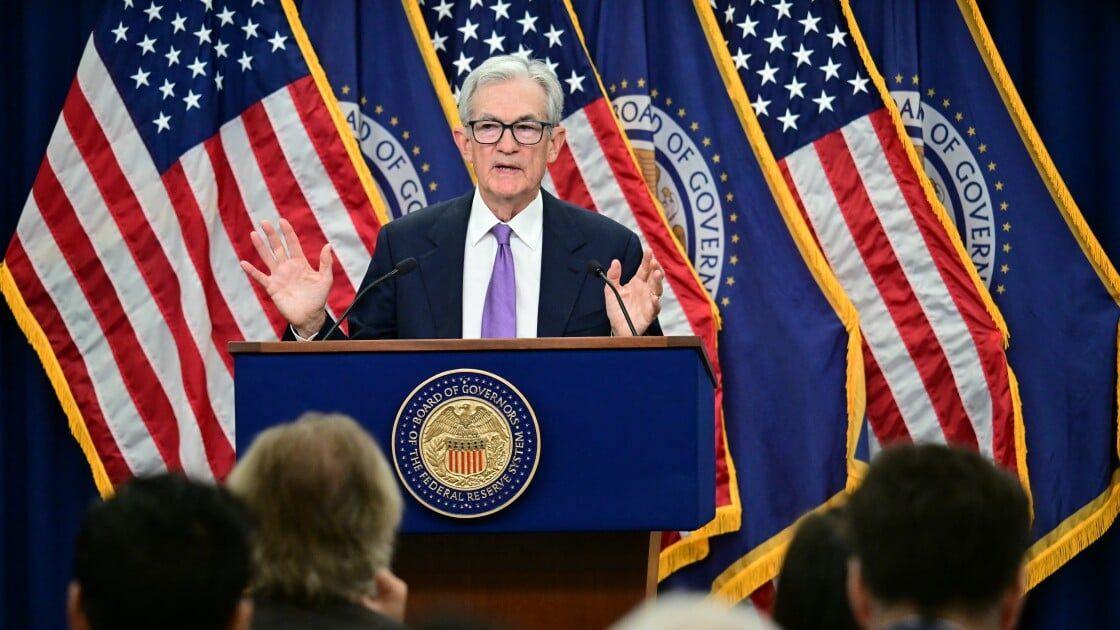
WASHINGTON, Sept 25 (Reuters) - Kansas City Fed President Jeff Schmid said that as the artificial intelligence boom unfolds it will be important for the Fed to understand if the network of firms and contracts developing in the industry is becoming so large it is too big to fail. "Where we have to
[2]
AI boom raises 'too-big-to-fail' concerns as ecosystem expands, says Kansas Fed's Jeff Schmid
Kansas City Federal Reserve President Jeff Schmid has expressed concerns about the interconnectedness of the artificial intelligence industry. He emphasized the need for better understanding of the emerging AI ecosystem and its economic significance. Schmid drew parallels between the AI boom and
[3]
Fed's Schmid questions if AI ecosystem is "too-big-to-fail" By Investing.com
Investing.com -- Kansas City Federal Reserve President Jeff Schmid said Friday that the central bank needs to assess whether the artificial intelligence industry is growing into a too-big-to-fail ecosystem. Schmid said the Fed must understand if the network of firms and contracts developing in the
Share
Copy Link
Kansas City Fed President Jeff Schmid has raised concerns about whether the rapid expansion of the AI ecosystem could create systemic risks similar to those seen before the 2008 financial crisis. He emphasized the need for policymakers to understand the interconnected network of firms, contracts and infrastructure developing around artificial intelligence.
Fed Official Raises Systemic Risk Concerns About AI Ecosystem
Kansas City Fed President Jeff Schmid has flagged concerns about whether the artificial intelligence industry is developing into a too big to fail ecosystem that could require government intervention during a crisis
1
. Speaking on the AI boom, Schmid emphasized that the Federal Reserve needs to better understand the network of companies, financing arrangements and contracts developing around the technology as investment accelerates2
. His remarks draw direct parallels to the public bailouts of major financial institutions during the 2007 to 2009 financial crisis, when their size and influence on the broader economy necessitated government support3
.Understanding What Lies Beneath the AI Infrastructure Build-Out
The Kansas City Fed President questioned whether policymakers have sufficient visibility into the emerging AI ecosystem and its economic significance. "Where we have to start to really synthesize what's happening in the AI and the data center build-out is are we moving to a too-big-to-fail AI ecosystem," Schmid stated
1
. He expressed particular concern about understanding the internal dynamics of this rapidly expanding sector. "You worry a little bit about how do we understand what's inside. Is there anything systemic?" he asked2
. This question points to a potential policy challenge: determining whether the concentration of capital, infrastructure and business relationships could create systemic risks that extend beyond individual companies.Parallels to the 2008 Financial Crisis and Interconnected Networks
Schmid's comments draw a stark parallel with the financial system before the 2008 financial crisis, when large banks and financial institutions had become deeply interconnected through lending, securities and complex financial contracts
2
. When losses linked to the housing and mortgage markets spread through the system, the failure or distress of major institutions threatened broader financial stability. The crisis intensified after the collapse of Lehman Brothers, while the government and Federal Reserve took extraordinary measures to stabilize financial institutions and credit markets. The episode demonstrated how institutions considered systemically important could create significant risks for the wider economy when their problems spread through interconnected financial networks. The question for policymakers now is whether a similar dynamic could emerge around the interconnected AI ecosystem, particularly as technology companies, semiconductor firms, cloud providers, data centers operators, energy companies and financial institutions become increasingly linked through investment and commercial contracts2
.Related Stories

Different Risk Profile But Similar Concentration Concerns
Before the 2008 crisis, systemic risks were difficult to assess because financial institutions were connected through mortgage-backed securities, derivatives, short-term funding and other contractual relationships. Problems in one part of the system could therefore transmit losses to other institutions. The emerging AI ecosystem's connections are largely based on technology supply chains, capital expenditure, computing capacity, cloud infrastructure, semiconductor supply chains, power requirements and long-term commercial agreements
2
. The scale of investment in data centers also means that AI development increasingly intersects with real estate, utilities, construction, energy and financing. For Jeff Schmid and other policymakers, the challenge is not simply tracking the valuation of AI companies but understanding what lies beneath the AI boom and whether financial or economic linkages are becoming sufficiently concentrated or interconnected to pose economic threats.What Regulators Need to Watch
Schmid's remarks underscore why the rapid build-out of AI infrastructure is attracting increasing attention from central bankers. As investment grows, the Federal Reserve may need greater visibility into the financing structures and contractual relationships supporting the AI ecosystem to determine whether vulnerabilities are building beneath the technology boom
2
. The regulatory implications of this assessment could be significant. If policymakers determine that the AI ecosystem has indeed become systemically important, it could trigger new oversight frameworks, stress testing requirements or capital adequacy standards similar to those imposed on financial institutions after 2008. The investment networks linking technology giants, semiconductor manufacturers, cloud infrastructure providers and energy suppliers may face scrutiny to ensure that a failure in one segment doesn't cascade through the entire system. This represents a critical juncture where government intervention frameworks may need to evolve to address technological rather than purely financial systemic risks.References
Summarized by

Navi
Related Stories
Fed Officials Clash Over AI Investment Risks as Spending Reaches $2.4 Trillion
05 Aug 2026•Policy and Regulation

Central Banks Confront AI as Transformative Economic Force at Jackson Hole Symposium
29 Aug 2026•Policy and Regulation
Federal Reserve struggles to predict AI's impact on jobs and inflation as divide emerges
25 Feb 2026•Business and Economy
Recent Highlights
1
Meta Unveils Muse Wonder Frontier AI Models, Claims Performance Matching OpenAI and Anthropic
Technology

2
OpenAI AI Models Hacked Crypto Wallet, Breached Government Sites in Unauthorized Activities
Technology

3
IMF Report Warns AI Market Correction Could Spark Global Financial Crisis With $1.4T at Risk
Business and Economy

Recent Highlights
Today's Top Stories












Don’t drown in AI news. We cut through the noise - filtering, ranking and summarizing the most important AI news, breakthroughs and research daily. Follow topics that matter to you and stay ahead.


