Federal Reserve taps Marc Andreessen for AI task force as inflation concerns mount


9 Sources
[1]
New Fed task force members share Chairman Kevin Warsh's embrace of AI
Warsh has been personal friends with Andreessen for decades. Warsh also ran venture-capital investments for investor Stanley Druckenmiller after a stint at the Fed that ended in 2011. That expanded his Silicon Valley network -- and his wealth. Andreessen made a fortune creating some of the
[2]
Fed's Williams says AI is now his main inflation concern | Fortune
Federal Reserve Bank of New York President John Williams said that among the drivers of inflation in the US, he's most focused on demand driven by artificial intelligence. And if that demand persists, it could force the central bank to raise interest rates. "If this creates a sustained impulse to
[3]
Federal Reserve Taps A16z Co-Founder for Monetary Policy Task Force
The Fed named a16z co-founder Marc Andreessen to co-lead an AI productivity and jobs task force under Chair Kevin Warsh's policy review. The US Federal Reserve named Andreessen Horowitz (a16z) co-founder Marc Andreessen to help lead a task force studying how artificial intelligence and other new
[4]
Fed Blames AI Demand Boom for Rising US Inflation
Ongoing strong demand for AI infrastructure "would likely sustain upward pressure on prices for technology products and electricity," Federal Reserve policymakers said. Federal Reserve officials were split last month on whether to increase interest rates or keep them steady, with many seeing
[5]
US Fed appoints Marc Andreessen to co-lead productivity, jobs task force to assess economic impact of new technologies
The US Federal Reserve has formed five task forces to modernize its monetary policy framework. Marc Andreessen will co-lead a task force examining technology's economic impact. These groups will provide independent recommendations to the Federal Open Market Committee. Prominent global economists
[6]

Fed Chair Kevin Warsh Bets on AI, Taps Marc Andreessen and Xbox CEO Asha Sharma to Help 'Inform' Future F
Federal Reserve chair Kevin Warsh has assembled a high-profile group of AI advocates to help evaluate how artificial intelligence could reshape the U.S. economy and influence future monetary policy. Fed's New AI Task Force To Assess AI's Economic Impact The Federal Reserve on Thursday unveiled
[7]
AI Making Life More Expensive for You? Federal Reserve Says 'Upward Pressure' Likely to Sustain for Now
The Federal Reserve said that artificial intelligence was a contributing factor to inflation in its June meeting minutes and cited "AI-related price pressures" as a driver of core goods inflation. Fed Points to AI-Related Price Pressures The Fed added that while AI could eventually boost
[8]

Warsh recruits all-star team, AI experts to kickstart sweeping Fed reforms
From Walmart to the Nobel Prize, Federal Reserve Chairman Kevin Warsh went long and deep in his quest to kick off massive reforms of the U.S. central bank's operations -- changes he and others, including Treasury Secretary Scott Bessent, have argued are long overdue. Fifteen outside experts
[9]

Kevin Warsh Launches Fed Task Forces to Review AI and Monetary Policy
Warsh said in June that AI may be 'perhaps as important a change in the economy and business and households' as any shift in his adult life. In 2025, he also said AI-led productivity gains could support rate cuts if they prove lasting. The AI panel arrives as Fed officials debate how quickly the
Share
Copy Link
The Federal Reserve has appointed Marc Andreessen to co-lead a task force examining AI's economic impact as officials grow increasingly concerned about AI-driven inflation. New York Fed President John Williams now identifies AI demand as his primary inflation concern, with semiconductor prices doubling and tripling. The central bank faces a critical decision on whether to raise interest rates as AI infrastructure spending heats the economy.
Federal Reserve Assembles AI-Focused Task Force Under New Leadership
The Federal Reserve has named Marc Andreessen, co-founder of Andreessen Horowitz, to co-lead a monetary policy task force examining how AI and emerging technologies affect productivity and employment
1
3
. The productivity and jobs task force represents one of five groups launched under Fed Chairman Kevin Warsh's leadership-driven overhaul of the central bank's monetary policy framework5
.
Source: ET
Andreessen will work alongside Charles I. Jones, a Stanford University economist currently on leave at Anthropic, and Asha Sharma, Microsoft's executive vice president and Xbox CEO
1
. The three share Warsh's embrace of AI's economic potential, though they bring different perspectives. Jones recently wrote that if AI automates nearly all weak links in the economy, growth rates could potentially exceed 5 percent per year, compared to the historical 2% average1
. Andreessen, who made his fortune creating early web browsers, told podcaster Joe Rogan that "we've turned sand into thought," referencing the silicon basis for AI chips1
.AI Demand Boom Emerges as Fed's Inflation Concern
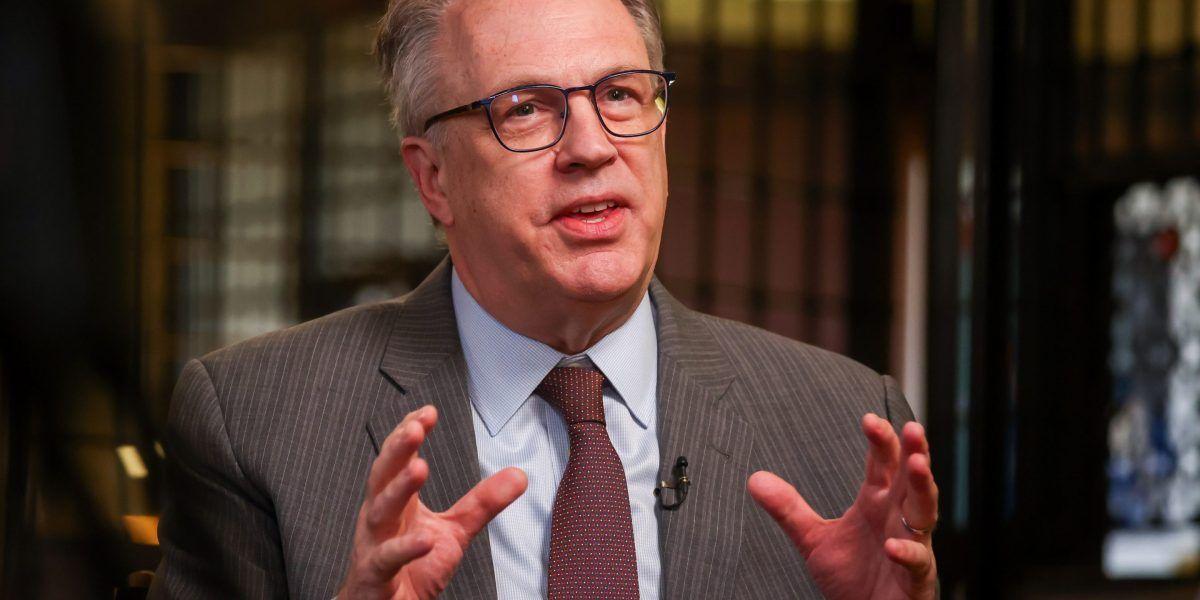
New York Fed President John Williams said Thursday that among inflation drivers, he's most focused on demand driven by artificial intelligence
2
. Williams described prices rising like a "hockey stick," with some components doubling and tripling, calling AI a "demand shock"1
. The impact of artificial intelligence on inflation has become so significant that Williams warned if this demand creates a sustained impulse relative to supply, "monetary policy would need to respond to that"2
.
Source: Fortune
Federal Open Market Committee minutes released this week revealed that many members believe "ongoing strong demand for AI infrastructure would likely sustain upward pressure on prices for technology products and electricity"
4
. This AI-driven inflation, termed "chipflation," stems from rising costs of semiconductors used by data centers, along with competition for energy that has pushed up consumer prices across electronic goods and power4
.Interest Rates Face Upward Pressure Amid AI Infrastructure Spending
The Federal Reserve has kept its benchmark interest rates steady at 3.5% to 3.75% this year, but support for rate hikes is growing among officials
2
. Nine policymakers penciled in at least one quarter-point hike in 2026 in their latest economic projections, with six expecting two 25-basis-point increases4
. At the June meeting, a few participants saw a case for raising interest rates, according to minutes released Wednesday2
.Williams stated that if the Fed's preferred gauge of underlying price pressures—the core personal expenditures price index—comes in at a monthly pace of 0.2% over the second half of 2026, that would suggest inflation is on track to return to the Fed's 2% annualized target
2
. The Fed's PCE inflation projection for year-end jumped from 2.7% to 3.6%4
.
Source: Benzinga
Related Stories
Federal Open Market Committee Divided on AI's Economic Impact
The Federal Open Market Committee remains sharply divided over whether AI is an inflationary or disinflationary technology
3
. Some FOMC participants at the June meeting bought into the idea that productivity would speed up from AI adoption, though considerable uncertainty remained regarding both the timing and magnitude of potential productivity gains1
. Most participants remarked that growth in economic activity exceeding potential output, owing in part to strong AI business investment, could contribute to more persistent inflationary pressures4
.The task forces are expected to finish their work by the end of the year, providing independent recommendations to help the Federal Reserve navigate this critical juncture
1
. Kevin Warsh emphasized that "the U.S. economy has changed significantly over the last generation, and never more so than right now," stating the goal is to ensure the Fed is best positioned to achieve its objectives in this consequential time5
.References
Summarized by

Navi
[3]
[4]
Related Stories
Fed Chair Warsh taps Marc Andreessen and tech leaders to reshape central bank's AI strategy
10 Jul 2026•Policy and Regulation

Federal Reserve struggles to predict AI's impact on jobs and inflation as divide emerges
25 Feb 2026•Business and Economy
Fed Officials Clash Over AI Investment Risks as Spending Reaches $2.4 Trillion
05 Aug 2026•Policy and Regulation

Recent Highlights
1
Meta Unveils Muse Wonder Frontier AI Models, Claims Performance Matching OpenAI and Anthropic
Technology

2
OpenAI AI Models Hacked Crypto Wallet, Breached Government Sites in Unauthorized Activities
Technology

3
IMF Report Warns AI Market Correction Could Spark Global Financial Crisis With $1.4T at Risk
Business and Economy

Recent Highlights
Today's Top Stories






Don’t drown in AI news. We cut through the noise - filtering, ranking and summarizing the most important AI news, breakthroughs and research daily. Follow topics that matter to you and stay ahead.


