Four Young Mathematicians Receive Prestigious Fields Medals as AI Reshapes the Profession


2 Sources
[1]
Four Young Mathematicians Receive Prestigious Fields Medals
The awards are bestowed only once every four years to mathematicians under the age of 40. Four mathematicians whose work covers areas like algebraic geometry and partial differential equations are the latest recipients of the Fields Medals, an award that is given out every four years to the
[2]
Fields medal honours four mathematicians as AI reshapes the profession
The International Mathematical Union awarded the prestigious Fields Medal to four mathematicians on Thursday, including only the third woman to receive the honour, as researchers weighed the growing impact of artificial intelligence on a field increasingly being reshaped by the technology. The
Share
Copy Link
The International Mathematical Union awarded Fields Medals to Hong Wang, Yu Deng, Jacob Tsimerman, and John Pardon at the International Congress of Mathematicians in Philadelphia. Wang becomes only the third woman to receive the honor since 1936. The awards arrive as AI demonstrates abilities that rival human mathematicians, prompting discussions about the future of mathematical research.
Four Young Mathematicians Honored with Fields Medals
The International Mathematical Union announced the 2026 Fields Medals recipients on Thursday during the International Congress of Mathematicians in Philadelphia, recognizing four young mathematicians whose work spans algebraic geometry, partial differential equations, and complex mathematical puzzles
1
. The prestigious Fields Medals went to Hong Wang, 35, a professor at New York University and the Institute for Advanced Scientific Studies in France; Yu Deng, 37, a professor at the University of Chicago; Jacob Tsimerman, 38, a professor at the University of Toronto; and John Pardon, 37, a professor at Stony Brook University on Long Island1
.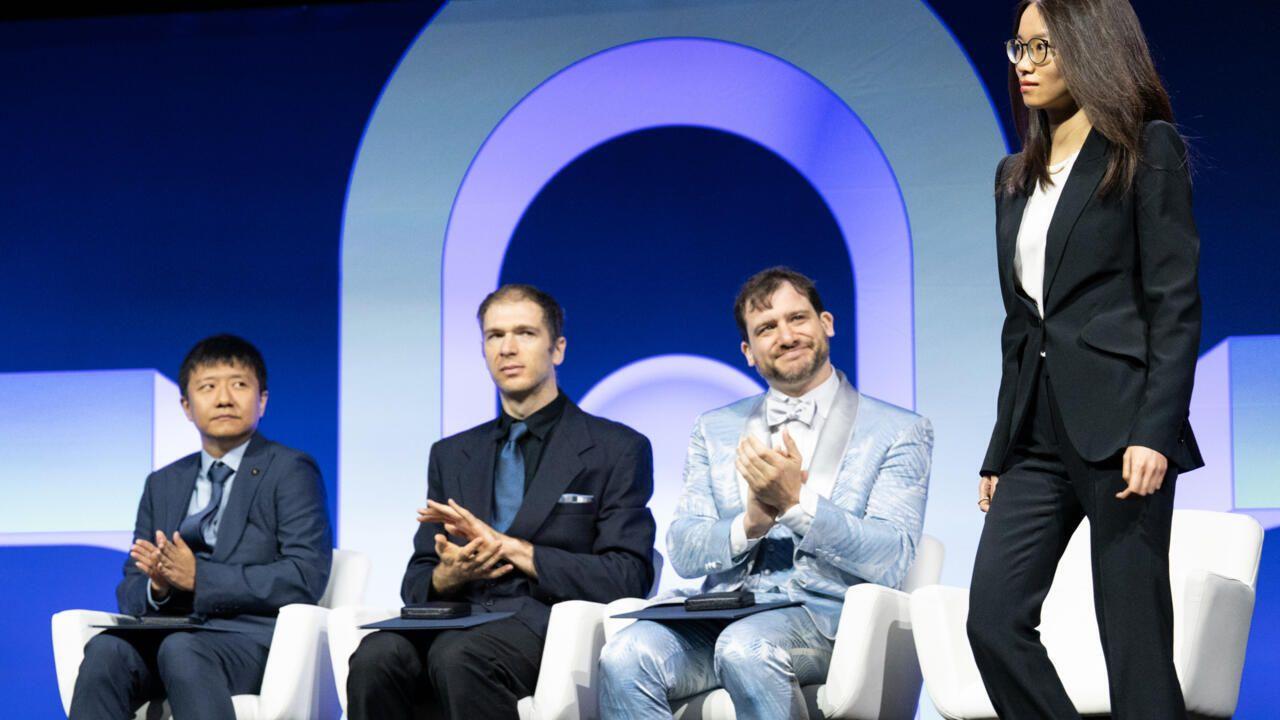
Source: France 24
This marks a historic moment as it's the first time the cadre of Fields winners includes more than one Asian mathematician, with both Wang and Deng born in China
1
. Wang becomes only the third woman to receive a Fields Medal since its inception in 1936, following Iranian mathematician Maryam Mirzakhani in 2014 and Ukrainian mathematician Maryna Viazovska in 20222
. Each recipient receives 15,000 Canadian dollars (approximately $10,600) and a gold coin bearing the face of Archimedes, the ancient Greek mathematician1
.Solving Century-Old Mathematical Puzzles
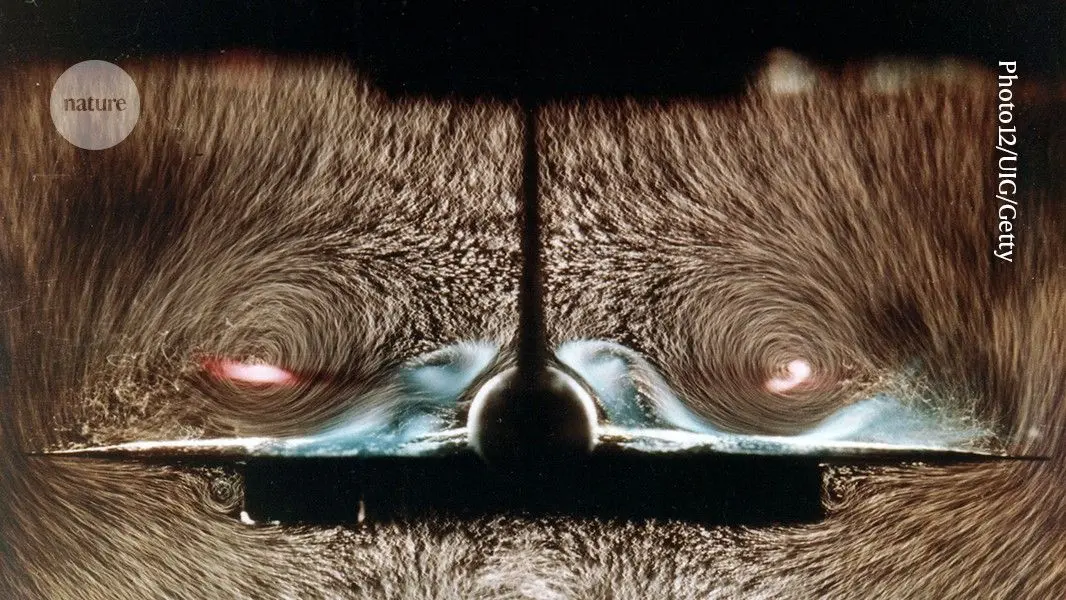
Wang's recognition stems from her groundbreaking work on a mathematical conjecture that had stumped experts for more than a century. Originally posed by Japanese mathematician Soichi Kakeya in 1917, the puzzle asked a deceptively simple question: "If you rotate a pencil so as to turn it completely around, what is the smallest area it sweeps out?"
2
. Working with colleague Josh Zahl, Wang solved the problem by analyzing what would happen if the pencil was floating in three-dimensional space rather than on a flat table2
. "If this conjecture fascinates people so much, it is because this kind of phenomenon shows up naturally in problems from very different fields," Wang told AFP2
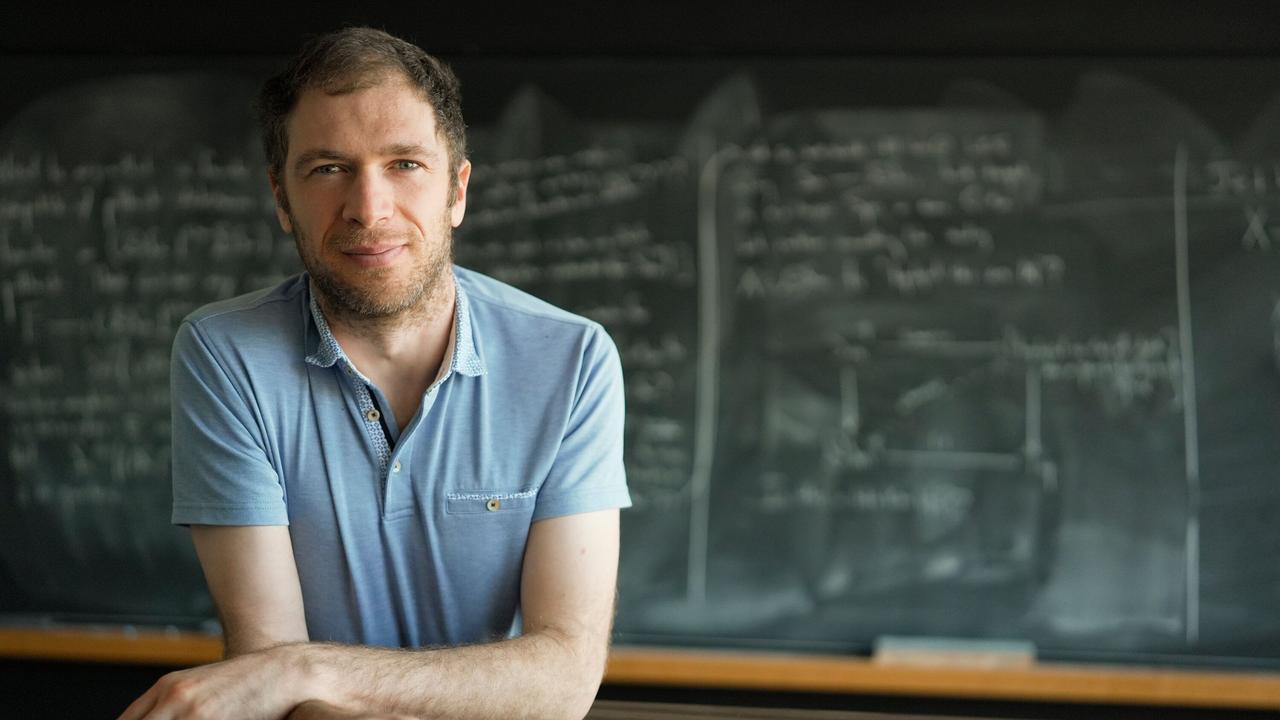
.Tsimerman, a specialist in complex algebraic geometry and analytic number theory, traced his passion for mathematics back to a childhood puzzle from his grandfather about a broken toaster. "I was like, 'That's beautiful,' and I was basically hooked," he recalled
2
. Deng called the recognition "a really great honour to have my name listed after all those great mathematicians I've always been admiring"2
.
Source: NYT
AI's Impact on the Field Creates New Challenges
The awards arrive at a pivotal moment as AI demonstrates capabilities that rival those of human mathematicians, fundamentally transforming how mathematical research is conducted. Just days before the ceremony, a mathematician reported using the Fable AI model from Anthropic to disprove a conjecture first proposed in 1939, discovering a counterexample while watching the World Cup final
1
. The counterexample was easily verified, leaving no doubt about the result's validity1
.In recent months, AI models have demonstrated the ability to produce high-level mathematical proofs, astonishing many experts
2
. However, these advances carry significant risks. A group of mathematicians outlined concerns in the Leiden Declaration in June, warning that "current automated techniques can produce plausible but unreliable (or even incorrect) arguments which are difficult to distinguish from correct mathematical proofs"2
. The declaration called for establishing frameworks and safeguards, noting these challenges arise "at a moment when the consequences of large-scale investment in artificial intelligence are being widely discussed in regard to warfare, mass surveillance, political disruption, and environmental damage"2
.Related Stories
The Future of Mathematical Research
Tsimerman is adapting to this new reality by changing his research focus to study the mathematical foundations of AI systems, aiming to better understand how they work and help avoid unintended consequences
1
. He announced he will soon start a position at OpenAI in its safety division, stating, "I think the world is changing. The maths profession as we know it now... I don't think it will exist the way it exists right now"2
.Deng expressed a more optimistic outlook on AI reshaping the profession: "I'm probably kind of on the more optimistic side, that the AI is going to be kind of helping mathematicians instead of replacing them"
2
. The International Congress of Mathematicians will include talks about how AI and other tools like software that checks proofs are changing mathematics1
.Conceived by Canadian mathematician John Charles Fields in the 1920s, the medals were first awarded in 1936 and are bestowed only once every four years to mathematicians under the age of 40 on January 1 of the award year
1
. This rarity adds prestige, making them somewhat akin to Olympic medals, while the Abel Prize recognizes lifetime achievements1
. The names of this year's recipients leaked last week after hackers discovered them poorly hidden on the meeting website, though Wang maintained secrecy despite friends' congratulations1
.References
Summarized by

Navi
Related Stories
OpenAI's AI Math Breakthrough on Millennium Problem Sparks Fierce Attribution Battle
08 Sept 2026•Science and Research
AI Solves 719 Previously Unsolvable Math Problems, Forcing Mathematicians to Rethink Their Future
Yesterday•Science and Research

OpenAI Forms Math Advisory Group After AI Resolves More Than 100 Open Problems
22 Sept 2026•Policy and Regulation
Recent Highlights
1
OpenAI AI Models Hacked Crypto Wallet, Breached Government Sites in Unauthorized Activities
Technology

2
IMF Report Warns AI Market Correction Could Spark Global Financial Crisis With $1.4T at Risk
Business and Economy

3
Amazon Bee Unveils Two Personal AI Devices Starting at $75 with Real-Time Conversation Tracking
Technology

Recent Highlights
Today's Top Stories









Don’t drown in AI news. We cut through the noise - filtering, ranking and summarizing the most important AI news, breakthroughs and research daily. Follow topics that matter to you and stay ahead.


