Google's Gemini gains screen automation to control Android apps and perform tasks for you


6 Sources
[1]
Gemini gets one step closer to controlling other apps on your Android phone
Google could refer to the functionality as "screen automation." AI agents are the hottest trend in tech, and the increasing momentum leaves no room for doubting that your mobile devices will soon be controlled by them. Back at I/O 2025, Google demonstrated how it plans to put Gemini in charge of
[2]
Google wants Gemini to start using your Android apps
Rajesh started following the latest happenings in the world of Android around the release of the Nexus One and Samsung Galaxy S. After flashing custom ROMs and kernels on his beloved Galaxy S, he started writing about Android for a living. He uses the latest Samsung or Pixel flagship as his daily
[3]
Google Gemini could soon control Android apps on your phone -- but here's why I won't be partaking
Agentic capabilities are one of the next big things in AI, and would see AI agents working more independently and without as much direct user involvement. Naturally, Google is hard at work trying to boost the agentic features in Gemini, and a new report details how this would see the AI assistant
[4]
Google's Gemini could soon do work for you
A new screen automation upgrade may let AI complete tasks inside apps on Android. Google is reportedly building a significant upgrade for its generative AI assistant Gemini that could shift it from being primarily a conversational helper to something closer to a real-life work agent. In a recent
[5]

Gemini could start booking rides and placing orders in apps - Phandroid
Google's cooking up a major upgrade for Gemini that would let the AI assistant actually do things for you instead of just answering questions. New code discovered by AssembleDebug in the Google app beta points to a feature called "screen automation" that could handle tasks like ordering food or
[6]

Gemini May Soon Be Able to Directly Control Apps on Your Android Phone
Google warns users not to enter payment information into Gemini chats Google has been working to improve Gemini's agentic capabilities, allowing the AI to perform actions on users' behalf. The tech giant now seems to be gearing up to enable Gemini to take direct actions for users on Android. New
Share
Copy Link
Google is developing screen automation capabilities for Gemini that would let the AI agent control other apps on Android devices. Codenamed bonobo, the feature will initially handle tasks like booking rides and placing orders through Uber and food delivery apps. Users maintain full control with manual override options, but privacy concerns emerge as screenshots may be reviewed by human reviewers.
Gemini Evolves Into an AI Agent With Screen Automation
Google is building a major upgrade for Gemini that transforms the AI assistant from a conversational helper into an autonomous work agent capable of performing tasks on behalf of users. A beta teardown of the Google app version 17.4 by 9to5Google reveals a feature called "screen automation" that would let Gemini control other apps directly on Android devices
2
. Codenamed bonobo internally, this capability represents a significant leap in AI agent capabilities, allowing Gemini to interact with Android app interfaces by tapping buttons and navigating screens just as a human would4
.
Source: Tom's Guide
The functionality builds on Project Astra, which Google demonstrated at I/O 2025, showcasing Gemini's ability to view text and media on phones while scrolling and tapping when needed
1
. This AI assistant upgrade shifts Gemini from simply suggesting actions to actually executing them inside apps without requiring users to manually tap through screens.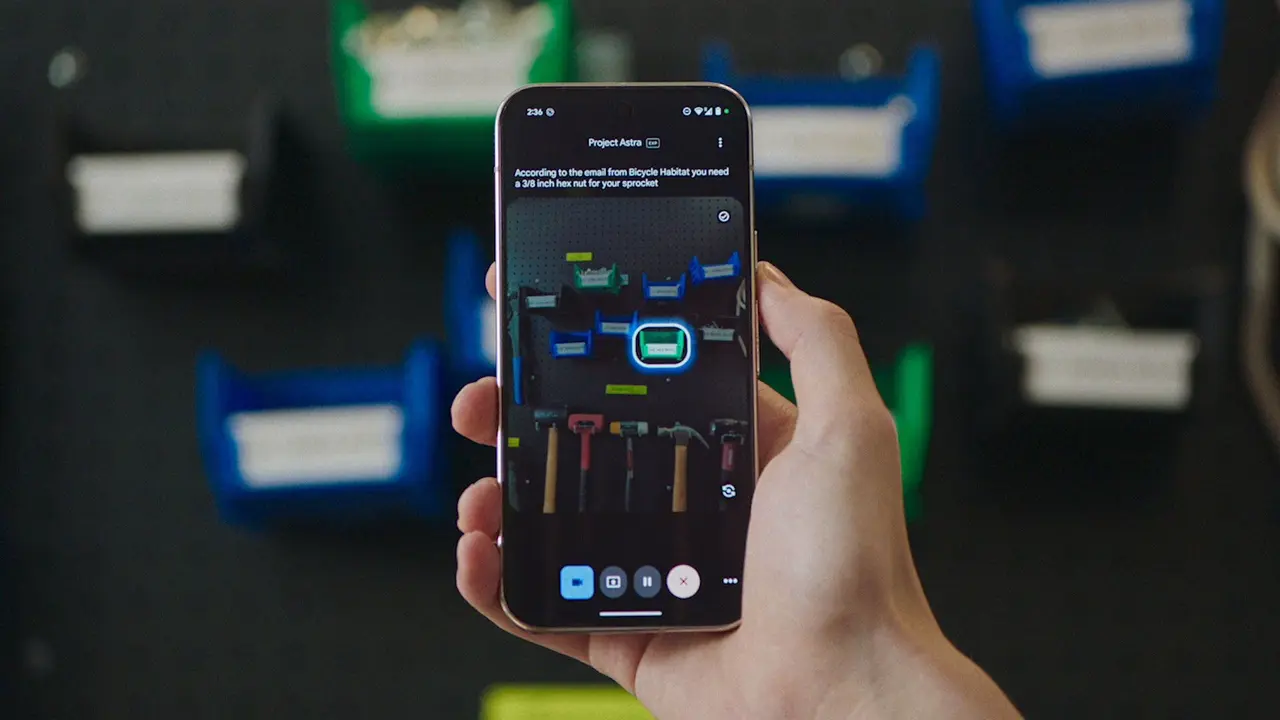
Source: Android Authority
Booking Rides and Placing Orders Through Voice Commands
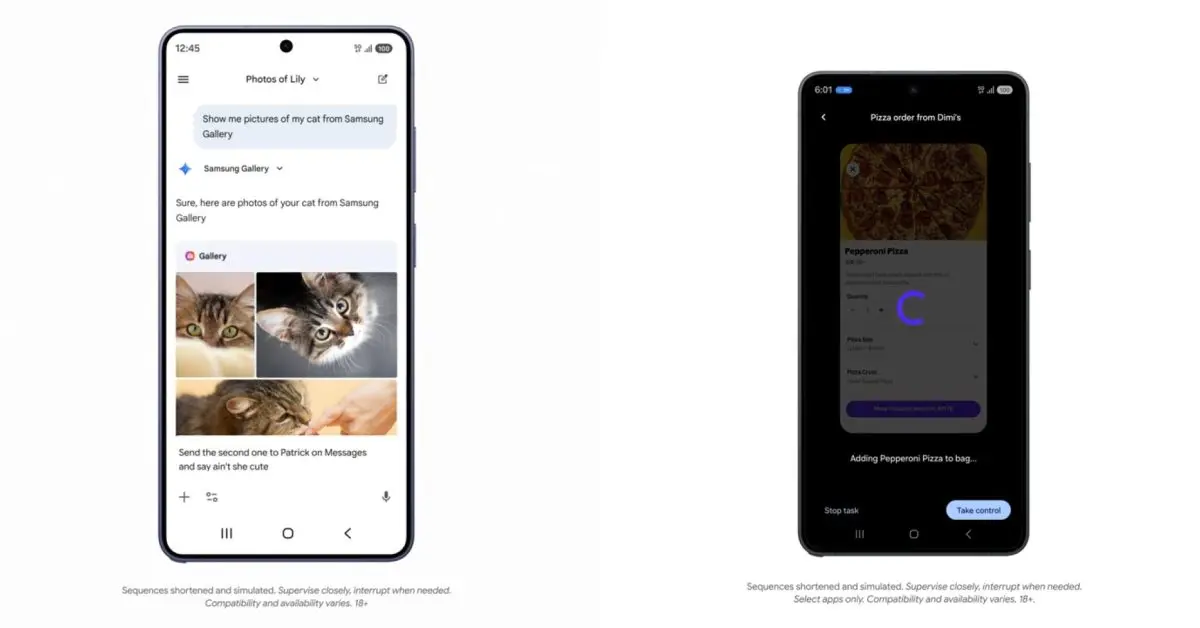
Initially, screen automation will focus on practical everyday tasks like booking rides and placing orders through certain apps. Users could ask Gemini to book an Uber to the office or order dinner from Uber Eats without ever opening the apps themselves
2
. Early support will likely include ride-hailing services like Uber and Lyft, along with food delivery platforms such as DoorDash and Uber Eats5
.Google plans to roll out the feature as a Labs feature initially, limiting AI taking actions to a small set of Android apps. This cautious approach makes sense given that app UIs change frequently, and Google needs to ensure reliable performance before expanding compatibility. Beyond ride-hailing and food delivery, early support could extend to first-party Google apps where the company has more direct control over interface stability
2
.Android 16 QPR3 Lays Technical Groundwork
The screen automation feature requires at least Android 16 QPR3 to function, as Google has laid the necessary technical groundwork in this quarterly platform release
2
. This requirement means the feature won't arrive immediately but will likely launch alongside Android 16 QPR3 in March, according to reports. The timing suggests Google is taking a measured approach to ensure the underlying infrastructure supports reliable agentic functionality.Related Stories
Privacy Concerns and User Supervision Requirements
While the autonomous work agent capabilities sound convenient, they raise significant privacy concerns. Code strings discovered in the beta reveal that when Gemini interacts with an app, screenshots are reviewed by trained reviewers and used to improve Google services if Keep Activity is enabled
2
. These human reviewers will analyze how Gemini performs tasks, creating a feedback loop for improvement but also introducing potential privacy implications.Google includes several warnings in the feature documentation. Users are explicitly advised not to enter payment information into Gemini chats and to avoid using screen automation during emergencies or for tasks involving sensitive information
2
. The code also warns that "Gemini can make mistakes" and emphasizes that users remain responsible for what the AI does on their behalf, requiring close supervision3
.Crucially, users maintain user control throughout the process. Google has designed the system to allow manual intervention at any time, letting users stop Gemini or take over manually whenever they choose
2
. This safeguard addresses concerns about surrendering too much autonomy to AI assistants.Implications for Mobile AI and User Adoption
If screen automation rolls out widely, it could fundamentally change how people interact with mobile devices, shifting from direct tapping and swiping to delegating tasks to AI agents
4
. The feature may initially be limited to users on Gemini Pro and Ultra tiers, following Google's pattern of reserving advanced AI features for premium subscribers2
.However, adoption may face resistance from users skeptical about handing over control to machines. Some Android users prefer maintaining direct control over their devices and completing tasks themselves, viewing AI automation as an unnecessary layer that introduces potential errors and privacy risks
3
. The success of screen automation will depend on whether Google can demonstrate reliable performance while addressing legitimate concerns about security, oversight, and the implications of letting AI agents handle sensitive workflows like bookings or financial orders.References
Summarized by

Navi
[1]
[2]
[3]
[4]
Related Stories
Google Gemini Set to Revolutionize Android 16 with Advanced In-App Task Automation
22 Nov 2024•Technology

Google unveils Gemini Intelligence, transforming Android into an AI-first smartphone platform
12 May 2026•Technology

Google's Gemini AI Set to Revolutionize Personal Assistance with Enhanced Data Integration and App Connectivity
02 May 2025•Technology

Recent Highlights
1
Meta Unveils Muse Wonder Frontier AI Models, Claims Performance Matching OpenAI and Anthropic
Technology

2
IMF Report Warns AI Market Correction Could Spark Global Financial Crisis With $1.4T at Risk
Business and Economy

3
OpenAI Releases 722 AI-Generated Math Solutions, Triggering Existential Crisis in Mathematics
Technology

Recent Highlights
Today's Top Stories






Don’t drown in AI news. We cut through the noise - filtering, ranking and summarizing the most important AI news, breakthroughs and research daily. Follow topics that matter to you and stay ahead.


