8 Sources
[1]
Half of Gen Z Uses AI, but Their Feelings Are Souring, Study Shows
A new study from Gallup found that young adults have grown less hopeful and more angry about artificial intelligence. Think young people are charging eagerly into an A.I.-mediated future? Think again. More than half of Gen Z-ers living in the United States use generative artificial intelligence regularly, but their feelings about the technology are souring, according to a new survey released on Thursday by Gallup, the Walton Family Foundation and GSV Ventures, a venture capital firm that works in education technology. The percentage of respondents ages 14 to 29 who said they felt hopeful about A.I. declined sharply since last year, down to 18 percent from 27. Young adults' excitement about artificial intelligence dropped, too, and nearly a third of respondents indicated that the technology made them feel angry. The survey of more than 1,500 people was conducted in February and March. Its results suggest that Americans' animosity toward A.I. extends to a younger generation -- one that is currently struggling to find its footing in the workplace. "In most of these cases, Gen Z-ers have become increasingly skeptical, increasingly negative -- from a place where even last year, they weren't particularly positive about it," said Zach Hrynowski, a senior education researcher for Gallup who worked on the survey. He said he had been surprised by how noticeably young people's attitudes had shifted. Many respondents did acknowledge that A.I. might make them more efficient in school and the workplace, he said. But they were concerned about how the technology would affect their creativity and critical thinking skills. Young adults in the work force were especially skeptical. Close to half of those surveyed said the risks of artificial intelligence outweighed its potential benefits in the workplace, an 11-point jump from the previous year. Only 15 percent said they saw A.I. as a net benefit.
[2]
Gen Z's Use of AI Is Plateauing and It's Feeling Less Hopeful About the Tech
Young people have grown increasingly skeptical of artificial intelligence, even those who use it daily, according to a new Gallup poll of more than 1,500 people aged 14 to 29. There is no decline in AI use among Gen Zers, but there is also no increase since the same poll was conducted in 2025. The latest poll found that AI use was plateauing among young users, accompanied by rising concern about the technology's consequences. The findings are significant because Gen Z is "the generation most likely to enter or grow within the workforce over the next decade," the report notes, meaning that their adoption could determine the trajectory of broader societal AI adoption. Gen Z has already overtaken Boomers in the workforce. Right now, the AI world is preparing for a massive jump in expected demand, and the top tech and financial companies are investing billions upon billions of dollars into building out the supply. Experts have warned that if demand does not pan out exactly as expected in the short term, then it could have disastrous consequences for the economy. "The data paint a picture of a generation that is neither wholly rejecting AI nor fully embracing it รขโฌ" including those who use it every day," the report says. "This signals a growing credibility challenge that access alone will not solve." Curiosity was still the most commonly felt emotion in response to AI among Gen Z, but it was closely followed by anxiety and anger. The lowest-ranked responses by a margin were excitement and hope. Excitement for AI dropped 14 percentage points since 2025, and hopefulness fell nine points, while anger increased by nine points and anxiety remained steady. Anxiety seems to be overwhelmingly common regardless of usage. According to the poll, 4-in-10 Gen Zers are anxious about the consequences of wider AI adoption. Among those who don't use AI, 60% reported anxiety and 2% reported being hopeful, while among those who use AI daily, 28% were still anxious and 38% were hopeful. There is reason for this shifting sentiment. As AI use increased, so did reports of its adverse impact on things like mental health, war, government, job market, and the environment. The result has been a growing distaste for AI as a concept and more dissent against the unprecedented data center buildout meant to service it. The impact has been especially rough for Gen Z. Cases of vulnerable teens allegedly being guided by AI chatbots to end their lives have gripped headlines in the past year, while studies have linked corporate AI initiatives to a hostile job market for young graduates. Artificial intelligence is relatively good at automating stuff that an early-career worker would be expected to fulfill at a company, which some experts believe has led to a decrease in hiring. The Irish government reported a link between slowing employment for young workers and AI adoption earlier this year, and last year, Fed Chair Jerome Powell admitted that AI is probably a factor inร the dismal young graduate employment rates in the U.S. The trend threatens not only the careers of young workers but the future of the workforce in general, as young workers have less access to crucial on-the-job training that they normally would have gone through in their 20s. Working young adults in the survey were also significantly more likely to say that the risks of AI outweigh or equal the benefits. Thirty-eight percent said AI would do more harm than good for creativity, and 42% said the same for critical thinking. There is also decreasing confidence in the belief that AI helps complete work faster, down 10 points since last year. But 56% still believe it can speed up work. Gallup also found that Gen Z is losing faith in AI's ability to help accelerate learning. That metric was down 7 points at 46%. Significantly more respondents were likely to trust work that was completely helmed by humans rather than AI. Only 3% of respondents said they would trust completely AI-generated work, and 28% said they would trust work done with the help of some AI, while 69% said they would rather pick work that was 100% human-made. The report concluded that to combat rising AI skepticism among younger users, tech companies will have to go beyond just highlighting it as a productivity booster with the potential to multiply work output. The big players in AI seem to have caught on to this trend, at least to some degree. At Nvidia's GTC conference last month, CEO Jensen Huang spoke to the press at length about how much he is against the complete automation of work via AI and how executives freezing hiring to maximize profits were "out of imagination." Meanwhile, earlier this week, OpenAI began calling for an AI-enabled four-day workweek.
[3]
Gen Z's fading AI hype
By the numbers: The share of Gen Z respondents who agree that AI makes them excited fell from 36% last year to 22% in 2026, per the findings from the Walton Family Foundation, GSV Ventures and Gallup. * Additionally, a smaller share feel hopeful (18%) this year than last (27%) -- and a larger share say they feel angry (22% to 31%). * That rising anger may be driven by AI dimming prospects for entry-level workers, says Gallup Senior Education Researcher Zach Hrynowski. The oldest Zoomers, he points out, are the angriest. * Gen Z, who grew up as digital natives, is perhaps more "acutely aware" of AI's impact versus someone in their mid career who "is playing around with AI, but doesn't feel threatened by it to the extent that maybe Gen Z does," he says. The fine print: Gen Zers' feelings about AI, the report notes, are closely linked with how much they use the tech: Daily AI users are more curious, excited and hopeful than even weekly users. * Still, even daily users are less excited and hopeful than they were last year. One might expect for AI use to slip with sentiment. But Gen Z's adoption of AI in daily life is largely unchanged from last year's survey, with just over half saying they use the tech daily (22%) or weekly (29%). * Hrynowski says that the plateaued usage "speaks to the the reticent acceptance that this technology is here to stay." * Gen Z may not be excited about adopting the tech -- but they recognize they may have to: Despite apprehension around AI, a majority of Gen Z K-12 students (52%) agree they'll have to know how to use it for college or classes after high school. That's up from 47% last year. What we're watching: The increasingly skeptical generation is also an increasingly prepared one. * More than half of K-12 students (56%) say they'll have the skills to use AI daily after they graduate high school, compared to 44% last year. Methodology: The results are based on a Gallup Panel web survey conducted Feb. 24-March 4 with a sample of 1,572 14- to 29-year-olds living in all 50 states and D.C. For the total sample of Gen Z respondents, the margin of sampling error is +/- 3.6 percentage points at the 95% confidence
[4]
Gen Z uses AI all the time, so why are they starting to hate it?
Gen Z was supposed to be AI's biggest fan. The numbers tell a very different story. More than half of Gen Zers in the US use generative AI regularly. So you'd think they'd be its biggest cheerleaders. As it turns out, not so much. According to a New York Times report, a new survey by Gallup, the Walton Family Foundation, and GSV Ventures surveyed more than 1,500 people aged 14 to 29 and found that Gen Z is growing increasingly skeptical of the technology they use every day. Is the excitement wearing off? The numbers are pretty telling. Excitement for AI dropped 14 percentage points since last year, hopefulness fell nine points, while anger rose by nine points. Only 18% of Gen Zers say AI makes them feel hopeful, and just 22% say it excites them. Meanwhile, 42% report feeling anxious about it, and 31% feel outright angry. What's interesting is that even daily users, who are generally more positive about AI, are becoming less optimistic. Among those who use AI every day, excitement and hopefulness dropped 18 points and 11 points, respectively, compared to last year. More access clearly isn't translating into more confidence. What's driving the frustration? A big part of it comes down to what Gen Z thinks AI is doing to their brains. A whopping 8 in 10 respondents said it is likely that using AI tools will make it harder for them to learn in the future. They are also skeptical about its impact on creativity and critical thinking, with 38% and 42% respectively saying AI will do more harm than good in those areas. The workplace isn't looking much rosier. Among employed Gen Zers, 48% say the risks of AI outweigh the benefits, compared to just 15% who see it as a net positive. Trust in AI-assisted work is also low, with 69% saying they trust work done without AI more. Recommended Videos That said, Gen Z isn't giving up. Close to half of high schoolers believe AI skills will be necessary for their future careers. They're not ignoring it, they're just going in with their eyes wide open.
[5]
Gen Z's AI Adoption Steady, but Skepticism Climbs
WASHINGTON, D.C. -- While a steady 51% of Gen Zers in the U.S. report using generative artificial intelligence at least weekly, negative emotions toward it have intensified over the past year. Anger about the technology has risen, while excitement and hopefulness have dropped. Even daily AI users, who generally hold more favorable views of AI, have not become more positive, according to a new survey by the Walton Family Foundation, GSV Ventures and Gallup. Generation Z -- those born between 1997 and 2012 and who are currently aged 14 to 29 -- is not convinced that AI enhances creativity or critical thinking, and the majority believe it may come at a cost, particularly to learning. Employed Gen Zers echo these concerns relative to the workplace, as more say the risks of AI outweigh its benefits, and trust in AI-assisted work is lower than in exclusively human output. Meanwhile, about half of Gen Z K-12 students think they will need to know how to use AI in their postsecondary education or their future jobs. Nearly three in five students believe they will be adequately prepared for daily AI use after high school. These findings are from a web survey conducted Feb. 24-March 4, 2026, with a sample of 1,572 14โ to 29โyearโolds, using the probability-based Gallup Panel. This is the latest research in the Voices of Gen Z study. Gen Z's use of generative AI in everyday life has been largely stable since March 2025. About half (51%) of 14- to 29-year-olds continue to say they use AI either daily (22%) or weekly (29%), while 11% report using it monthly, 20% every few months, and 19% say they never use it. (Generative AI is defined for this study as technology capable of creating new content based on what you tell it to do, such as writing, brainstorming or creating images.) Gen Z K-12 students (56%) are more likely than Gen Z adults (48%) to say they use AI at least weekly. Over the past year, Gen Z's sentiment toward AI has become significantly more negative on three of the four emotions first measured in 2025. Gen Zers' strong agreement or agreement that they feel excited about AI has dropped 14 percentage points to 22%, while hopefulness has fallen nine points to 18%, and anger has increased nine points to 31%. At the same time, anxiety about AI is steady at 42%. Curiosity, which was added to the list of emotions in this year's survey, is currently the most common, felt by 49% of Gen Zers. Gen Zers' feelings about AI are closely tied to how frequently they use it. Among daily users, 69% report feeling curious, 44% excited and 38% hopeful about the technology. This compares with 28% who are curious among those who never use AI, along with 4% excited and 2% hopeful. Meanwhile, negative emotions about AI are far more prevalent among nonusers, with 60% reporting anxiety and 59% anger, compared with 28% and 18%, respectively, among daily users. However, even daily users' positivity has declined significantly over the past year. Gen Zers who report using AI daily are less excited than they were last year (down 18 points) and less hopeful about it (down 11 points). Their anxiety and anger about AI are statistically similar to last year's levels. Gen Zers are less inclined than they were in 2025 to believe AI improves efficiency in learning and completing tasks. The 56% of Gen Z who now agree or strongly agree that AI tools can help expedite work is down 10 points from 2025, while agreement that AI can accelerate learning has fallen seven points, to 46%. Similar proportions of Gen Zers believe AI will help (37% a little or a lot) or hurt (39% a little or a lot) their ability to search for accurate information, while about a quarter think it will do neither. At the same time, more tend to believe the technology will be harmful rather than helpful to their abilities to come up with new ideas on their own (38% harmful, 31% helpful) or think carefully about information (42% harmful, 25% helpful). Gen Zers are less optimistic today than last year that AI will enhance their creativity and research skills, with the percentages expecting it to help them down 11 and six points, respectively. Gen Zers also question whether AI's short-term conveniences come at the expense of their long-term development. Eight in 10 Gen Zers say it is "very" (34%) or "somewhat" (46%) likely that using AI tools will make it more difficult for them to learn in the future. Employed Gen Zers are more than three times as likely to say the risks of AI in the workforce (48%) outweigh the potential benefits than to say the reverse (15%), while 37% view them as roughly equal. This reflects a more negative outlook than a year ago, when 37% saw greater risks and 20% greater benefits. Gen Z workers place more trust in work completed without AI (69%) than in AI-assisted work (28%). Virtually no workers indicate greater trust in work produced solely by AI (3%). These findings are similar to last year's. Fifty-two percent of Gen Z K-12 students (up from 47% in 2025) agree or strongly agree that they will need to know how to use AI if they go to college or take classes after high school. Nearly as many, 48%, think they will need to know how to use AI in their future jobs or career, which is statistically similar to last year's finding. K-12 students' confidence that they will be prepared for the future has increased, with 56% now saying they agree or strongly agree that they will have the skills needed to use AI in their daily lives after graduation from high school. This is up 12 points since last year. The share of K-12 students who report that their school has AI rules jumped from 51% in 2025 to 74% in 2026. Access to AI tools from school computers rose from 36% to 49% over the same period. Among students whose school has a policy, 65% are now permitted to use AI for schoolwork, up from 55% in 2025. Still, only 28% of students say their school provides them with AI tools to use for their schoolwork. Gen Z's use of AI is mostly steady, but enthusiasm for it has declined while skepticism has climbed. Gen Zers are more widely questioning AI's effects on their cognitive skills, particularly in areas tied to thinking, learning and creativity. Concerns among Gen Z that AI may undermine skill development appear to be outweighing its perceived efficiency gains. Fostering trust in AI among Gen Z will seemingly depend on demonstrating how AI can enhance rather than replace human talents.
[6]
Gen Z Thinks AI Is Rotting Their Brains, But Can't Stop Using It: Survey - Decrypt
Fear of cognitive decline and dependency has grown among youngsters. Gen Z increasingly hates AI, but they also can't stop using it, according to a new Gallup survey released this week. The survey, conducted February 24 through March 4 by the Walton Family Foundation, GSV Ventures, and Gallup, polled 1,572 Americans aged 14 to 29. About 51% still use generative AI at least weekly -- up 4% from last year. AI usage among GenZ is rising, but enthusiasm is falling. Excitement about AI dropped 14 percentage points to just 22%. Hopefulness fell 9 points to 18%. Anger climbed 9 points to 31%. These are not marginal shifts. And this negative sentiment extends to even the more hardcore users. Among Gen Zers who use AI every single day, excitement dropped 18 points year-over-year. "In most of these cases, Gen Zers have become increasingly sceptical, increasingly negative -- from a place where even last year, they weren't particularly positive about it," said Zach Hrynowski, a senior education researcher at Gallup. Eight in 10 Gen Zers believe that relying on AI to get work done faster will likely make learning more difficult in the future, showing fears of becoming dependent on a tool that makes them worse at the things it helps them do. This issue has been studied before. Scientists weighed in on whether AI makes you dumber back in 2024, and the verdict was uncomfortable: Overreliance on tools like ChatGPT has been linked to procrastination and memory loss in students. Besides the anxiety over the decreasing cognitive skills, users are also worried about how AI will affect their creativity. Only 31% of Gen Z respondents believe AI helps them come up with new ideas, down from 42% last year. Only 37% trust it for accurate information, down from 43%. This tracks with separate research showing that generative AI hurts originality, boosting individual output while narrowing the diversity of creative work overall. Workplace skepticism is even sharper. Nearly half of employed Gen Zers -- 48% -- now say the risks of AI outweigh its benefits at work, an 11-point jump from last year. Only 15% see it as a net positive for their careers. Fewer than 20% would choose AI over a human for services like tutoring, financial advice, or customer support. Trust in AI-assisted work sits at 28%, compared to 69% for exclusively human output. Part of this is rational fear, considering AI is already displacing white-collar jobs faster than most predicted, and Gen Z is watching it happen as they enter the workforce. Sydney Gill, a 19-year-old freshman at Rice University, told the New York Times: "I feel like anything that I'm interested in has the potential of maybe getting replaced, even in the next few years." A separate Gallup study found 42% of bachelor's degree students have reconsidered their college major because of AI. Nearly three-quarters of K-12 schools now have AI policies -- up 23 points in a single year -- but more rules haven't produced more trust. If anything, they've entrenched a sense of academic dishonesty: 41% of students believe most of their classmates are using AI for schoolwork when they're not supposed to. "What we're seeing in the data is a generation that recognizes AI's utility but is increasingly concerned about its long-term impact on learning, trust and career readiness," said Stephanie Marken, senior partner at Gallup. "Their growing skepticism signals a need for more thoughtful integration of these tools in both school settings and the workplace." Gen Z was supposed to be AI's proof of concept -- the generation so native to digital tools that adoption would be frictionless and enthusiasm would be self-sustaining. Instead, the data shows a cohort that uses AI largely out of necessity, increasingly distrusts what it produces, and worries that the shortcut is making them worse at the long game. Even elite scientists have started admitting AI does most of their thinking now -- which might explain why Gen Z, watching this unfold, isn't particularly reassured.
[7]
Think Gen Z Loves AI? A New Study Shows Anger Spiking While Excitement Tanks
Sasha Kostakis, a sophomore at the University of Maryland, College Park, recalls toiling over math homework as a child with her tears of frustration blurring the numbers on the page. But in the new age of artificial intelligence, she thinks "kids these days don't go through that frustration.". Kostakis feels disheartened by AI's overconvenience: "It makes things so easy that there's no friction involved in the learning process, no challenges to overcome," she says. Kostakis' frustration reflects a growing share of Generation Z members, young people born between 1997 and 2012, whose negative feelings toward AI have intensified since last year, according to a new survey released Thursday by the Walton Family Foundation, GSV Ventures and Gallup. The report, called "The AI Paradox," found that excitement about AI dropped 14 percentage points, to 22%, among Gen Z. Hopefulness fell nine points, to 18%. Anger toward AI rose by nine points, while anxiety remained steady from last year. Even young people who used AI daily, and who generally view the tools more favorably, have become less positive over the past year. Yet, despite the generation souring on AI, the frequency with which it used the tool remained more or less the same. Just over half of 14- to 29-year-olds say they use AI either daily (22%) or weekly (29%), while 19% say they never use it - findings that were statistically similar to 2025. So, why does Gen Z continue to use AI at the same rates despite feeling increasingly skeptical of the technology? Zach Hrynowski, senior education researcher at Gallup and author of the report, says it might be tied to a sense of inevitability. He sums up their thinking this way: "Even if it makes me anxious, even if I think it's potentially harming my cognition, it's here to stay. It's being integrated into my schools, it's being integrated into my workplaces, and I'm going to need to know how to use it." Hrynowski points out that older Gen Zers (roughly 22- to 29-year-olds) are most likely to say AI makes them angry. "The further on along you get on the spectrum of age, the more skeptical, the more angry, the more anxious you tend to see Gen Zers get," he says. A possible reason for the increase in anger toward AI is the perceived disruption to Gen Z college students' job prospects, he says. Another Gallup report from April 2 found that about half of college students have considered changing their majors due to AI's impact on the job market, and about 1 in 6 say they've already changed their major. When it comes to perceptions about AI in the workforce, younger members of Gen Z appear unconvinced that they will need the tool for workplace success. Just under half of Gen Zers who are pre-college students, or 48%, believe AI skills will be necessary for their future careers. The survey also found: Kostakis plans to pursue a career in government and diplomacy, a field she thinks cannot be fully overtaken by AI. "AI is truly impersonal, and in a job where the goal is to make a connection with another country, with other leaders, AI will never be able to take that job," she says. Just over half of Gen Z pre-college students believe they will need to know how to use AI for postsecondary education, according to the survey. That said, they remain skeptical about how the tool can impact their education. Eight in 10 say it is very or somewhat likely that using AI tools now will make learning more difficult for them in the future. Younger, Black and male Gen Zers were less wary of AI negatively impacting their learning compared to other groups. Use of AI isn't equal among male and female Gen Zers, or even among younger and older members of the generation, according to the survey. Males in Gen Z continue to report more frequent AI use (54%) than females (50%), although the gap has shrunk since last year. Gen Z pre-college students report more weekly AI use than Gen Z adults, who are more likely to say they occasionally or never use AI than the grade schoolers. Parental use is a major factor in young Gen Z AI use, as the children of frequent AI users are more likely to become frequent users as well. This survey sends the message to schools, workplaces and creators of AI that Gen Z will not blindly adopt these technologies, says Hrynowski. "If you are a school trying to integrate AI into the classroom, or a manager trying to get your team to adopt these tools, or a founder trying to pitch an AI product to new users, you cannot just assume that this digitally-native generation is going to automatically gravitate to it," he says. "You have to earn their trust and prove that using AI is not only going to help young people work more effectively or efficiently; you have to demonstrate that the benefits of doing so outweigh the many risks that Gen Zers are worried about."
[8]
Young adults are growing more skeptical and angry about AI
Young adults are growing more skeptical and angry about artificial intelligence. The share of Gen Z respondents who say they feel angry about AI rose from 22% last year to 31% this year, with the oldest members of the cohort expressing the most anger. The sentiment appears tied to fears that AI is shrinking opportunities for entry-level workers, a threat the youngest adults perceive more acutely than mid-career peers, The New York Times reported. More than half of respondents ages 14 to 29 said they regularly use generative A.I. Yet the share who felt hopeful about the technology fell to 18 percent from 27 percent since last year. Among young adults in the workforce, close to half said the risks of A.I. outweighed its potential benefits on the job, an 11-point jump from the previous year, while only 15 percent saw it as a net benefit. The survey of more than 1,500 people was conducted in the United States in February and March and also recorded concerns about the technology's effects on creativity and critical thinking, according to The New York Times. "In most of these cases, Gen Z-ers have become increasingly skeptical, increasingly negative -- from a place where even last year, they weren't particularly positive about it," said Zach Hrynowski, a senior education researcher for Gallup involved in the survey, according to The New York Times. A Nature study A study of 608 non-English major students learning In university English-as-a-foreign-language found that reliance on A.I. tools in learning correlated with greater interpersonal incompetence, according to a study published by Nature. Students with higher awareness of A.I. ethics showed a weaker link between tool dependence and interpersonal difficulties, researchers said. Controlled experiments indicate a measurable shift toward less exploratory thinking and a reduction in critical engagement when participants receive help from a chatbot. A report from the MIT Media Lab associated using tools like ChatGPT for tasks such as essay writing with reduced brain engagement and diminished learning over time, as measured by neural and linguistic metrics.
Share
Copy Link
A Gallup survey reveals Gen Z's growing disillusionment with AI despite regular usage. Excitement fell 14 points while anger increased 9 points since 2025. Young workers express concern about creativity, critical thinking, and job prospects as nearly half believe the risks outweigh the benefits in the workplace.
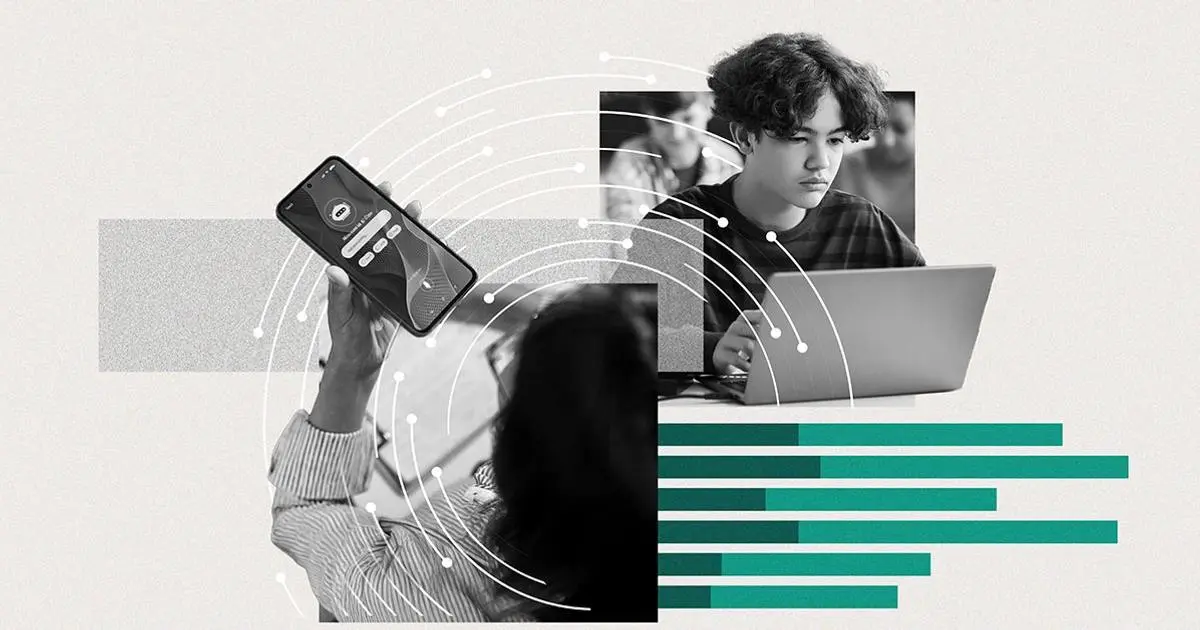
Gen Z continues to engage with artificial intelligence at consistent rates, but their emotional relationship with the technology has shifted dramatically. According to a Gallup survey conducted by the Walton Family Foundation, GSV Ventures, and Gallup between February 24 and March 4, 2026, 51% of Gen Z respondents aged 14 to 29 report using generative AI at least weeklyโa figure unchanged from 2025
1
. The survey of more than 1,500 people reveals that while AI adoption has plateaued, negative emotions have intensified significantly5
. Among daily users, 22% engage with AI tools regularly, while 29% use them weekly3
. This stability masks a deeper transformation in how young people perceive the technology they've woven into their daily routines.
Source: Gallup
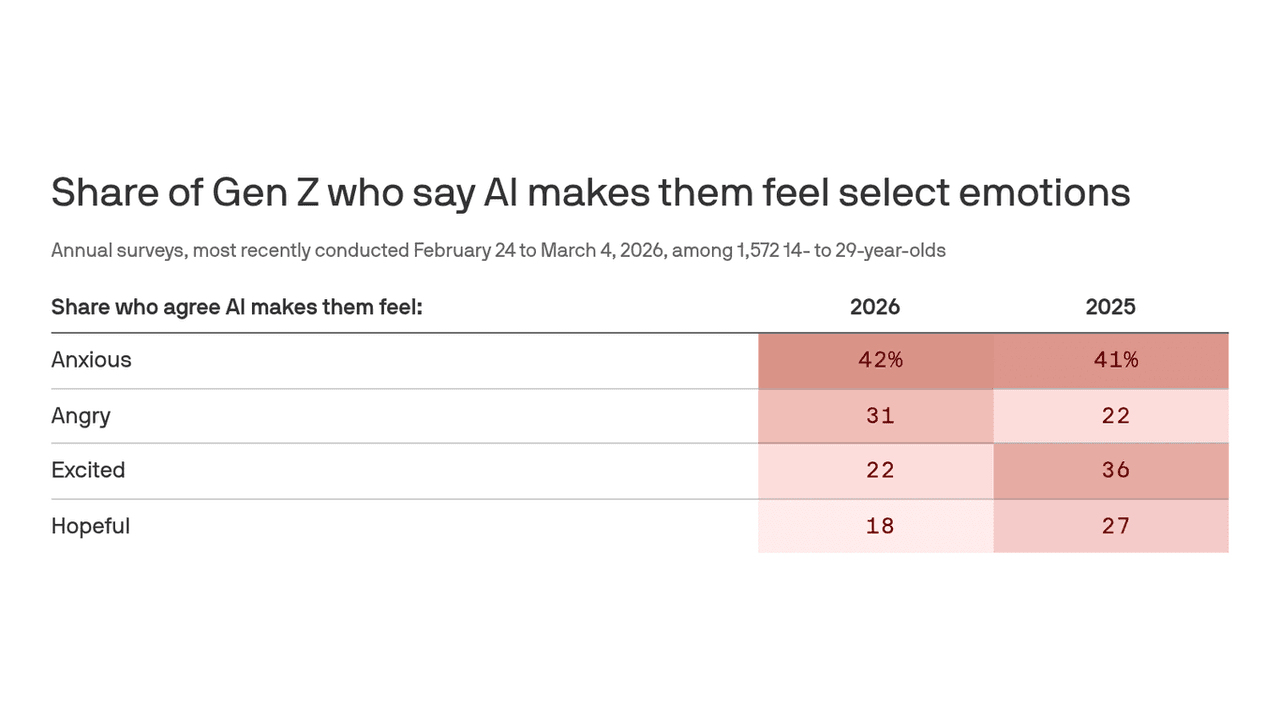
The emotional trajectory tells a stark story. Excitement for AI among Gen Z dropped 14 percentage points since 2025, falling from 36% to just 22%
3
. Hopefulness declined nine points to 18%, down from 27% the previous year1
. Meanwhile, anger increased nine points to 31%, and anxiety remained steady at 42%5
. Zach Hrynowski, a senior education researcher for Gallup who worked on the survey, expressed surprise at how noticeably attitudes had shifted1
. Even daily AI users, who generally hold more favorable views, saw excitement drop 18 points and hopefulness fall 11 points compared to last year4
. Curiosity remains the most common emotion at 49%, but it's closely followed by anxiety and anger rather than optimism2
.
Source: Axios
The skepticism towards AI runs particularly deep among employed Gen Z members navigating an uncertain job market. Close to half of working young adultsโ48%โnow say the risks of AI in the workforce outweigh the potential benefits, representing an 11-point jump from the previous year
1
. Only 15% view AI as a net benefit in the workplace, while 37% see risks and benefits as roughly equal5
. This rising anger may be driven by AI dimming prospects for entry-level workers, Hrynowski suggests, noting that the oldest members of Gen Z express the most anger3
. Fed Chair Jerome Powell admitted last year that AI is probably a factor in the dismal young graduate employment rates in the U.S., while the Irish government reported a link between slowing employment for young workers and AI adoption earlier this year2
.

Source: Gizmodo
Related Stories
Gen Z harbors significant doubts about AI's impact on creativity and critical thinking skills. Thirty-eight percent believe AI will do more harm than good for creativity, while 42% say the same for critical thinking
2
. More broadly, 80% of Gen Z respondents say it's very or somewhat likely that using AI tools will make it more difficult for them to learn in the future5
. Trust in AI-assisted work remains low, with 69% saying they trust work done without AI more, compared to 28% who trust AI-assisted work and just 3% who trust completely AI-generated work2
. Confidence in AI's ability to help complete work faster has also declined 10 points, though 56% still believe it can speed up work2
.The plateaued usage "speaks to the reticent acceptance that this technology is here to stay," Hrynowski explains
3
. Despite apprehension, 52% of Gen Z K-12 students agree they'll need to know how to use AI for college or classes after high school, up from 47% last year3
. More than half of K-12 studentsโ56%โsay they'll have the AI skills necessary for future careers after graduating high school, compared to 44% last year3
. The findings signal what the report calls "a growing credibility challenge that access alone will not solve"2
. As digital natives, Gen Z may be more acutely aware of AI's impact compared to mid-career professionals who don't feel as threatened by the technology3
. This generation's adoption patterns could determine the trajectory of broader societal technology adoption, making their skepticism a signal that tech companies will need to address beyond simply highlighting productivity gains2
.Summarized by
Navi
[3]
[4]
25 Nov 2024โขTechnology

18 Sept 2025โขTechnology

04 Apr 2025โขTechnology

1
Technology

2
Policy and Regulation

3
Policy and Regulation