3 Sources
[1]
Clooney tells Venice festival that AI threatens film and journalism
VENICE, Sept 2 (Reuters) - U.S. actor George Clooney warned on Wednesday that advances in artificial intelligence were making it increasingly difficult to distinguish truth from fiction, posing a challenge for journalists, governments and the public. Speaking at the Venice Film Festival, where he is receiving a Golden Lion for Lifetime Achievement, the actor, filmmaker and political activist said deepfake technology and AI-generated content were undermining trust in information. "It's getting harder and harder for us to discern the truth," Clooney told reporters, adding that the burgeoning technology could make people doubt genuine evidence. "Worse than that, because you poison the well of saying 'maybe this is true', 'maybe this isn't', then when you see real things that are really true, people are able to say, 'Well, that's fake'," he said. WORRIED BY MEDIA OWNERSHIP The two-time Oscar winner, who has won awards for his campaigns to promote justice, said he had recently met leading AI developers and was unconvinced current safeguards would be enough to keep pace with improvements in the technology. "Everybody's working furiously at it, and I haven't seen any great strides yet in success," he said, joking that he didn't want to think of his likeness being used after he has gone. "I would like to avoid being in a tampon commercial 20 years after I'm dead," he said. The actor linked the AI challenge to wider concerns about journalism, saying media ownership had become concentrated in the hands of a small number of wealthy individuals. "The richest people in the world right now are owning the Washington Post and Twitter and most of the places we get our information, and that is a concern," he said, referring to Jeff Bezos and Elon Musk respectively. "The state of journalism is always in flux, always challenged," he said. "But I do believe that information will find its way out." He also expressed scepticism about Paramount's proposed acquisition of Warner Bros, saying media consolidation often led to job losses and was hard to pull off. "I don't see how it financially ends up making sense ... but we'll see." Clooney was in Venice to receive the festival's top career honour after nearly three decades of regular appearances on the Lido, dating back to the premiere of "Out of Sight" in 1998. Reflecting on receiving the award at 65, Clooney joked that growing older inevitably brought a touch of melancholy. "Everything is melancholy," he said. "You brush your teeth and think: 'My teeth used to be so much nicer.'" Reporting by Crispian Balmer; editing by Philippa Fletcher Our Standards: The Thomson Reuters Trust Principles., opens new tab
[2]
Venice Film Festival opens with George Clooney, Murdoch film and geopolitics
George Clooney used a Venice Film Festival appearance on Wednesday to weigh in on artificial intelligence, media ownership and US politics while receiving a lifetime achievement award. Clooney warned Hollywood must adapt to AI and criticised growing billionaire control of major media platforms. George Clooney may be at the Venice Film Festival to receive a lifetime achievement award, but he didn't dwell just on memories and nostalgia on Wednesday. Before the award ceremony, which he attended with wife Amal Clooney, the 65-year-old actor and director addressed issues such as the artificial intelligence revolution in Hollywood and the Paramount-Warner Bros. merger, and the state of journalism and power in America. "There's a great word, kakistocracy, which is a country run by the least qualified people," Clooney said. "I think maybe we have a kakistocracy right now. But we'll get through it." Of artificial intelligence, Clooney said that his industry is going to have to find ways to survive, and that he would "like to avoid being in a tampon commercial 20 years after I'm dead." He bemoaned the fact that some of the world's richest men own The Washington Post and X and said that the proposed merger of Paramount and Warner Bros. was "a complicated thing because I don't know how this works out, I don't know how it goes through." Over the course of 11 days, the 83rd edition of the festival will see many stars from Hollywood and beyond grace the red carpet, from Robert Pattinson to Noel and Liam Gallagher of Oasis, but the focus this year seems to be more on geopolitics than movie star moments. The sprawling lineup includes documentaries about the conflict in Gaza ( "NAZA" ), Elon Musk ("Musk") and independent Russian journalists covering the war in Ukraine ("My Undesirable Friends -- Part II: Exile") as well as Palestinian films and a short about US Immigration and Customs Enforcement in Minneapolis. Jury president Maggie Gyllenhaal spoke about the fact that many of the films in the slate are about current events and conflicts. "Look, we could say how are we possibly here talking about movies right now when the world is in a state of emergency," Gyllenhaal said. "To me the answer has something to do with empathy." When asked if she thought films should be political, she said that she thinks they are "fundamentally, unavoidably political." Festival director Alberto Barbera told The Associated Press that most of the films they saw during the selection process dealt with "contemporary problems." "We didn't really have a choice," he said. "We are in a space open to everybody for discussion, for confrontation. Everybody is completely free to express themselves. And I'm, in a way, really happy that this kind of film could help the viewers, the critics, everybody to have a better understanding of what is going on in our contemporary, difficult world." Read moreUS independent director Jim Jarmusch beats Gaza war film to Venice top prize Gyllenhaal also addressed the dearth of female directors in the competition lineup. When the slate was announced in July, there was much attention on the fact that there was only one film directed by a woman. The documentary "NAZA," which was added to the lineup just last week, was also co-directed by a woman. "I guess it's just finally become clear that men make better movies than women do," Gyllenhaal quipped, before speaking about the systemic issues facing female directors, like financing and preconceived notions about high art. Earlier, Barbera called it "a big problem," adding: "There is a lot to do to give women the place that they deserve in cinema." He explained that while the organizers saw many interesting films from women, and programmed many in the festival's sidebars, they didn't find films that were strong enough for the main competition. The festival is also known for being a launch pad for Oscar contenders. Barbera said one such possibility could be the opening-night film "Ink," a competition title starring Guy Pearce as Rupert Murdoch and Jack O'Connell as tabloid newspaper editor Larry Lamb, which reportedly received a five-minute standing ovation. An adaptation of James Graham's acclaimed play, the Danny Boyle-directed film dramatises Murdoch's acquisition of Britain's "The Sun" in 1969 and explores how Lamb transformed a failing paper into a bestselling one. Pearce said Murdoch's daughter, Elisabeth, told him: "'Dad's very happy that you are playing him.' But he hadn't seen the film at that point." As in the stage play, Boyle said the point was not to "monsterize" Murdoch, who at the time was seen as a breath of fresh air in a rigid British society and media landscape. The filmmakers and the cast spoke about "Ink's" themes and the cost of sacrificing morals, standards and decency for profit and sensationalism. Boyle's thoughts also turned to AI and how it might impact journalism. The danger with "tech giants and their AI" is "they'll be able to replace journalists," he said. "Will that AI journalist speak truth to the power that's created it?"
[3]
George Clooney says he'd like to avoid being in tampon ads after death
George Clooney sounded the alarm on AI and its future with visual media during a panel at the 2026 Venice Film Festival. George Clooney is sounding the alarm on artificial intelligence. The "Ocean's Eleven" star addressed the future of AI in the entertainment industry, telling reporters during a panel at the 83rd Venice International Film Festival that it will be a "very big" part of show business moving forward. However, the obvious drawback, according to Clooney, is that it will become "harder and harder and harder" to discern fact from fiction. "... So, it's a very complicated moment in time and we're gonna have to find a way to discern this," Clooney said. "And everybody's working furiously at it and I haven't seen any great strides yet in success." He later added: "I would like to avoid being in a tampon commercial 20 years after I'm dead. I would like that. I would like to avoid that." Other Hollywood stars who have voiced concerns about AI Clooney isn't the only star wary of AI as it pertains to the future of visual media, with peers like Robert Downey Jr. and Tom Hanks making similar comments in recent months. "I would like to here state that I intend to sue all future executives just on spec," Downey said in October 2024 while on the Kara Swisher podcast. When Swisher noted that the "Avengers" actor will be long gone by the time executives make AI replicas of him, Downey quipped, "But my law firm will still be very active," prompting laughs from the podcast host, who compared him to Elvis Presley and his estate. Why was Clooney at the Venice International Film Festival? Clooney and his wife, Amal, touched down in Venice on Wednesday, Sept. 2, to accept the Golden Lion for Lifetime Achievement, an honorary award bestowed upon a legendary filmmaker or artist. The couple posed for photographs along the opening red carpet ahead of Donny Boyle's Rupert Murdoch biopic "Ink," which opened the festival.
Share
Copy Link
George Clooney received the Golden Lion for Lifetime Achievement at the Venice Film Festival and used the platform to warn about AI's dangers. The actor cautioned that deepfake technology and AI-generated content are making it harder to distinguish truth from fiction, undermining public trust in journalism and genuine evidence.
George Clooney used his appearance at the 83rd Venice Film Festival to issue a stark warning about artificial intelligence and its impact on Hollywood and journalism
1
. The 65-year-old actor and filmmaker, who was at the festival to receive the Golden Lion for Lifetime Achievement, told reporters that advances in AI are making it increasingly difficult to distinguish truth from fiction, posing serious challenges for journalists, governments, and the public1
. "It's getting harder and harder for us to discern the truth," Clooney stated, adding that deepfake technology and AI-generated content are actively undermining public trust in information1
.The two-time Oscar winner emphasized a particularly insidious aspect of AI's impact on Hollywood and society. "Worse than that, because you poison the well of saying 'maybe this is true', 'maybe this isn't', then when you see real things that are really true, people are able to say, 'Well, that's fake'," Clooney explained
1
. This observation highlights how AI-generated content creates a climate of skepticism that allows genuine evidence to be dismissed. Clooney revealed he had recently met with leading AI developers and expressed concern that current safeguards would not be sufficient to keep pace with rapid improvements in the technology. "Everybody's working furiously at it, and I haven't seen any great strides yet in success," he said1
.With characteristic humor, Clooney addressed personal concerns about AI's impact on his own legacy, joking that he would "like to avoid being in a tampon commercial 20 years after I'm dead"
1
3
. This lighthearted comment underscores a serious concern about unauthorized use of actors' likenesses through AI technology after their deaths. Clooney noted that AI will be "a very big" part of show business moving forward, but warned it will become "harder and harder and harder" to discern fact from fiction as the technology advances3
.Related Stories
Clooney connected AI concerns to broader issues about journalism and media ownership, warning that media control has become concentrated in the hands of wealthy individuals. "The richest people in the world right now are owning the Washington Post and Twitter and most of the places we get our information, and that is a concern," he said, referring specifically to Jeff Bezos and Elon Musk
1
. The actor also addressed the proposed Paramount-Warner Bros merger, expressing skepticism about media consolidation. "I don't see how it financially ends up making sense ... but we'll see," Clooney commented, noting that such consolidation often leads to job losses and proves difficult to execute successfully1
2
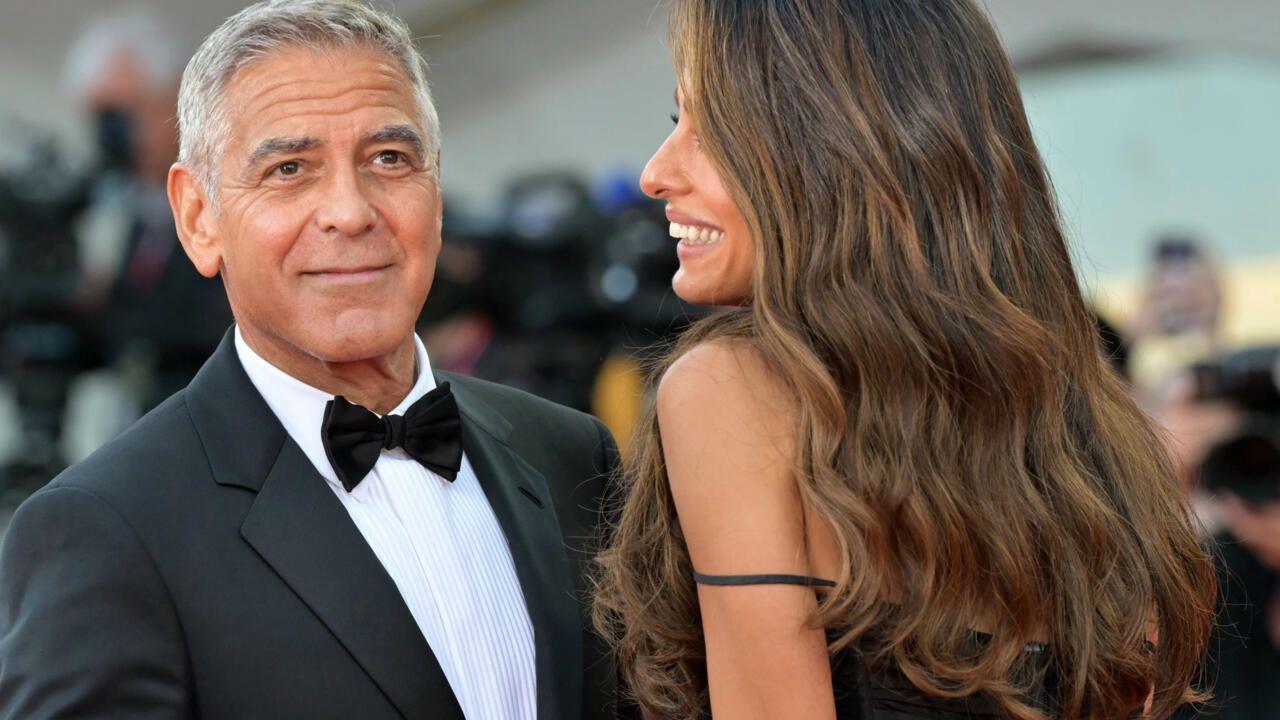
.Clooney attended the festival with his wife Amal Clooney, and the ceremony preceded the opening-night screening of "Ink," Danny Boyle's film about Rupert Murdoch's acquisition of Britain's The Sun newspaper
2
. Festival director Alberto Barbera noted that this year's lineup heavily features films dealing with contemporary problems and geopolitics, including documentaries about Gaza, independent Russian journalists covering the Ukraine war, and Elon Musk2
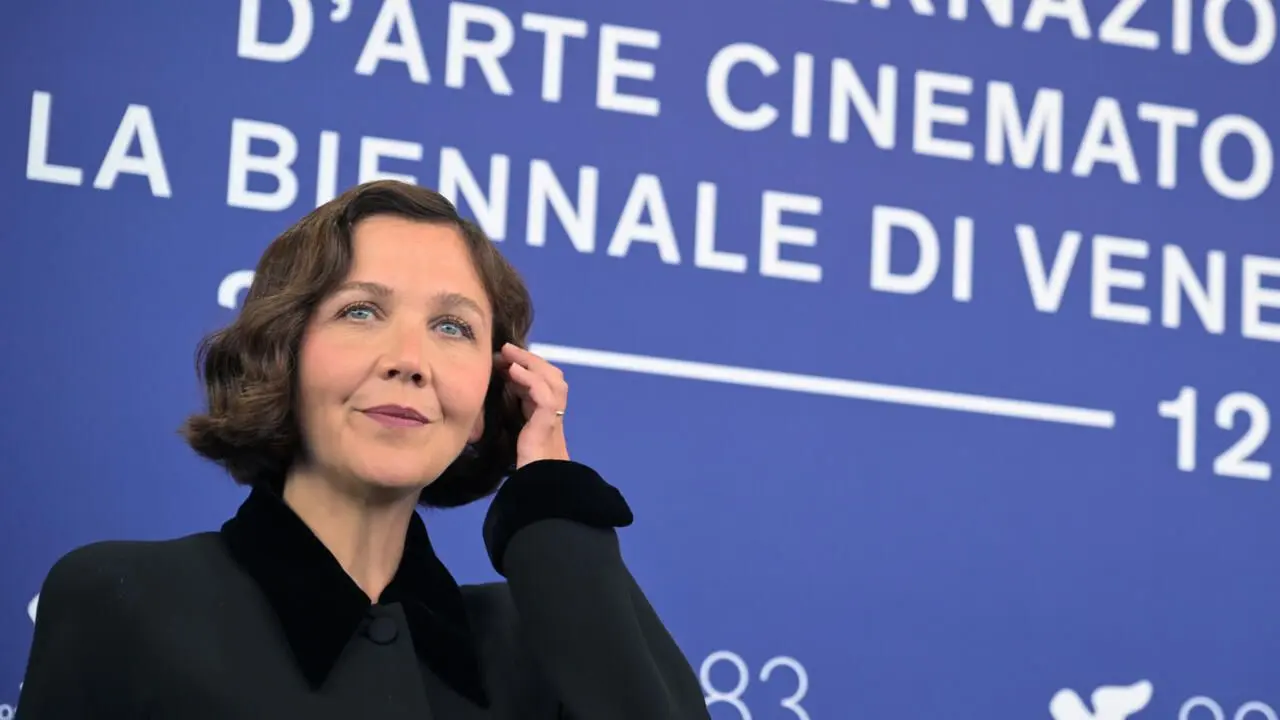
. Jury president Maggie Gyllenhaal addressed the festival's political themes, stating that films are "fundamentally, unavoidably political" and can help build empathy during times of global emergency2
.
Source: France 24
Summarized by
Navi
19 May 2026•Entertainment and Society

17 Jul 2026•Technology

12 May 2026•Entertainment and Society

1
Policy and Regulation

2
Technology

3
Technology