GM installs 50 robots at Detroit EV plant as 1,300 workers remain laid off, sparking union clash


2 Sources
[1]
GM installs robots at flagship EV factory after laying off 1,300 workers
Dozens of new robot arms have been installed at General Motors' flagship electric vehicle factory in Detroit -- even as 1,300 workers remain out of work following what was supposed to be a temporary layoff. The latest automation push has spurred union pushback over a potentially existential issue
[2]
General Motors layoffs: GM replaces over 1,000 workers with 50 robots at US flagship plant in Michigan, says "we are implementing..."
General Motors Detroit plant robots: General Motors has introduced 50 collaborative robots at its Factory Zero plant, a move that has led to over 1,000 job cuts. While GM states these 'cobots' are designed to assist workers and improve conditions, the United Auto Workers union strongly criticizes
Share
Copy Link
General Motors deployed 50 collaborative robots at its Factory Zero electric vehicle plant in Detroit while over 1,300 workers remain out of work following what was described as temporary layoffs. The move has ignited fierce criticism from the United Auto Workers union, which views the automation push as a direct threat to employment at a time when Chinese automakers are rapidly advancing dark factory capabilities.
General Motors Deploys Collaborative Robots Amid Workforce Reductions
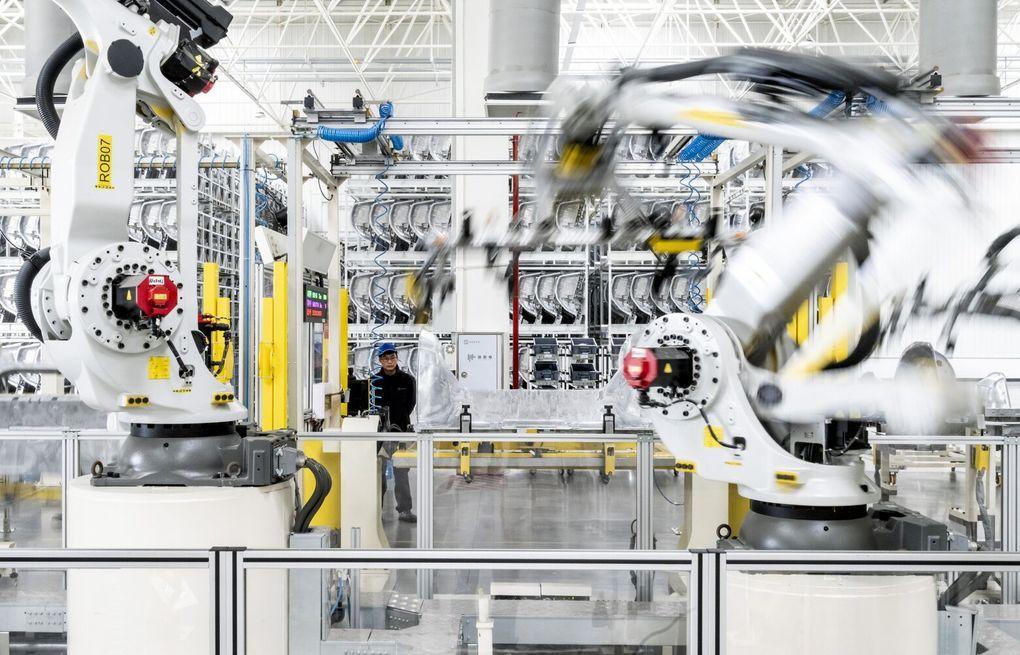
General Motors has installed approximately 50 robot arms at its Factory Zero electric vehicle factory in Detroit, Michigan, even as more than 1,300 workers remain out of work following layoffs that were initially described as temporary [1](https://arstechnica.com/ai/2026/06/gm- installs-robots-at-flagship-ev-factory-after-laying-off-1300-workers/). The collaborative robots, or cobots, manufactured by Japanese robotics company FANUC, are designed to assist in attaching body panels and various components to vehicles during the assembly line process
2
. This automation push at the flagship Detroit plant represents a significant shift in how General Motors approaches manufacturing, but it has triggered intense backlash from labor organizations concerned about the future of human workers in an increasingly automated industry.
Source: ET
The deployment comes after permanent layoffs involving another 1,200 workers at Factory Zero in October 2025, followed by the March 2026 temporary layoffs affecting the 1,300 workers who have yet to be called back
1
. GM spokesperson Kevin Kelly defended the move, stating that the company has been installing cobots across its manufacturing footprint as part of a broader push to bring more advanced technology into operations, claiming they help improve safety and ergonomics while keeping operations flexible and competitive2
.United Auto Workers Condemns Automation in the Automotive Industry
The United Auto Workers union has responded with sharp criticism to GM installs robots decision, viewing it as a fundamental threat to employment. James Cotton, president of UAW Local 22, told media outlets that more than 1,000 union members remain "laid off indefinitely" and questioned why the company would install 50 robots instead of bringing back affected workers
1
. "Our manpower is being taken away from us," Cotton stated, adding that workers are "disgusted" by the presence of cobots in their plants2
. The UAW has reportedly filed grievances over the robot installations and challenged GM's safety improvement claims.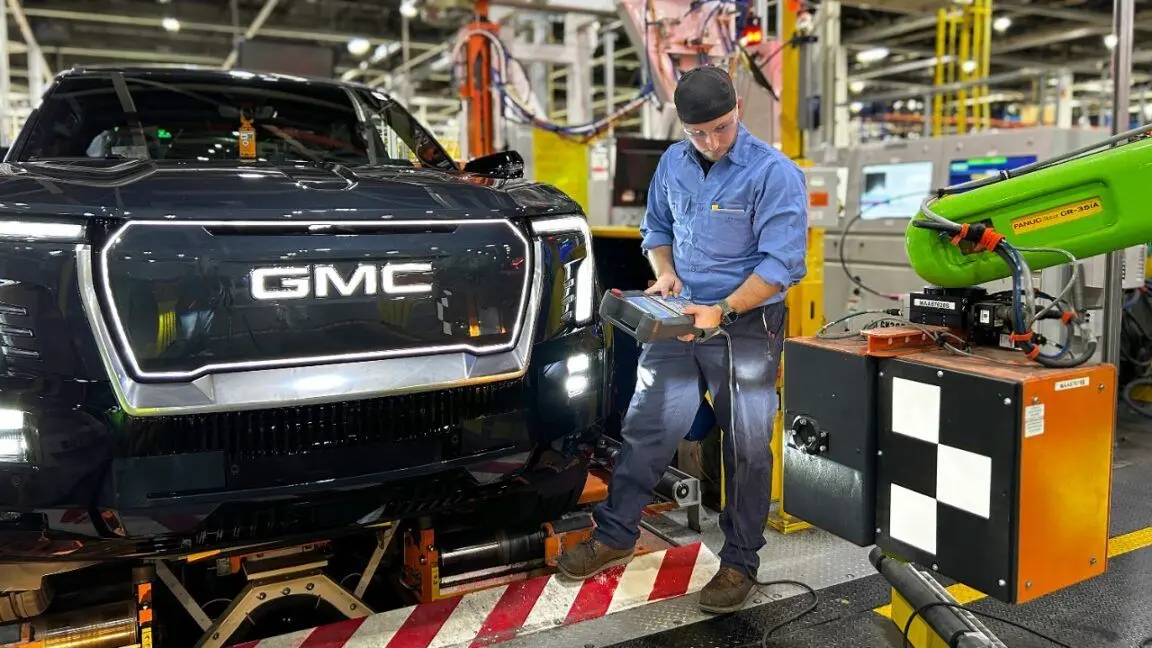
Source: Ars Technica
Andrew Bergman, a Local 22 member and union organizer who was among those laid off by GM, described corporate leaders in the automotive industry as prioritizing profits over human workers. "Technological development has the capability of making work safer for the working class and enabling workers to have a shorter work week without losing pay," Bergman told The Detroit News. "But in the bosses' and billionaires' hands it's used to pad profits and lay off workers"
1
. UAW president Shawn Fain warned against "the threat of humanoid robotics and mass automation" undermining worker employment and wages at a time of rising wealth inequality, framing the situation as "a fight for humanity"1
2
.Broader Restructuring and AI-Driven Production Systems
The Factory Zero automation represents just one piece of General Motors' wider transformation strategy. In recent months, the automaker has cut roles across its IT and engineering divisions, including more than 600 job cuts in its tech unit and over 200 Computer-Aided Design engineers in earlier rounds
2
. The company has stated it is "transforming its Information Technology organization to better position the company for the future," signaling a broader move toward AI-driven production systems and automation across all divisions2
.The automation push comes at a time when demand for electric vehicles has been weaker than expected, forcing General Motors to adjust production schedules at Factory Zero multiple times over the past year
2
. Despite operational challenges and the ongoing restructuring, GM reported strong financial results, posting first-quarter 2026 profits of $4.25 billion, a 22% increase year-on-year2
. Industry analysts now describe the shift as a "skills swap," where traditional manufacturing roles are reduced while companies invest more heavily in robotics and AI talent.Related Stories
The Race Toward Fully Automated Facilities and Dark Factories
General Motors is far from alone in pursuing automation. Many automakers, including Stellantis NV and Ford Motor Company, have deployed assembly-line robots such as FANUC robot arms as they push to automate more of their US operations
1
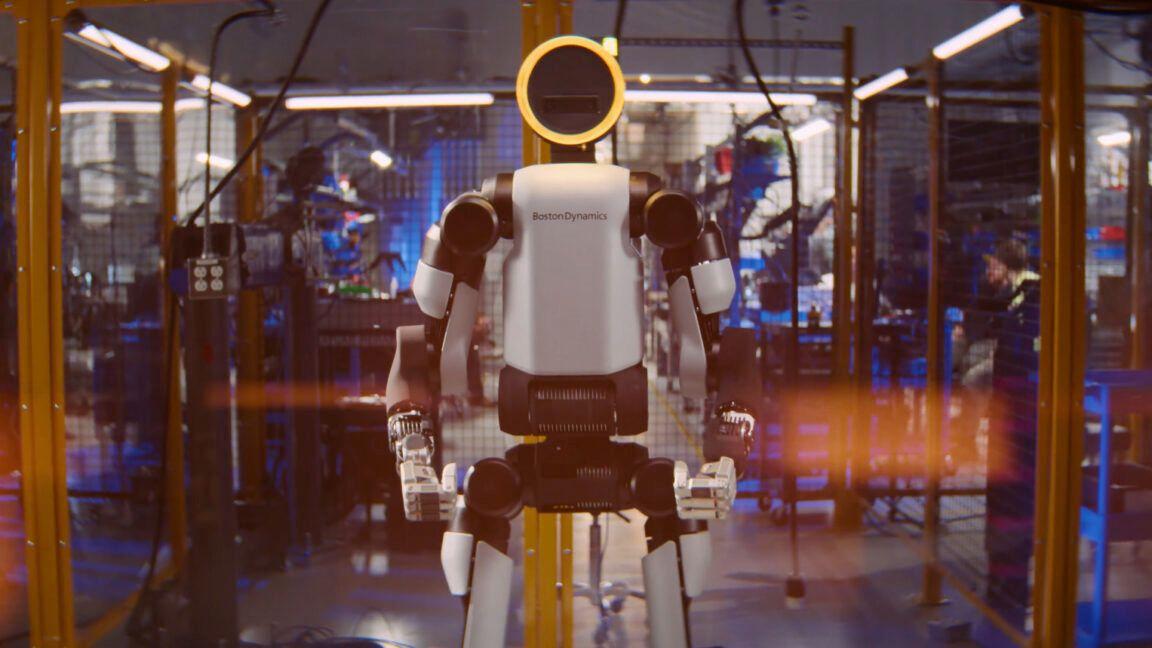
. Hyundai Motor Company plans to deploy Atlas humanoid robots made by Boston Dynamics at its flagship EV facility in Georgia by 20281
.However, companies in East Asia have already charged ahead in establishing multiple dark factories—facilities featuring near-complete automation with minimal human staff for oversight and troubleshooting. The Japanese robotics company FANUC itself operates a "lights out" factory since 2001, meaning the FANUC robot arms being deployed by GM were themselves primarily built by other robots
1
. Chinese companies now lead this trend, with automotive brand Jetour operating a dark factory in Fuzhou and luxury EV maker Zeekr running a facility in Ningbo City capable of producing up to 300,000 cars per year1
. Chinese smartphone maker Xiaomi uses more than 700 robots at its EV Hyperfactory in Beijing to produce a new electric vehicle every 76 seconds1
.What This Means for Workers and Competitiveness
The scale of automation matters for US competitiveness. China's manufacturing industry had deployed 2 million industrial robot units by 2024, adding 295,000 robots in that year alone, while Japan installed 44,500 and the United States installed just 34,200 such robots in 2024
1
. China's latest five-year plan puts AI and robotics at the heart of the government's economic blueprint as it looks ahead to 2030, potentially giving Chinese automakers a significant edge in competitiveness1
.Yet the Institution of Mechanical Engineers has pointed out that leaning too heavily into fully automated facilities can create new vulnerabilities. Humans are often better at quickly identifying problems on the production line that can spiral out of control in a fully automated system, and cybersecurity becomes an even greater concern for heavily automated, AI-powered facilities
1
. Still, many companies are betting that lower labor costs and increased production capacities justify the risks. For the 1,300 workers still waiting to return to Factory Zero, the question remains whether automation will complement their roles or replace them entirely.References
Summarized by

Navi
Related Stories
GM lays off 600 IT workers in deliberate AI skills swap as automaker rebuilds tech workforce
12 May 2026•Business and Economy
Hyundai Strike Over Humanoid Robots Marks Historic Labor Standoff in Auto Industry
16 Jul 2026•Business and Economy
BMW deploys humanoid robots at Leipzig factory after successful US pilot with 30,000 vehicles
10 Mar 2026•Technology

Recent Highlights
1
Microsoft and Nvidia Launch Surface Laptop Ultra: A $2,599 AI-Ready PC With RTX Spark Chip
Technology

2
OpenAI Releases 722 AI-Generated Math Papers on GitHub, Igniting Fury Among Mathematicians
Science and Research

3
Trump Consulted Grok AI Before Ordering Venezuela Invasion and Capture of Nicolás Maduro
Policy and Regulation

Recent Highlights
Today's Top Stories










Don’t drown in AI news. We cut through the noise - filtering, ranking and summarizing the most important AI news, breakthroughs and research daily. Follow topics that matter to you and stay ahead.


