China's AI-Powered Robot Army: A Game-Changer in Global Trade and Manufacturing


2 Sources
[1]
China has an army of robots on its side in the tariff war
NINGBO, China -- China's secret weapon in the trade war is an army of factory robots, powered by artificial intelligence, that have revolutionized manufacturing. Factories are being automated across China at a breakneck pace. With engineers and electricians tending to fleets of robots, these
[2]
China has an army of robots on its side in the tariff war
China is rapidly automating factories with AI-powered robots, cutting costs and boosting export competitiveness amid global trade tensions. Government investment, cheap robotics, and skilled labor fuel the shift. From small workshops to auto giants like Zeekr, robots now dominate production,
Share
Copy Link
China's rapid adoption of AI-powered robots in manufacturing is revolutionizing its industrial landscape, potentially giving it a significant edge in global trade disputes and reshaping the future of production.

China's Robotic Revolution in Manufacturing
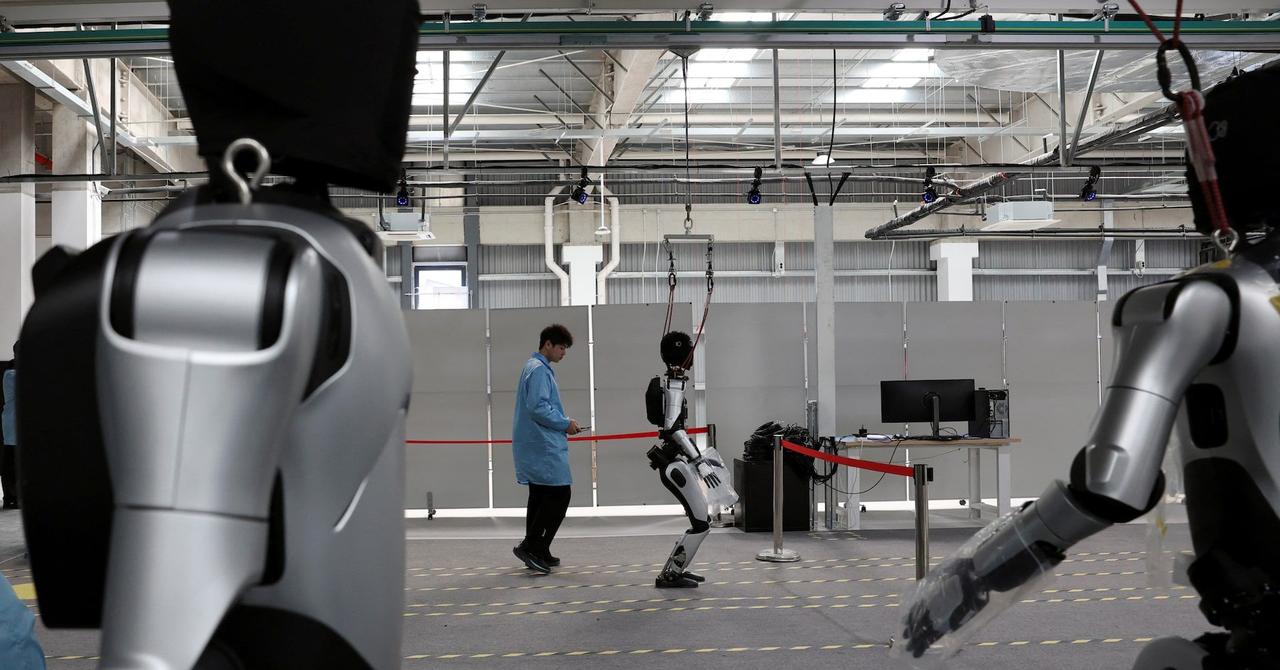
China is spearheading a manufacturing revolution with its rapidly expanding army of AI-powered robots. This technological leap is positioning the country to maintain its dominance in mass production and potentially gain an upper hand in ongoing trade disputes
1
2
.Automation Across Industries
The automation drive is not limited to large-scale operations. Even small workshops are embracing this trend. In Guangzhou, Elon Li's curbside workshop, which produces ovens and barbecue equipment, is investing $40,000 in a robotic arm equipped with AI capabilities. This system, which was previously only available from foreign companies at a much higher cost, can now work around the clock, significantly boosting productivity
1
.Zeekr: A Case Study in Advanced Automation
Zeekr, a Chinese electric carmaker, exemplifies the scale of this automation push. Its factory in Ningbo has increased its robot count from 500 to 820 in just four years. These robots perform a wide range of tasks, from transporting materials to welding car bodies in "dark factories" that can operate without human presence or lighting
1
.AI in Quality Control and Design
Artificial Intelligence is not just powering robots on the factory floor. It's also revolutionizing quality control and design processes:
- At Zeekr's assembly line, AI-powered cameras and computers perform rapid quality checks, comparing each car to a database of correctly assembled vehicles
1
. - In design, AI is being used to analyze interior surfaces, freeing up human designers to focus on creative aspects like incorporating fashion trends
1
.
China's Strategic Push for Robotics Dominance
China's rapid advancement in factory robotics is part of a top-down strategy. The "Made in China 2025" initiative, launched a decade ago, identified robotics as one of ten key industries for global competitiveness
1
. This national focus has led to:- China now having more factory robots per 10,000 manufacturing workers than the US, Germany, or Japan
1
. - The development of a robust domestic robotics industry, with Chinese-made robots now dominating even in foreign car manufacturers' plants in China
1
.
Related Stories

Implications for Global Trade and Labor
This automation drive has significant implications:
- Trade Competitiveness: By reducing costs and improving quality, China aims to keep its exports competitive despite rising tariffs and trade barriers
1
2
. - Labor Market Shifts: While factories still employ many workers, roles are shifting towards monitoring and specialized tasks that robots can't perform
1
. - Global Supply Chains: China's dominance in robotics manufacturing is influencing global supply chains, with even US car factories sourcing much of their automation equipment from China
1
.
Challenges and Future Directions
Despite the rapid progress, challenges remain. Some tasks still require human touch, such as final quality checks and installing complex components like wiring harnesses
1
. However, the push towards even more advanced automation continues, with efforts to develop and integrate humanoid robots into manufacturing processes1
.As China continues to invest heavily in AI and robotics, it's not just transforming its own manufacturing sector but potentially reshaping global industrial dynamics. This technological leap could have far-reaching implications for international trade, labor markets, and economic competitiveness in the years to come.
References
Summarized by

Navi
[1]
Related Stories
China's AI-Powered Humanoid Robots: Transforming Manufacturing and Driving Economic Growth
13 May 2025•Technology
China Ships 97% of Global Humanoid Robots as US Struggles to Compete in Physical AI Race
11 Aug 2026•Technology

US Robot Makers Face Tariff Challenges in Race Against China for Humanoid Dominance
02 May 2025•Technology

Recent Highlights
1
Microsoft and Nvidia Launch Surface Laptop Ultra: A $2,599 AI-Ready PC With RTX Spark Chip
Technology

2
OpenAI Releases 722 AI-Generated Math Papers on GitHub, Igniting Fury Among Mathematicians
Science and Research

3
Trump Consulted Grok AI Before Ordering Venezuela Invasion and Capture of Nicolás Maduro
Policy and Regulation

Recent Highlights
Today's Top Stories










Don’t drown in AI news. We cut through the noise - filtering, ranking and summarizing the most important AI news, breakthroughs and research daily. Follow topics that matter to you and stay ahead.


