7 Sources
7 Sources
[1]
Google Launches $750 Million Fund for Consultants to Adopt AI
The capital will be used to help consultancies train engineers, develop AI agents, co-fund projects and pre-sale activities, and provide usage incentives. Alphabet Inc.'s Google Cloud is launching a $750 million fund to help consulting firms including McKinsey & Co., Accenture Plc and Deloitte bring agentic artificial intelligence to their clients. Google's AI lab DeepMind will give early access to Gemini models to select firms, which will use the AI tools and provide feedback ahead of launch, according to an emailed statement. Google engineers will also work alongside consulting firms to help solve client issues. The capital will be deployed over the next 12 months and used to help consultancies train engineers, develop AI agents through Gemini's enterprise platform, as well as co-fund projects and pre-sale activities. It will also go toward usage incentives, according to Kevin Ichhpurani, head of Google Cloud's Global Partner Ecosystem. "The reason we are partnering with the top advisory consultancy firms in the world is because they are in the middle of some of the largest transformations with customers," Ichhpurani said in an interview. "They understand, they bring the unique domain expertise of industry and business process expertise." Alphabet is one of many large tech companies that have struck partnerships with consulting firms as part of an effort to push companies to adopt AI. Its rivals, including Anthropic and OpenAI, have announced similar deals. Private equity firm Thoma Bravo struck a partnership with Google Cloud in April to help its portfolio companies accelerate their AI adoption. As part of the agreement, McKinsey is forming a unit designed to "deliver enterprise AI transformation and make sure our clients and Google clients reap the economic benefits," senior partner Philipp Nattermann said in an interview. McKinsey and Google will co-fund projects for clients delivered on an outcome-basis, meaning the "client pays for the work based on the benefit of the work," Nattermann said. For Accenture, the initiative is designed to help clients adopt AI at scale. "AI is easy to try, but it is hard to scale," Accenture Chief Strategy and Services Officer Manish Sharma said in an interview. "We are helping the client to move from AI pilots to repeatable, scaled, agentic deployment."
[2]
Google launches $750M partner fund at Cloud Next 2026 to finance agentic AI deployments across Accenture, Deloitte, KPMG
Summary: Google announced a $750 million fund at Cloud Next 2026 to finance partners' agentic AI development, the largest single partner investment from any hyperscaler. Accenture has built 450+ agents, Deloitte committed its "largest investment yet," KPMG pledged $100M, PwC $400M, and NTT DATA dedicated 5,000 engineers. With partners capturing up to $7.05 for every $1 spent on Google Cloud, the fund targets the consulting firms that determine which platform enterprises adopt for agent deployments, as Google, OpenAI, Microsoft, and Anthropic all compete for the same systems integrators. Google announced a $750 million fund on Tuesday to accelerate partners' development of agentic AI applications, the largest single partner investment commitment from any hyperscaler and a signal that the race to dominate enterprise AI has shifted from selling cloud infrastructure to financing the consultancies and systems integrators that deploy it. Kevin Ichhpurani, president of Google Cloud's global partner ecosystem, said at Cloud Next 2026 that "agentic AI will create a roughly $1 trillion global market" and that Google intends to capture a disproportionate share of it by making its partners the primary delivery channel. The fund is not a venture capital vehicle. It is a mix of credits, co-investment capital, training subsidies, and go-to-market funding designed to get the world's largest consulting firms building agents on Google's platform rather than on Microsoft Azure or AWS. The economics explain the urgency: for every dollar a customer spends on Google Cloud, partners capture up to $7.05 in services revenue, meaning the consultancies are not just a distribution channel but a multiplier of Google's own cloud consumption. Google now counts more than 2,900 services partners, with a 400% increase in new partner entries over the past year and a 250% increase in partner-influenced revenue. The fund is a bet that accelerating the partner ecosystem is the fastest route to closing the market share gap with AWS and Azure. The commitments from individual partners are substantial. Accenture has built more than 450 agents on Google Cloud and is expanding its Gemini practice across all industry verticals. Deloitte described its investment as the "largest yet" in any single cloud AI platform and has deployed more than 100 agents for enterprise customers. KPMG committed $100 million of its own capital to build agentic AI solutions on Google Cloud. PwC announced a $400 million collaboration focused on security and compliance agents. Cognizant and NTT DATA, which has dedicated 5,000 engineers to Google Cloud agent development, are building industry-specific agent suites for manufacturing, financial services, and healthcare. Vista Equity Partners, the private equity firm that controls a portfolio of enterprise software companies, also announced a partnership at Cloud Next to integrate Google's agent platform across its portfolio companies. The partnership gives Google a route into dozens of mid-market enterprise software firms that Vista controls, each of which becomes a potential distribution point for Gemini-powered agents. Google also restructured its partner programme with new tiers, Select, Premier, and Diamond, that tie benefits and co-selling support to the volume of agent deployments rather than traditional cloud consumption metrics. The shift in incentive structure is deliberate: Google wants partners measured and rewarded for deploying agents, not for migrating workloads. The fund lands in a market where every major AI company is courting the same consulting firms. Microsoft announced its own partner initiative the day before Cloud Next. OpenAI formed its "Frontier Alliances" programme with McKinsey, BCG, and Accenture in February 2026, offering early model access and co-development resources to push enterprise deployments. Anthropic committed $100 million to its Claude Partner Network, a fraction of Google's figure but backed by the fastest-growing enterprise AI revenue in the industry. Anthropic has also launched a $200 million private equity venture to embed Claude in portfolio companies, a strategy that mirrors Google's Vista partnership. The consulting firms themselves are not exclusive. Accenture is a lead partner for Google, OpenAI, and Microsoft simultaneously. Deloitte and KPMG maintain similar multi-cloud, multi-model practices. The $750 million is not buying exclusivity. It is buying priority: ensuring that when a Fortune 500 company asks Deloitte to build an AI agent for supply chain management, the default recommendation is Google's Gemini Enterprise Agent Platform rather than Azure's Copilot Studio or AWS Bedrock Agents. The scale of the fund also reflects the economics of agentic AI deployment. Building agents is more complex and more services-intensive than traditional cloud migration. An agent that automates procurement decisions needs to integrate with ERP systems, comply with regulatory frameworks, maintain audit trails, and handle edge cases that require human escalation. The consulting hours per deployment are higher, the expertise required is more specialised, and the revenue opportunity for partners is correspondingly larger. Google's bet is that by financing the build-out of that expertise on its platform first, it creates a structural advantage that compounds over time as partners accumulate institutional knowledge, reference architectures, and reusable agent components tied to Google's stack. Google has committed to outpacing Microsoft on AI investment, with $175 billion to $185 billion in capital expenditure planned for 2026 alone. The $750 million partner fund is a rounding error against that figure, but it targets a different constraint. Capital expenditure builds the infrastructure. The partner fund builds the human capital that turns infrastructure into deployed solutions. Google Cloud holds roughly 11% of the cloud infrastructure market, behind AWS at 31% and Azure at 25%. It grew at 48% in the fourth quarter of 2025, the fastest of the three, but the gap remains large enough that organic sales alone will not close it. The $7.05 partner multiplier is the number that explains the strategy. If Google can generate $10 billion in incremental cloud revenue through partner-influenced deals, partners capture roughly $70 billion in services revenue. That creates an economic gravity that pulls consulting talent, training investment, and client relationships toward Google's platform. Partnerships like the one with ElevenLabs, which expanded its Google Cloud collaboration to include Nvidia Blackwell GPU support, illustrate how the ecosystem extends beyond consulting into technology partnerships that deepen platform capabilities. The question is whether $750 million is enough to shift the balance. Microsoft's enterprise distribution through Office 365 gives it a structural advantage with the same Fortune 500 customers Google is targeting. AWS's developer gravity means most cloud-native applications already run on Amazon's infrastructure. Google's argument is that the agentic era favours vertical integration, that a company offering the model, the silicon, the runtime, the productivity suite, and now the partner financing under one programme will win the deployments that matter most. The $750 million is not the strategy. It is the lubricant that makes the strategy move faster. Whether it moves fast enough depends on whether the consulting firms that take the money also take the platform, and whether the enterprises they serve follow.
[3]
Google Will Spend Up to $185 Billion This Year to Power AI 'Agentic Era': CEO - Decrypt
New deals with Citi, Thinking Machines, and a $750 million partner fund show Google's plan to monetize agentic AI. Google is making one of its biggest-ever bets on artificial intelligence. Speaking Tuesday at the Google Cloud Next event in Las Vegas, CEO Sundar Pichai said the company plans to invest between $175 billion and $185 billion in capital expenditures this year -- up from $31 billion in 2022 -- to build the infrastructure needed for what he called the "agentic era" of AI. "As we move into the agentic era, we are taking this to the next level," Pichai said. "We are making big investments now and for the future." The spending surge highlights Google's effort to compete with rivals, including Microsoft, Amazon, and OpenAI, as the industry shifts from chatbots to autonomous AI agents capable of completing tasks with limited human oversight. According to Pichai, Google is already using those systems internally. "Today, nearly 75% of all new code at Google is AI-generated and approved by engineers, up from 50% last fall," he said. "We are now shifting to truly agentic workflows." However, despite the push into agentic AI, Pichai emphasized that human engineers review the AI-generated code. He said Google is also using AI to automate parts of its cybersecurity operations, helping teams process large volumes of threat intelligence faster and respond to risks more quickly. "Each month, our teams receive unstructured threat reports at a scale that will take thousands of hours to review -- a nearly impossible task," he said. "Today, our security operation center agents automatically triage tens of thousands of unstructured threat reports each month by accelerating the extraction of critical intelligence and filtering out the noise. It's reduced threat mitigation time by over 90%; we are more on the front foot than ever before." Google also used Cloud Next to show how it plans to turn that spending into revenue. The tech giant announced a $750 million fund to help its 120,000-member Google Cloud partner ecosystem build and deploy agentic AI products. The initiative includes engineering support, early access to Gemini models, and incentives for companies such as Accenture, Deloitte, and McKinsey & Company. While Google used Cloud Next to show how it plans to turn its AI spending into revenue, other companies, including Citi and Thinking Machines Lab, revealed how they are using Google's infrastructure and AI tools to launch new products and train frontier models. Citi unveiled "Citi Sky," an AI-powered wealth management assistant for U.S. clients. At the same time, Thinking Machines Lab said it expanded its use of Google Cloud's AI Hypercomputer to accelerate AI research and model training. "One thing that is super clear: We are firmly in the agentic Gemini era," Pichai said. "The conversation has gone from 'Can we build an agent?' to 'How do we manage thousands of them?'"
[4]
Google Cloud invests $750M to fuel the agentic enterprise - SiliconANGLE
Google Cloud puts $750M behind partner ecosystem to power the agentic enterprise Every enterprise faces an imminent reckoning with agentic AI, but the transformation is too large and too complex for any single organization to navigate alone. The race is now on to build the ecosystems, skills and infrastructure necessary to bring about the agentic enterprise. Google LLC is betting that its rebuilt partner network is the mechanism that gets them there. The company announced a $750 million fund to arm its 120,000-member ecosystem with the skills, tooling and forward-deployed engineering capacity to accelerate customer outcomes, according to Philip Larson (pictured), managing director of the Google Cloud Partner Network at Google. "We believe that customers fundamentally are on a journey toward an agentic enterprise," Larson said. "All customers on the planet have to undergo that transformation. None of the customers can do that on their own. They need an ecosystem capable of helping them on that path. We have purpose-built the Google Cloud Partner Network to help build the capacity, the skills, et cetera -- and a growing ecosystem of partners that can take customers along that journey." Larson spoke with theCUBE's John Furrier and co-host Alison Kosik at Google Cloud Next, during an exclusive broadcast on theCUBE, SiliconANGLE Media's livestreaming studio. They discussed the rebuilt Google Cloud Partner Network, the $750 million agentic ecosystem investment and how AI is being used to run the partner program itself. (* Disclosure below.) The Google Cloud Partner Network spans the full delivery chain of the agentic enterprise, from independent software providers building technology that works alongside Google Cloud, to global systems integrators such as Accenture PLC delivering agentic solutions directly to customers, as well as data providers and marketplace partners, Larson explained. The $750 million investment covers sandbox credits for workshops and pilots, demand generation to identify customers ready to begin their agentic journey, deployment vouchers and forward-deployed engineering services to bring workloads live. "I feel that most partner programs fail because they try to track too many things that don't actually matter," Larson said. "At the end of the day, accelerating customer outcomes is the path to the end game. The Google Cloud Partner Network removes all of the friction of unnecessary external audits, unnecessary ornaments on the tree just for the sake of having them, and instead measures partners' ability to contribute to customer outcomes." The program is itself built on an agentic architecture, with AI agents already handling partner onboarding, training, enablement and support -- including a statement-of-work analyzer that went from zero to 90% adoption among funded partners within six months, according to Larson. The pace of partner demand now sees annual release cycles accelerating to monthly cadences as partners recognize a once-in-a-generation market opportunity. "Agents from our partners are going to talk to agents from the Google Cloud Partner Network across onboarding, training, et cetera," Larson said. "It's going to infuse the content from my system into their internal systems. It's going to make targeted recommendations around what learning their reps should do in real time from within their systems. All of a sudden, the people are going to be sitting on top with an intelligence layer that's helping them figure out how to add value fast." Here's the complete video interview, part of SiliconANGLE's and theCUBE's coverage of Google Cloud Next:
[5]
Google's $750 Million Plan to Move AI From Experiments to the Real World
Google is putting serious money behind a simple idea: most companies still don't know how to effectively implement AI tools. Google thinks it can fix that problem. The company announced it's investing $750 million to help major consulting firms like Deloitte, McKinsey & Company, and Accenture bring agentic artificial intelligence into everyday business operations. Instead of each firm building new, proprietary AI models, Google is focusing on deploying existing tools -- particularly its Gemini models -- inside companies, reflecting a broader shift in the industry where the challenge is no longer access to AI but figuring out how to apply it in ways that actually improve how businesses run. Google is betting that firms already embedded in large-scale corporate transformations are best positioned to translate AI into real-world use cases, from automating customer service workflows to managing internal operations. "The reason we are partnering with the top advisory consultancy firms in the world is because they are in the middle of some of the largest transformations with customers," Kevin Ichhpurani, president of Google Cloud's global partner ecosystem said in a statement, adding that these firms bring "unique domain expertise of industry and business process expertise" that technology alone cannot provide. Through its DeepMind unit, Google will give select partners early access to its Gemini models, along with hands-on support from engineers who will work directly with consulting teams to design, test, and deploy AI systems.
[6]
Sundar Pichai reaffirms $185 billion capex spending by Google in 2026
Google plans a massive $185 billion investment in artificial intelligence infrastructure this year. CEO Sundar Pichai highlighted AI's growing role in software development and security. New platforms like Gemini Enterprise Agent and advanced chips like TPU 8t and TPU 8i are being introduced. This significant spending signals Google's strong focus on enterprise AI solutions and future growth. Google CEO Sundar Pichai on Wednesday reaffirmed the tech major will spend up to $185 billion in total capital expenditure (capex) this year, doubling down on artificial intelligence (AI) infrastructure despite investor anxiety. Addressing the Google Cloud Next 2026 summit here, Pichai said more than 50% of Google's machine learning compute resources will be dedicated specifically to its cloud business, signaling a massive prioritisation of enterprise customers. The company's ballooning capital expenditure, mostly to harness artificial intelligence (AI) capabilities, will double this year from $91.4 billion in 2025, representing a nearly sixfold increase over its $31 billion investment just four years ago in 2022. Alphabet's stock had fallen by as much as 5% after the announced spending plan blew past forecasts, with investors questioning the scale and sustainability of big tech's investment plans. However, the stock has recovered since then amid the tumult of the Iran conflict. But signalling the company's increasing reliance on AI resources, Pichai revealed to the annual gathering that nearly 75% of all new code at Google is now AI-generated and subsequently approved by engineers. In a techtonic shift in software development, this figure has jumped from just 15% in 2023. Meanwhile, using AI agents to triage tens of thousands of unstructured threat reports each month, Google's security teams have reduced the time required for threat mitigation by over 90%, he said. The CEO said Google's internal marketing teams also used Gemini and Chrome to generate thousands of creative variations, resulting in 70% faster turnaround times and a 20% increase in conversion rates through large-scale personalisation. Major announcements Pichai also announced the Gemini Enterprise Agent Platform, a new enterprise agent platform to address the complexity of managing "thousands" of AI agents. The new developer platform is an evolution of Google's Vertex AI. It brings together a full suite of models, development, and tuning services, with new features for businesses to build, scale, govern, and optimize agents that can work autonomously to execute complex business workflows. First launched last year, Pichai said Gemini Enterprise saw 40% growth in paid monthly active users quarter-over-quarter in Q1. The company also announced the eighth generation of Google's custom Tensor Processor Unit (TPU), TPU 8t and TPU 8i. Amin Vahdat, chief technologist, AI and Infrastructure at Google Cloud, said the two chips are designed to power Google's custom-built supercomputers, drive cutting-edge model training and agent development, and work through massive inference workloads. Google also introduced the Agentic Data Cloud, an AI-native architecture that evolves the enterprise data platform from a static repository into a dynamic reasoning engine. Major global firms such as Vodafone, American Express and Virgin Voyages are already using the cloud to manage and run thousands of AI agents. Leveraging the company's largest ever acquisition, that of cloud security firm Wiz for a reported $32 billion, Google has also announced three new agents In Google Security Operations can help hunt threats, engineer detections, and provide context on third parties. (The writer is at Google Cloud Next 2025 in Las Vegas at the invitation of Google.)
[7]
Google Unveils Two New AI Chips, Will Invest $750 Million in Agentic AI Adoption
Google unveiled its latest custom chips and set up a new $750 million agentic AI partner fund to accelerate the adoption of agentic artificial intelligence. The TPU 8t and TPU 8i, Google's new eighth-generation chips that will be available later this year, were co-designed in partnership with Google DeepMind, Google-parent Alphabet's AI research lab, to meet more demanding workloads of AI agents as well as to adapt to evolving model designs at a large scale. Google said the chips can take on greater workloads at much faster speeds and at nearly a lower cost of its previous chip generation. "[The chips] are designed to handle the intricate, collaborative, iterative work of many specialized agents, often "swarming" together in complex flows to deliver solutions and insights for the most challenging tasks, " Google said Wednesday. The announcement comes as part of the Google Cloud Next 2026 conference, where the company rolled out a slate of agentic AI partnerships with SAP, Accenture, Oracle and Merck. "Several years ago, we anticipated rising demand for inference from customers as frontier AI models are deployed in production and at scale," Amin Vahdat, Google senior vice president and chief technologist for AI and infrastructure, said in a blog post Wednesday. "And with the rise of AI agents, we determined the community would benefit from chips individually specialized to the needs of training and serving." Separately, Google signed a $1 billion deal with Merck to deploy an agentic platform across Merck's research & development, manufacturing, commercial, and corporate functions. "Merck's collaboration with Google Cloud represents the next phase of our AI journey, extending our longstanding use of advanced technologies into an intelligent agentic ecosystem that will work alongside our teams, as we enter one of the most significant launch periods in our company's history," said Dave Williams, chief information and digital officer at Merck. Earlier this month, Anthropic said it was expanding its use of Google Cloud's TPU chips as it aims to grow its computing resources to train the next generations of its AI model Claude. Under the agreement, Anthropic will have access to up to 1 million TPU chips, as well as additional Google Cloud services. Google also expanded its long-running partnerships Oracle, SAP and Accenture to scale agentic AI adoption. Google said the $750 million fund is to help its 120,000-member partner ecosystem adopt and build out agentic AI. The fund aims to support early prototyping to full agent development allowing consulting firms, systems integrators and software partners to integrate AI tools into existing software and workflows. Write to Adriano Marchese at [email protected]
Share
Share
Copy Link
Google announced a $750 million fund to accelerate agentic AI deployment through major consulting firms including McKinsey, Accenture, and Deloitte. The investment, deployed over 12 months, will finance training, co-funded projects, and early access to Gemini models as Google competes with OpenAI and Microsoft for enterprise AI market share.
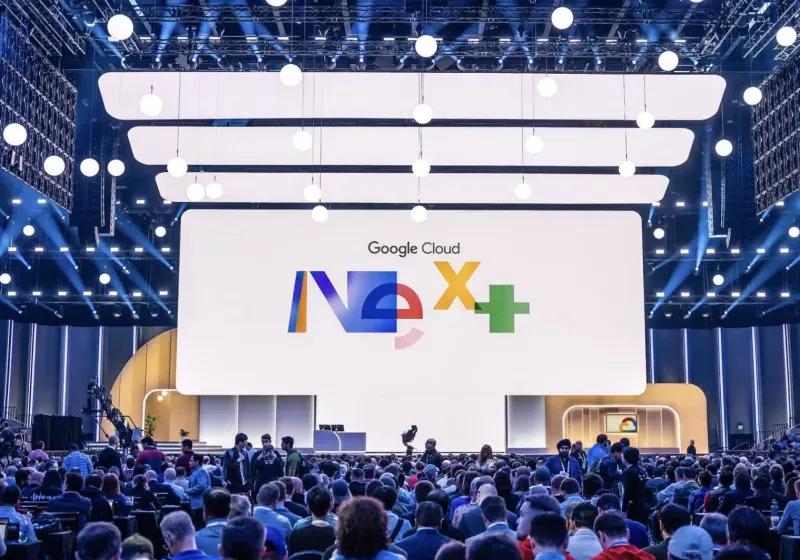
Google Cloud announced a $750 million fund at Cloud Next 2026 to accelerate agentic AI development through its partner ecosystem, marking the largest single partner investment from any hyperscaler
2
. The capital will be deployed over the next 12 months to help consulting firms including McKinsey, Accenture, and Deloitte train engineers, develop AI agents through Gemini's enterprise platform, co-fund projects, and provide usage incentives1
. Kevin Ichhpurani, president of Google Cloud's global partner ecosystem, explained that partnering with top advisory firms makes strategic sense because "they are in the middle of some of the largest transformations with customers" and bring unique domain expertise in industry and business processes1
.The fund represents a calculated shift in strategy as the race to dominate enterprise AI has moved from selling cloud infrastructure to financing the consulting firms and systems integrators that actually deploy it
2
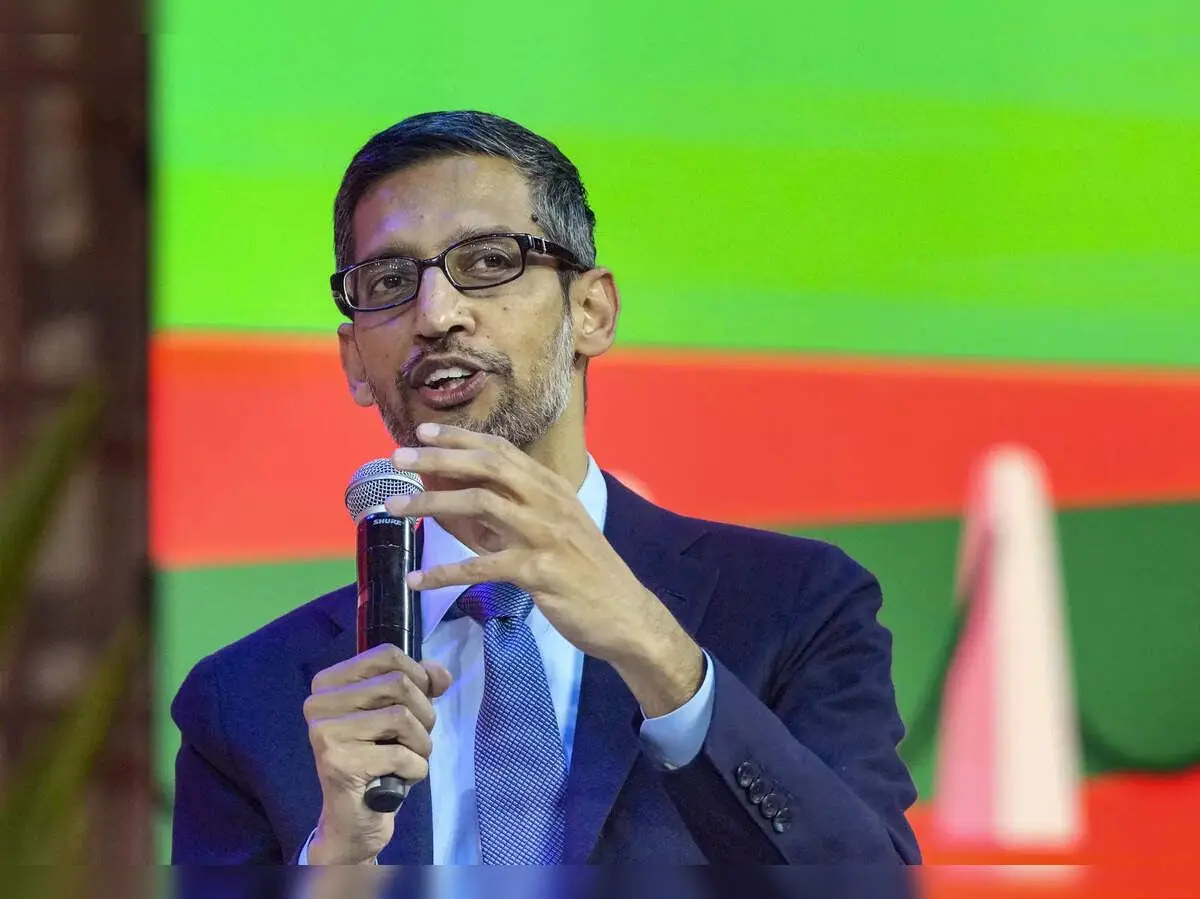
. This investment comes as CEO Sundar Pichai revealed Google plans to spend between $175 billion and $185 billion in capital expenditures this year to build infrastructure for what he called the "agentic era" of AI3
.
Source: ET
The commitments from individual consulting firms demonstrate the scale of enterprise AI adoption underway. Accenture has already built more than 450 agents on Google Cloud and is expanding its Gemini practice across all industry verticals
2
. Deloitte described its investment as the "largest yet" in any single cloud AI platform and has deployed more than 100 agents for enterprise customers2
. KPMG committed $100 million of its own capital to build agentic AI solutions on Google Cloud, while PwC announced a $400 million collaboration focused on security and compliance agents2
.McKinsey is forming a dedicated unit designed to "deliver enterprise AI transformation and make sure our clients and Google clients reap the economic benefits," according to senior partner Philipp Nattermann
1
. The firm will co-fund projects delivered on an outcome-basis, meaning clients pay based on the actual benefit of the work1
. Accenture Chief Strategy and Services Officer Manish Sharma emphasized that "AI is easy to try, but it is hard to scale," positioning the initiative as helping clients move from AI pilots to repeatable, scaled, agentic deployment [1](https://www.bloomberg.com/news/articles/2026-04-22/google-l
Source: Inc.
The $750 million fund isn't a venture capital vehicle but rather a mix of credits, co-investment capital, training subsidies, and go-to-market funding designed to get consulting firms building agents on Google's platform rather than on Microsoft Azure or AWS
2
. The economics explain the urgency: for every dollar a customer spends on Google Cloud, partners capture up to $7.05 in services revenue, meaning the consulting firms function not just as a distribution channel but as a multiplier of Google's own cloud consumption2
.Google now counts more than 2,900 services partners, with a 400% increase in new partner entries over the past year and a 250% increase in partner-influenced revenue
2
. The fund is a bet that accelerating the partner ecosystem is the fastest route to closing the market share gap with AWS and Azure. Google's DeepMind will provide early access to Gemini models to select firms, which will use the AI tools and provide feedback ahead of launch1
.

Source: Decrypt
Related Stories
The $750 million fund lands in a market where every major AI company is courting the same consulting firms. Microsoft announced its own partner initiative the day before Cloud Next, while OpenAI formed its "Frontier Alliances" programme with McKinsey, BCG, and Accenture in February 2026, offering early model access and co-development resources
2
. Anthropic committed $100 million to its Claude Partner Network, a fraction of Google's figure but backed by rapidly growing enterprise AI revenue2
.The consulting firms themselves maintain multi-cloud, multi-model practices and aren't exclusive to any single platform. Accenture serves as a lead partner for Google, OpenAI, and Microsoft simultaneously
2
. The $750 million fund isn't buying exclusivity but rather priority, ensuring that when a Fortune 500 company asks Deloitte to build an AI agent, the default recommendation is Google's Gemini Enterprise Agent Platform rather than Azure's Copilot Studio or AWS Bedrock Agents2
. Philip Larson, managing director of the Google Cloud Partner Network, emphasized that the program focuses on "accelerating customer outcomes" rather than tracking unnecessary metrics4
.Summarized by
Navi
[2]
10 Apr 2025•Technology
Yesterday•Technology

24 Jul 2025•Technology

1
Policy and Regulation

2
Technology

3
Business and Economy