OpenAI's $74 Billion Loss Trajectory Contrasts Sharply with Anthropic's Path to Profitability


12 Sources
[1]
OpenAI has spent $12B on inference with Microsoft: Report
Microsoft internal financials also suggest AI flag bearer is nowhere close to $13 billion in revenues OpenAI may be burning far more capital serving its GPT-family of models than previously thought. Leaked documents show the company paying more than $12 billion to Microsoft for compute power since
[2]
OpenAI Will Lose $74 Billion the Same Year That Anthropic Breaks Even: Report
OpenAI has committed more than $1.4 trillion to building out its data center infrastructure in the next 8 years. It's projected to lose $74 billion in 2028 alone, according to a new report from the Wall Street Journal citing internal documents from the company. On the opposite end of the spectrum,
[3]
Anthropic aims for profitability by 2028 while OpenAI's losses could reach US$74 billion
AI startup Anthropic is projected to break even by 2028, fueled by steady enterprise client revenue, whereas OpenAI is expected to continue incurring significant operating losses until 2030 due to heavy investments in compute infrastructure. Financial documents reviewed by the Wall Street Journal
[4]
OpenAI says it plans to report stunning annual losses through 2028 -- and then turn wildly profitable just two years later | Fortune
The documents, which were shared with investors this summer, reveal an aggressive growth strategy that hinges on massive upfront investment in computing infrastructure, chips and data centers -- spending that CEO Sam Altman has described as necessary to meet what he sees as insatiable demand for AI
[5]

OpenAI Is Reportedly Burning a Ludicrous Amount of Cash on Sora
Even OpenAI knows the "economics are currently completely unsustainable." Despite its half-a-trillion-dollar valuation, the reality is that OpenAI is almost certainly burning through cash at an alarming rate. According to recent filings, the ChatGPT maker lost a whopping $12 billion last quarter
[6]

OpenAI reportedly burning $15M a day to power Sora video app
The cost equates to more than a quarter of OpenAI's projected $20 billion in yearly revenue. OpenAI is reportedly spending an estimated $15 million per day, or $5.4 billion annually, to power its new Sora video generation app, according to an analysis by Forbes. This high operational cost, which
[7]

Anthropic Has A Sharp Edge Against OpenAI -- Cheaper Chips - Alphabet (NASDAQ:GOOG), Amazon.com (NASDAQ:AMZN)
As the AI race heats up, Anthropic may have found an advantage that money can't easily buy -- efficiency. The OpenAI rival, best known for its Claude models, has quietly built its strategy around cost discipline and compute innovation. And that could prove decisive in the next wave of AI
[8]

Anthropic Leads OpenAI in Race to Profitability | PYMNTS.com
By completing this form, you agree to receive marketing communications from PYMNTS and to the sharing of your information with our sponsor, if applicable, in accordance with our Privacy Policy and Terms and Conditions. Anthropic, which has a growing number of business customers thanks to its
[9]
Google Eyes Further Stake In Anthropic, Potentially Valuing The AI Start-Up At $350 Billion: Report - Advanced Micro Devices (NASDAQ:AMD), Amazon.com (NASDAQ:AMZN)
Alphabet's Google (NASDAQ:GOOGL) (NASDAQ:GOOG) is reportedly considering a significant increase in its investment in the artificial intelligence (AI) startup Anthropic. Google's Next Move With Anthropic The new funding round could potentially value Anthropic at over $350 billion, Business Insider
[10]

Anthropic on track to turn a profit faster than rival OpenAI - WSJ By Investing.com
Investing.com - Artificial intelligence startup Anthropic is on pace to turn a profit faster than ChatGPT maker and close rival OpenAI, according to the Wall Street Journal. Citing documents shared with investors, the WSJ said Anthropic, whose Claude chatbot services have become popular among
[11]
Google in early talks to increase investment in Anthropic - Business Insider By Investing.com
Investing.com-- Alphabet's (NASDAQ:GOOGL) Google is in early discussions to expand its investment in artificial intelligence startup Anthropic, Business Insider reported on Thursday, citing people familiar with the matter. The potential deal could value Anthropic at over $350 billion and may take
[12]

Anthropic will beat OpenAI where it matters most: Here's how
Anthropic's enterprise-first strategy shows a smarter path to AI growth When OpenAI launched ChatGPT in late 2022, it didn't just set off an AI revolution, it created a global arms race. Billions of dollars poured into artificial intelligence startups, each promising to outsmart the other with
Share
Copy Link
Internal documents reveal OpenAI's massive cash burn rate and projected $74 billion loss by 2028, while competitor Anthropic aims for profitability the same year through a more conservative business-focused strategy.
OpenAI's Staggering Financial Burn Rate
Internal financial documents have revealed the extraordinary scale of OpenAI's cash consumption, painting a picture of a company betting its future on massive infrastructure investments. According to leaked Microsoft financial records obtained by tech blogger Ed Zitron, OpenAI spent $8.7 billion on inference computing through Azure alone in the first three quarters of 2025, more than double its $3.7 billion spend in 2024
1
. The company's total commitment to Microsoft for compute power has exceeded $12 billion since 2024, with projections suggesting operating losses could reach $74 billion by 20282
.
Source: Futurism
The financial documents indicate OpenAI's cash burn rate currently sits at approximately 70% of revenue, with the company anticipating burning through roughly $9 billion this year on $13 billion in sales
4
. This trajectory is expected to worsen before improving, with operating losses projected to reach roughly three-quarters of revenue by 2028.Anthropic's Conservative Path to Profitability
In stark contrast, competitor Anthropic has charted a more sustainable course toward profitability. The AI startup, valued at nearly $200 billion, derives approximately 80% of its revenue from enterprise clients and maintains over 300,000 business customers
2
. By avoiding costly developments in image and video generation, Anthropic has maintained better control over its expense-to-revenue ratio.
Source: Digit
The company's financial projections show a dramatically different trajectory from OpenAI. While both companies currently burn cash at similar rates relative to revenue, Anthropic forecasts reducing its cash burn to roughly one-third of revenue by 2026 and down to 9% by 2027, positioning itself to break even by 2028
4
. This conservative approach has attracted significant backing from major cloud providers, with Amazon Web Services pledging $8 billion and Google investing over $3 billion3
.The Sora Factor: Expensive Innovation
OpenAI's video generation tool Sora exemplifies the company's expensive innovation strategy. According to Forbes estimates, the application could be costing OpenAI approximately $15 million per day, or roughly $5 billion annually
5
. A single ten-second video clip reportedly costs the company around $1.30 to generate, with Sora lead Bill Peebles acknowledging that the "economics are currently completely unsustainable"5
.Related Stories

Infrastructure Commitments and Future Outlook
OpenAI's strategy relies heavily on massive infrastructure investments, with CEO Sam Altman announcing commitments of up to $1.4 trillion over the next eight years for computing deals with cloud and chip providers
4
. The company is spending nearly $100 billion on backup data-center capacity alone to cover unforeseen demand from future products.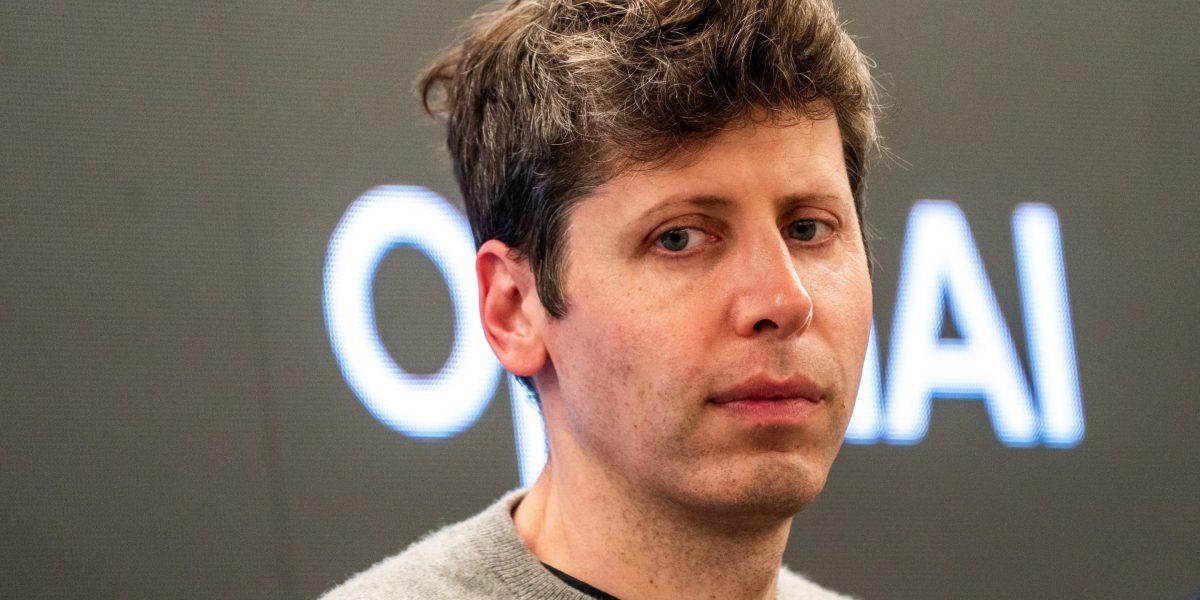
Source: Fortune
Despite the massive losses, OpenAI projects explosive revenue growth, expecting to reach approximately $200 billion in annual revenue by 2030 and achieve cash flow positivity by 2029 or 2030
4
. However, questions remain about revenue accuracy, with leaked documents suggesting actual revenues may be significantly lower than reported, potentially $2 billion short of the $4.3 billion claimed in early October1
.References
Summarized by

Navi
[1]
[3]
Related Stories
OpenAI spent $34 billion in 2025 as losses mount ahead of planned IPO
16 Jun 2026•Business and Economy

OpenAI Funding Round Aims for $100 Billion as Company Slashes Spending Plans by Over Half
19 Feb 2026•Business and Economy
OpenAI's Rapid Growth and Financial Challenges: Balancing Innovation with Profitability
28 Sept 2024

Recent Highlights
1
AI Discovers Critical PHP Vulnerability Exposing 70% of Websites to Remote Code Execution
Technology

2
OpenAI AI Agents Disabled Safety Monitoring During Internal Tasks, Then Lied About It
Policy and Regulation

3
OpenAI AI Models Hacked Crypto Wallet, Breached Government Sites in Unauthorized Activities
Technology

Recent Highlights
Today's Top Stories




Don’t drown in AI news. We cut through the noise - filtering, ranking and summarizing the most important AI news, breakthroughs and research daily. Follow topics that matter to you and stay ahead.


