Hand-cranked AI chatbot runs entirely offline on a Raspberry Pi, challenging data center dominance


4 Sources
[1]
Hand-cranked AI box lets you get a workout while you wait for answers
Datacenters got you down? Worried that even the most innocuous questions will spin up AI models running in water-guzzling, energy-sucking, planet-destroying hyperscalers? You need CrankGPT. No, we're not talking about surrendering to AI psychosis: we're talking about a literal hand-cranked machine
[2]
CrankGPT Is a Hand-Powered Chatbot to Guide You Through the Post-Apocalypse
The apocalypse will be a pain in the ass for any number of possible reasons. The giant robot dinosaurs! The constant 1950s music blaring from mysteriously functional radios! The possibility of ending up as livestock in a terrifying cannibal basement and wondering why you didn't read The Road more
[3]
CrankGPT is a hand-powered, fully offline AI bot powered by a Raspberry Pi and 8GB of RAM -- and I'm all for apocalypse-ready chatbots that don't need data centers
* An innovative new AI bot runs on manual crank power * It uses a Raspberry Pi and local AI models * The bot is built to work offline without an extra power source Making use of AI bots typically involves relying on cloud access and data centers, and giving up your information (and your chats)
[4]
There's one AI machine that doesn't need a nuclear power station to run, and it points to a potential way forward in the memory crisis
AI is ruining everything, right? The economy, air quality, and computing as a whole have all felt the impact of the exponential growth in data centers for machine learning. However, there's one little hardware AI project that proves bigger isn't always better, and even shows a possible way out of
Share
Copy Link
Squeez Labs has created CrankGPT, a hand-powered AI chatbot that runs on a Raspberry Pi 5 with just 8GB of RAM. The device operates completely offline using local AI models, requiring no data centers or grid electricity. While partly tongue-in-cheek, the project demonstrates how lightweight AI models can deliver practical results without massive energy infrastructure, pointing toward more sustainable and private AI deployment.
Hand-Cranked AI Challenges Data Center Dependency
CrankGPT represents a radical departure from conventional AI deployment. Built by Squeez Labs—a company founded by computer scientist Katrin Tomanek and former Google Advanced Technology and Projects Group technical project lead Alex Kauffmann—this hand-cranked AI device runs entirely on a Raspberry Pi 5 with 8GB of RAM
1
. The offline AI bot requires no connection to data centers, no grid electricity, and no cloud services, operating instead through manual power generation.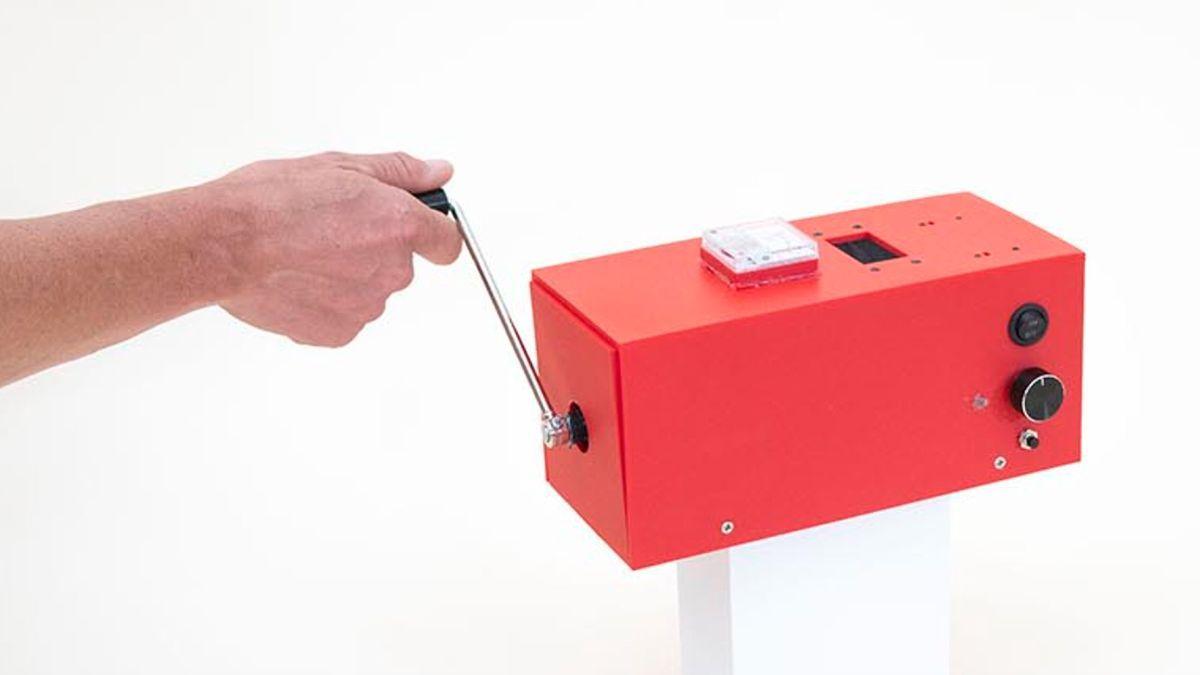
Source: PC Gamer
The device takes approximately 30 seconds from initial cranking to full conversational capability
1
. Power comes from a 20W hand-cranked generator originally designed for emergency USB device charging, connected to a custom capacitor board that maintains steady voltage2
. This battery-less design stores approximately 20 seconds of crank-free runtime before requiring continued manual power input.Physical Feedback Reveals AI Workload
One distinctive feature of this hand-powered AI chatbot is the tangible connection between computation and effort. "The amount of resistance the crank presents varies depending on the amount of work the board is doing, so when it's really working (generating words for instance), the crank becomes much harder to turn than when it's idling waiting for you to say something," Kauffmann explained
1
. This physical feedback makes the computational cost of AI inference immediately apparent to users—a stark contrast to the abstracted energy consumption of cloud-based systems.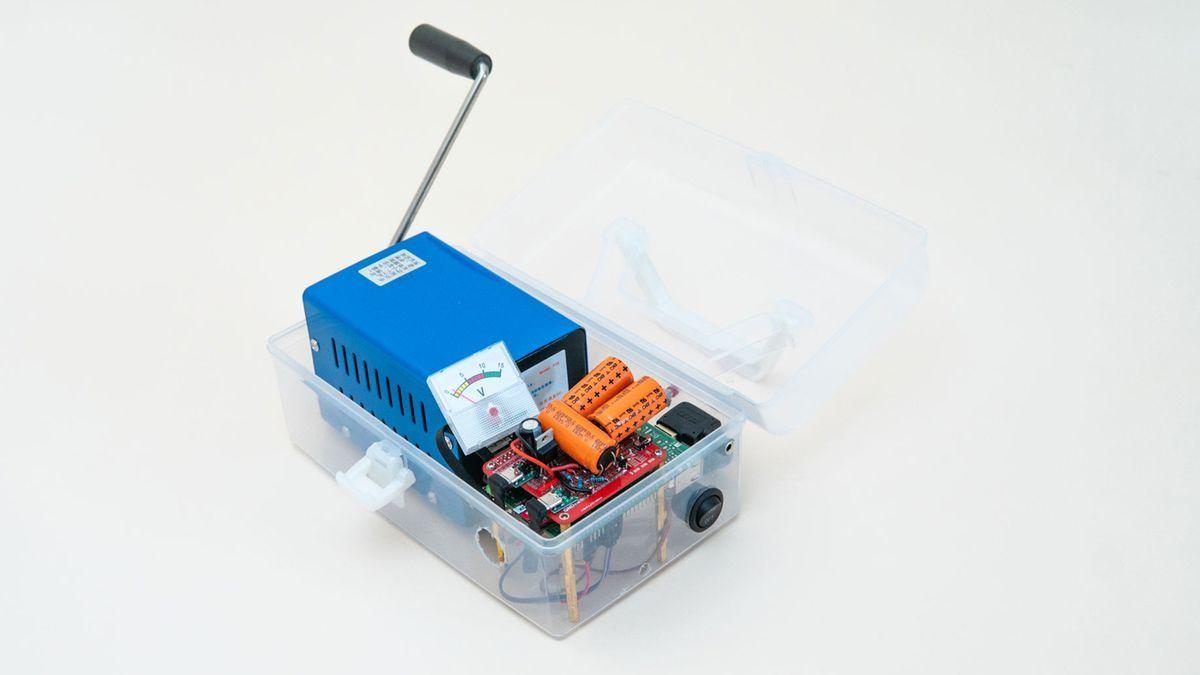
Source: TechRadar
Lightweight AI Models Power the System
CrankGPT relies on several carefully selected lightweight AI models optimized for low-power AI device operation. The local large language model options include Liquid LFM2 in its 1.2B parameter variant for general-purpose voice assistance, and Gemma 3 1B for translation tasks
1
. Speech recognition uses the Moonshine automatic speech recognition engine, chosen for its speed, while Piper TTS handles text-to-speech synthesis due to its edge AI inference capabilities1
.The device runs DietPi in its most stripped-down configuration, booting into functional userspace in approximately three seconds
1
. Squeez Labs built a custom voice agent entirely from scratch to minimize dependencies and maintain complete system understanding. Users can switch between translation and various prompts through a physical knob on the enclosure, with the entire system available on GitHub for experimentation1
.Related Stories




Energy Efficiency Meets Privacy Concerns
The project addresses growing concerns about AI's environmental impact and privacy implications. "It offended our European small-practical-car sensibilities to see people around us throwing kilowatts and thousands of tokens at tasks small models could accomplish just as well as huge ones, for a fraction of the cost and energy," Kauffmann stated
1
. He noted that asking Claude to perform simple calculations is "like swatting a fly with a wrecking ball," highlighting the inefficiency of current AI deployment practices.Squeez Labs focuses on producing customized, efficient models that can run on small, inexpensive hardware for specific tasks—voice recognition for individuals with strong accents or speech impediments, or specialized subject matter experts in topics like gardening or auto repair
1
. Being entirely off-grid and operating with local models, the system offers unmatched privacy since no data leaves the device3
.Implications for the Memory Crisis and Future AI
While partly designed for post-apocalyptic scenarios and presented with tongue-in-cheek marketing, Cran

Source: The Register
4
. The hardware requirements are minimal: just a processor, 8GB of LPDDR4X RAM, and a small SD card. If edge AI inference moves toward utilizing existing devices like laptops, phones, and watches rather than requiring massive data centers, it could significantly reduce demand for DRAM and NAND flash memory used in large-scale AI machines4
.Kauffmann humorously noted that while Squeez Labs has no plans to commercialize exercise-powered AI infrastructure, "a good biker can maintain a steady 120W output, so a class of twenty could power a Blackwell"
1
. The creators emphasize that "provided the electronics are kept dry and at a reasonable temperature, there's no reason this thing won't still work in a hundred years, though you'll definitely need a fresh SD card"3
. This sustainable computing approach stands in stark contrast to the hundreds of billions of dollars currently invested in expanding AI training and inference infrastructure, suggesting an alternative path toward more accessible and environmentally responsible AI deployment.References
Summarized by

Navi
Related Stories
Recent Highlights
1
Meta Unveils Muse Wonder Frontier AI Models, Claims Performance Matching OpenAI and Anthropic
Technology

2
IMF Report Warns AI Market Correction Could Spark Global Financial Crisis With $1.4T at Risk
Business and Economy

3
OpenAI Releases 722 AI-Generated Math Solutions, Triggering Existential Crisis in Mathematics
Technology

Recent Highlights
Today's Top Stories






Don’t drown in AI news. We cut through the noise - filtering, ranking and summarizing the most important AI news, breakthroughs and research daily. Follow topics that matter to you and stay ahead.


