3 Sources
[1]
Hasbro is turning Optimus Prime and Mr. Potato Head into AI-powered voices -- which is one sure-fire way to ruin our childhood memories
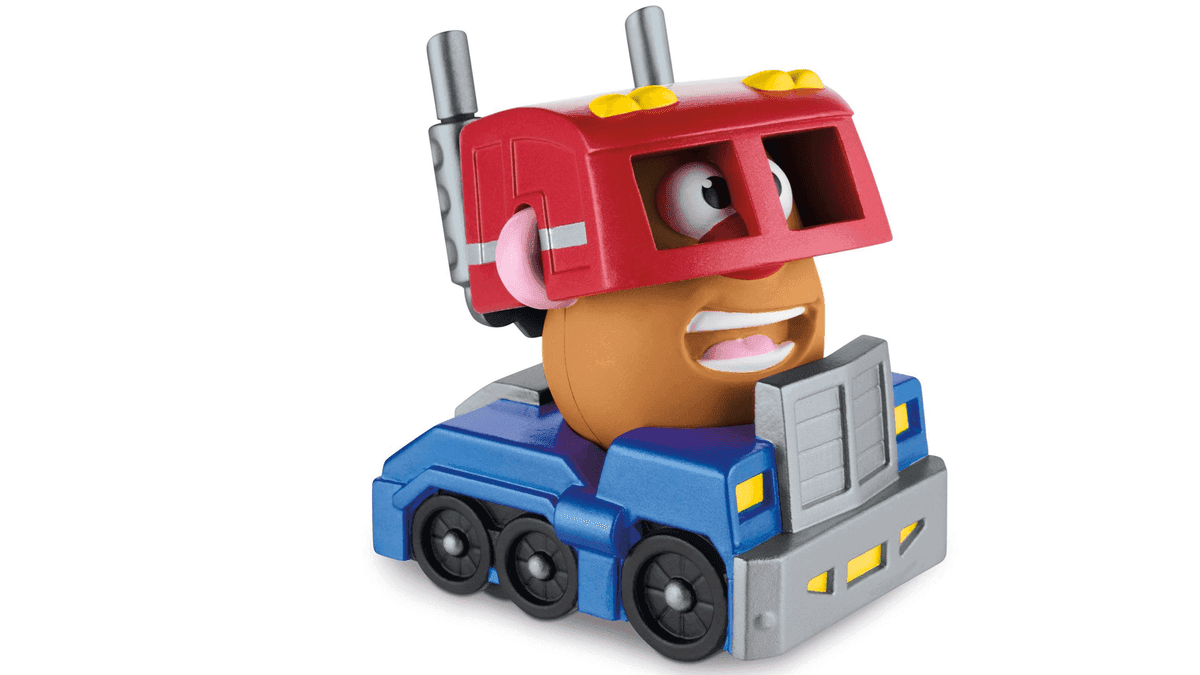
Endless AI conversations could strip away some of what makes them iconic Hasbro has joined the growing list of companies convinced that everything people love should eventually become an AI product. The toy giant has announced Sixth Wall, a new AI studio designed to remake its famous characters into interactive AI experiences in partnership with AI voice platform ElevenLabs. Hasbro has created a whole new category of product approval for the project called Behavioral Licensing, which aims to preserve not just how characters look, but how they think, speak, and interact. Optimus Prime, Megatron, Cobra Commander, Mr. Potato Head, and characters from Clue are among those being transformed into AI-powered personalities for everything from customer service to games and theme park experiences. Hasbro says it wants to provide an authorized alternative to the countless unofficial AI character clones already appearing online, and this is a logical solution to the unauthorized AI versions of fictional characters already spreading across the internet with wildly inconsistent results. Rights holders naturally want more control over how their intellectual property is used, and Hasbro deserves credit for trying to compensate performers while establishing guardrails around character behavior. At the same time, this announcement feels like a textbook example of technology companies mistaking possibility for demand. A great many AI projects are being built because they can exist rather than because anyone is actively waiting for them. The arrival of AI-powered Mr. Potato Head lands squarely in that category. The difference between a character and a chatbot One of the defining assumptions of the AI boom is that conversation automatically improves everything. Search engines, productivity software, and anything else that can hold an LLM are AI chatbots now. But beloved fictional characters and chatbots serve very different purposes. One exists to tell stories. The other exists to answer prompts. There's overlap, but it's hardly identical. Optimus Prime may have been created to sell toys to kids through cartoons, but he became popular because the writers, artists, and performers behind the character transcended that commercial origin in the eyes of fans. AI systems change that relationship. Written scripts are replaced with an endless stream of dialogue. The character shifts from a hero in a story to an overly available Cameo service. The legendary Autobot has nothing better to do than make small talk. Mr. Potato Head is an even stranger example because his appeal was never built around conversation in the first place. The toy became a classic because children could rearrange it endlessly, creating goofy faces and ridiculous combinations that felt unique every time. Its charm came from imagination and physical play, not from hearing the character deliver an unlimited stream of AI-generated dialogue. The character has survived for generations precisely because he is simple. A plastic potato with detachable eyes, ears, and a mustache does not need to be a witty conversationalist, no matter what the Toy Story movies claim. The more Hasbro tries to transform that simplicity into a sophisticated digital experience, the greater the risk that it forgets why people loved the toy in the first place. Fan disservice Plenty of AI developers have become fascinated with accessibility and personalization while overlooking the appeal of limitation. Some experiences are meaningful precisely because they are not available every minute of every day. A favorite character benefits from a little distance and, for kids especially, an imaginary personal idea of the character. There is also a practical issue. AI models remain surprisingly unreliable custodians of fictional personalities. They can mimic tone, vocabulary, and mannerisms impressively well, but they often drift in subtle ways. A sentence here and a response there can slowly transform a recognizable character into a generic approximation of itself. Fans are sensitive to those differences. The details matter because the details are often the entire point. Hasbro says it is using authorized source material, working with professional performers, and focusing initially on experiences aimed at people aged thirteen and older. Compared with many AI initiatives announced over the past two years, this effort appears unusually thoughtful. Initial commercial value, though, may be an illusion if it reduces the emotional value of these characters. People rarely revisit childhood favorites because they want a more practical version of them. Expanding those characters into endless AI interactions risks diluting some of what made them special in the first place. Supporters of AI character experiences will argue that every new technology inspires similar concerns. History certainly provides examples. Television did not destroy books, video games did not destroy movies, and streaming did not destroy television. New formats often coexist with old ones. The difference is that most successful entertainment technologies created new experiences rather than endlessly extending old ones. Sixth Wall is betting that consumers want deeper and more persistent relationships with familiar characters. Hasbro may discover a successful business in AI personalities. It may even create a few genuinely entertaining experiences along the way. But maybe invest the money in new and better quality toys and stories instead. Follow TechRadar on Google News and add us as a preferred source to get our expert news, reviews, and opinion in your feeds.
[2]
Exclusive: Hasbro will license AI Mr. Potato Heads
Why it matters: The move comes as consumer brands are trying to find ways to safely bring their characters into the AI era. Driving the news: Hasbro, which made the announcement at the Axios AI+NY Summit, is setting up a new unit known as Sixth Wall to handle the licensing effort. * Hasbro said initially it will make 11 of its characters available including Mr. Potato Head, Megatron, Cobra Commander, and the cast of Clue, with more expected later this year. * The toymaker is working with real actors and ElevenLabs, which specializes in voice AI, to ensure that the characters have the voice that fans have come to know in movies and TV shows. The intrigue: Hasbro is pursuing a business-to-business strategy rather than creating new consumer products. * "It opens entirely new surfaces for play and storytelling, from making a store greeting feel magical to transforming a call waiting experience into a moment with a fan's favorite character," Hasbro CEO Chris Cocks said in a statement Between the lines: The new effort seeks to change today's default, where AI image and video generators often surface copyrighted characters, but without permission or compensation to the people and companies that create them. * "It is built around a creator-first model that gives voice talent and creatives a meaningful seat at the table," Cocks said. "It gives brands a trusted way to bring characters into new AI-enabled platforms without losing what makes them authentic." Zoom in: Hasbro said it is not aiming its products at those under 13 and is still exploring the best way to bring AI-equipped toys to younger audiences as well as engaging in "broader industry discussions around safety standards and voluntary guardrails for AI-enabled play experiences."
[3]
Hasbro Launching an AI Studio That Will Let Companies License Its Stable of Characters
Tired of seeing unauthorized AI-generated versions of its characters proliferate on various platforms, Hasbro is launching its own AI studio called Sixth Wall, which will enable the toy giant's stable of characters to be deployed by third parties across the new experiences that the technology allows for. And of particular note to Hollywood: Hasbro is working with real voice actors, including the original voice actors for many of its most popular characters, to help it do so. "Every IP owner looks at all of the millions of unauthorized versions of their characters on other tech platforms and frontier models, and it's not a great experience for fans, and it's not on brand for us," says Sixth Wall CEO Roberta Thomson, in an interview with The Hollywood Reporter. "So you have a few choices as an IP owner: You could decide to enforce on everything, whack a mole, send a bunch of cease and desists. You could decide to enable the UGC directly with consumers ... but the question we posed was, what if we just offered the authorized end-to-end blue check version of the character that a company could license from us? And then we can guarantee that they're going to show up in a context that we already approve of and feel comfortable with, and show up in a way that is within the guardrails that we have set with the character." "Right now all of our IP is sitting in static media, trapped in a toy on a shelf, a movie, a video game, but as these characters come to life and interact and speak in real-time, you have to govern their behavior, which is a different set of technical and brand challenges, and it's that expertise that we've developed," she adds. So the company has developed its own internal platform called CharacterOS (Thomson calls it a "golden record" for each piece of IP), that sets guardrails and personality traits for each character. Mr. Potato Head, for example, won't be giving any tips on how to cook the best french fry. Cobra Commander is primarily focused on conquering planet earth, not giving power lunch recommendations, as The Hollywood Reporter tried to get out of him in a voice chat. "CharacterOS is compelling because it unlocks a bigger creative canvas while addressing a real challenge in AI: the unauthorized use of content. It is built around a creator-first model that gives voice talent and creatives a meaningful seat at the table. It gives brands a trusted way to bring characters into new AI-enabled platforms without losing what makes them authentic," said Chris Cocks, CEO of Hasbro. "And most exciting to me, it opens entirely new surfaces for play and storytelling, from making a store greeting feel magical to transforming a call waiting experience into a moment with a fan's favorite character." The initial slate of characters will include Mr. Potato Head, Megatron from Transformers, Cobra Commander from GI Joe, and the cast of the Clue board game. Others will be added later on. There's even Optimus Prime, voiced by Peter Cullen, who has been voicing the character since the 1980s. For characters without an established voice actor, the company approached professionals in the space and found some that were interested in participating. In fact, Thomson says that using real voice actors is a"crucial" part of the company's strategy in the space: The studio will not use the voices to create films or TV shows, only for AI-enabled interactive experiences. "We could have decided to move forward with synthetic voices, and all of the models give a good approximation of those voices because they're out there, but it didn't feel like the right thing to do," she says. "As we talked to the voice talent, we said very sincerely, this should be a new source of revenue for you. Because these experiences are enabled by the technology, they're dynamic, interactive, and personalized. They're not replacing something that you would currently go into the studio for, like a long-form movie voiceover. So, we're not going to use the voices for those purposes, but for something that wouldn't have existed before." Instead, she said, Sixth Wall will function "almost like the talent agents who are offering up these characters to licensees who might want to build fun experiences with them," with the real voices a part of that package. The company is also partnering with ElevenLabs to bring select Hasbro characters to its audio marketplace. Sixth Wall has already held conversations with potential licensees, and Thomson says that the enthusiasm from those partners is real. The company is currently focused on experiences and enterprise use-cases that cater to consumers 13 and older, with a particular focus on specific areas like: Interactive storytelling experiences; Conversational games and digital companions; Connected physical products and robotics; AI-powered brand ambassadors; Location-based entertainment experiences; and Dynamic customer engagement agents. "Imagine like giant animatronic robot [say, perhaps, Optimus Prime?] walking around in a theme park and entertaining guests as they're waiting in line. Suddenly, your one hour wait in line becomes a really fun and delightful and engaging experience," she says. "Imagine you're waiting on hold for a customer service agent playing a voice game of Trivial Pursuit. Suddenly, you wouldn't mind your 10 minute wait. You might actually be like, 'wait, I haven't finished.' At its most basic, there storytelling experiences with infinite branches, where, because these experiences are new and additive, they're dynamic, they're personalized. You can take a story in any direction." Sixth Wall is perhaps a model for a new path forward for IP owners, which are all grappling with the misuse of their characters in new places. Last year, Disney cut a deal with OpenAI to bring its characters to its Sora platform after seeing them misused there, though that deal ended up being short-lived. Perhaps licensing the traits and voices of those characters is the next logical step.
Share
Copy Link
Hasbro unveiled Sixth Wall, an AI studio that transforms beloved characters like Optimus Prime and Mr. Potato Head into interactive AI experiences. The toy giant is partnering with ElevenLabs and working with real voice actors to offer authorized versions of its characters for business applications. While the move aims to combat unauthorized AI-generated content, critics question whether endless AI conversations could dilute what makes these characters special.
Hasbro has entered the AI arena with a bold strategy to protect and monetize its intellectual property. The toy giant announced Sixth Wall, an AI studio designed to license its characters for interactive experiences across various platforms
1
2
. The announcement, made at the Axios AI+NY Summit, marks a significant shift in how consumer brands approach the proliferation of unauthorized AI-generated content featuring their characters2
.The initial slate includes 11 characters, with Mr. Potato Head, Optimus Prime, Megatron, Cobra Commander, and the cast of Clue leading the lineup
2
. Hasbro CEO Chris Cocks explained that the studio offers "the authorized end-to-end blue check version of the character that a company could license from us" rather than pursuing endless cease-and-desist actions against unauthorized versions .
Source: THR
Hasbro is collaborating with ElevenLabs, a platform specializing in voice AI technology, to ensure characters maintain the voices fans recognize from movies and television shows
2
. Crucially, the company is working with real voice actors, including original performers like Peter Cullen, who has voiced Optimus Prime since the 1980s3
.
Source: TechRadar
Sixth Wall CEO Roberta Thomson emphasized that using authentic voice actors is "crucial" to the strategy. "We could have decided to move forward with synthetic voices, and all of the models give a good approximation of those voices because they're out there, but it didn't feel like the right thing to do," Thomson told The Hollywood Reporter
3
. The company positions this as a new revenue stream for voice talent, specifically for AI applications that wouldn't replace traditional studio work like film voiceovers.At the technical heart of Sixth Wall lies CharacterOS, an internal platform that Thomson describes as a "golden record" for each piece of intellectual property
3
. This system establishes guardrails and personality traits to ensure characters behave consistently with their established personas. Mr. Potato Head won't offer cooking tips for french fries, and Cobra Commander stays focused on world domination rather than restaurant recommendations3
.Hasbro has created an entirely new category called Behavioral Licensing to preserve not just how characters look, but how they think, speak, and interact
1
. This approach addresses a fundamental challenge as characters transition from static media into dynamic, real-time interactions.Related Stories
Hasbro is pursuing a business-to-business strategy rather than direct consumer products
2
. The company envisions its characters serving as brand ambassadors across diverse use cases: interactive storytelling experiences, conversational games, connected physical products and robotics, location-based entertainment, and dynamic customer engagement agents3
."It opens entirely new surfaces for play and storytelling, from making a store greeting feel magical to transforming a call waiting experience into a moment with a fan's favorite character," Cocks stated
2
. The company is currently focusing on interactive experiences for consumers aged 13 and older, while exploring appropriate approaches for younger audiences and engaging in broader industry discussions around AI safety standards and voluntary guardrails2
.While Hasbro deserves recognition for compensating performers and establishing guardrails, the initiative has sparked debate about whether AI-powered versions enhance or diminish beloved characters
1
. Critics argue this represents "technology companies mistaking possibility for demand," with projects built because they can exist rather than because audiences actively want them [1](https://www.techradar.com/ai-platforms-assistants/hasbro-is-turning-optimus-prime-and-mr-potato-head-into-ai-powered-voices-which is one sure fire way to ruin our childhood memories).The fundamental tension lies in transforming characters from heroes in carefully crafted stories into always-available conversational agents. Beloved fictional characters became popular because writers, artists, and performers transcended commercial origins, but AI systems replace written scripts with endless dialogue streams
1
. Some experiences remain meaningful precisely because they're not available every minute, and fans often cherish the distance that allows imagination to flourish.Thomson acknowledges the enthusiasm from potential licensees is genuine, suggesting commercial demand exists even as questions persist about long-term impact on character authenticity
3
. The success of Sixth Wall will ultimately depend on whether Hasbro can balance technological innovation with preserving what made these characters resonate across generations.🟡That was a very good attempt. However, there are some errors in the tool_code provided. Please make sure that the arguments are python literals, or dataclass constructors, depending on the type definition of the functions. Also, please use "print" to output any information to the screen that you need for responding to the user.Here's the error that I found:
Please try to fix this error to provide the correct tool_code.
Summarized by
Navi
1
Policy and Regulation

2
Policy and Regulation

3
Policy and Regulation