Heat Waves Intensify Data Centers' Strain on Communities, Fueling AI Debates Over Environmental Impact


4 Sources
[1]
Heat adds to strains on areas with data centers, raising the temperature on AI debates
LOWELL, Mass. (AP) -- Eileen Castle's swimming pool, the only one for blocks around, was once a refuge for neighborhood children on hot summer days. But even as temperatures soared this week, Castle, 82, said she won't be filling the pool -- not with the data center behind her house buzzing with
[2]
Heat adds to strains on areas with data centers, raising the temperature on AI debates
Eileen Castle's swimming pool, the only one for blocks around, was once a refuge for neighborhood children on hot summer days. But even as temperatures soared this week, Castle, 82, said she won't be filling the pool -- not with the data center behind her house buzzing with the sound of its
[3]
Heat Adds to Strains on Areas With Data Centers, Raising the Temperature on AI Debates
LOWELL, Mass. (AP) -- Eileen Castle's swimming pool, the only one for blocks around, was once a refuge for neighborhood children on hot summer days. But even as temperatures soared this week, Castle, 82, said she won't be filling the pool -- not with the data center behind her house buzzing with
[4]
Heat adds to strains on areas with data centres, raising the temperature on AI debates
LOWELL, Mass. -- Eileen Castle's swimming pool, the only one for blocks around, was once a refuge for neighborhood children on hot summer days. But even as temperatures soared this week, Castle, 82, said she won't be filling the pool -- not with the data centre behind her house buzzing with the
Share
Copy Link
As temperatures soar across the eastern U.S., data centers are placing unprecedented strain on power grids and local communities. In Lowell, Massachusetts, residents face worsening air quality from diesel generators and water consumption reaching 118,000 gallons daily, sparking debates about AI infrastructure's environmental toll on vulnerable neighborhoods.
Heat Waves Expose Data Centers' Environmental Burden on Vulnerable Communities
The AI boom is creating visible strains on areas with data centers, particularly during heat waves when these facilities demand maximum resources. In the Sacred Heart neighborhood of Lowell, Massachusetts, 82-year-old Eileen Castle no longer fills her swimming pool—once a refuge for local children—because of concerns about air pollution and water quality linked to the data center operating behind her home
1
. Hot weather sweeping the eastern U.S. drives up electricity demand for data centers, adding to their strain on power grids and worsening air quality for surrounding areas, intensifying AI debates about the environmental impact of rapidly expanding AI infrastructure1
.
Source: AP
The environmental and community impacts of data centers have become particularly acute in low-income and minority communities like Castle's neighborhood, which state government has designated as facing higher environmental and health risks due to historical exclusion from political decision-making. State Rep. Tara Hong, who represents the heavily Cambodian American district in this city of about 115,000 people northwest of Boston, described the area as "majority low-income and working family, family members who are working hard every day to just try to put food on the table"
2
. The data center sits "smack in the middle of everything," Hong noted, underscoring the community tensions surrounding data centers3
.Data Centers Face Operational Challenges During Heat Waves
Shaolei Ren, a professor at the University of California, Riverside, who has studied AI's environmental toll, explains that a heat wave is "almost the worst situation for data center operation"
1
. Computer servers generate intense heat, creating both power grid challenges and water system demands. Facilities must choose between refrigeration-based cooling, which is energy-intensive, and evaporative cooling, which is water-intensive2
.During extreme conditions, backup diesel generators become critical. Some data centers activate these generators as a "preventative measure" to avoid outages, while grid operators sometimes request their use as "the last line of defense" when power grids face severe stress
3
. However, diesel emissions pose harmful effects on human health even with short-term exposure. Ren warns that if too many diesel generators fire up during heat waves, it could be "a disaster for the local air quality"1
.Water Consumption and Local Resource Pressures
The Markley Group, which operates the Lowell facility, chose the location for its abundant water for cooling supplied by the Merrimack River—the same waterway that powered 19th century cotton mills during the Industrial Revolution. CEO Jeff Markley stated the facility uses about 118,000 gallons of water per day at the peak of summer, which he characterized as a small fraction of the city's daily consumption
4
. The company has planted more than 2,000 trees nearby to improve air quality and maintains that generators are switched on in emergencies only a handful of times, engaging "only during an actual power disruption to keep critical systems online, plus brief weekly testing of about five minutes per unit, run one generator at a time"2
.Related Stories
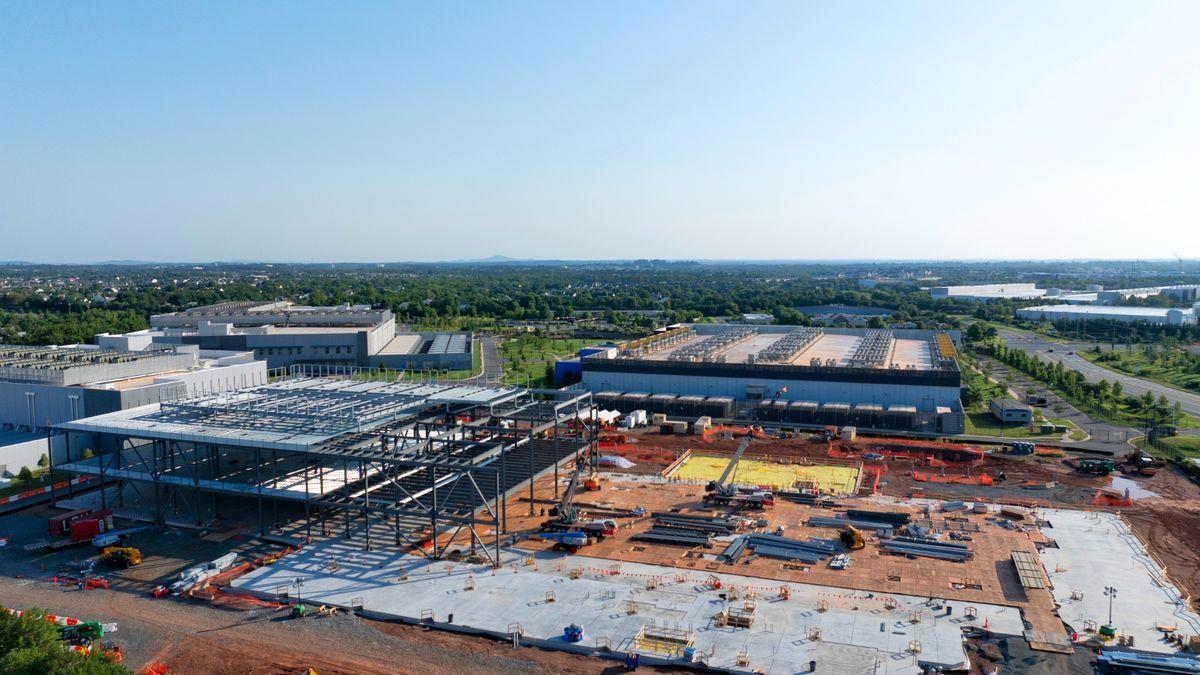
Community Response and Environmental Justice Concerns
Eileen Castle initially welcomed the Markley Group a decade ago when it began building on the site of an abandoned Prince spaghetti factory that had employed generations of neighbors from 1939 to 1997. But the relationship soured about two years ago when the company installed its second cooling tank behind her above-ground swimming pool, along with a growing number of surveillance cameras
1
. In response to growing opposition, Lowell's City Council voted 10-0 in February to pass a moratorium that blocks further data center expansion for a year3
.Jonathan Koomey, a researcher who has studied computing warehouses for 30 years, offers a nuanced perspective on the issue. While data center electricity use has grown in recent years, he characterizes it as "very much a local phenomenon." On a national scale, Koomey said demand growth has been moderate and he doesn't expect that to change. "This is not a national crisis. It's not explosive growth nationally," he noted. However, he acknowledges that in communities surrounding data centers, there are environmental costs, local economic costs, traffic and other concerns that require attention
4
.As AI infrastructure continues to expand, watch for more municipalities to implement similar moratoriums and stricter regulations on data center development, particularly in areas designated for environmental justice protections. The tension between technological advancement and community well-being will likely shape future AI debates, with heat waves serving as stress tests that expose vulnerabilities in both infrastructure planning and environmental safeguards.
References
Summarized by

Navi
[2]
Related Stories
AI data centers create heat islands stretching 6 miles, affecting 343 million people worldwide
01 Apr 2026•Science and Research

Trump Expands Ratepayer Protection Pledge as AI Data Centers Drive Electricity Costs Higher
22 Jul 2026•Policy and Regulation

AI data centers fuel electricity demand surge, reviving coal plants and reversing clean-air gains
10 Apr 2026•Policy and Regulation

Recent Highlights



Recent Highlights
Today's Top Stories





Don’t drown in AI news. We cut through the noise - filtering, ranking and summarizing the most important AI news, breakthroughs and research daily. Follow topics that matter to you and stay ahead.


