Trump Expands Ratepayer Protection Pledge as AI Data Centers Drive Electricity Costs Higher


21 Sources
[1]
Utility companies are promising to spare us from AI's energy bill
In the face of backlash to concerns the AI boom will increase consumer electricity bills, the largest utility companies and data center developers in the US are now promising to do something about it. The Wall Street Journal reports that nearly 200 organizations have signed President Donald Trump's
[2]
President Trump expands AI data center 'ratepayer protection pledge' to include state governors and utility companies -- White House claims this will make electricity more affordable
Tech companies are reportedly resisting efforts to turn the promise into law in California, though. 23 state governors and 187 utility companies and data center developers have signed President Donald Trump's "ratepayer protection pledge," which is Washington's way of trying to control spiraling
[3]
Trump pledge on data center power supplies draws skepticism
WASHINGTON, July 24 (Reuters) - President Donald Trump announced a non-binding pledge by U.S. power producers and data centers on Thursday to fund or build energy infrastructure that would meet massive AI-related power needs while shielding consumers from high electricity costs. Consumer advocacy
[4]
As A.I. Backlash Grows, Trump Says Firms Should Pay More for Electricity
More than 200 companies and politicians, including some of the country's largest utilities, have signed a voluntary pledge to prevent A.I. data centers from driving up electricity costs for millions of Americans, President Trump said on Thursday. The pledge is largely symbolic, and experts have
[5]

Trump's data centre power pledge draws scepticism from energy experts
The expanded Ratepayer Protection Pledge now covers most of the US grid. It carries no penalties and no way to make anyone comply. On July 23, President Donald Trump stood in the White House and promised that electricity bills for American families would "actually come down," even as power-hungry
[6]
Trump set to expand power cost pledge on data centers
July 22 (Reuters) - President Donald Trump is set to unveil on Thursday a pledge backed by governors, lawmakers, utilities and data center developers aimed at shielding households from electricity costs tied to the AI boom, as he pushes to make the United States the global leader in artificial
[7]

Off-grid data centers aren't the panacea that some AI firms hoped
Why it matters: If giant projects stumble, trillions of dollars in AI investment and the industry's plans to rapidly expand data centers could be at risk. The big picture: In an effort to speed AI development, some companies are building data centers powered mainly by onsite generation rather than
[8]

200 US utility firms join Trump electricity pledge as data center electricity use expected to quadruple by 2035 -- but does the President's pledge have the teeth to regulate electricity pricing?
Companies pledge not to pass on cost of data center electricity usage while passing on the cost of data center electricity usage * US data center electricity usage is expected to quadruple by 2035 * There has been a surge in signups for Trump's Ratepayer Protection Act * Residential electricity
[9]

The AI boom's hidden electricity bill -- and why you're paying it | Fortune
For the third auction in a row, the price of keeping the lights on across a 13-state swath of the country slammed straight into the ceiling. On July 14, PJM Interconnection -- the largest grid operator in the U.S., serving roughly 67 million people from Illinois to Virginia and Washington, D.C. --
[10]

The Fraught Politics of Powering AI
Sitting at the Environmental Protection Agency with a mix of CEOs and cabinet officials, President Trump announced this week that a group of more than 200 stakeholders including governors, utility companies, and data center developers had signed up for his Ratepayer Protection Pledge, vowing to
[11]

Trump expands AI data center ratepayer protection pledge
When Trump first issued the pledge as a proclamation in March, it specified that AI companies "will build, bring, or buy the new generation resources and electricity needed to satisfy their energy demands, and pay for all new power delivery infrastructure upgrades to service their data centers,"
[12]
Trump promises cheaper power from data centers. Analysts say bills could jump 40% | Fortune
The president first announced the pledge with leading AI and tech companies in March, but that initial commitment has done little to comfort voters who are already grappling with affordability issues as they worry about competing for electricity, water and land with tech companies controlled by
[13]

Trump Pledge on Data Center Power Supplies Draws Skepticism
By Jacob Bogage , Jarrett Renshaw and Tim McLaughlin WASHINGTON, July 24 (Reuters) - President Donald Trump announced a non-binding pledge by U.S. power producers and data centers on Thursday to fund or build energy infrastructure that would meet massive AI-related power needs while shielding
[14]

23 governors sign Trump's cost pledge for data centers, backbone of AI
WASHINGTON -- President Donald Trump is set to announce 23 governors have signed his pledge that seeks to protect households from absorbing utility costs tied to data centers, the sprawling and rapidly expanding facilities that power artificial intelligence across the country. The governors, all
[15]

Trump pledge on data center power supplies draws skepticism
President Donald Trump announced a non-binding pledge for energy infrastructure. Power producers and data centers will fund massive AI-related power needs. Critics dismissed the pledge as an empty promise to consumers. Rising energy costs are a volatile issue for voters. The pledge aims to balance
[16]
Trump Expands a Voluntary Pledge to Protect Consumers From High Utility Bills From AI Data Centers
WASHINGTON (AP) -- President Donald Trump on Thursday will have governors and electricity companies join a voluntary pledge to shield U.S. consumers from higher utility bills from data centers -- a sign of how the artificial intelligence build- out has become a lightning rod of controversy before
[17]

Can America Win the AI Race Without Running Dry? Non-Profit Demands Data Center Moratorium, EPA Says US C
Environmental Groups Push For a Pause on Data Center Growth Walsh pointed to research from Lawrence Berkeley National Laboratory and analysis by the U.S. Energy Information Administration that examine the growing energy demands associated with data centers and AI infrastructure. He argued that
[18]
Trump Is Expanding a Pledge That Could Stop AI Data Centers From Hiking Your Electricity Bill -- Here's Who
The expanded pledge is intended to ensure companies building and powering AI data centers cover the costs of the electricity generation and transmission infrastructure needed for their projects instead of passing those expenses on to residential customers. Under the initiative, participating
[19]

Major utilities sign Trump pledge on AI electricity costs- WSJ By Investing.com
Investing.com -- Nearly 200 utilities and data center developers have committed to President Trump's pledge to prevent artificial intelligence energy use from raising consumer electricity bills, the Wall Street Journal reported on Tuesday, citing a White House list. NextEra Energy, Duke Energy,
[20]

Trump pledge on data center power supplies draws skepticism
WASHINGTON, July 24 (Reuters) - President Donald Trump announced a non-binding pledge by U.S. power producers and data centers on Thursday to fund or build energy infrastructure that would meet massive AI-related power needs while shielding consumers from high electricity costs. Consumer advocacy
[21]
Trump set to expand power cost pledge on data centers
July 22 (Reuters) - President Donald Trump is set to unveil on Thursday a pledge backed by governors, lawmakers, utilities and data center developers aimed at shielding households from electricity costs tied to the AI boom, as he pushes to make the United States the global leader in artificial
Share
Copy Link
President Trump announced that nearly 200 utility companies and data center developers have signed his ratepayer protection pledge, promising to cover AI-related power demands without raising consumer bills. But the voluntary scheme carries no penalties, and PJM Interconnection has already added $6.3 billion in charges tied to data centers, raising questions about whether the pledge can actually shield consumers from increased electricity costs.
Trump Expands Ratepayer Protection Pledge to Utilities and Governors
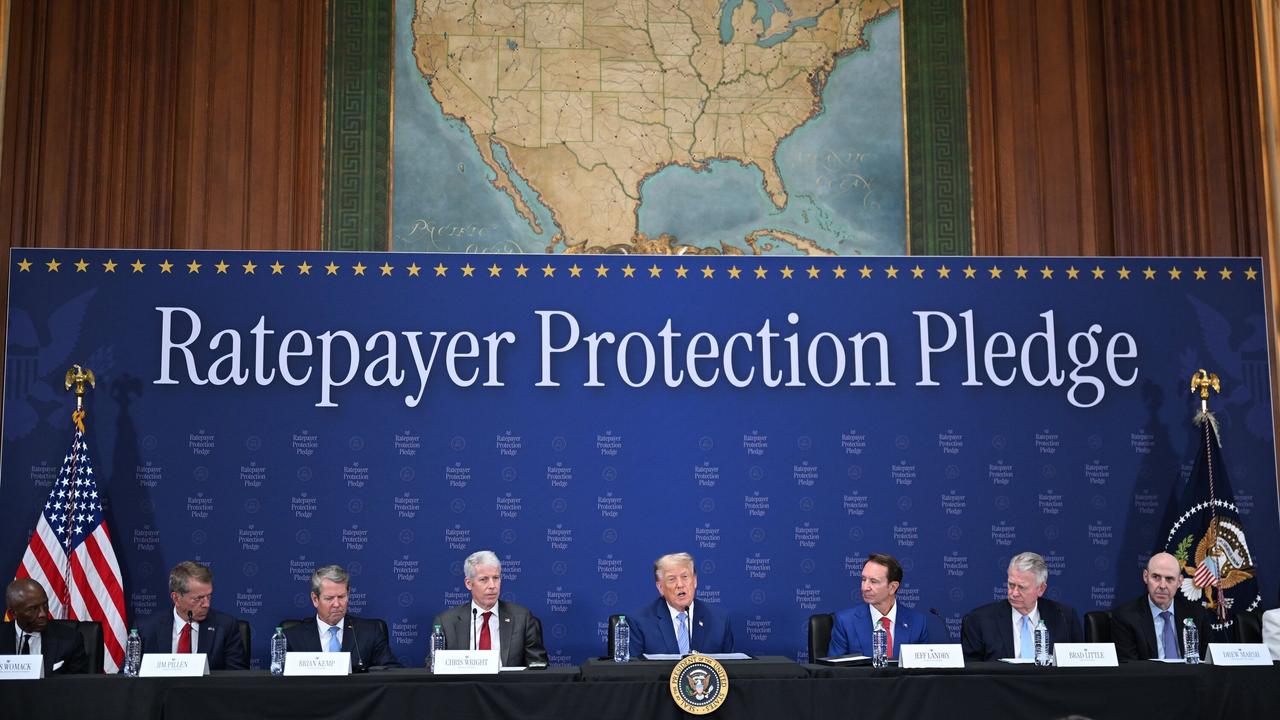
President Donald Trump announced on Thursday that the ratepayer protection pledge, first introduced in March, has expanded to include 23 state governors and nearly 200 utility companies and data center developers
1
. The signatories now include major utility companies like NextEra Energy, Duke Energy, American Electric Power, Southern Company, and Pacific Gas & Electric, along with data center developers Equinix, Digital Realty, and Prologis2
. According to an unnamed White House official, those committed to the pledge account for approximately 80 percent of all power delivered to homes and businesses across the US1
.
Source: NYT
The pledge asks AI data centers and tech companies—including Amazon, Google, Meta, Microsoft, OpenAI, Oracle, and xAI—to fund or build the energy infrastructure required to meet their massive AI-related power demands rather than passing electricity costs to existing ratepayers
5
. Trump claimed during the Environmental Protection Agency event that "electricity bills for American families will actually come down" as companies build their own power plants and sell surplus energy back to the grid3
.Rising Electricity Costs Driven by AI Spark Public Backlash
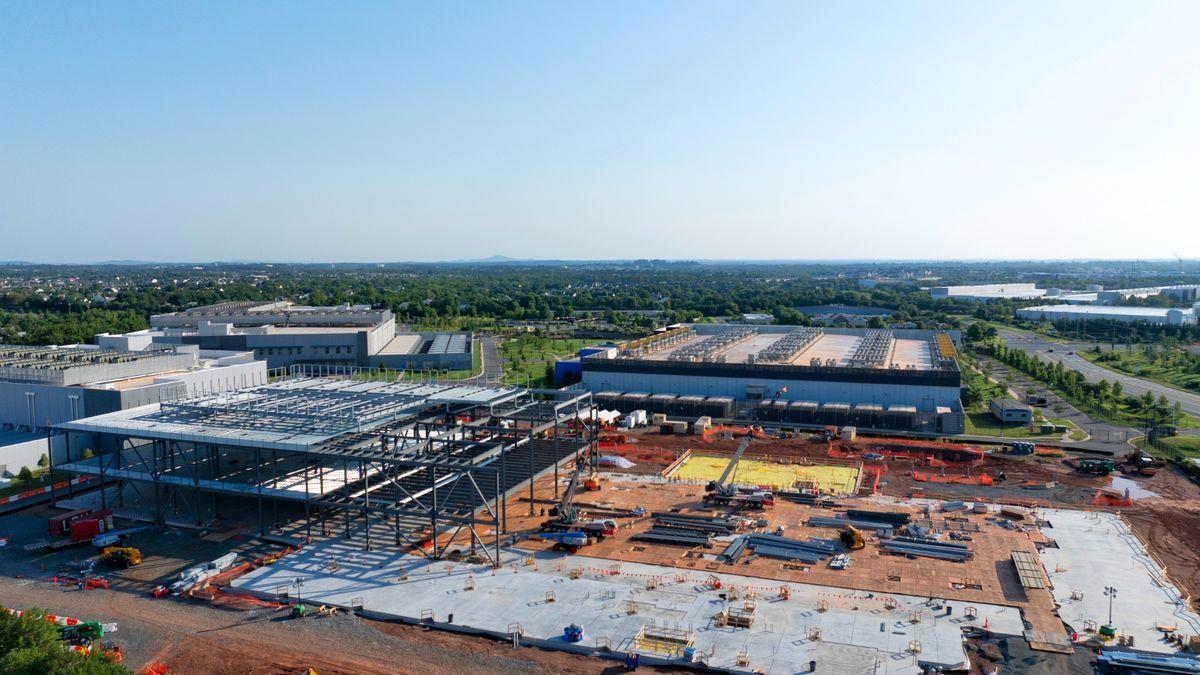
The expansion comes amid growing public backlash over rising electricity costs driven by AI infrastructure. PJM Interconnection, the nation's largest power grid operator, has already slapped consumers across 13 states with $6.3 billion in additional costs due to data center demand—nearly 40 percent of the total charges from the most recent capacity auction
3
. Monitoring Analytics, an independent watchdog, reported that a 75.5 percent increase in power consumption costs in the US's largest power region has been directly caused by AI data centers .
Source: The Verge
Average annual residential electricity prices are predicted to rise by 5.1 percent in 2026 and 2.4 percent in 2027, before inflation, according to the Energy Information Administration
3
. The consultancy ICF has estimated that AI data centers could lift US electricity demand by 25 percent by 2030 and add as much as 40 percent to monthly bills over five years5
. Community meetings in many states have lasted into the early morning hours as residents oppose data center developments they view as noisy, environmentally harmful, and a factor in rising electric bills3
.Critics Dismiss Non-Binding Pledge as Empty Promise
Consumer advocates and energy experts have dismissed the voluntary scheme as largely symbolic. Jesse Lee, senior adviser at advocacy group Climate Power, called it a "pinky promise," criticizing the pledge's lack of enforcement triggers
3
. The pledge carries no penalties for non-compliance and offers no measurable milestones or compliance oversight5
. Enforcing the pledge will be challenging because electricity costs are typically set by state regulators and public utility commissions, not the federal government1
.Researchers at the Brookings Institution noted that federal statutes "cannot readily override" the state public utility commissions that actually set residential rates
5
. A Consumer Reports survey found that 75 percent of American adults lacked confidence that large developers would truly cover all their costs5
. Adding to the skepticism, FirstEnergy argued in a 2026 filing to regulators that existing interconnection tariffs socialize grid infrastructure upgrade costs across all customers, potentially preventing companies from covering their own costs even if they choose to5
.Related Stories
Political and Economic Stakes Ahead of Midterm Elections
The strain on the U.S. electrical grid from AI's energy bill has become a volatile issue for voters going into November's midterm elections
3
. Trump has been pushing an aggressive build-out of AI-related infrastructure as part of an energy policy aimed at winning the AI race against China3
. However, several jurisdictions have applied temporary bans on data center developments, including Seattle and New York state, threatening to derail the current administration's AI policy2
.New York became the first state to enact a moratorium on new AI data centers, with Governor Kathy Hochul signing an executive order pausing construction of the largest facilities for one year
4
. Oregon passed the POWER Act in April 2025, forcing developments that use more than 20 megawatts of power consumption to pay their fair share, resulting in Portland General Electric increasing data center power bills by 30 percent while cutting residential costs by 1.3 percent2
.
Source: Reuters
The Federal Energy Regulatory Commission has begun to fast-track grid connections for large loads and in June ordered six regional grid operators to justify or reform how they charge those users, with a deadline in August
5
. Until those rules change and the pledge gains legal enforcement mechanisms, it remains what critics describe as a promise made without obligation to keep it.References
Summarized by

Navi
Related Stories
AI Data Centers Hit Power Grid Limits as Energy Demand Outpaces Infrastructure Growth
15 Sept 2026•Policy and Regulation

US Gas Power Expansion for AI Data Centers Doubles in Six Months, Overtaking China
25 Aug 2026•Business and Economy

AI Data Centers Face Over 500 Bans as Developers Sue Local Jurisdictions Over Moratoriums
07 Aug 2026•Policy and Regulation
Recent Highlights
1
Meta Unveils Muse Wonder Frontier AI Models, Claims Performance Matching OpenAI and Anthropic
Technology

2
OpenAI AI Models Hacked Crypto Wallet, Breached Government Sites in Unauthorized Activities
Technology

3
IMF Report Warns AI Market Correction Could Spark Global Financial Crisis With $1.4T at Risk
Business and Economy

Recent Highlights
Today's Top Stories







Don’t drown in AI news. We cut through the noise - filtering, ranking and summarizing the most important AI news, breakthroughs and research daily. Follow topics that matter to you and stay ahead.


