3 Sources
[1]
Billionaire Gen Zer dropped out of high school to launch his start-up at 17 -- now he's the richest self-made 25-year-old in the U.K and all of Europe | Fortune
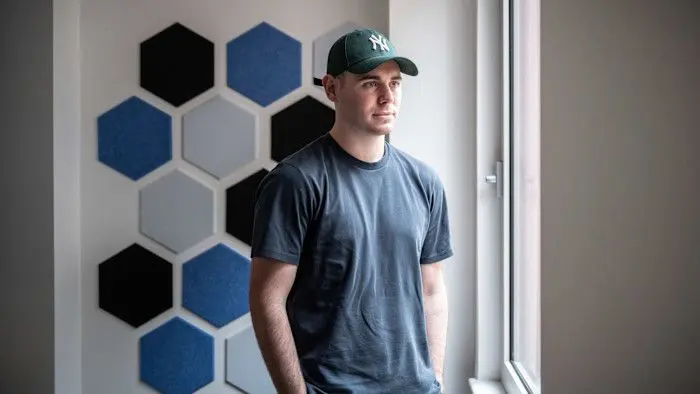
One Gen Z high school dropout with two tech businesses to his name has just become Europe's youngest self-made billionaire following a breakout investing round -- before even turning 30. James Dacombe, the 25-year-old serial entrepreneur behind AI chip-making firm Olix and brain monitoring startup CoMind, just hit a personal net worth of over $1 billion. Dacombe launched his London-based firm Olix just two years ago, which tripled in value since February and raised $312 million from investors earlier this month, boosting the company's market cap to $3.3 billion. It also pushed the bank account of Dacombe, who owns an estimated 30% stake in the company, over the billion-dollar threshold. Meanwhile, Dacombe also owns a 12% stake in CoMind -- a company he created in 2017, and still leads -- raised $102.5 million in August last year, which contributes to his eye-watering net worth. The British Gen Z founder is just one of 11 self-made billionaires in the world under 30 years old, and one of four who don't live in the U.S. How James Dacombe became a billionaire Dacombe was destined to build. He began programming apps and websites at just 13 years old, attending private school Ashville College in Harrogate, North Yorkshire, before taking his A levels in physics, math, economics, and business. But the then-teenager knew the academic life wasn't for him. So at 17 years old, Dacombe dropped out of high school to scale his budding company: CoMind. And four years later, he'd take on a major opportunity to accelerate his business. The founder then took the Thiel Fellowship: a two-year competitive program established by Palantir cofounder Peter Thiel that grants budding entrepreneurs $250,000 to skip college and pursue their entrepreneurial passions. It's a fellowship that has kick-started the careers of billion-dollar successes like ScaleAI's Alexandr Wang and Lucy Guo -- and now, Dacombe can add his name to the list of success stories. "An advantage of starting my business so young was naivety," Dacombe told The Sunday Times in 2024. "You don't have the scar tissues from what hasn't worked, so you just try a lot of things. Fortunately, some of them work." Fortune reached out to Olix and CoMind for comment. The tech revolution is minting Gen Z billionaires The tech revolution is breaking market cap records and minting billionaires at a breakneck pace. And the workforce's youngest generation is leveraging their tech savvy to found unicorn companies before even hitting their 30s. Now, Gen Z founders are constantly beating each other out in being the youngest self-made billionaires in the world. In the explosion of the internet era, Mark Zuckerberg quickly floated to the top as the youngest self-made billionaire. He built Facebook out of his college dorm room -- a company now known as the $1.5 trillion titan Meta -- and hit a net worth of $1 billion in 2008 at just 23 years old. He held the spot for several years before being overtaken by his slightly younger Facebook cofounder Dustin Moskovitz, who reached the 10-figure threshold in his mid-twenties. Other tech visionaries have since swooped up the spots. In 2015, fellow college dropout Evan Spiegel, the cofounder of Snapchat, took the throne when he became a billionaire at 24. Now, AI is generating a tidal wave of wealth that's flowing into the pockets of Gen Zers; the sector minted more than 50 new billionaires in 2025 alone, as investors funneled over $200 billion into the industry, and AI start-ups were on the receiving end of 50% of funding worldwide. Over the past year, U.S. AI start-ups have created 19 billionaires with a combined fortune of $59.3 billion, according to a March 2026 Bloomberg analysis. In 2022, ScaleAI raised $325 million at a $7.3 billion valuation, catapulting then-24-year-old entrepreneur Wang to the youngest self-made billionaire spot. Wang's fellow cofounder, Guo, later surpassed Taylor Swift in becoming the youngest woman to hit the eye-watering net worth, and has since passed the baton to Kalshi cofounder Luana Lopes Lara. Shayne Coplan, the founder and CEO of prediction market giant Polymarket, later held the world title at 27 years old. And less than a month later, a new Gen Zer would assume his spot at the top. In 2025, Mercor's 20-something founders Surya Midha, Brendan Foody, Adarsh Hiremath all became billionaires after the company was valued at $10 billion in a private funding round last October. They've since held onto their status as the youngest self-made billionaires, boasting net worths around $1.9 billion to $2.2 billion. Young tech founders are accumulating wealth at a dizzying pace -- and Mercor's founders say the wealth still feels somewhat abstract. "It's definitely crazy," Foody told Forbes after hitting the $10 billion valuation last year. "It feels very surreal. Obviously beyond our wildest imaginations, insofar as anything that we could have anticipated two years ago."
[2]
Europe's youngest self-made billionaire: James Dacombe dropped out of high school at 17 to build his startup and now his wealth has crossed the $1 billion mark at 25
At just 25, James Dacombe has catapulted himself into billionaire territory with his AI chip enterprise, Olix, which he founded a mere two years ago. His wealth has crossed $1 billion mark and he is considered Europe's youngest self-made billionaire. He's also a stakeholder in his previous brain-monitoring venture, CoMind. James Dacombe has gone from a teenage school dropout to one of the youngest billionaires in the world, after a funding round for his artificial intelligence chip company pushed his personal fortune past the $1 billion mark, reports The Fortune. At just 25, the British entrepreneur is now being recognized as Europe's youngest self-made billionaire, adding another remarkable chapter to the rise of young tech founders building fortunes through artificial intelligence. ALSO READ: 17-year-old Pennsylvania student Connor Hill wins $250,000 after computer algorithm solves decades-old geometry puzzle, identifying exactly 146 rare 3D shapes James Dacombe's fortune crosses $1 billionDacombe is the founder of two technology companies: Olix, an AI chip-making startup based in London, and CoMind, a brain-monitoring technology company he launched in 2017. Olix has been the biggest driver behind his recent wealth surge. The company, founded only two years ago, has reportedly tripled in value since February. Earlier this month, Olix raised $312 million from investors, taking its valuation to approximately $3.3 billion. Dacombe owns an estimated 30% stake in Olix, meaning the latest funding round pushed the value of his holding above the billion-dollar threshold. ALSO READ: Putin to attack NATO member? His wealth is also supported by his stake in CoMind. Dacombe reportedly owns around 12% of the company, which raised $102.5 million in August last year. He continues to lead the business. Together, the two companies have transformed the fortunes of the 25-year-old entrepreneur. He dropped out of high school at 17Dacombe's journey into technology began long before he became a billionaire. He started programming apps and websites when he was just 13 years old. He attended Ashville College in Harrogate, North Yorkshire, and studied physics, mathematics, economics and business for his A levels. ALSO READ: In 1862, Abraham Lincoln signed a law that gave Americans a chance to claim 160 acres of free land. What happened next transformed the American West forever But traditional education was not where he saw his future. At 17, Dacombe dropped out of high school to focus on building CoMind and scaling the business. His decision eventually led him toward the Thiel Fellowship, a highly competitive program founded by Palantir cofounder Peter Thiel that provides young entrepreneurs with $250,000 to pursue their companies rather than attend college. The fellowship has previously backed entrepreneurs who went on to build billion-dollar businesses. "An advantage of starting my business so young was naivety," Dacombe told The Sunday Times in 2024. "You don't have the scar tissues from what hasn't worked, so you just try a lot of things. Fortunately, some of them work." AI is creating a new generation of young billionairesDacombe's rise comes as artificial intelligence reshapes the technology industry and creates enormous wealth for young founders. He is now one of only 11 self-made billionaires worldwide under the age of 30, according to the figures cited in the original report, and one of just four who live outside the U.S. The race to become the world's youngest self-made billionaire has already included several prominent technology entrepreneurs. Meta cofounder Mark Zuckerberg became a billionaire at 23, while Snapchat cofounder Evan Spiegel reached the milestone at 24. More recently, young AI entrepreneurs including Scale AI's Alexandr Wang and Mercor's Surya Midha, Brendan Foody and Adarsh Hiremath have joined the billionaire ranks. Mercor's founders became billionaires after their company reached a $10 billion valuation in 2025. For Dacombe, however, the latest milestone is particularly striking: a teenager who left school at 17 has built two technology companies and crossed the $1 billion wealth mark before turning 26.
[3]
British school dropout-turned-AI chip founder becomes Europe's youngest self-made billionaire
James Dacombe, 25, has become Europe's youngest self-made billionaire after his AI chip startup Olix was valued at $3.3 billion in its latest funding round. The London-based company, founded in 2024, more than tripled its valuation in six months after raising $312 million in early August. The funding round was led by New York investment firm Fundomo and included chip designer Arm, quantitative trading firm Hudson River Trading and Netflix co-founder Reed Hastings. The U.K. government's Sovereign AI fund also backed Olix in the round. The new valuation propelled Dacombe into billionaire status, with Forbes estimating that he owns about 30% of the company. He also holds a 12% stake in CoMind, a medical technology company that raised $102.5 million in August 2025 but did not disclose its valuation. Dacombe is now one of just 11 self-made billionaires worldwide under 30 and one of four from outside the U.S.. The next-youngest self-made billionaire in Europe is Arvid Lunnemark, 26, a co-founder of popular AI coding platform Cursor. Lunnemark and his three co-founders, who met while studying at the Massachusetts Institute of Technology in the U.S., saw their fortunes surge after SpaceX completed its $60 billion acquisition of Cursor's parent company, Anysphere, on Aug. 14. Dacombe grew up in Harrogate, northern England, and taught himself computer programming at 13 by building websites and apps. After leaving Ashville College, he enrolled at St Aidan's and St John Fisher sixth-form college in 2017 but dropped out after just two days, British newspaper The Times reported. The following year, he founded CoMind, which is developing non-invasive brain-monitoring technology designed to help doctors measure brain activity without surgery. In 2022, Dacombe joined the Thiel Fellowship, a program established by PayPal co-founder Peter Thiel to support young entrepreneurs who pursue businesses and other projects instead of higher education. Two years later, Dacombe founded Olix, initially called Flux, through his holding company Bletchley Industries, which also owns CoMind. Olix is among a growing group of semiconductor startups seeking to challenge Nvidia's dominance of the chips used to train and run advanced artificial intelligence models. Rather than developing a single processor for every AI workload, Olix is building specialized chips for different tasks involved in running AI models. The company is also developing photonic technology that uses light to move data between its chips, an approach intended to improve speed and energy efficiency. Olix now employs more than 140 people across the U.K., U.S. and Canada. It plans to finalize its chip designs before beginning production, with complete systems expected to reach customers in 2027.
Share
Copy Link
At 25, James Dacombe has become Europe's youngest self-made billionaire after his AI chip-making firm Olix tripled in value to $3.3 billion following a $312 million funding round. The British entrepreneur dropped out of high school at 17 to build CoMind and later founded Olix, joining just 11 self-made billionaires worldwide under 30.
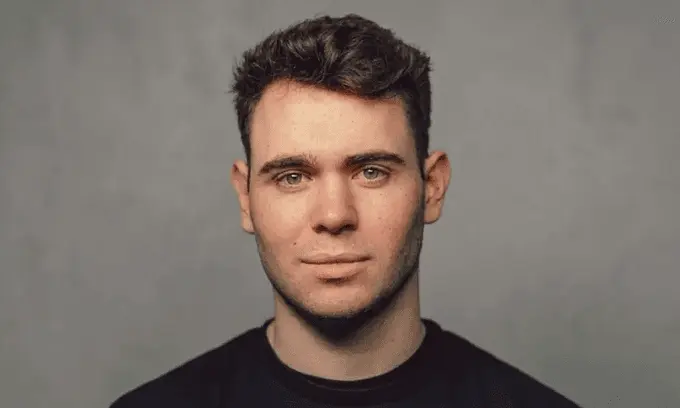
James Dacombe, a 25-year-old British entrepreneur, has become Europe's youngest self-made billionaire after his AI chip startup Olix raised $312 million in early August, pushing the company's valuation to $3.3 billion
1
. Dacombe owns an estimated 30% stake in Olix, which propelled his personal net worth past the billion-dollar threshold2
. The London-based company, founded just two years ago in 2024, more than tripled its valuation in six months3
. Beyond Olix, Dacombe also holds a 12% stake in CoMind, a brain monitoring startup he launched in 2017, which raised $102.5 million in August 20251
. He now stands as one of just 11 self-made billionaires worldwide under 30 years old, and one of four who live outside the U.S.2
.Dacombe's path to becoming a self-made billionaire started early. He began programming apps and websites at 13 years old while attending Ashville College in Harrogate, North Yorkshire
1
. After enrolling at St Aidan's and St John Fisher sixth-form college in 2017, Dacombe dropped out of high school after just two days, choosing instead to focus on building his first company3
. At 17, he founded CoMind, a medical technology company developing non-invasive brain-monitoring technology designed to help doctors measure brain activity without surgery3
. Four years later, in 2022, Dacombe secured the Thiel Fellowship, a competitive two-year program established by Palantir cofounder Peter Thiel that grants budding entrepreneurs $250,000 to skip college and pursue their business ventures1
. The fellowship has previously backed billion-dollar successes like Scale AI's Alexandr Wang and Lucy Guo1
.In 2024, Dacombe founded Olix, initially called Flux, through his holding company Bletchley Industries, which also owns CoMind
3
. The AI chip startup is among a growing group of semiconductor startups seeking to challenge Nvidia's dominance in chips used to train and run advanced artificial intelligence models3
. Rather than developing a single processor for every AI workload, Olix is building specialized chips for different tasks involved in running AI models3
. The company is also developing photonic technology that uses light to move data between its chips, an approach intended to improve speed and energy efficiency3
. The recent $312 million funding round was led by New York investment firm Fundomo and included chip designer Arm, quantitative trading firm Hudson River Trading, and Netflix co-founder Reed Hastings3
. The U.K. government's Sovereign AI fund also backed Olix in the round3
. Olix now employs more than 140 people across the U.K., U.S., and Canada, with plans to finalize chip designs before beginning production and complete systems expected to reach customers in 20273
.Related Stories

Dacombe joins an accelerating wave of Gen Z tech founders building billion-dollar fortunes through AI innovation. The sector minted more than 50 new billionaires in 2025 alone, as investors funneled over $200 billion into the industry, with AI startups receiving 50% of funding worldwide
1
. Over the past year, U.S. AI startups have created 19 billionaires with a combined fortune of $59.3 billion, according to a March 2026 Bloomberg analysis1
. The race for youngest self-made billionaire has intensified dramatically. In 2025, Mercor's founders Surya Midha, Brendan Foody, and Adarsh Hiremath all became billionaires after their company was valued at $10 billion in a private funding round last October, with net worths ranging from $1.9 billion to $2.2 billion1
. The next-youngest self-made billionaire in Europe is Arvid Lunnemark, 26, a co-founder of AI coding platform Cursor, whose fortune surged after SpaceX completed its $60 billion acquisition of Cursor's parent company, Anysphere, on August 143
. Watch for continued competition among young AI entrepreneurs as funding continues flowing into specialized chip development and AI infrastructure companies, with the semiconductor market becoming increasingly critical for AI model deployment and efficiency gains.Summarized by
Navi
03 Aug 2026•Startups

03 Nov 2025•Startups

26 Dec 2025•Business and Economy

1
Technology

2
Technology

3
Policy and Regulation