House advances SPEED Act to fast-track permits for AI data centers and chip manufacturing


2 Sources
[1]
AI future: Big Tech faces key House vote on reforming permit process
OpenAI CEO Sam Altman attends an event to pitch AI for businesses in Tokyo, Japan February 3, 2025. But recently, as AI has been seen as an increasingly important sector, support has grown among Democrats for easing the permitting process. And pressure has increased on Congress as China laps the
[2]
Congress advances bill to speed up permits for AI- and semiconductor-related projects
The House of Representatives cleared a key step on Tuesday by narrowly approving - by 215 votes to 209 - a procedural motion for the SPEED Act. The bill, backed by OpenAI, Meta, Microsoft and several industry players, aims to streamline and accelerate federal permitting for large-scale technology
Share
Copy Link
The House cleared a critical procedural vote for the SPEED Act, a bipartisan bill backed by OpenAI, Meta, and Microsoft to accelerate federal permits for AI infrastructure. The legislation would shorten environmental review timelines and limit legal challenges to 150 days, but faces internal Republican opposition over an amendment restricting presidential authority on energy permits.
House Clears Key Vote on SPEED Act Amid Tech Industry Pressure
The House of Representatives narrowly approved a procedural motion for the SPEED Act on Tuesday by 215 votes to 209, advancing legislation that could reshape how quickly AI data centers and semiconductor manufacturing infrastructure get built in the United States
2
. The bill, backed by major tech players including OpenAI, Meta, and Microsoft, targets what industry leaders describe as a crippling bottleneck in reforming the federal permitting process2
.
Source: Market Screener
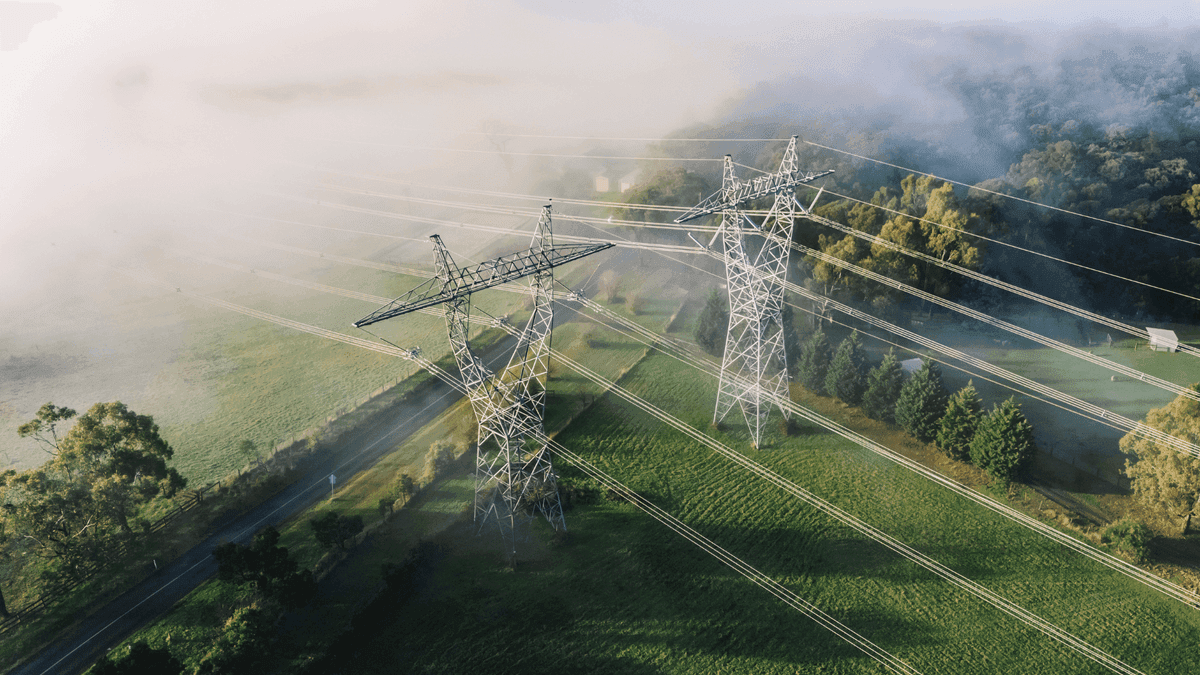
The legislation arrives as pressure mounts on Congress to address China's rapid expansion in AI infrastructure while America's aging electric grid struggles under the demands of energy-intensive data centers
1
. Rep. Dusty Johnson, R-S.D., a member of the House Select Committee on the Chinese Communist Party, warned that "we've made it entirely too difficult to build big things in this country, and if we do not reform that, that will be a powerful gift that we are giving to China"1
.How Permit Reform Would Accelerate AI Infrastructure Development
The SPEED Act would fundamentally alter the timeline for accelerating the development of AI infrastructure by tightening deadlines for federal agencies conducting reviews under NEPA, the National Environmental Protection Act
1
. Most significantly, the bill would shorten review timelines and limit legal challenges to projects by shrinking the current six-year statute of limitations for challenging a permit decision to just 150 days1
2
."Anybody that wants to stop something under NEPA has an upper hand," said Rep. Bruce Westerman, R-Ark., the bill's co-sponsor and chair of the House Natural Resources Committee
1
. He emphasized that data centers require substantial energy infrastructure and generating capacity, with the environmental review process representing the primary hurdle1
.Industry Stakes Hundreds of Billions on Fast-Track Federal Permitting
The Data Center Coalition, representing major tech companies building data centers, declared that "comprehensive permitting reform is a must-have to win the AI race, grow the U.S. economy and secure America's continued global leadership"
1
. Cy McNeill, the group's director of federal affairs, noted that "transmission and generation constraints across the country are restricting economic growth, including the development of the U.S. data center industry"1
. The industry is seeking to continue investing hundreds of billions of dollars annually in U.S. digital infrastructure1
.Semiconductor production also stands to benefit significantly. Micron, in a letter supporting the legislation, stated that the SPEED Act would "accelerate the implementation of economic development investments, such as those by Micron, and would ensure every federal dollar is used efficiently and effectively"
1
. Westerman warned that data centers could become entangled in NEPA litigation if they receive federal funding, such as money from the CHIPS and Science Act for semiconductor projects1
.Related Stories

Bipartisan Support Threatened by Internal Republican Division
Despite bipartisan support for the core concept of permit reform, the SPEED Act faces significant political hurdles on Capitol Hill
1
. The legislation was co-sponsored by Westerman and Rep. Jared Golden, a Maine Democrat, signaling cross-party agreement on the need for change1
. However, an amendment from Golden that would limit a president's ability to revoke permits for energy projects has triggered opposition from the ultra-conservative House Republican Freedom Caucus1
2
.Freedom Caucus Chair Andy Harris, R-Md., threatened to block the bill before it reaches the House floor if Golden's amendment remains, stating "the Golden amendment has to be taken out, and that's a minimum"
1
. The amendment has particular relevance given President Donald Trump's revocation of offshore wind permits this year1
. With Republicans holding a very slim majority in the House and party leadership able to afford losing only three GOP votes at most to pass legislation without Democratic support, the bill's fate remains uncertain1
. In Congress, no equivalent Senate version has been introduced yet, though discussions are underway to reach a bipartisan compromise necessary to clear the 60-vote threshold2
.References
Summarized by

Navi
Related Stories
US Tech Giants Urge Easing of AI Export Controls to Compete with China
08 May 2025•Technology

AI Data Centers Spark Political Firestorm as US Midterms Loom and Tech Giants Scramble to Address Backlash
30 Sept 2026•Policy and Regulation

House Passes Bill to Make AI Data Centers Pay for Grid Upgrades as Utility Costs Spark Voter Backlash
16 Sept 2026•Policy and Regulation
Recent Highlights
1
Microsoft and Nvidia Launch Surface Laptop Ultra: A $2,599 AI-Ready PC With RTX Spark Chip
Technology

2
Meta Muse AI Agent Surges to 6.6M Downloads Despite Privacy and Security Controversies
Technology

3
Scientists Build AI Model That Reconstructs Images From Brain Scans in Record Time
Science and Research

Recent Highlights
Today's Top Stories










Don’t drown in AI news. We cut through the noise - filtering, ranking and summarizing the most important AI news, breakthroughs and research daily. Follow topics that matter to you and stay ahead.


