2 Sources
[1]
China's Huawei reveals chip design breakthrough amid US sanctions
SHANGHAI/BEIJING, May 25 (Reuters) - Huawei Technologies said on Monday it will make industry-leading semiconductors using a new technology in five years, underscoring Beijing's efforts to neutralise U.S. sanctions that have made it hard for China to build cutting-edge chips. Huawei, in a semiconductor symposium in Shanghai, said its high-end chips will have transistor density equivalent to 1.4-nanometre processes by 2031, but did not provide independent performance data. The target is significant as China's most advanced proven chipmaking capability is widely seen at around 7 nanometres, while 1.4 nm is expected to be close to the global frontier for advanced chipmaking around the end of the decade. China is generally viewed as unlikely to reach that level through conventional manufacturing alone because Washington has restricted its access to advanced lithography tools and other key semiconductor technologies. Taiwan's TSMC (2330.TW), opens new tab, the world's largest producer of the most advanced chips, currently uses a 2-nm manufacturing technology and plans to introduce a 1.4-nm process for mass production in 2028. 'TAU SCALING LAW' Huawei unveiled on Monday a new principle for improving chips, noting the industry can no longer rely on shrinking transistors for computing breakthroughs, a pattern known as Moore's Law, as they have become so small that their dimensions are measured in only a few atoms. The Tau Scaling Law, as the principle is called, instead focuses on cutting the time it takes signals and data to move through chips and computing systems, Huawei said. While the global chip industry is increasingly investing in post-Moore's Law solutions, from advanced packaging to chiplets, the search has become especially urgent for China. U.S. export controls have restricted Chinese companies' access to the most advanced chipmaking tools, particularly the equipment needed to make chips at leading-edge process nodes. That has made alternative routes to higher performance central to Beijing's goal of building a world-leading and self-sufficient semiconductor industry. "What Huawei is proposing is a shift from traditional node-driven scaling to system-level efficiency scaling," said He Hui, director of semiconductor research at Omdia. "Rather than depending solely on smaller transistors, the company is focusing on shortening interconnect, lowering latency and improving data movement inside the chip, which is a credible way to extract more performance when leading-edge lithography is constrained." AI BOOM RAISES STAKES The stakes of Huawei's chip breakthroughs are doubly high, as frontier technologies have become an increasingly important pillar of future economic development and geopolitical leverage for China. Huawei's Ascend chip series is central to powering Chinese AI models, including DeepSeek's latest flagship model V4, released last month. Huawei said its Kirin smartphone chips scheduled to launch later this year would be the first to use a Tau Scaling architecture called LogicFolding, which the company said would shorten wiring inside chips and considerably improve performance. LogicFolding will also be applied to Ascend chips by 2030, as well as large AI clusters made up of hundreds or thousands of chips that power data centers, the company said. It added that its chip division has designed and mass-produced 381 chips over the past six years based on Tau Scaling Law for use in industries including smartphones and AI computing. DOMESTIC ALTERNATIVE TO NVIDIA Huawei was placed on a U.S. trade blacklist in 2019 that cut it off from many U.S.-origin technologies, including chips and software, and restricted its ability to rely on global contract chipmakers. Huawei entered what it described as an "extreme survival mode" after the restrictions were imposed. A secret backup chip project led by He Tingbo, president of Huawei's semiconductor business and director of its Scientist Committee, became central to its survival strategy. The company mounted a surprise comeback in 2023 with the launch of its 5G-capable Mate 60 series smartphones, powered by a system-on-chip produced by China's biggest contract chipmaker, Semiconductor Manufacturing International Corp (SMIC) (0981.HK), opens new tab, using 7-nm technology. SMIC shares rose 7.6% on Monday after Huawei's announcement of its LogicFolding architecture. SMIC has also recently invested in post-Moore's Law pathways, setting up an advanced packaging research institute in Shanghai in January. Demand for Ascend chips has risen in China this year, as domestic tech firms seek alternatives to U.S. company Nvidia (NVDA.O), opens new tab, whose most advanced AI processors are restricted from sale to China. Nvidia CEO Jensen Huang said earlier this month that the company had "largely conceded" China's AI chip market to Huawei. While acknowledging progress, analysts say China remains behind global leaders in the most advanced process technology. "Cost, power, heat, and system integration remain major challenges, especially for Cloud AI servers," said Brady Wang, associate director at Counterpoint Research. "In the short term, China may narrow the gap with global leaders, but a technology gap with the most advanced nodes will still remain," he added. Huawei's chip head He acknowledged that its latest approach still faces major hurdles, including the need for new chip-design tools suited to Tau Scaling and the challenge of preventing overheating, from mobile chips to large AI data centers. "Given all the various constraints, we have found some pretty good solutions... I can confidently say in the coming 10 years our solutions for mobile computing and AI computing will be competitive," said He. Reporting by Che Pan, Eduardo Baptista and Casey Hall; Editing by Miyoung Kim and Muralikumar Anantharaman Our Standards: The Thomson Reuters Trust Principles., opens new tab * Suggested Topics: * Asia Pacific Eduardo Baptista Thomson Reuters Eduardo Baptista is a Senior Correspondent for Reuters based in Beijing, covering China's technology, space, and automotive industries. He has led enterprise and investigative reporting on China's military-linked companies, artificial intelligence and semiconductor supply chains, as well as macroeconomic and industrial policy. Baptista has reported from China for nearly a decade and holds a BA in History from the University of Cambridge. Casey Hall Thomson Reuters Casey is the Shanghai bureau chief and a senior correspondent covering companies in China, reporting on the biggest issues facing local and global businesses operating in the world's second largest economy. The Australian-born journalist has been based in Shanghai since 2007.
[2]
Huawei executive credits bans for accelerating domestic chip independence
US trade ban on Huawei sparks unexpected boom in China's semiconductor industry * US sanctions forced Huawei into a rapid domestic chip innovation shift * Engineers developed hundreds of chips under severe technological constraints * Domestic semiconductor chain expanded through coordinated industry-wide response efforts When the US Department of Commerce added Huawei to its Entity List on May 16, 2019, few observers anticipated the long-term consequences of that decision. Huawei's chairman, Xu Zhijun, has stated that the United States restrictions on the company have unintentionally strengthened China's semiconductor industry chain. He made the remarks while reflecting on years of export controls that limited Huawei's access to advanced chip manufacturing and overseas supply chains. Sanctions and the shift in semiconductor strategy According to Xu, those constraints forced both Huawei and the wider Chinese industry to accelerate internal development efforts across multiple technological layers. Xu explained that Huawei's dependence on external semiconductor manufacturing had become a critical limitation once trade restrictions intensified. The company previously relied heavily on overseas foundries for advanced chip production, particularly for high-performance mobile and computing processors. After sanctions disrupted that access, Huawei was compelled to reorganize its design and manufacturing approach under significantly tighter constraints. Huawei used available production capabilities rather than waiting for advanced external nodes, and this marked the beginning of broader structural changes. According to Xu Zhijun, the pressure created by restrictions extended beyond Huawei and influenced the wider semiconductor supply chain. Regarding chip production, Xu is not elated that Huawei now does this, as they are some years behind, but he appreciates the progress they have made so far. "If it weren't for the United States forcing our country, our company, and our industry, we wouldn't have been able to do something like this," said Xu Zhijun "But I also thank the United States for enabling our country's semiconductor industry chain to truly grow. Now the momentum is very good, and everyone recognizes and supports it." Xu argued that sustained pressure led to increased investment in domestic design capabilities, manufacturing processes, and supporting technology infrastructure. The investments paid off, as the company launched the fastest-ever AI chip last year despite tighter restrictions. This shift reduced reliance on external suppliers while encouraging parallel development across multiple segments of the industry. Internal response and restructuring efforts Huawei's response to the U.S. sanctions was positive, and it prioritized continuity in existing products while expanding long-term chip development strategies internally. The company also increased efforts to relocate production pathways and redesign hardware systems for compatibility with domestic manufacturing constraints. During this period, engineers were required to solve complex design challenges under significant technological limitations. These efforts led to the creation of hundreds of chips adapted for alternative production environments within China. At some point, Huawei was producing chips to ensure operational survival, but its efforts have extended into broader industrial participation across China. Designers, manufacturers, and research institutions had to collaborate vigorously to offer solutions because the ban created a huge market in China. This collaboration contributed to a more integrated domestic semiconductor chain capable of reducing dependency on foreign technology sources. While acknowledging ongoing limitations in advanced manufacturing, he maintained that progress had been made across multiple stages of production. Via Weixin (originally in Chinese) Follow TechRadar on Google News and add us as a preferred source to get our expert news, reviews, and opinion in your feeds.
Share
Copy Link
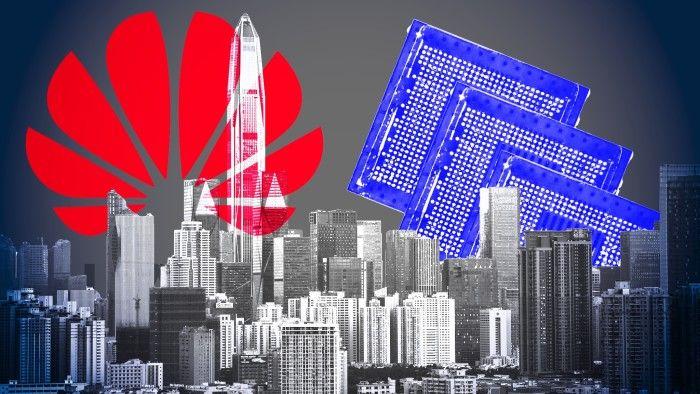
Huawei announced a major chip design breakthrough at a Shanghai symposium, unveiling its Tau Scaling Law that targets 1.4-nanometer equivalent performance by 2031. The company's chairman credited US sanctions for accelerating domestic chip independence, as China's semiconductor industry develops alternative pathways to advanced chipmaking technology despite restricted access to cutting-edge lithography tools.
Huawei announced at a semiconductor symposium in Shanghai on Monday that it will produce industry-leading semiconductors using a new technology within five years, targeting transistor density equivalent to 1.4-nanometer processes by 2031
1
. This ambitious goal comes as China's most advanced proven chipmaking capability remains at around 7 nanometers, while Taiwan's TSMC currently uses 2-nm manufacturing technology and plans to introduce 1.4-nm processes for mass production in 20281
. The target represents a significant leap for Huawei as it works to counter U.S. sanctions that have restricted China's access to advanced lithography tools and other key semiconductor technologies.
Source: TechRadar
The company unveiled the Tau Scaling Law, a new principle for improving chip development that shifts focus away from shrinking transistors—the foundation of Moore's Law—which has become increasingly difficult as transistor dimensions are now measured in only a few atoms
1
. Instead, the Tau Scaling Law concentrates on reducing the time it takes signals and data to move through chips and computing systems. He Hui, director of semiconductor research at Omdia, explained that "what Huawei is proposing is a shift from traditional node-driven scaling to system-level efficiency scaling," focusing on shortening interconnect, lowering latency, and improving data movement inside the chip1
. Huawei's Kirin smartphone chips scheduled to launch later this year will be the first to use a Tau Scaling architecture called LogicFolding, which the company says will shorten wiring inside chips and considerably improve performance. The company added that its chip division has designed and mass-produced 381 chips over the past six years based on Tau Scaling Law for use in industries including smartphones and AI computing1
.Huawei's chairman, Xu Zhijun, stated that US sanctions have unintentionally strengthened China's domestic semiconductor industry chain, forcing both Huawei and the wider Chinese industry to accelerate internal development efforts
2
. "If it weren't for the United States forcing our country, our company, and our industry, we wouldn't have been able to do something like this," said Xu Zhijun, adding "But I also thank the United States for enabling our country's semiconductor industry chain to truly grow"2
. After being placed on a U.S. trade blacklist in 2019 that cut it off from many U.S.-origin technologies, Huawei entered what it described as an "extreme survival mode"1
. The trade bans forced engineers to develop hundreds of chips under severe technological constraints, leading to broader structural changes across China's semiconductor ecosystem .Related Stories
Demand for Huawei's Ascend AI chips has risen in China this year as domestic tech firms seek alternatives to Nvidia, whose most advanced AI processors are restricted from sale to China
1
. Huawei's Ascend chip series is central to powering Chinese AI models, including DeepSeek's latest flagship model V4 released last month1
. Nvidia CEO Jensen Huang said earlier this month that the company had "largely conceded" China's AI chip market to Huawei1
. LogicFolding will be applied to Ascend chips by 2030, as well as large AI clusters made up of hundreds or thousands of chips that power data centers1
. SMIC shares rose 7.6% on Monday after Huawei's announcement, reflecting investor confidence in China's advanced chipmaking technology development1
.Summarized by
Navi
25 May 2026•Technology

19 Nov 2024•Technology

04 May 2025•Technology

1
Technology

2
Policy and Regulation

3
Technology