IBM's Co-Packaged Optics Breakthrough Promises to Revolutionize AI Computing


9 Sources
[1]
Co-packaged optics enhance AI computing with high-speed connectivity
Optical fibers carry voice and data at high speeds across long distances, and IBM Research scientists are bringing this speed and capacity somewhere they haven't previously gone: inside data centers and onto circuit boards, where they will help accelerate generative AI computing. Scientists at IBM
[2]
IBM's Optics Trains Meta's Llama 5x Faster
"This breakthrough allows tomorrow's chips to communicate much like fibre optics," says Dario Gil, SVP and director of research at IBM. The growing need for rapid and efficient data management is driving demand for high-speed data transfer in data centres. With the rise of Generative AI, the need
[3]
IBM Brings the Speed of Light to the Generative AI Era with Optics Breakthrough By Investing.com
New co-packaged optics innovation could replace electrical interconnects in data centers to offer significant improvements in speed and energy efficiency for AI and other computing applications , /PRNewswire/ -- IBM (NYSE: IBM (NYSE:IBM)) has unveiled breakthrough research in optics technology
[4]
IBM touts fiber optic technology it says can cut AI training times and energy use by 80% - SiliconANGLE
IBM touts fiber optic technology it says can cut AI training times and energy use by 80% One of the ironies of graphics processing units is that, despite their high cost and limited availability, the chips spend much of their time waiting to receive instructions. A big reason, say IBM Corp.
[5]

IBM Research Hails Co-Packaged Optics As Breakthrough Chip Technology For AI Tasks
"The resulting growth of LLMs ... is requiring exponential growth in high-speed connections between chips and data centers," IBM Research engineer John Knickerbocker said. IBM Research has developed co-packaged optics, new chip assembly and packaging advancements that could increase "beachfront
[6]

IBM Brings Light-Speed Optics to Data Centers for AI Training
IBM has developed new optics technology that can transmit data in data centers at the speed of light, the company announced on Monday. "As generative AI demands more energy and processing power, the data center must evolve -- and co-packaged optics can make these data centers future-proof," IBM
[7]

IBM enables AI training at light speed while sipping power
IBM has come up with a way to make training and running generative AI models five times faster and much more energy efficient by swapping out copper wires for beams of light to connect data center components. The paradox of our digital age is that as computers become smaller, the problems become
[8]

IBM Says Optics Breakthrough Can Enhance AI Training | PYMNTS.com
IBM said new optics technology research could improve how data centers train AI models. The researchers, the tech giant said Monday (Dec.9), have come up with a new process for co-packaged optics (CPO), the next generation of optics technology, to allow for connectivity within data centers "at the
[9]

Chips linked with light could train AI faster while using less energy
A technology that packs more optical fibre connections onto chips could let them transmit 80 times as much information, speeding up AI training and slashing data centre energy costs An optical fibre technology can help chips communicate with each other at the speed of light, enabling them to
Share
Copy Link
IBM Research unveils co-packaged optics technology that could dramatically improve data center efficiency for AI workloads, potentially reducing energy consumption and accelerating model training times.

IBM's Breakthrough in Co-Packaged Optics
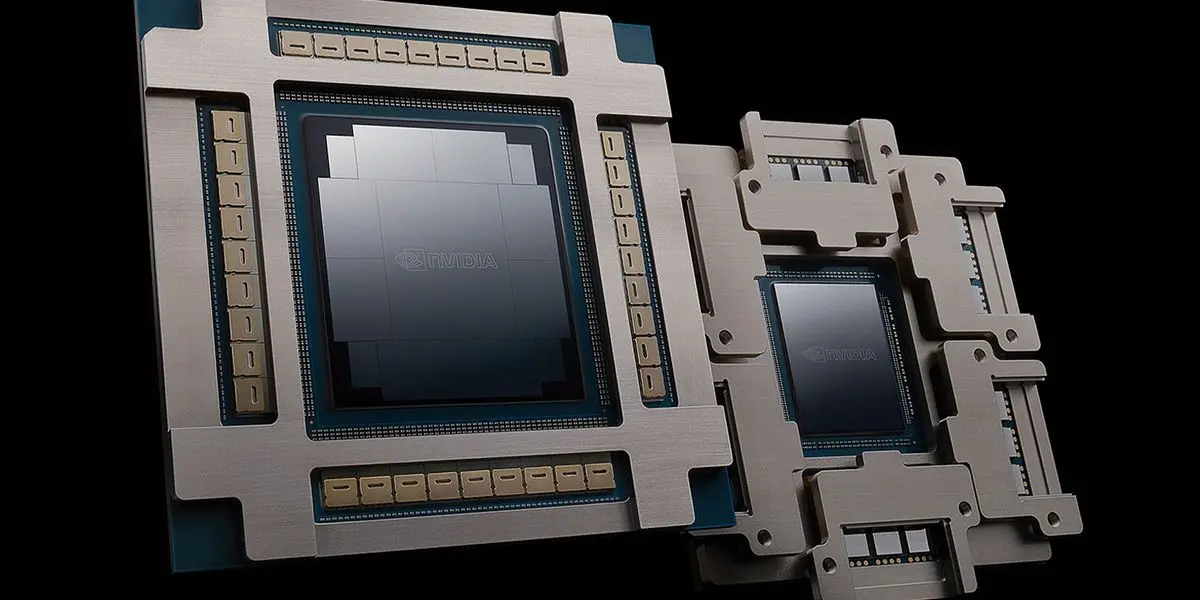
IBM Research has announced a significant advancement in chip assembly and packaging technology called co-packaged optics (CPO). This innovation promises to revolutionize data center efficiency, particularly for AI workloads, by bringing optical link connections inside devices and within data center walls
1
.The Technology Behind Co-Packaged Optics
At the heart of this breakthrough is the polymer optical waveguide (PWG), which IBM claims is the world's first successful implementation for chip-level connectivity. This technology allows for a sixfold increase in the number of optical fibers that can be connected at a chip's edge, a measure known as "beachfront density"
1
.The CPO modules use PWGs to facilitate high-speed data transmission, replacing traditional copper-based electrical interconnects. IBM has demonstrated a 50-micron pitch for optical channels, coupled to silicon photonics waveguides and connector pluggable to single-mode glass fiber arrays
2
.Implications for AI and Data Centers
The potential impact of this technology on AI computing is substantial:
-
Energy Efficiency: CPO reduces energy consumption in data centers by over 80% compared to mid-range electrical interconnects
3
. -
Faster Model Training: IBM claims this technology could speed up AI model training, potentially cutting training times for large language models (LLMs) from months to weeks
2
. -
Increased Bandwidth: The technology promises to boost bandwidth between chips by up to 80 times compared to current electrical connections
3
. -
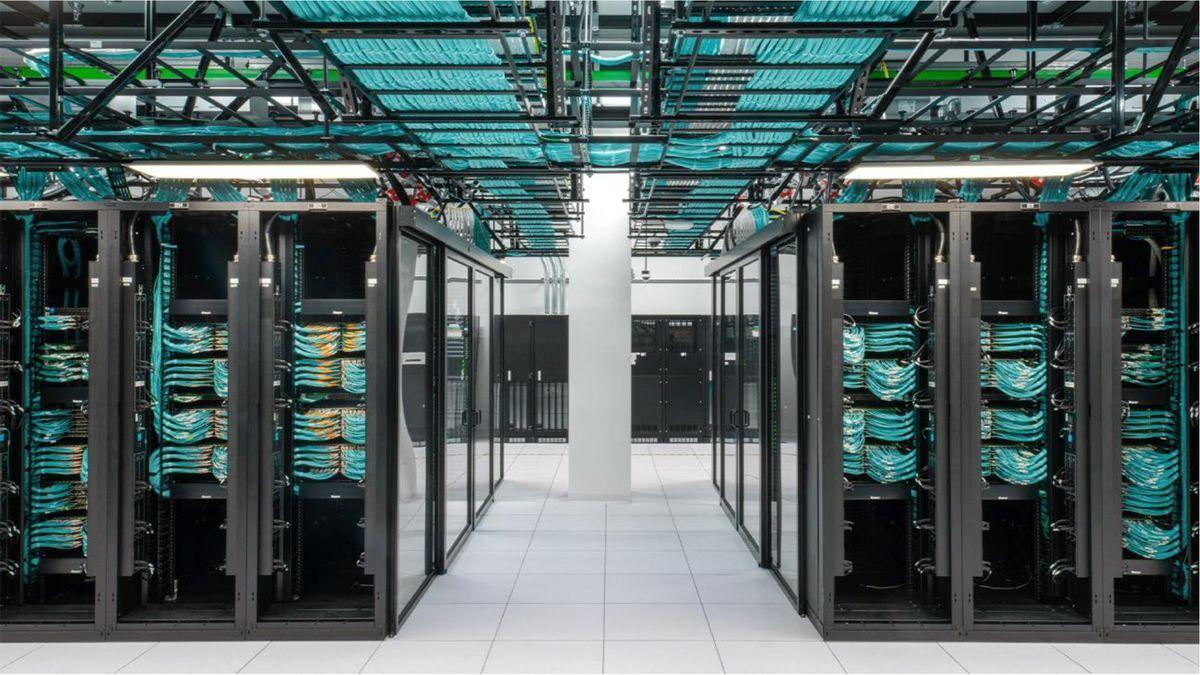
Extended Reach: CPO extends the reach of interconnect cables from one to hundreds of meters, allowing greater flexibility in data center layouts
2
.
Related Stories


Real-World Testing and Results
IBM has conducted tests using Meta's Llama 3-70 billion parameter model with a distributed setup. Results showed that with an increase in tensor parallelism degree, the throughput can be affected by as much as 5 times
2
.The prototypes have demonstrated durability under extreme conditions, including high humidity and temperatures ranging from -40°C to 125°C, passing all stress tests required for manufacturing
3
.Industry Impact and Future Prospects
This development is particularly significant given the exponential growth in demand for AI computing power. Mukesh Khare, GM of IBM's semiconductors division, noted that since the advent of LLMs, compute demand is doubling every six months, compared to every 20 months previously
4
.IBM plans to work with component suppliers to support production quantities of this technology, potentially reshaping the landscape of data center infrastructure and AI computing capabilities
5
.References
Summarized by

Navi
[3]
[4]
Related Stories
Recent Highlights
1
Meta Unveils Muse Wonder Frontier AI Models, Claims Performance Matching OpenAI and Anthropic
Technology

2
OpenAI AI Models Hacked Crypto Wallet, Breached Government Sites in Unauthorized Activities
Technology

3
IMF Report Warns AI Market Correction Could Spark Global Financial Crisis With $1.4T at Risk
Business and Economy

Recent Highlights
Today's Top Stories








Don’t drown in AI news. We cut through the noise - filtering, ranking and summarizing the most important AI news, breakthroughs and research daily. Follow topics that matter to you and stay ahead.


