5 Sources
[1]
Military hardware, energy supply chains to fortify India-Japan ties
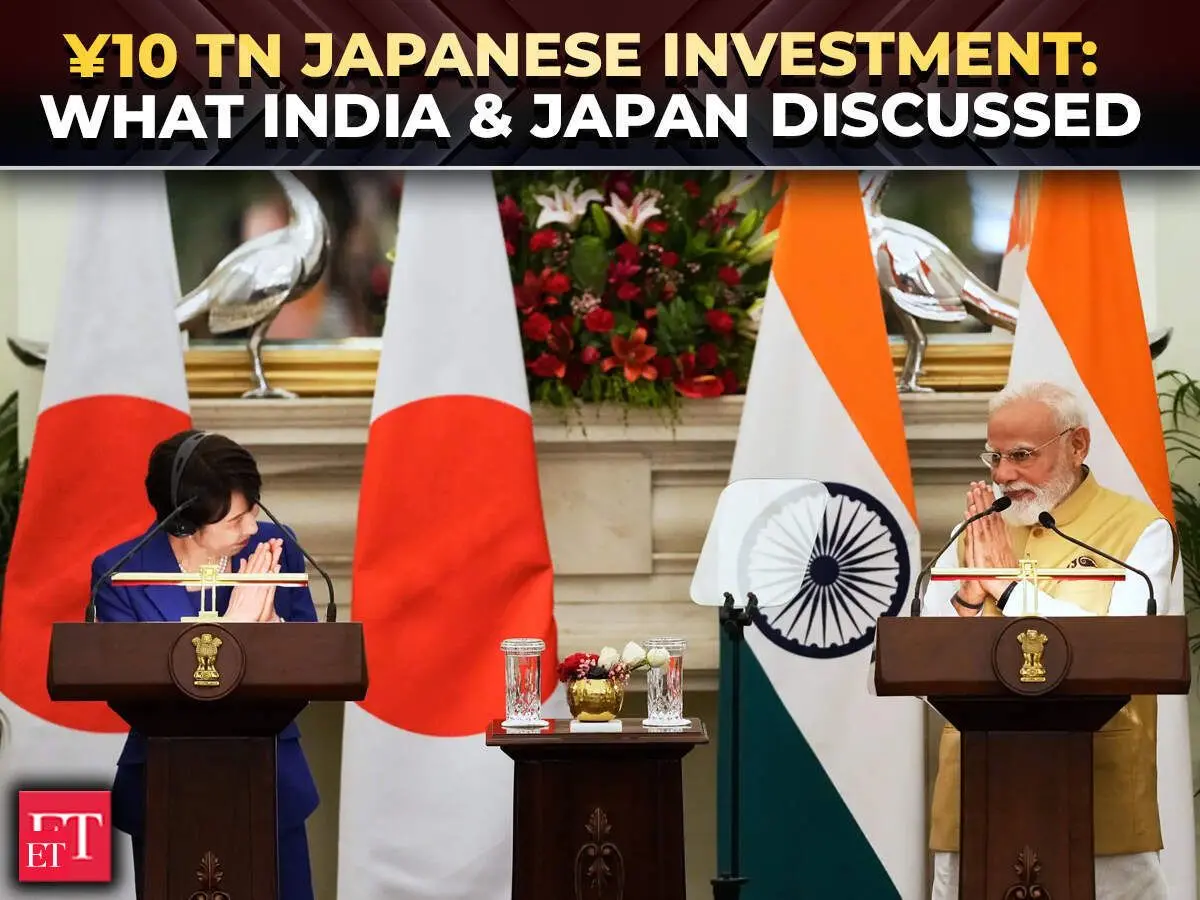
India and Japan have officially strengthened their strategic partnership, emphasizing initiatives aimed at economic security and collaborative military technology development. Important agreements focus on advancements in artificial intelligence and enhancing energy supply chains, particularly in semiconductors and critical minerals. Prime Minister Modi highlighted technology as fundamental, introducing a joint naval radio antenna project and designating 2027 as the India-Japan Year of Shared Horizons. New Delhi: India and Japan on Thursday launched a slew of initiatives, including a joint declaration on economic security and a pact to codevelop military hardware following talks between Prime Minister Narendra Modi and his Japanese counterpart Sanae Takaichi. The other major outcome from the summit included a joint statement for cooperation in the field of artificial intelligence and a joint statement to bolster engagement in the energy supply chain. The two countries have identified semiconductors, critical minerals, pharmaceuticals, clean energy and information and communication technology as priority areas under economic security. ET had reported this week that India and Japan will announce an arrangement on stockpiling LNG and focus on economic security as they seek to diversify supply chains amid weaponisation of supply chains and the conflict. Following the summit, Modi introduced Sanae Takaichi not just as the leader of one of India's closest strategic partners, but as his "younger sister" and hailed her origin from the Nara prefecture in Japan, with which, he claimed "India has Buddhists linkages". Modi announced that India and Japan have signed an agreement for their first co-development project in the defence sector, marking a significant step in bilateral strategic partnership. "This project involving the Naval Radio Antenna 'Unicorn' will open a new chapter in our defence technology partnership." Modi also acknowledged Japan's exceptional contributions to India's domestic infrastructure and industrial modernisation. He underlined the joint efforts by India and Japan to prepare a roadmap for economic security cooperation. "Prime Minister Takaichi and I believe that a technology partnership will become the strongest pillar of our cooperation. To realise this vision, we have also issued a joint statement today regarding AI. Several key institutions within the Indian AI ecosystem have also signed agreements with their Japanese partners today." Modi said, "The convergence of Japan's precision technology and India's software capabilities will give a new momentum and strength to global AI development." The two sides reaffirmed the importance of sharing their respective knowledge and experience, and, where appropriate, promoting concrete cooperation related to stockpiling systems and reserve mechanisms for crude oil and petroleum products. 2027: Shared Horizons Recalling 75 years of establishment of diplomatic relations between India and Japan, the two governments, in cooperation with their respective stakeholders, will celebrate 2027 as the India-Japan Year of Shared Horizons.
[2]
India and Japan Launch Strategic AI Alliance to Drive Trusted Digital Innovation
The initiative marks a significant step in expanding bilateral cooperation across emerging technologies and strengthening the two countries' Special Strategic and Global Partnership. India and Japan have elevated their technology partnership with the launch of a comprehensive artificial intelligence cooperation framework during Japanese Prime Minister Shigeru Ishiba's official visit to India. Announced during the 16th India-Japan Annual Summit with Narendra Modi, the initiative marks a significant step in expanding bilateral cooperation across emerging technologies and strengthening the two countries' Special Strategic and Global Partnership. While the summit addressed a broad range of issues including defence, economic security, resilient supply chains, clean energy, and regional cooperation, technology emerged as one of the central themes. Both leaders agreed to deepen collaboration across the entire AI ecosystem while promoting the development of artificial intelligence that is safe, secure, trustworthy, inclusive, and human-centric. The partnership also encourages closer collaboration between governments, research institutions, universities, startups, and industry to accelerate innovation, commercialisation, and responsible AI adoption across key sectors. The initiative brings together India's strengths in software engineering, digital public infrastructure, and AI talent with Japan's expertise in advanced manufacturing, robotics, semiconductors, and precision engineering. This complementary approach is expected to create new opportunities for innovation while supporting the development of trusted digital technologies. As AI becomes increasingly integrated into critical sectors such as healthcare, manufacturing, financial services, education, and public administration, India and Japan aim to work together on governance frameworks and best practices that encourage innovation without compromising safety or ethical standards. The leaders also reaffirmed their commitment to expanding industrial collaboration and encouraging greater participation by businesses and research organisations in next-generation technology initiatives. The collaboration is expected to leverage India's large pool of digital talent alongside Japan's strengths in industrial innovation, creating new opportunities for research, technology development, and cross-border investment. As the global AI race intensifies, the partnership represents more than a bilateral agreement. It lays the foundation for long-term collaboration in innovation, digital transformation, and responsible AI, while reinforcing both nations' commitment to building a secure, resilient, and future-ready technology ecosystem.
[3]
India, Japan deepen AI cooperation across full tech stack; agree on safe, secure, human-centric AI ecosystem
India and Japan have forged a significant partnership to build a "safe, secure, trustworthy, and inclusive" AI ecosystem. This collaboration spans the entire technology stack, from governance and infrastructure to model development and talent exchange. Both nations aim to leverage AI for innovation, economic security, and societal benefit, aligning with India's MAHASAGAR vision and Japan's Indo-Pacific strategy. India and Japan on Thursday significantly expanded their cooperation in Artificial Intelligence, agreeing to jointly develop a "safe, secure, trustworthy, inclusive, human-centric, sustainable, accountable, and innovation-orientated AI ecosystem" across the entire technology stack. Addressing a special briefing on Japanese Prime Minister Sanae Takaichi's three-day official visit to India, Foreign Secretary Vikram Misri said AI has emerged as a "major sunrise sector" in bilateral cooperation, with both countries aligning their vision on governance, innovation, infrastructure and applications of AI. "The third major focus of discussions today was advanced technology and innovation. Building on the India-Japan AI Cooperation Initiative, the leaders today released a joint statement on cooperation in the field of artificial intelligence," Misri said. "Artificial intelligence is emerging as a major sunrise sector in the cooperation between the two countries," he added. According to the India-Japan Joint Statement on Cooperation in Artificial Intelligence (AI) following the meeting of Prime Minister Narendra Modi and his Japanese counterpart, both leaders acknowledged that AI is an "era-defining general-purpose technology" that is transforming economies, societies, science, governance, industry and security. They noted that "the choices made today in the design, development, deployment and governance of AI will have long-term implications for innovation, social welfare, economic security, and the international order." Both sides concurred in advancing cooperation to enhance resilience and competitiveness and promote innovation and growth while building a "safe, secure, trustworthy, inclusive, human-centric, sustainable, accountable, and innovation-orientated AI ecosystem." The statement also emphasised cooperation in line with India's MAHASAGAR vision and Japan's updated Free and Open Indo-Pacific (FOIP) framework, including strengthening AI collaboration with like-minded countries across the Indo-Pacific and the Global South. On governance, both sides reaffirmed the importance of a global framework centred on "safe, secure, trustworthy, robust, and inclusive AI" and stressed that AI governance should be "risk-balanced, participatory, informed, proportionate, interoperable, and adaptive". They also reaffirmed support for the Hiroshima AI Process (HAIP) and coordination in multilateral platforms, including the G20, OECD, GPAI and the United Nations. The two leaders also emphasised strengthening cooperation across the AI lifecycle, including model evaluation, capability assessment, benchmarks and safety tools. They noted that frontier AI systems carry both defensive and misuse risks, stating that "cyberspace is a Global Public Good," and called for risk-based evaluation and trusted access mechanisms for advanced systems. On infrastructure, India and Japan agreed to strengthen cooperation in secure digital ecosystems, including data centres, GPU capacity, semiconductors and AI compute resources, while assessing vulnerabilities across the AI technology stack from an "economic-security perspective". Both leaders also welcomed efforts under the FOIP Digital Corridor Initiative. In model development and research, both sides agreed to promote cooperation in multilingual, open-source and domain-specific AI models. The statement highlighted key MoUs, including collaboration between IIT Bombay's BharatGen and Japan's National Institute of Informatics (NII) on multilingual scientific large language models, and between Sarvam AI and Preferred Networks on full-stack AI development. The two leaders also stressed AI-enabled scientific discovery and advanced research, encouraging cooperation under the Network of AI for Science (AI4S) Institutions. On human resources, both sides agreed to deepen industry-academia collaboration and talent exchange across the AI ecosystem, including semiconductors and AI applications. The statement noted Japan's recognition of India's "strong AI human capital" and welcomed expanding engagement of Japanese companies with Indian institutions. They also reaffirmed the goal of inviting 500 highly skilled AI professionals from India to Japan by 2030, along with measures to promote joint research, internships and employment opportunities. The leaders emphasised co-creation of AI solutions for public good, calling on governments, startups, academia and industry to develop scalable solutions. They also encouraged the use of the Global AI Impact Commons to scale successful AI use cases. Under the "AI for All" vision, both sides reiterated their commitment to ensure AI benefits "all humanity" and supports inclusive and sustainable development while improving public service delivery. The statement also welcomed Japan's announcement to host an AI Summit at the earliest opportunity, marking another step in strengthening bilateral technology cooperation.
[4]
Modi, Takaichi unveil India-Japan roadmap on AI, Defence ties, energy & economic security
Prime Minister Narendra Modi and Japanese Prime Minister Sanae Takaichi announced a new roadmap to strengthen the India-Japan Special Strategic and Global Partnership at the 16th India-Japan Annual Summit. Among the key announcements was an ambitious target of ¥10 trillion in Japanese investment in India over the next decade, alongside plans to double the number of Japanese companies operating in the country. The leaders also unveiled major initiatives in AI, defence co-development, semiconductors, critical minerals, energy security, green hydrogen, next-generation mobility, research, startups and supply chain resilience.
[5]
India, Japan sign pacts on AI, metals, and energy after Modi-Takaichi talks
NEW DELHI, July 2 (Reuters) - India and Japan signed pacts on Thursday to boost their cooperation in artificial intelligence, metals, energy, and prepared a joint roadmap for economic security, Indian Prime Minister Narendra Modi said after talks with his Japanese counterpart Sanae Takaichi. Takaichi is on a three-day visit to New Delhi as the two Asian partners hold their 16th annual summit. "The convergence of Japan's precision technology and India's software capabilities will give a new momentum and strength to global AI development," Modi told reporters. Bilateral trade between the two countries reached $27.5 billion in fiscal year 2025/26, while Japanese investment in India was $3.2 billion between April and December 2025, according to Indian government data. Modi said that the two countries, also members of the Quad grouping, signed an agreement on their first co-development project in the defence sector. "Through the India-Japan bio-gas Initiative, we will set up 1,000 bio-gas and organic fertilizer plants in India," he added. Japan is among India's largest investors, backing major infrastructure projects including a high-speed rail corridor between the cities of Mumbai and Ahmedabad. Japanese firms have also increased investments in Indian companies, including a recent $1.6 billion deal for a 20% stake in Yes Bank. Takaichi is accompanied by a large business delegation and is due to speak at a business conference later on Thursday. (Reporting by Tanvi Mehta, writing by Hritam Mukherjee; Editing by YP Rajesh)
Share
Copy Link
India and Japan have strengthened their strategic partnership with major agreements on artificial intelligence, military hardware co-development, and energy supply chains. Prime Minister Narendra Modi and Japanese counterpart Sanae Takaichi unveiled an ambitious ¥10 trillion investment target over the next decade, alongside initiatives in semiconductors, critical minerals, and green hydrogen. The partnership aims to build a safe, secure, and human-centric AI ecosystem while addressing economic security challenges.
India and Japan have elevated their Special Strategic and Global Partnership through a comprehensive set of agreements announced during the 16th India-Japan Annual Summit between Prime Minister Narendra Modi and Japanese Prime Minister Sanae Takaichi. The partnership emphasizes artificial intelligence, defence co-development, and economic security as central pillars of bilateral cooperation
1
. The two nations unveiled an ambitious target of ¥10 trillion in Japanese investment over the next decade, with plans to double the number of Japanese companies operating in India4
. This strategic AI alliance marks a significant shift in how both countries approach emerging technologies and supply chain resilience in an increasingly complex geopolitical environment.
Source: ET
The India-Japan roadmap for AI collaboration spans the entire technology stack, from governance and infrastructure to model development and talent exchange. Both leaders agreed to jointly develop a "safe, secure, trustworthy, inclusive, human-centric, sustainable, accountable, and innovation-orientated AI ecosystem"
3
. Foreign Secretary Vikram Misri described artificial intelligence as a "major sunrise sector" in bilateral cooperation, with both countries aligning their vision on governance, innovation, infrastructure and applications. The partnership leverages India's strengths in software engineering, digital public infrastructure, and AI talent alongside Japan's expertise in advanced manufacturing, robotics, semiconductors, and precision engineering2
. Modi emphasized that "the convergence of Japan's precision technology and India's software capabilities will give a new momentum and strength to global AI development"5
.
Source: DT
India and Japan signed an agreement for their first co-development project in the defence sector, marking a watershed moment in bilateral strategic partnership. The Naval Radio Antenna Unicorn project will serve as the inaugural collaboration, opening new possibilities for defence technology partnerships between the two nations
1
. This military hardware cooperation reflects both countries' commitment to strengthening their defence capabilities amid regional security challenges. The agreement builds on existing frameworks and positions India and Japan as key partners in the Quad grouping, which also includes the United States and Australia5
.The two countries identified semiconductors and critical minerals as priority areas under economic security, alongside pharmaceuticals, clean energy, and information and communication technology
1
. India and Japan agreed to strengthen cooperation in secure digital ecosystems, including data centres, GPU capacity, semiconductors, and AI compute resources, while assessing vulnerabilities across the AI technology stack from an economic-security perspective3
. This focus on trusted digital innovation addresses growing concerns about supply chain weaponization and the need for diversified, resilient supply chains in critical sectors.Both nations launched a joint statement to bolster engagement in the energy supply chain, with specific focus on stockpiling systems and reserve mechanisms for crude oil and petroleum products
1
. The partnership includes initiatives in green hydrogen and next-generation mobility, reflecting shared commitments to clean energy transitions. Modi announced the India-Japan bio-gas Initiative, which will establish 1,000 bio-gas and organic fertilizer plants in India5
. These energy supply chain resilience measures come as both countries seek to reduce vulnerabilities and ensure stable access to critical energy resources.
Source: ET
Related Stories
The AI collaboration aligns with India's MAHASAGAR vision and Japan's updated Free and Open Indo-Pacific strategy, including strengthening AI collaboration with like-minded countries across the Indo-Pacific and the Global South
3
. Both sides reaffirmed support for the Hiroshima AI Process and coordination in multilateral platforms, including the G20, OECD, GPAI and the United Nations. This emphasis on global governance frameworks demonstrates both nations' commitment to shaping international AI standards and ensuring that AI development follows principles of safety, transparency, and accountability.Key memorandums of understanding include collaboration between IIT Bombay's BharatGen and Japan's National Institute of Informatics on multilingual scientific large language models, and between Sarvam AI and Preferred Networks on full-stack AI development
3
. The partnership encourages closer collaboration between governments, research institutions, universities, startups, and industry to accelerate innovation, commercialisation, and responsible AI adoption across key sectors2
. Japan has committed to inviting 500 highly skilled AI professionals from India by 2030, along with measures to promote joint research, internships and employment opportunities3
. Bilateral trade between the two countries reached $27.5 billion in fiscal year 2025/26, while Japanese investment in India totaled $3.2 billion between April and December 20255
. The two governments will celebrate 2027 as the India-Japan Year of Shared Horizons, marking 75 years of diplomatic relations1
.Summarized by
Navi
[5]
15 Feb 2025•Technology

18 Jun 2026•Policy and Regulation

02 Jan 2026•Policy and Regulation

1
Policy and Regulation

2
Policy and Regulation

3
Policy and Regulation