India's AI Data Centers Spark Community Pushback as Amazon's $21B Plan Faces Mumbai Protests


2 Sources
[1]
Modi wants India to power the AI age. Residents are pushing back
MUMBAI, Oct 9 (Reuters) - The view from Indian engineer Tushar Shetty's Mumbai apartment captures a tension playing out around the world as the artificial intelligence boom fuels an unprecedented data-centre building spree. What was once a stretch of lush greenery outside his 21st-floor window is
[2]
Modi wants India to power the AI age. Residents are pushing back.
MUMBAI - The view from Indian engineer Tushar Shetty's Mumbai apartment captures a tension playing out around the world as the artificial intelligence boom fuels an unprecedented data-center building spree. What was once a stretch of lush greenery outside his 21st-floor window is now a scar of red
Share
Copy Link
Prime Minister Narendra Modi wants India to power the AI age by hosting the world's data, but residents near Amazon's planned $21 billion AI infrastructure project in Mumbai are pushing back. Concerns over deforestation, water strain, and industrialization of residential areas have sparked street protests, highlighting tensions between India's AI ambitions and community quality of life.
India's AI Ambitions Meet Growing Community Resistance
Prime Minister Narendra Modi envisions India as a global AI hub that can "host the whole world's data," but this vision is colliding with fierce community pushback as AI data centers rapidly expand across the country. The tension is most visible in Mumbai, where Amazon's planned $21 billion investment in AI infrastructure by 2030 has transformed what engineer Tushar Shetty once viewed as lush greenery outside his 21st-floor apartment into a scarred stretch of red earth.
1
The 46-year-old, who purchased his home just five months ago, now regrets the decision he made without knowing about the impending development.Amazon, Google, and Microsoft are collectively pouring billions into facilities stretching from Maharashtra in the west to Andhra Pradesh in the south, with Microsoft unveiling a four-year $20.5 billion investment plan for India AI data centers.
1
Unable to match the frontier AI models emerging from the US and China, India is pursuing a different path by betting that dominance in the physical backbone of artificial intelligence may prove just as valuable. This strategy sits at the heart of Modi's investment pitch as the world's back office loses its shine, even as the ambition collides with concerns over scarce resources and communities living alongside the infrastructure powering the digital economy.Water and Power Strain Threaten India's AI Infrastructure Plans
The environmental and social impact of India's AI data centers is becoming increasingly difficult to ignore. India holds just 4% of the world's freshwater for 18% of its people, and AI data centers are clustering in cities already facing severe shortages.
1
S&P Global estimates that 60% to 80% of Indian data centers could face high water stress this decade. In 2025 alone, data centers consumed about 150 billion liters of water, a figure projected to more than double by 2030, according to research firm Mordor Intelligence.The Amazon data center near Mumbai has emerged as one of India's most prominent flashpoints for resident pushback. Reuters interviews with more than two dozen residents and a review of official correspondence reveal growing concerns that the 54-acre facility will strain local power and water supplies and generate noise harmful to health, particularly for children and the elderly.
1
On September 8, hundreds of residents, including elderly people, gathered beside the site holding placards reading "Data centres are energy vampires," demanding the project be moved elsewhere.Amazon Faces Community Outrage Over Industrialization of Residential Areas
More than 1,000 residents living near the Amazon facility say the project was pushed through without meaningful consultation, highlighting the lack of community engagement that has characterized India to power the AI age strategy.
1
In stark contrast, Amazon paused a 2024 proposal for three facilities in Virginia amid concerns over noise and proximity to homes, saying it wanted more time for community engagement. Mumbai residents say they never received that opportunity.
Source: Japan Times
Vasudha Shetty, 62, who bought a flat near the planned facility, captured the community's frustration: "If the data centre stops, we will stay ... If it goes ahead, we will move."
1
The deforestation required for the project has particularly angered residents who watched trees being felled to make way for the facility. Internally, Amazon is not overly concerned because government officials have indicated the protests will pass, according to a person familiar with its planning. However, the company is drawing up community outreach plans to address concerns over noise, water and power strain.Related Stories

Industry Questions and Government Defense of AI Data Centers
Amazon and local authorities have strongly defended the project, stating it will not burden public utilities because water and power will come from dedicated sources.
1
Amazon told Reuters the data center will use water-free cooling, a dedicated power supply separate from homes, and noise-mitigation measures. The company added that more saplings were planted than trees removed. "Building data centres comes at a cost. Amazon at a global level is prepared to work with community and limit any inconvenience," a person familiar with the planning said. "For now there is no other option but to live with protests."Yet even some industry executives question whether AI data centers belong next to neighborhoods. Sharad Agarwal, CEO of Sify Infinit Spaces, which runs 14 data centers, stated at an industry event in September: "I will never set up a data centre in a residential area. Centres need abundant, uninterrupted power and water ... and near homes they risk being starved of both in a shortage."
1
Modi's government has mounted a public defense, promoting data centers online as "the invisible engines powering India's digital life" and arguing modern technologies use water and electricity more efficiently. The Ministry of Electronics and Information Technology, the Prime Minister's Office, and Maharashtra's chief minister's office did not respond to requests for comment.The dispute has sparked street protests and drawn opposition politicians into the fight, signaling that community pushback may intensify as India's AI ambitions accelerate. From the suburbs of Virginia to the outskirts of Amsterdam and Dublin, residents have increasingly rebelled against the spread of AI data centers, complaining of noise, surging electricity consumption, water stress, and industrialization of residential neighborhoods.
1
This resistance is now gaining ground in India, where the collision between national AI infrastructure priorities and local quality of life concerns will likely shape how the country positions itself in the global AI race.References
Summarized by

Navi
Related Stories
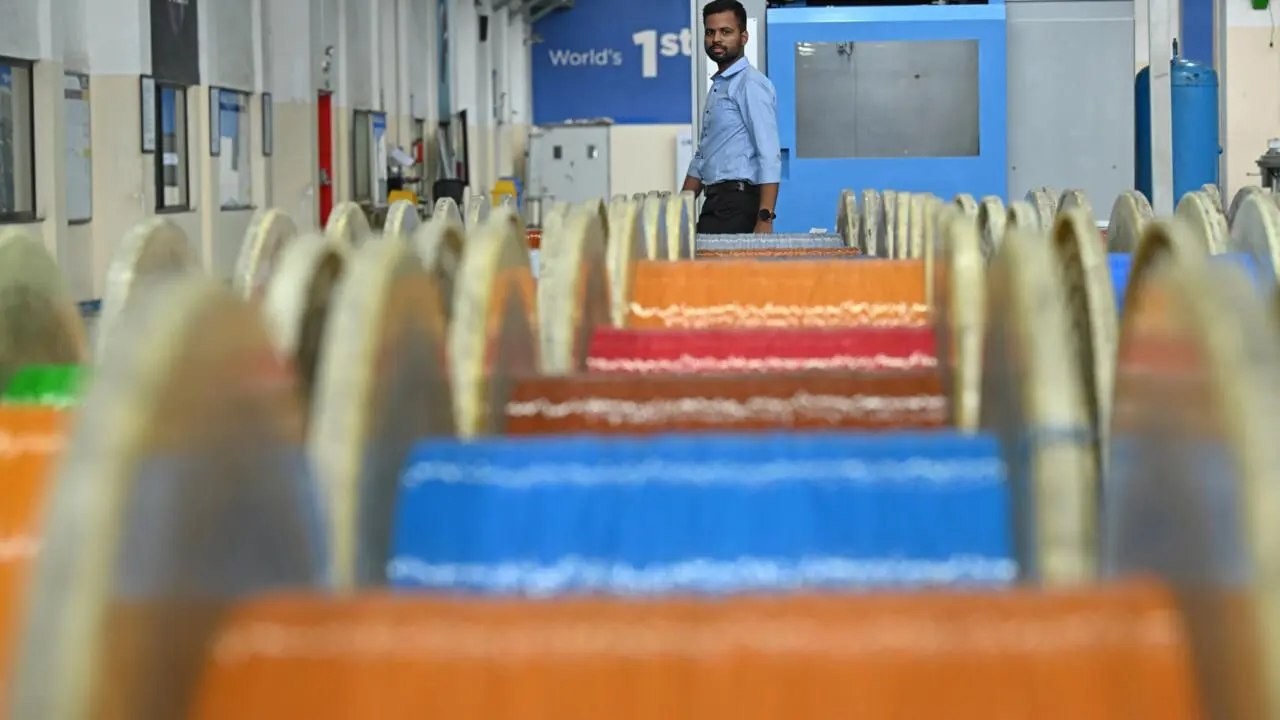
Indian manufacturers cash in on AI infrastructure boom with cables, cooling systems and power units
31 Jul 2026•Business and Economy
India's AI data centers promise internet era-type job boom, but IMF warns of 40% displacement
06 Feb 2026•Business and Economy

India's AI Infrastructure Push: TCS, RIL Lead $1.3 Billion Mission to Build Sovereign Computing Power
08 Sept 2026•Technology

Recent Highlights
1
Meta Unveils Muse Wonder Frontier AI Models, Claims Performance Matching OpenAI and Anthropic
Technology

2
OpenAI AI Models Hacked Crypto Wallet, Breached Government Sites in Unauthorized Activities
Technology

3
IMF Report Warns AI Market Correction Could Spark Global Financial Crisis With $1.4T at Risk
Business and Economy

Recent Highlights
Today's Top Stories






Don’t drown in AI news. We cut through the noise - filtering, ranking and summarizing the most important AI news, breakthroughs and research daily. Follow topics that matter to you and stay ahead.


