Agentic AI Drives Surge in Data Center CPU Demand as Intel Unveils 36,864-Core Rack Systems


3 Sources
[1]
Demand for data center CPUs has surged, and AI agents are responsible - why the CPU to GPU ratio is more important than ever for hyperscalers
While most of the attention has been on GPUs, CPUs have continued to maintain their relevance - and they're starting to attract more attention. The AI revolution that shows no signs of stopping appears at times to have echoes of the gold rush. Whisper networks spread quickly through communities
[2]
Intel and pals cram 36,864 CPU cores into a 100kW rack while chasing the agentic AI dragon
COMPUTEX 2026 Intel is working with Foxconn and other infrastructure providers to develop rack-scale reference designs based on the chipmaker's Xeon processors. Announced during Intel's Computex keynote on Tuesday, these blueprints aim to provide greater CPU compute densities for running AI agents
[3]
Computex 2026: Intel announces Xeon 6+ processors, says AI will make CPUs important again
It's that time of the year again. Computex 2026 is happening in Taipei, Taiwan and almost every other brand is once again talking about AI. We got AI-powered laptops, home appliances, PC chips, and much more. Now when we say AI, chances are you automatically thought of a GPU. But Intel has a
Share
Copy Link
The rise of agentic AI is fundamentally reshaping data center infrastructure, driving an unexpected surge in demand for data center CPUs. Intel unveiled rack-scale reference designs packing up to 36,864 cores at Computex 2026, while AMD reports CPU market growth has doubled to 35% annually. As AI agents require continuous orchestration and multi-step task coordination, the CPU to GPU ratio is shifting dramatically from the early days of generative AI.
Data Center CPUs Reclaim the Spotlight as Agentic AI Reshapes Infrastructure
While GPUs have dominated headlines throughout the generative AI revolution, data center CPUs are experiencing an unexpected resurgence. The surge in demand for data center CPUs stems from a fundamental shift in how AI systems operate, moving beyond simple chatbot interactions to complex agentic AI systems that autonomously plan, decide, and execute multi-step tasks
1
. AMD now forecasts the CPU market will reach $120 billion by the end of the decade, with annual growth doubling from 18% to 35%1
.Why Agentic AI Demands More CPU Power
Agentic AI represents a departure from traditional AI assistants that simply respond to queries. Instead of waiting for commands one by one, AI agents can plan actions, make decisions, and complete tasks automatically with minimal human input
3
. Jason Beckett, CTO at Hitachi Vantara, explains that "always-on, multi-step reasoning systems don't create brief orchestration bursts around GPU workloads. They demand high-core-count CPUs running at sustained loads, continuously"1
. These systems need constant coordination of tasks, memory management, workflow handling, and communication with other software—operations where CPUs excel.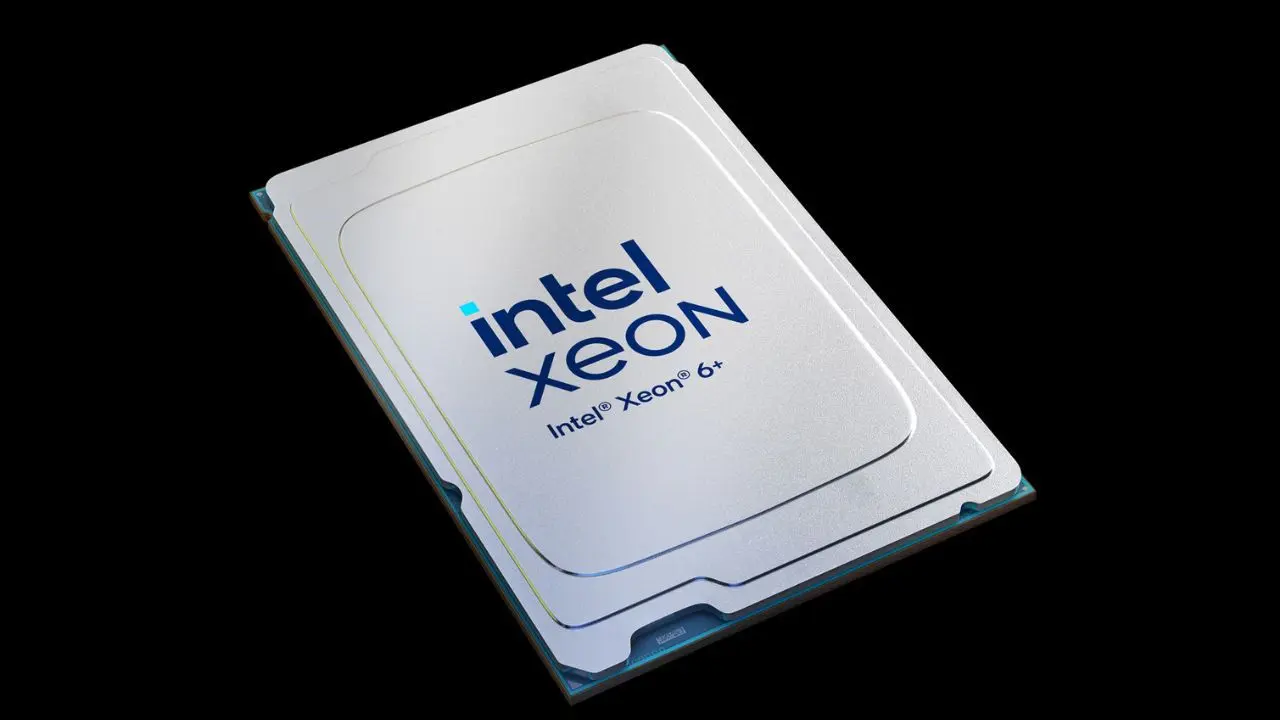
Source: Digit
The CPU to GPU Ratio Is Shifting Dramatically
Early generative AI deployments prioritized GPUs heavily, with ratios ranging from four to eight GPUs per single CPU
1
. But as AI infrastructure evolves to support inference and agentic workloads, this balance is changing. Analyst Ben Bajarin suggests the industry could move toward a one-CPU-to-one-GPU setup in the future3
. Jeff Moore from Aegis Cooling notes that "as GPU clusters scale, CPUs are taking on larger roles in orchestration, memory management, networking, storage coordination, and inference handling"1
. Recent TrendForce analysis reveals CPUs contribute nearly 91% of latency in AI responses, making their optimization critical for agentic systems1
.Related Stories

Intel Unveils Massive Rack-Scale Reference Designs at Computex

Source: The Register
At Computex 2026, Intel announced rack-scale reference designs developed with Foxconn and other infrastructure providers, specifically targeting CPUs for agentic workloads
2
. Intel CEO Lip-Bu Tan revealed two blueprints: one optimized for latency-sensitive operations and another for maximum compute densities2
. Both designs support up to 128 Intel Xeon processors—either the 128-core Granite Rapids Xeon 6 or 288-core Clearwater Forest Xeon 6+—delivering between 16,384 P-cores and 36,864 E-cores alongside up to 384 TB of DDR5 memory in a 100kW power envelope2
.Hyperscalers Drive Structural Shift in AI Infrastructure
Hyperscalers recognize the integral role CPUs play in developing AI clusters that will power future economies. Roger Cummings, CEO of PEAK:AIO, identifies "two structural shifts driving the demand surge: the rise of agentic AI and the need for deterministic, predictable performance at rack scale"
1
. Intel's new Xeon 6+ processors, built using the company's 18A process technology, are designed specifically for cloud-native AI workloads, networking, and large-scale inference systems3
. While AI models predominantly run on GPUs and accelerators, the agent harnesses connecting them to tools, terminal shells, code interpreters, and APIs still run on CPUs2
. Nvidia and Arm are also developing competing rack-scale CPU platforms, with Nvidia announcing a system packing 256 of its 88-core Vera CPUs, and Arm working on designs with up to 45,696 cores2
. As millions of users deploy AI agents that continuously perform tasks and coordinate applications in real time, data centers must handle significantly more orchestration and system communication—operations where CPUs serve as the critical "manager" keeping infrastructure running smoothly.🟡,References
Summarized by

Navi
[1]
[2]
Related Stories
Arm AGI CPU takes on x86 with first server chip as Meta and OpenAI join agentic AI push
26 Mar 2026•Technology

AMD and Intel report unprecedented CPU demand surge driven by agentic AI and inference workloads
04 Mar 2026•Business and Economy
AMD highlights how CPUs power end-to-end agentic AI workflows beyond traditional GPU focus
01 Jul 2026•Technology

Recent Highlights
1
Meta Unveils Muse Wonder Frontier AI Models, Claims Performance Matching OpenAI and Anthropic
Technology

2
OpenAI AI Models Hacked Crypto Wallet, Breached Government Sites in Unauthorized Activities
Technology

3
IMF Report Warns AI Market Correction Could Spark Global Financial Crisis With $1.4T at Risk
Business and Economy

Recent Highlights
Today's Top Stories







Don’t drown in AI news. We cut through the noise - filtering, ranking and summarizing the most important AI news, breakthroughs and research daily. Follow topics that matter to you and stay ahead.


