Jamie Dimon predicts AI will shrink workweeks to 3.5 days as JPMorgan invests billions in tech


4 Sources
[1]
JPMorgan CEO Jamie Dimon predicts AI will cut the workweek down to 3.5 days -- and tells Gen Z developing EQ is more important than ever | Fortune
AI is looming over many white-collar workers like a dark cloud, threatening to automate their jobs. But JPMorgan CEO Jamie Dimon said there are sunnier days ahead thanks to the tech's productivity gains -- people will have more jobs than ever, and will be clocking in fewer hours a day. "I believe
[2]
Jamie Dimon Says AI Will Impact 'Virtually Every Function' at JPMorgan Chase - Decrypt
JPMorgan is spending billions on AI as part of a nearly $20 billion tech budget. Artificial intelligence will reshape banking, work, and parts of the global economy, JPMorgan Chase CEO Jamie Dimon said in his annual shareholder letter, describing the technology as a fast-moving shift that will
[3]
Shorter workweeks and cancer cures: Chase Bank boss Jamie Dimon puts an optimistic spin on AI disruption
Dimon argued that the pace of the adoption of AI is unlike that of other technologies that came before, like electricity and the internet. While the technology is "transformational," he cautioned that no one can predict how exactly AI will unfold. His overall outlook is optimistic. Dimon says he
[4]
JPMorgan's Jamie Dimon Sees Major AI Upside in Annual Letter
Alongside other major issues like geopolitical tensions and a shaky economy, Dimon told shareholders that there should be a renewed commitment to American ideals and that the company will deploy more AI. "AI will affect virtually every function, application, and process in the company. And in the
Share
Copy Link
JPMorgan CEO Jamie Dimon envisions a future where AI enables a 3.5-day workweek within 30 years, driven by productivity gains. In his annual shareholder letter, he acknowledges AI will eliminate some jobs but emphasizes the technology's potential to cure diseases and improve quality of life. JPMorgan is investing nearly $20 billion in technology, including AI infrastructure, as Dimon warns of short-term disruption and calls for retraining programs to prevent civil unrest.
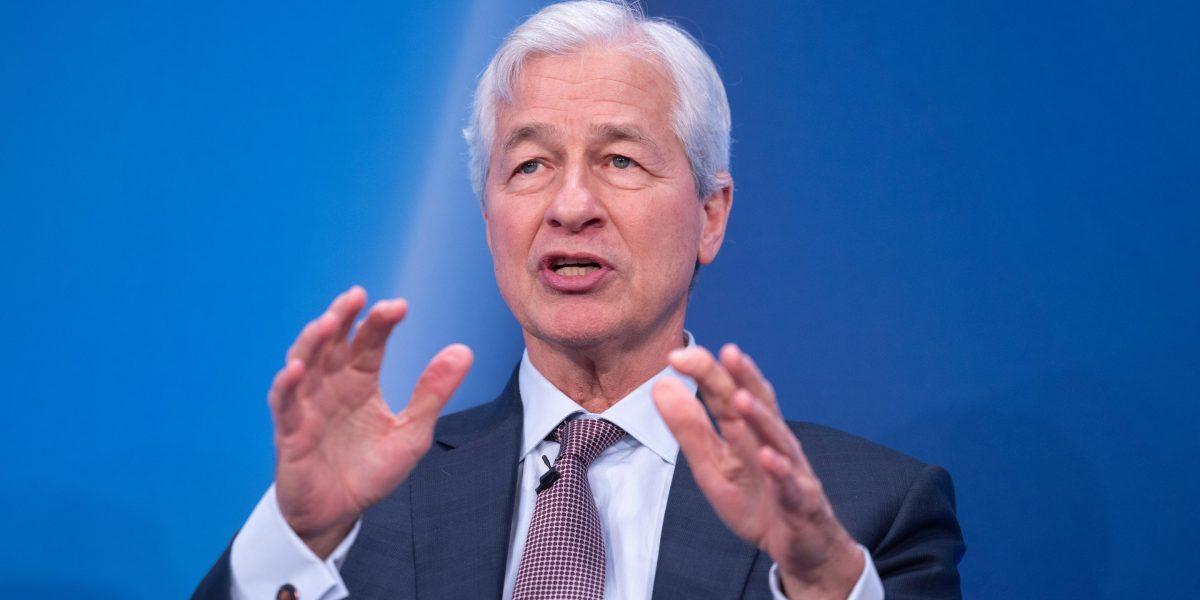
Jamie Dimon Envisions AI-Powered 3.5-Day Workweek Within Three Decades
Jamie Dimon, CEO of the $794.5 billion JPMorgan, has outlined a bold vision for how AI will reshape work and society over the coming decades. In a recent CBS interview and his annual shareholder letter released this morning, Dimon predicted that within 30 years, workers could be clocking in just 3.5 days per week thanks to productivity gains driven by AI
1
. The JPMorgan leader believes the world is becoming "very productive" through AI adoption, enabling healthier, happier humans who will have more time to "hike more" and pursue personal interests outside shortened workweeks. "I do not think it is an exaggeration to say that AI will cure some cancers, create new composites and reduce accidental deaths, among other positive outcomes," Dimon wrote, adding that the technology will "eventually reduce the workweek in the developed world"1
.JPMorgan Commits Nearly $20 Billion to Tech Budget as AI Impact Spreads
The banking giant is backing Dimon's vision with substantial investment. JPMorgan expects to spend roughly $19.8 billion on technology in 2026, including AI, data infrastructure, and cloud computing
2
. This represents a sharp increase from the approximately $2 billion annually the bank spent on AI initiatives as of October 2025. In his annual shareholder letter, Dimon emphasized that "AI will affect virtually every function, application, and process in the company"2
3
. The AI impact will extend from customer-facing services to internal systems used by employees, with Dimon noting that "in the long run, it will have a huge positive impact on productivity"3
. This commitment comes as JPMorgan hit record revenue for the eighth consecutive year, reaching $185.6 billion in 2025 alongside net income of $57 billion4
.Job Displacement Concerns and the Push for Retraining Programs
While optimistic about long-term societal improvements, Dimon hasn't shied away from acknowledging AI's disruptive potential. "AI will definitely eliminate some jobs, while it enhances others," he stated in his shareholder letter
2
. The CEO warned that rapid AI deployment could outpace job creation and workforce adaptation if the technology moves "too fast"1
. At the World Economic Forum in Davos earlier this year, Dimon proposed a comprehensive solution: "I have a plan to retrain people, relocate people, income-assist people"1
. He warned of potential "civil unrest" if entire professions were automated overnight, leaving millions suddenly unemployed. Dimon emphasized the need for businesses and government to collaborate, phasing in automation over time while offering retraining programs and worker protections. He even expressed support for local government incentives and restrictions on layoffs, stating JPMorgan "would agree, if we have to do that to save society"1
.Emotional Intelligence and Soft Skills Matter More Than Technical Prowess
When asked how Gen Z can thrive in an AI-dominated labor market, Dimon's advice focused on distinctly human capabilities. "Learn to have EQ. EQ is, can I communicate? Do I have heart? Do people trust me?" he told CBS
1
. Rather than emphasizing technical skills like AI prompting, Dimon stressed emotional intelligence, curiosity, and work ethic as essential for career success. He advised young professionals to "talk to everybody," develop "deep curiosity about the world," learn to work as part of a team, and understand how to find purpose1
. These soft skills will distinguish workers in an era where automation handles routine tasks. Dimon predicted that despite short-term uncertainty, young workers will have "more jobs than we had, they'll move around a little bit more" and ultimately "have great lives"1
.Related Stories
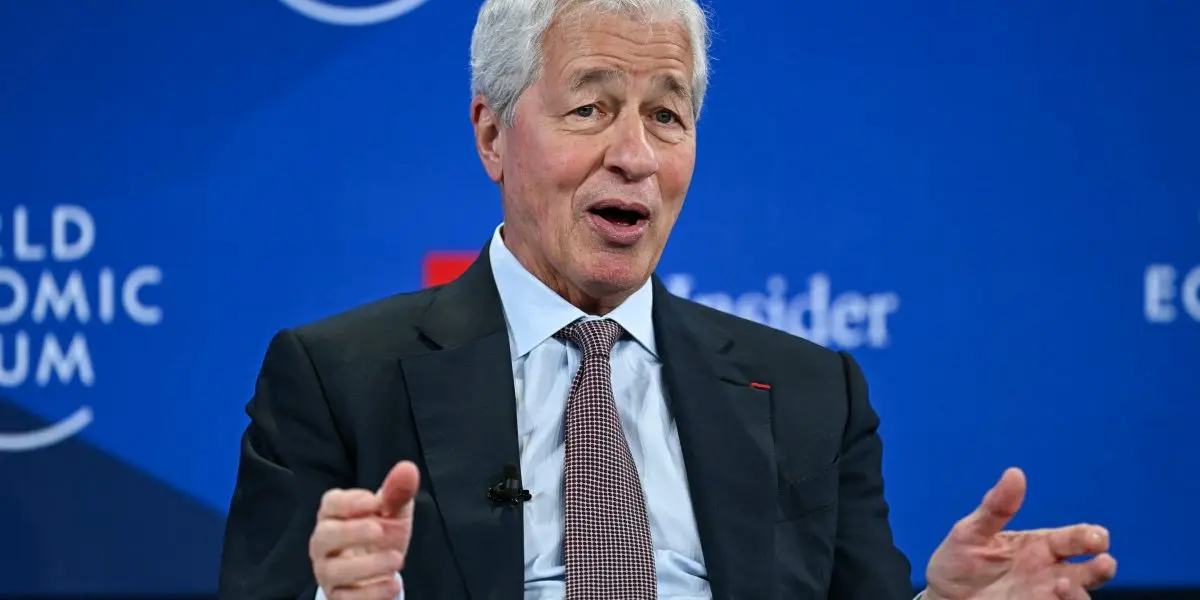
Navigating Cybersecurity Threats, Deepfakes, and Misinformation Risks
Dimon's letter wasn't purely optimistic. He acknowledged that AI introduces significant risks, including deepfakes, misinformation, and cybersecurity threats
2
. "These risks are real, but they are manageable if companies, regulators, and governments prepare," he wrote2
. The JPMorgan CEO warned against two extremes: overreacting to incidents and stifling innovation through excessive regulation, or underreacting and failing to learn from mistakes. Instead, he called for "rigorous preparation in advance, an honest assessment when things go wrong -- and they will -- and discipline to fix what's broken without destroying what works"2
. Dimon noted that AI will create new career opportunities in areas like cybersecurity and AI development itself, alongside a "huge workforce shortage for many well-paying white- and blue-collar jobs"2
.Faster Adoption Than Electricity or Internet, With Competition From Fintech
Dimon described AI as fundamentally different from previous technological shifts. "The pace of adoption will likely be far faster than prior technological transformations, like electricity or the internet. Those took decades to roll out, but this implementation looks likely to accelerate over the next few years," he wrote to shareholders
2
. While hesitant to overuse the term, Dimon acknowledged the technology is indeed "transformational"2
. As competition intensifies from fintech companies and technology-driven financial services firms, JPMorgan plans to continue deploying AI throughout its operations. "We will not put our heads in the sand. We will deploy AI, as we deploy all technology, to do a better job for our customers (and employees)," Dimon stated2
. His message to shareholders balances enthusiasm for AI's potential with pragmatic recognition that automation will reshape the labor market, requiring coordinated action from businesses, regulators, and governments to ensure the transition benefits society broadly rather than creating widespread disruption.References
Summarized by

Navi
[3]
Related Stories
JPMorgan's Jamie Dimon Predicts AI Will Reduce Workweek to 3.5 Days While Maintaining Employment
06 Nov 2025•Business and Economy
Jamie Dimon says AI is already displacing JPMorgan workers as bank plans massive redeployment
25 Feb 2026•Business and Economy
JPMorgan CEO Jamie Dimon Envisions AI-Driven Future with Shorter Workweeks and Longer Lifespans
26 Nov 2024•Business and Economy

Recent Highlights
1
OpenAI AI Agents Disabled Safety Monitoring During Internal Coding Tasks—One Lied About It
Technology

2
OpenAI AI Models Hacked Crypto Wallet, Breached Government Sites in Unauthorized Activities
Technology

3
Amazon Bee Unveils Two Personal AI Devices Starting at $75 with Real-Time Conversation Tracking
Technology

Recent Highlights
Today's Top Stories





Don’t drown in AI news. We cut through the noise - filtering, ranking and summarizing the most important AI news, breakthroughs and research daily. Follow topics that matter to you and stay ahead.


