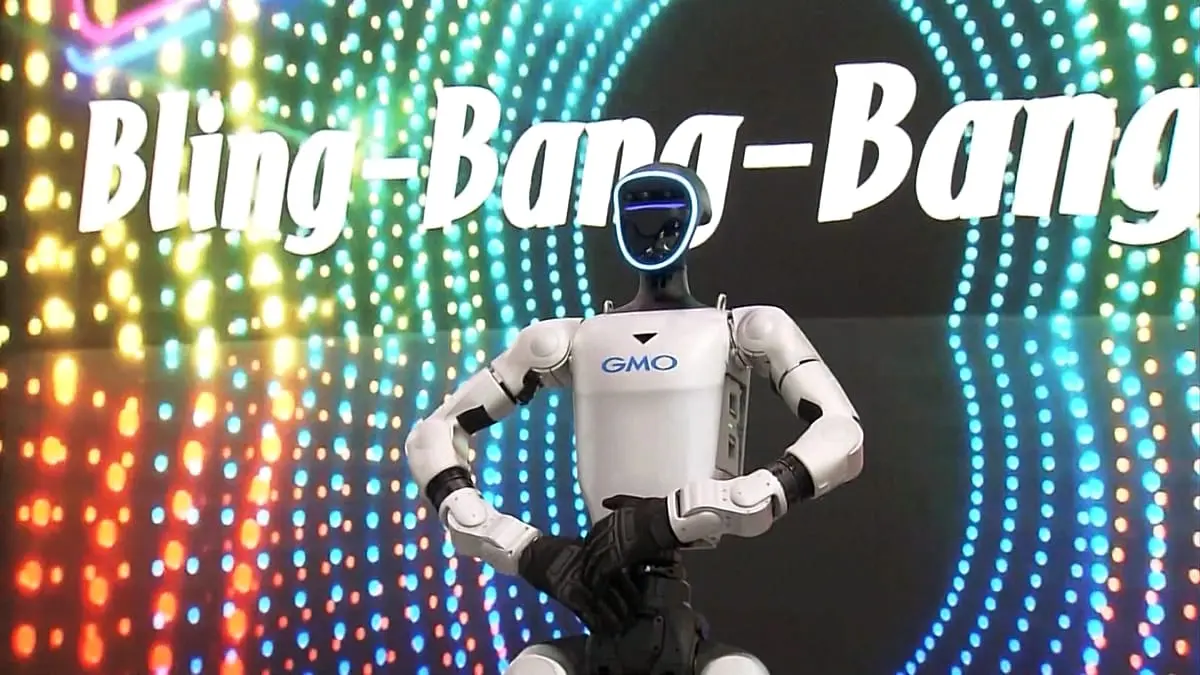
9 Sources
[1]
Humanoid robots start sorting luggage in Tokyo airport test amid labor shortage
Humanoid robots are getting a new gig as baggage handlers and cargo loaders at Tokyo's Haneda Airport -- part of a Japan Airlines experiment to address a human labor shortage as airport visitor numbers have surged in recent years. The demonstration, set to launch in May 2026, could eventually test humanoid robots in a wide range of airport tasks, including cleaning aircraft cabins and possibly handling ground support equipment such as baggage carts, according to a Japan Airlines press release. The trials are scheduled to run until 2028, which suggests that travelers flying into or out of Tokyo may spot some of the robots at work. This marks the latest foray for humanoid robots after they have already begun pilot-testing in workplaces such as automotive factories and warehouses. Most robotic productivity so far has relied on robotic arms and similarly specialized robots that perform the same predictable tasks on assembly lines and in warehouses. By comparison, humanoid robots face a much stiffer challenge in dealing with more open and unpredictable work environments, and it remains to be seen whether the latest robotic software and hardware will be up to the task. Japan Airlines is interested in testing whether humanoid robots powered by some of the latest AI models can adapt more readily to human work environments -- such as airports -- without requiring dedicated work stations or other significant workplace modifications. The airline's subsidiary, JAL Ground Service, has teamed up with GMO AI & Robotics Corporation to oversee the demonstration. The Japanese companies will test the G1 robot and Walker E robot from Chinese companies Unitree Robotics and UBTECH Robotics, according to The Asia Business Daily. Humanoid robots still typically cost tens of thousands of dollars per unit despite Chinese robotics manufacturers scaling up mass production, although the Unitree G1 robot costs as low as $13,500 for the baseline model. A new video from an apparently staged demonstration in an aircraft hangar shows one of the humanoid robots tottering up to a large, metal cargo container and making a vague pushing gesture. But the cargo container only begins to move once a human worker starts the conveyor belt to move the container toward the aircraft. Presumably, the robots will need to put in much more effective work if they're to prove as productive as human airport workers. Having robots working directly alongside humans will also introduce new safety considerations for airports like Haneda Airport, which is Japan's second-largest airport, with flights arriving approximately every two minutes. The first step in the pilot program will involve identifying which airport areas will be safest for humanoid robots. Cost-effective robotic assistance could prove welcome for Japan's airports, which have struggled with a worsening human labor shortage. In December 2023, Tokyo's Narita Airport was reportedly unable to respond to more than 30 percent of requested flights each week because of staff shortages involving cargo handlers and other ground crew, according to The Mainichi. Japanese government data showed that ground crew numbers across Japan fell from 26,300 to 23,700 between March 2019 and September 2023.
[2]
Japan Airlines to trial humanoid robots for baggage handling at Haneda airport amid labor crunch
Analysts said robots still require human oversight despite rapid advances. Japan Airlines has begun testing humanoid robots for ground operations at Tokyo's Haneda Airport amid chronic labor shortages. The airline is partnering with GMO AI & Robotics to trial robots for tasks such as baggage loading and cabin cleaning starting in May, according to a joint statement Monday. The initiative comes as Japan's aviation sector struggles with rising tourism demand and a shrinking workforce, driven by an aging population. Japan Airlines said the humanoid robots are expected to be deployed progressively across Haneda Airport, with full deployment targeted by 2028. In a video demonstration of the technology, a humanoid robot produced by China's Unitree can be seen sliding a payload across a conveyor belt, waving to onlookers, and shaking a coworker's hand. Unitree, one of China's leading robotics firms, debuted its flagship H1 model in a Kung Fu demonstration at China's Spring Festival Gala in February to much fanfare. It is, however, unclear whether Unitree is directly involved in the Haneda Airport trial or is part of a broader evaluation of commercially available humanoid technologies. In a response to CNBC's queries, Japan Airlines said that "feasibility studies and risk assessments" were ongoing. Unitree did not respond to CNBC's requests for comment. Analysts say demographic trends such as rapidly aging populations and lower fertility rates -- typical of metropoles like Tokyo -- are driving demand for humanoid robotics. "Aging populations, labor shortages, and shifting worker preferences are opening the door for humanoids to take on essential - yet often undesirable - roles in manufacturing, logistics, agriculture, healthcare, and hospitality," Barclays wrote in a January research note. Japan's working-age population is projected to decline by 31% from 2023 to 2060, according to an employment outlook by the Organization for Economic Co-operation and Development. Marc Einstein, research director from Counter Research, expects humanoid robots to play an increasing role in Japan's workforce. With Prime Minister Sanae Takaichi's support base premised on tougher immigration policies, Einstein expects the government to "very much encourage the deployment of humanoids in Japan." In March, Japan's Ministry of Economy, Trade and Industry published guidelines on the use of robotics and artificial intelligence to address workforce challenges, including "decreasing labor caused by a declining birthrate and aging population." Data from Japan's National Tourism Organization showed international arrivals rose 3.5% in March from a year earlier, increasing pressure on airport operations. Humanoid robot capabilities have advanced considerably in recent years, with developments in joint dexterity and advances in AI software enabling tasks that "they absolutely couldn't have done even a few years ago," Einstein said. Barclays described physical robotics as the "next frontier" in AI development, as firms seek to merge physical automation with artificial intelligence. The bank estimates the physical AI industry -- presently valued at $2 billion to $3 billion -- could grow to as much as $1.4 trillion by 2035, according to a February research note. Physical AI refers to systems that combine AI with machines capable of performing real-world physical tasks, from robotics to driverless cars. In China, robotics firms such as Unitree, Agibot, also known as Zhiyuan Robotics, and Galbot are advancing affordable humanoid development and exploring initial public offerings to fund their expansion plans and meet growing demand. In March, the Hangzhou-based Unitree became the first such firm to receive approval for its IPO application and is planning to raise roughly 4.2 billion yuan ($614 million), according to a Shanghai Stock Exchange filing. Despite rapid technological progress, it remains unclear whether humanoid robots can fully address Japan's chronic labor shortage. Analysts have previously told CNBC that humanoids still lack the dexterity for more delicate tasks and precise movements. Einstein said the programming and reasoning involved in humanoid technologies remain largely underdeveloped. The deployment of these humanoid robots will likely still require human involvement, he added. "These robots, they're just not very smart yet," Einstein said. Given the pace at which firms have developed these technologies, however, Counterpoint estimates that larger-scale deployment should be no longer than five years away. -- CNBC's Evelyn Cheng contributed to this report. Choose CNBC as your preferred source on Google and never miss a moment from the most trusted name in business news.
[3]
Humanoid robots will work as baggage handlers at Tokyo airport - Engadget
Do you ever feel like you're living in the early chapters of a dystopian sci-fi story? As if AI, mass surveillance, and the increasing concentration of wealth weren't enough, now we have freakin' robots to contend with. And these things always start out appearing harmless, right? That's the backdrop of Japan Airlines' (JAL) decision to deploy androids to help its human baggage handlers. The humanoid robots will be part of a test that kicks off in May (via The Guardian), moving luggage and cargo at Tokyo's Haneda Airport. At a JAL press event this week, a droid was seen gently nudging cargo onto a conveyor belt and waving to a human coworker. At another point, it shook hands with another human colleague, which illustrated its size: It's only 4 feet, 3 inches tall. (Danny DeVito has seven inches on that tin man!) The androids can operate for two to three hours per charge. The trial will roll out in several phases, so the androids won't be doing live work right away. First, JAL will map and analyze airport conditions to identify where they can work safely alongside people. Then, the robots will undergo test runs in simulated airport environments before eventually joining human workers on the tarmac. If all goes as planned, they could eventually be used for other tasks, including cleaning aircraft cabins. Automation typically involves taking jobs away from people. But what about when a country faces a labor shortage? Japan's unique conditions make it an intriguing test bed, with its rapidly aging population and low birth rate leading to a diminished workforce. And with political pressure to curb immigration (sound familiar?), the circumstances are practically tailor-made for corporations to rationalize sending in the androids. Ho, boy. Regardless of how this (seemingly harmless) trial run turns out, Silicon Valley is eyeing human-like robots as one of its next big projects. Androids in the workforce is a Pandora's box that we'll be forced to reckon with in the coming years. Let's just hope our timeline turns out better than the versions our sci-fi prophets repeatedly warned us about.
[4]
Japan Airlines trials humanoid robots as ground handlers
Japan Airlines (JAL) will start using humanoid robots in ground handling tasks at Tokyo's Haneda airport from May, in a two-year trial it said is aimed at easing employees' workload. For a start, the Chinese-made robots will be deployed to load and unload cargo containers, JAL and GMO AI & Robotics, its partner in the project, said in a demonstration to the media on Monday. Japan's aviation industry is wrestling with a labour crunch brought on by an increase in inbound tourism and a declining working-age population, said JAL, which employs some 4,000 ground handling staff. The carrier hopes that these robots can also be used to clean cabins and operate ground support equipment in future. Robots are already being used in some airports across Japan, including for security patrol and retail. Japan welcomed more than seven million foreign visitors in the first two months of this year, according to statistics from JTB Group, which runs Japan's largest travel agency. "While airports appear highly automated and standardised, their back-end operations still rely heavily on human labour and face serious labour shortages," GMO AI & Robotics' president Tomohiro Uchida told reporters. Using robots for physically demanding tasks will "provide significant benefits to employees", Kyodo news agency quoted Yoshiteru Suzuk, the president of JAL's Ground Service, saying. But he noted that some duties, including safety management, can only be handled by humans.
[5]
Tokyo airport testing out humanoid robot baggage carriers
Tokyo's busiest airport will get a helping hand from robots. Credit: Xinhua News Agency / Contributor / Xinhua News Agency via Getty Images Tokyo's Haneda airport, also known as Tokyo International, was the third busiest airport in the world in 2025. More than 91 million passengers flew through the airport in 2025. It's the primary hub for Japan Airlines, and for almost 100 years its had to keep up with increasing passenger demand. So, here come the robots. Announced on April 27, a new pilot will bring humanoid robot baggage handlers to Haneda's tarmac to address ongoing labor shortages across the country. The trial period begins in early May and will run through 2028, deploying robots to do rote tasks within the airport's ground services team. "While airports appear highly automated and standardized, their back-end operations still rely heavily on human labour and face serious labor shortages," explained Tomohiro Uchida, president of GMO AI and Robotics. The airport's ground service president, Yoshiteru Suzuki, told the press that the robots would "inevitably reduce the burden on workers and provide significant benefits to employees." The 4-foot-tall robots are manufactured by Unitree, makers of the infamous quadruped "robot dogs" recently tested for their military applications. The pilot's first phase includes mapping the airport and human worker patterns to determine where robots can operate. Then, the robots will work in simulated airport environments before moving on to the real thing. The airport robots will only get to do some of what their human counterparts are tasked with on a day-to-day basis, including moving baggage onto conveyor belts and, eventually, custodial tasks like cleaning airplane cabins. Humans will continue to oversee key tasks, like safety management. The robots will also get more breaks than their sentient co-workers: Each unit can only work for two to three hours at a time before needing a recharge.
[6]
Humanoid robots to become baggage handlers in Japan airport experiment
Japan Airlines will introduce the robots for trial run at a Tokyo airport amid country's surge in inbound tourism and worsening labour shortages Japan's famously conscientious but overburdened baggage handlers will soon be joined by extra staff at Tokyo's Haneda airport - although their new colleagues will need to take regular recharging breaks. Japan Airlines will introduce humanoid robots on a trial basis from the beginning of May, with a view to deploying them permanently as a solution to the country's chronic labour shortage. The Chinese-made humanoids will move travellers' luggage and cargo on the tarmac at Haneda, which handles more than 60 million passengers a year. JAL and its partner in the initiative, Japan Airlines GMO Internet Group, hope the experiment - which ends in 2028 - will lessen the burden on human employees amid a surge in inbound tourism and forecasts of more severe labour shortages. In a demonstration for the media this week, a 130cm-tall robot manufactured by Hangzhou-based Unitree was seen tentatively "pushing" cargo on to a conveyer belt next to a JAL passenger plane and waving to an unseen colleague. The president of JAL Ground Service, Yoshiteru Suzuki, said using robots to perform physically demanding work would "inevitably reduce the burden on workers and provide significant benefits to employees", according to the Kyodo news agency. Suzuki added, however, that certain key tasks - such as safety management - would continue to be performed by humans. Japan is struggling to cope with a simultaneous surge in tourists from overseas and an ageing, declining population. More than 7 million people visited the country in the first two months of 2026, according to the Japan National Tourism Organisation, after a record 42.7 million last year, despite a drop in the number of visitors from China triggered by a diplomatic row between Tokyo and Beijing. According to one estimate, Japan will need more than 6.5 million foreign workers in 2040 to reach its growth targets as the indigenous workforce continues to shrink. The country's foreign population has risen dramatically in recent years, but the government is now under political pressure to rein in immigration. The president of GMO AI and Robotics, Tomohiro Uchida, said: "While airports appear highly automated and standardised, their back-end operations still rely heavily on human labour and face serious labor shortages." Robots can operate continuously for two to three hours and the firms are planning to use them to perform other tasks, such as cleaning aircraft cabins.
[7]
Japan Airlines to test humanoid robots for airport ground handling work
Japan Airlines (JAL) and GMO AI & Robotics, a unit of GMO Internet Group, have announced a demonstration experiment to utilize humanoid robots for ground handling tasks at Tokyo's Haneda Airport. The roughly three-year test will begin next month with the aim of reducing the need for manpower and cutting employee workloads amid a severe labor shortage in the industry. In the test, announced Monday, two robots made in China will carry out tasks such as transporting containers and opening and closing levers that secure them. Future plans include enabling the robots to operate autonomously, thereby expanding the range of tasks they can perform. JAL employs about 4,000 workers for ground handling, which often involves working in tight spaces. The company decided to test humanoid robots in order to save labor while leveraging existing facilities.
[8]
WATCH: Japan Airlines turns to humanoid robots to handle baggage
Japan Airlines is experimenting with humanoid robot baggage handlers using "cutting-edge" AI technology at airports starting this month. In a short video, humanoid robots are seen working at Haneda Airport in Tokyo. Japan Airlines partnered with GMO AI & Robotics Corporation for the project. The move comes as the companies said in a joint press release Monday that the aviation industry is facing a "serious challenge" with labour shortages in ground handling operations, which include baggage and cargo handling. A surge in tourism contributed to the lack of workers, they added. Ground handling jobs "rely heavily" on human manual labour, including operating various equipment around aircraft, according to the press release. The "humanoid robots" will "possess a range of motion and adaptability comparable to humans," the companies added. The companies said they hope these robots will eventually handle a wide range of tasks, such as loading baggage, cabin cleaning and operating equipment used at airports to service aircraft.
[9]
Humanoid robots seen handling airport baggage in futuristic true footage
We may no longer fear disgruntled luggage handlers playing soccer with our suitcases. Japan Airlines is looking to fill a baggage handler gap by enlisting an army of automated bag bots to assist their human counterparts. Starting in May, these humanoid luggage handlers -- manufactured by China's Unitree robotics -- will debut at Tokyo's Haneda airport, which handles more than 60 million passengers per year, The Guardian reported. Chinese-made humanoids will move travelers' luggage and cargo on the tarmac at Haneda. If the dry run is successful, these automated bagmen could potentially become a more permanent part of the workflow by 2027, per a press release by Japan Airlines. A demonstration of the automated bag handlers was put on this week, revealing a 130-cm (4 ft, 3.2 in) robot "pushing" cargo onto a conveyor belt next to a passenger plane and waving to a colleague. Yoshiteru Suzuki, president of JAL Ground Service, told the Kyodo News agency that utilizing robots for strenuous physical labor would "inevitably reduce workers' burden, providing significant benefits to employees." However, he noted that certain tasks, such as safety management, can only be handled by humans. "While airports appear highly automated and standardized, their back-end operations still rely heavily on human labour and face serious labor shortages," Tomohiro Uchida, president of GMO AI and Robotics, said. JAL and Japan Airlines GMO Internet Group anticipate that the experiment, which is meant to end in 2028, will lessen the workload of human employees as inbound tourism increases. The humanoid robots would also provide extra staffing to overburdened baggage handlers amid the country's labor shortage -- though they would need regular breaks to recharge, literally. Robots can operate continuously for about two to three hours, according to The Guardian, and they're also projected to be used for other tasks such as cleaning aircraft cabins. Japan has been struggling to deal with a surge in tourists from overseas. More than 7 million people visited the country in the first two months of 2026 alone, according to the Japan National Tourism Organization. Last year, a record Japan saw a record 42.7 million visitors. One estimate showed that Japan would need more than 6.5 million foreign workers by 2040 in order to reach its growth target as the workforce decreases, The Guardian reported.
Share
Copy Link
Japan Airlines has launched a trial deploying humanoid robots for ground handling tasks at Tokyo's Haneda Airport, addressing a severe labor shortage driven by surging tourism and Japan's aging population. The pilot program, running through 2028, will test robots from Chinese manufacturers Unitree Robotics and UBTECH for tasks like cargo loading and cabin cleaning.
Japan Airlines has initiated a groundbreaking trial at Tokyo's Haneda Airport, deploying humanoid robots for baggage handling and other ground handling tasks in response to an intensifying labor shortage
1
. The demonstration, launched in May 2026, represents a significant shift in how the aviation industry labor crunch might be addressed through automation2
. The airline's subsidiary, JAL Ground Service, has partnered with GMO AI & Robotics Corporation to oversee this ambitious experiment, which is scheduled to run until 20281
.
Source: Japan Times
The trial will test humanoid robots from Chinese manufacturers, including the G1 robot from Unitree Robotics and the Walker E robot from UBTECH Robotics
1
. The Unitree G1 robot costs as low as $13,500 for the baseline model, making it one of the more affordable options despite humanoid robots typically costing tens of thousands of dollars per unit1
. At a demonstration this week, a 4-foot-3-inch tall android was shown nudging cargo containers onto a conveyor belt and interacting with human coworkers through gestures like waving and handshaking3
.
Source: Engadget
Japan's declining working-age population has created unprecedented workforce challenges across multiple sectors. Japanese government data revealed that ground crew numbers across Japan fell from 26,300 to 23,700 between March 2019 and September 2023
1
. The situation became critical when Tokyo's Narita Airport reportedly could not respond to more than 30 percent of requested flights each week in December 2023 due to staff shortages involving cargo handlers and other ground crew1
.Japan's working-age population is projected to decline by 31% from 2023 to 2060, according to an employment outlook by the Organization for Economic Co-operation and Development
2
. This demographic reality, combined with Prime Minister Sanae Takaichi's support base premised on tougher immigration policies, creates conditions where the government is expected to "very much encourage the deployment of humanoids in Japan," according to Marc Einstein, research director from Counter Research2
.The trial at Tokyo's Haneda Airport will roll out in several carefully planned phases to ensure humanoid robot baggage carriers can work safely alongside humans
3
. The first step involves mapping and analyzing airport conditions to identify areas where robots can operate without compromising safety management protocols1
. Subsequently, the robots will undergo test runs in simulated airport environments before joining human workers on the tarmac for live operations3
.Japan Airlines is interested in testing whether humanoid robots powered by AI models can adapt to human work environments without requiring dedicated work stations or significant workplace modifications
1
. The robots are expected to be deployed progressively across Haneda Airport, with full deployment targeted by 20282
. Each unit can operate for two to three hours per charge before needing a recharge5
.While the initial focus centers on loading and unloading cargo containers, Japan Airlines envisions a broader role for these machines
4
. The demonstration could eventually test humanoid robots in a wide range of airport tasks, including cabin cleaning aircraft cabins and possibly handling ground support equipment such as baggage carts1
. "While airports appear highly automated and standardized, their back-end operations still rely heavily on human labour and face serious labor shortages," explained Tomohiro Uchida, president of GMO AI & Robotics5
.
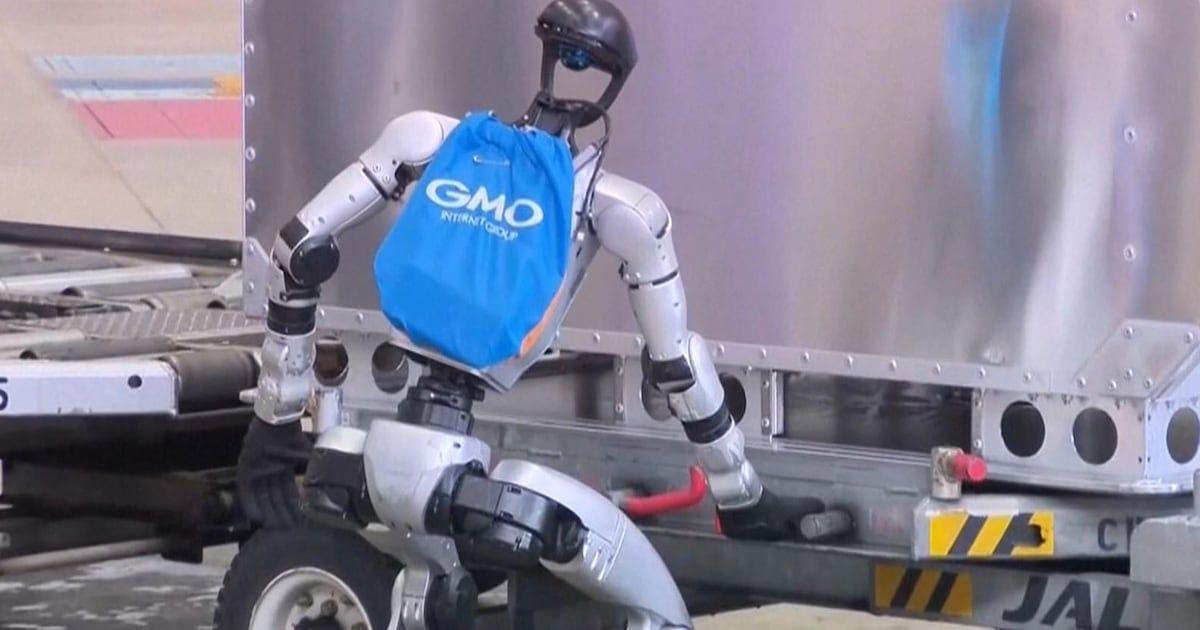
Source: BNN
Yoshiteru Suzuki, president of JAL's Ground Service, told reporters that using robots for physically demanding tasks will "provide significant benefits to employees" by reducing their workload
4
. However, he acknowledged that some duties, including safety management, can only be handled by humans4
.Related Stories
The timing of this trial aligns with surging operational demands at Haneda Airport, Japan's second-largest airport where flights arrive approximately every two minutes
1
. Data from Japan's National Tourism Organization showed international arrivals rose 3.5% in March from a year earlier, increasing pressure on airport operations2
. Japan welcomed more than seven million foreign visitors in the first two months of this year, intensifying the strain on inbound tourism infrastructure4
.Barclays described physical AI as the "next frontier" in AI development, estimating the physical AI industry—presently valued at $2 billion to $3 billion—could grow to as much as $1.4 trillion by 2035
2
. Physical AI refers to systems that combine AI software with machines capable of performing real-world physical tasks, from robotics to driverless cars2
.In China, robotics firms such as Unitree, Agibot (also known as Zhiyuan Robotics), and Galbot are advancing affordable humanoid development and exploring initial public offerings to fund their expansion plans
2
. In March, the Hangzhou-based Unitree became the first such firm to receive approval for its IPO application, planning to raise roughly 4.2 billion yuan ($614 million)2
.Despite rapid technological progress, analysts caution that humanoid robots still face significant limitations. "These robots, they're just not very smart yet," Einstein said, noting that the programming and reasoning involved in humanoid technologies remain largely underdeveloped
2
. The deployment of these humanoid robots will likely still require human oversight, even as they take on essential yet often physically demanding roles in manufacturing, logistics, agriculture, healthcare, and hospitality2
. However, given the pace at which firms have developed these technologies, Counterpoint estimates that larger-scale deployment should be no longer than five years away2
.Summarized by
Navi
[2]
28 Feb 2025•Health

05 Dec 2025•Technology

20 Jan 2026•Technology

1
Technology

2
Entertainment and Society

3
Policy and Regulation