Jensen Huang Says Nvidia Achieved AGI—But Calls Milestone 'Senseless'


4 Sources
[1]
Jensen Huang says Nvidia achieved AGI, again -- not that it matters
On Nvidia's earnings call Wednesday, CEO Jensen Huang casually announced the company had "achieved AGI," one of the tech industry's ultimate goals some of its biggest players have spent years chasing. Almost immediately, Huang dismissed the coveted milestone as "senseless." He's right. For the
[2]
Nvidia CEO: We've Achieved AGI, But It Doesn't Really Matter
AI capable of matching or surpassing human intelligence remains a major goal for the tech industry. But to Nvidia CEO Jensen Huang, this artificial general intelligence (AGI) is a milestone that's become irrelevant. "For many tasks, we could say that we have already achieved AGI. I think all of
[3]
Jensen Huang says AGI doesn't really matter, and he may be right for the wrong reason
How today's imperfect AI is used matters far more than whether it qualifies as intelligent Skynet has missed another appointment. Depending on which Terminator timeline you prefer, the murderous artificial intelligence should have become self-aware in 1997, 2004, 2011, 2017, or perhaps last
[4]
Nvidia CEO Jensen Huang says AGI is already here -- and the milestone is 'senseless'
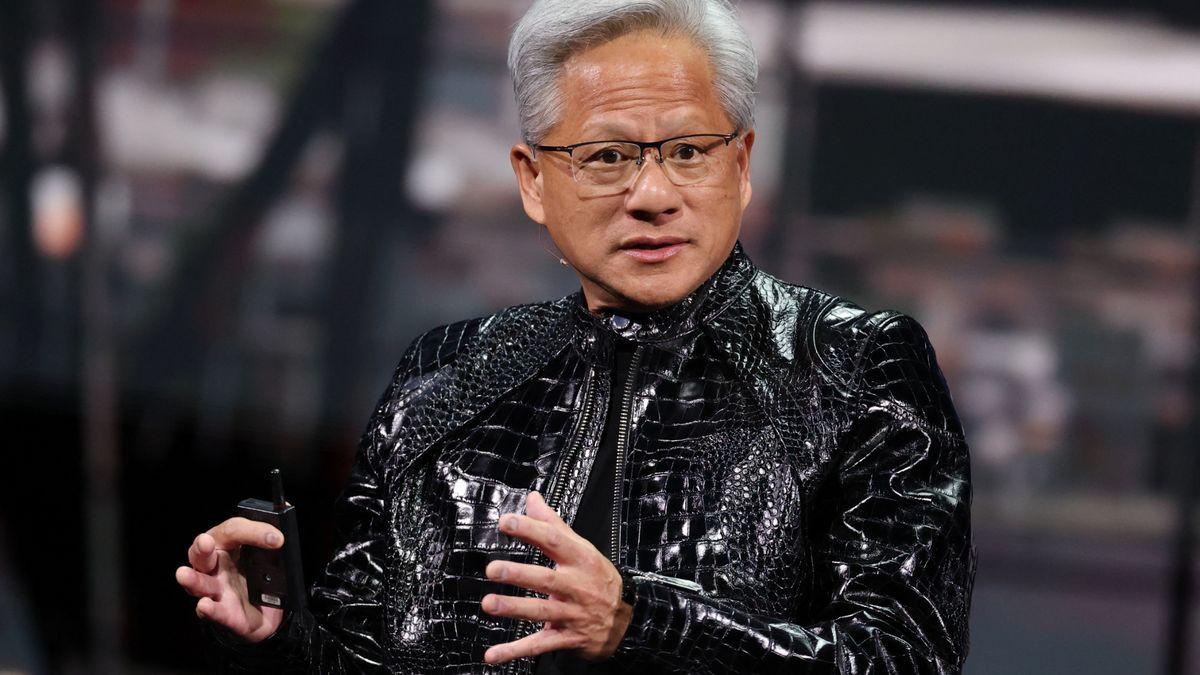
Nvidia CEO Jensen Huang says the company has already achieved AGI but it doesn't matter. Credit: Kiyoshi Ota/Bloomberg via Getty Images Some AI industry leaders, such as OpenAI CEO Sam Altman, are obsessed with artificial general intelligence, or AGI. While the term has no universally agreed-upon
Share
Copy Link
Nvidia CEO Jensen Huang declared on the company's earnings call that AGI has been achieved for many tasks, then immediately dismissed the milestone as meaningless. With no consensus on what artificial general intelligence means, tech leaders remain divided while Nvidia focuses on AI generating profitable tokens.

Jensen Huang Declares AGI Achievement During Nvidia Earnings Call
During Nvidia's earnings call on August 26, 2026, CEO Jensen Huang made a startling claim: the company had "achieved AGI" for many tasks
1
. Almost immediately, the Nvidia CEO dismissed artificial general intelligence as a "senseless" milestone1
. This isn't the first time Huang has made such claims. In March 2026, during an appearance on the Lex Fridman podcast, he plainly stated, "I think we've achieved AGI"2
. However, he qualified this by noting that while AI might create a viral billion-dollar app, "the odds of 100,000 of those agents building Nvidia is zero percent"4
. The declaration comes as Nvidia reported $96.2 billion in fiscal Q2 revenue, up a staggering 106% year-over-year2
, though the company faces extreme pricing conditions in memory that could remain a bottleneck through early 20282
.The AI Industry Debate Over AGI's Definition Intensifies
The definition of AGI remains frustratingly nebulous across the AI industry. OpenAI, founded with the explicit goal of building artificial general intelligence, defines it as "highly autonomous systems that outperform humans at most economically valuable work"
1
2
. Yet Sam Altman himself has acknowledged this is "not a super useful term"1
. Complicating matters further, OpenAI reportedly worked out a different, financially-driven definition of AGI with Microsoft—systems that can generate at least $100 billion in profits1
. In a recent Time interview, OpenAI chief research officer Mark Chen estimated the company is "80% of the way" to AGI, while Altman claimed OpenAI would achieve it by the end of the year1
4
. Other tech giants have retreated to their own terminology: Anthropic CEO Dario Amodei calls AGI "imprecise," even a "marketing term," preferring "powerful AI"1
. Meta discusses "personal superintelligence," Microsoft talks about "humanist superintelligence," Amazon pursues "useful general intelligence," and Google DeepMind's Demis Hassabis speaks of reaching the "foothills of the singularity"1
.What Really Matters: Profitable Tokens Over AGI Milestones
Jensen Huang redirected focus away from the AGI milestone toward more tangible metrics. "I think the most important thing that matters for the industry is that one, AI is doing productive and useful work," Huang explained during the earnings call
2
. "Two, AI is generating profitable tokens. And three, if we had more compute, we could generate more profitable tokens, which results in more profit for all of the services"2
. The Nvidia CEO pointed to AI's evolution beyond simple prompt-response interactions, highlighting how autonomous AI agents can now learn new skills and improve "recursively" by running tasks repeatedly1
2
. This shift in focus might respond to growing concerns about an AI bubble amid unprecedented investment in AI data centers, even as leading players like OpenAI and Anthropic struggle to prove profitability2
. Critics argue that large language models will never achieve AGI because they lack persistent memory, struggle with logic, and remain prone to hallucinating incorrect information2
.Related Stories

Real-World Risks Beyond the AGI Hype
While tech leaders debate abstract AGI milestones, today's AI already poses concrete dangers that don't require human-level intelligence. AI can produce endless fodder for scams, clone voices and faces well enough to trick loved ones out of money through voice cloning, deploy phishing messages to hack secure servers, and flood social networks with synthetic accounts
3
. None of this qualifies as AGI under any serious definition, but the distinction offers little comfort to victims3
. The fixation on AGI may actually complicate regulatory efforts, as lawmakers struggle to address immediate harms while companies obsess over hypothetical future scenarios3
. Huang's suggestion that profitability should replace AGI as a yardstick raises its own concerns. Scams are profitable, as is workforce displacement through replacing human employees with AI models that are 30% as effective at 10% the cost3
. Regulators need to focus on liability, identity verification, ownership, and other legal details rather than getting distracted by AGI's perpetually delayed arrival3
. So long as AGI remains poorly defined and carelessly used, the whole concept remains senseless—unless companies want a handy tool for AI hype1
. Expect the AI industry, including Huang, to keep the AGI talk coming regardless1
.References
Summarized by

Navi
[2]
Related Stories
Jensen Huang claims Nvidia achieved AGI, then immediately walks back the bold statement
23 Mar 2026•Technology

Nvidia CEO Jensen Huang Declares AGI Has Arrived With OpenAI's GPT-6 Astra Release
07 Sept 2026•Technology

Jensen Huang says AI doomer narrative is hurting society and damaging the industry
12 Jan 2026•Technology
Recent Highlights
1
Microsoft and Nvidia Launch Surface Laptop Ultra: A $2,599 AI-Ready PC With RTX Spark Chip
Technology

2
OpenAI Releases 722 AI-Generated Math Papers on GitHub, Igniting Fury Among Mathematicians
Science and Research

3
Trump Consulted Grok AI Before Ordering Venezuela Invasion and Capture of Nicolás Maduro
Policy and Regulation

Recent Highlights
Today's Top Stories









Don’t drown in AI news. We cut through the noise - filtering, ranking and summarizing the most important AI news, breakthroughs and research daily. Follow topics that matter to you and stay ahead.


