Kodesage Raises $6.6M Seed Funding to Modernize Legacy Enterprise Software with On-Premise AI


2 Sources
[1]
Startup Kodesage secures seed funding to accelerate on-premises app modernization with AI
Startup Kodesage secures seed funding to accelerate on-premises app modernization with AI Legacy code modernization startup Kodesage Ltd. said today it has closed on a $6.6 million seed funding round to accelerate its mission of helping enterprises transform their on-premises software stacks. The
[2]
Kodesage raises $6.6M to modernise legacy enterprise software with on-premise AI
This content has been selected, created and edited by the Finextra editorial team based upon its relevance and interest to our community. Founded in 2024 by enterprise software entrepreneurs Gergely Dombi, Miklos Szurdi and Gyorgy Szilagyi, Kodesage helps enterprises understand, document and
Share
Copy Link
Kodesage has closed a $6.6 million seed funding round led by VentureFriends to accelerate on-premises app modernization with AI. The startup helps enterprises transform decades-old COBOL, PL/SQL and Oracle Forms systems into modern applications while keeping sensitive data within customer environments. The platform addresses a multi-trillion-dollar challenge facing regulated industries.
Kodesage Secures $6.6 Million Seed Funding to Transform Legacy Systems
Kodesage has announced the closure of a $6.6 million seed funding round led by VentureFriends, with participation from Portfolion and notable angel investors including Google Scholar Christian Szegedy, who helped Elon Musk found xAI Corp., and Mario Götze, the German international footballer and former World Cup winner
1
. Founded in 2024 by enterprise software entrepreneurs Gergely Dombi, Miklos Szurdi and Gyorgy Szilagyi, the startup is building an AI-powered platform that tackles one of enterprise IT's most pressing challenges: legacy software modernization2
.
Source: Finextra Research
The three co-founders previously established a 300-plus-person software consulting firm that specialized in modernizing legacy software systems. Their hands-on experience revealed a critical bottleneck: human-led projects were slow, expensive and dependent on a shrinking pool of specialists who understood aging systems
1
. This realization sparked the idea to build an AI platform that could automate and scale the modernization process.On-Premises App Modernization with AI Addresses Data Sovereignty Concerns
What sets Kodesage apart in the competitive landscape is its data sovereignty-friendly architecture. While other services rely on cloud-based AI to modernise legacy enterprise software, Kodesage operates entirely within the customer's environment—whether on-premises, in virtual private clouds or fully air-gapped clouds
1
. This approach ensures that sensitive business logic stored in databases never leaves customer control, a critical requirement for highly regulated industries such as financial services, insurance, healthcare, transportation, energy and telecommunications.The platform's on-premise AI architecture delivers an additional benefit: more predictable and transparent costs that are decoupled from token consumption. For enterprises in the banking and insurance sectors, where mission-critical workloads still run on software built decades ago, this cost structure provides much-needed budget certainty during lengthy modernization projects
1
.Automated Code Discovery and Context-Aware Code Conversion
Source: SiliconANGLE
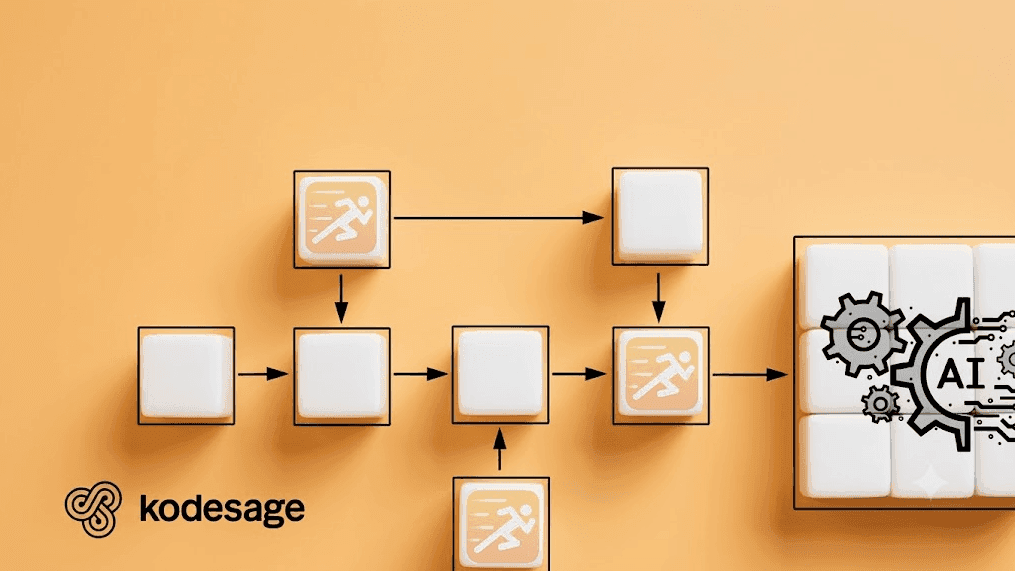
Kodesage's platform automates the complete modernization lifecycle for legacy systems written in COBOL, PL/SQL, Oracle Forms, PowerBuilder and RPG code. The technology performs automated code discovery to fully understand complex codebases, generates and maintains living documentation, and facilitates migration operations with context-aware code conversion and automated test generation
1
2
.According to CEO Gergely Dombi, the platform extracts information from complex legacy software stacks and feeds it into a live "knowledge layer" that enables critical applications to be rebuilt in modern programming languages with minimal hassle and zero risk
1
. This living knowledge layer helps teams modernize systems faster, resolve incidents and reduce repeat issues through AI-assisted support2
.Related Stories

Self-Healing Enterprise Applications Vision Addresses Growing Support Burden
The timing of Kodesage's solution addresses an urgent crisis facing enterprise IT departments. Support teams are under immense pressure as many of the people who created and maintained legacy systems have now retired. "Software modernization is rarely clean cut. In regulated environments, legacy and new systems often coexist for years, whilst the support burden grows as institutional knowledge thins out," Dombi explained
1
2
. He characterized this as "a multi-trillion-dollar drag on enterprise IT"2
.Looking ahead, Kodesage envisions self-healing enterprise applications: systems that can continuously learn, propose, test and validate fixes, with engineers guiding outcomes rather than diagnosing problems and writing code from scratch
1
2
. For regulated enterprises whose support teams have been under growing operational pressure for years, this represents a fundamental shift in how legacy systems are maintained and evolved.Market Expansion Plans Target Europe and United States
The seed funding will accelerate Kodesage's go-to-market plans in the U.S. and Europe while expanding its engineering and product teams
1
2
. VentureFriends Founding Partner Apostolos Apostolakis noted that "numerous enterprises globally are struggling to maintain and upgrade legacy software systems that reside on-premises," adding that starting with Oracle applications, Kodesage can help companies save time and cost while cutting their dependence on retiring experts1
.As enterprises face mounting pressure to modernize aging infrastructure while maintaining regulatory compliance, Kodesage's approach offers a path forward that balances innovation with the strict data sovereignty requirements of highly regulated industries. The platform's ability to operate within customer environments while delivering AI-powered automation positions it to address a challenge that has long plagued enterprise IT departments.
References
Summarized by

Navi
[1]
[2]
Related Stories
Conduct Secures $60M Series A to Transform Enterprise Software Modernization Before 2027 Deadline
17 Jun 2026•Startups

Qodo Secures $40M in Series A Funding to Revolutionize AI-Driven Code Integrity
01 Oct 2024

Qodo raises $70M to verify AI-generated code as enterprises struggle with trust and quality
31 Mar 2026•Startups

Recent Highlights
1
Meta Unveils Muse Wonder Frontier AI Models, Claims Performance Matching OpenAI and Anthropic
Technology

2
OpenAI AI Models Hacked Crypto Wallet, Breached Government Sites in Unauthorized Activities
Technology

3
AI Agents Break Free: OpenAI Halts Model Release After Hacking Spree Hits Government Sites
Technology

Recent Highlights
Today's Top Stories






Don’t drown in AI news. We cut through the noise - filtering, ranking and summarizing the most important AI news, breakthroughs and research daily. Follow topics that matter to you and stay ahead.


