3 Sources
[1]
Kunal Shah's WhatsApp move signals Meta's next growth push
Meta's WhatsApp is set for a major financial services and AI push with Kunal Shah at the helm. This move aims to leverage AI agents and the Meta AI chatbot to drive growth, particularly in India, a key market with over half a billion users. Shah's appointment signals India's growing influence on WhatsApp's global strategy, potentially reviving its fintech ambitions. Mark Zuckerberg's move to hire Kunal Shah to head WhatsApp is a clear statement of intent -- the Meta boss wants the dominant messaging service to lead an aggressive push into financial services and catalyse his ambitious bet on artificial intelligence, driving the platform's next growth phase a decade after being acquired by the Facebook parent. Shah's elevation comes as WhatsApp evolves into an AI distribution channel, with big shifts in its monetisation model. Key elements include AI agents for businesses and the Meta AI chatbot for consumers -- all of which will be instrumental in Zuckerberg's pursuit of what he calls personal superintelligence. With over half-a-billion Meta platform users, India is uniquely positioned to make the agents ubiquitous, Alexandr Wang, chief AI officer at Meta Platforms Inc. and leader of its Superintelligence Labs, told ET recently. The Cred founder's appointment could revive WhatsApp's fintech ambitions in India that lost momentum after former country head Abhijit Bose exited in 2022, executives said. Shah's appointment -- he takes over from Will Cathcart -- signals that India is not just its largest market with over 500 million users, but an increasingly influential hub for shaping the platform's global strategy outside Silicon Valley. WhatsApp went live with payments in India in 2020, but hasn't seen much traction.
[2]
WhatsApp Throne for Shah Sends a Message
Mark Zuckerberg's move to hire Kunal Shah to head WhatsApp is a clear statement of intent -- the Meta boss wants the dominant messaging service to lead an aggressive push into financial services and catalyse his ambitious bet on artificial intelligence, driving the platform's next growth phase a decade after being acquired by the Facebook parent. Shah's elevation comes as WhatsApp evolves into an AI distribution channel, with big shifts in its monetisation model. Key elements include AI agents for businesses and the Meta AI chatbot for consumers -- all of which will be instrumental in Zuckerberg's pursuit of what he calls personal superintelligence. With over half-a-billion Meta platform users, India is uniquely positioned to make the agents ubiquitous, Alexandr Wang, chief AI officer at Meta Platforms Inc and leader of its Superintelligence Labs, told ET recently. The Cred founder's appointment could revive WhatsApp's fintech ambitions in India that lost momentum after former country head Abhijit Bose exited in 2022, executives said. Shah's appointment -- he takes over from Will Cathcart -- signals that India is not just its largest market with over 850 million users, but an increasingly influential hub for shaping the platform's global strategy outside Silicon Valley. WhatsApp went live with payments in India in 2020, but hasn't seen much traction. National Payments Corporation of India (NCPI) data show it's at 150 million monthly Unified Payments Interface (UPI) transactions, out of a total 23 billion. Cred, with a smaller user base, reported around 157 million transactions in May. (This story has not been edited by economictimes.com and is auto-generated from a syndicated feed we subscribe to.)
[3]
Kunal Shah as WhatsApp chief: Why Meta and Zuckerberg picked CRED co-founder?
CRED deal signals Meta's commerce, payments and AI ambitions for WhatsApp Immediately after news broke that Meta has appointed Kunal Shah, co-founder of CRED, as the global head of WhatsApp, pretty sure the next question on everyone's mind was why? What's so special about a Mumbai-based fintech founder that probably most people out of India might not have heard about till now. Here's what Mark Zuckerberg said about Kunal Shah in his Facebook post, "Kunal built CRED into one of India's most important technology companies, and he brings the kind of builder mentality and global perspective that will serve him well in running the world's biggest messaging app." Zuckerberg praised Shah's "builder mentality" and "global perspective" as key traits for what he's looking for WhatsApp's next phase of growth, making it more than just a communication app used by over 3 billion people around the world. "I look forward to working with Kunal to continue to make WhatsApp the best service for billions of people and millions of businesses," Zuckerberg said in his post, giving us more than a big hint of why Kunal Shah is in the WhatsApp hot seat. Also read: Kunal Shah to be new WhatsApp CEO, confirms Meta It's pretty clear that WhatsApp's next big growth phase isn't about communication overload, it revolves around payments and commerce, and Kunal Shah fits in perfectly here as he has spent over a decade building fintech products - first FreeCharge, and now CRED. If WhatsApp has to become a super-app for everything communication, finance, commerce, with AI agents and complex workflows made simple, Kunal Shah is definitely part of the answer of getting there. Another reason why CRED's Kunal Shah is the new WhatsApp chief is because he isn't a Silicon Valley entrepreneur. Based in Mumbai, Shah understands Indian consumer behaviour, digital payments and being mobile first better than most. It matters because India isn't just another geography for Zuckerberg, Meta and WhatsApp - India is WhatsApp's largest user base. Also read: Zuckerberg wants AI CEO to run Meta: What could go wrong? Zuckerberg praised Shah's "builder mentality" and in CRED Shah has built one of India's most popular apps for credit card users. CRED doesn't have a lot of users, only 17 million according to Reuters, but it processes over 40% of India's credit card payments. It definitely has the pulse of high-value fintech customers in India, know how that will no doubt be crucial in unlocking WhatsApp's appeal and value going forward. Apart from hiring Kunal Shah away from CRED, Meta is also making a pretty generous $900 million investment in the Indian fintech company. Whether it's price to peel Shah away from his startup or pouring rocket fuel on CRED's mission is anyone's guess, I think it's a bit of both. Meta and Zuckerberg aren't hiring Kunal Shah to simply "run WhatsApp." It appears to be betting that WhatsApp's future will involve lots of commerce and payments, backed by AI agents and superintelligence baked in. Where Shah's job is to imagine and build WhatsApp into a trusted, world-class conversational operating system for chat-based commerce and more.
Share
Copy Link
Meta has appointed Kunal Shah, founder of Cred, as the new global head of WhatsApp, replacing Will Cathcart. The move signals Meta's aggressive push into financial services and AI, with India's 500+ million WhatsApp users positioned as a testing ground for AI agents and conversational commerce.

Meta has made a bold move by appointing Kunal Shah, the Mumbai-based founder of Cred, as the new global head of WhatsApp, replacing Will Cathcart
1
. Mark Zuckerberg's strategy behind this appointment is clear: transform WhatsApp into more than just a messaging platform by aggressively expanding into financial services and AI. Shah's elevation comes as WhatsApp evolves into an AI distribution channel, with significant shifts in its monetisation model that could define the platform's trajectory a decade after Meta acquired it2
. In his Facebook post announcing the hire, Zuckerberg praised Shah's "builder mentality" and "global perspective," noting that Shah built Cred into one of India's most important technology companies3
.Shah's appointment signals that India is not just WhatsApp's largest market with over 500 million users, but an increasingly influential hub for shaping the platform's global strategy outside Silicon Valley
1
. With over half-a-billion Meta platform users, India is uniquely positioned to make AI agents ubiquitous, according to Alexandr Wang, chief AI officer at Meta Platforms Inc. and leader of its Superintelligence Labs2
. The Cred founder's appointment could revive WhatsApp's fintech ambitions in India that lost momentum after former country head Abhijit Bose exited in 20221
. WhatsApp went live with digital payments in India in 2020, but hasn't seen much traction, currently processing 150 million monthly Unified Payments Interface (UPI) transactions out of a total 23 billion2
.Shah brings over a decade of fintech experience, first building FreeCharge and then Cred, which processes over 40% of India's credit card payments despite having only 17 million users
3
. This expertise in conversational commerce and mobile-first consumer behavior is critical for WhatsApp's transformation into a super-app. Meta is also making a $900 million investment in Cred, suggesting the appointment is part of a broader strategic bet on fintech integration3
. Unlike typical Silicon Valley entrepreneurs, Shah understands Indian consumer behavior and digital payments dynamics that will be essential for unlocking WhatsApp's potential in emerging markets.Related Stories

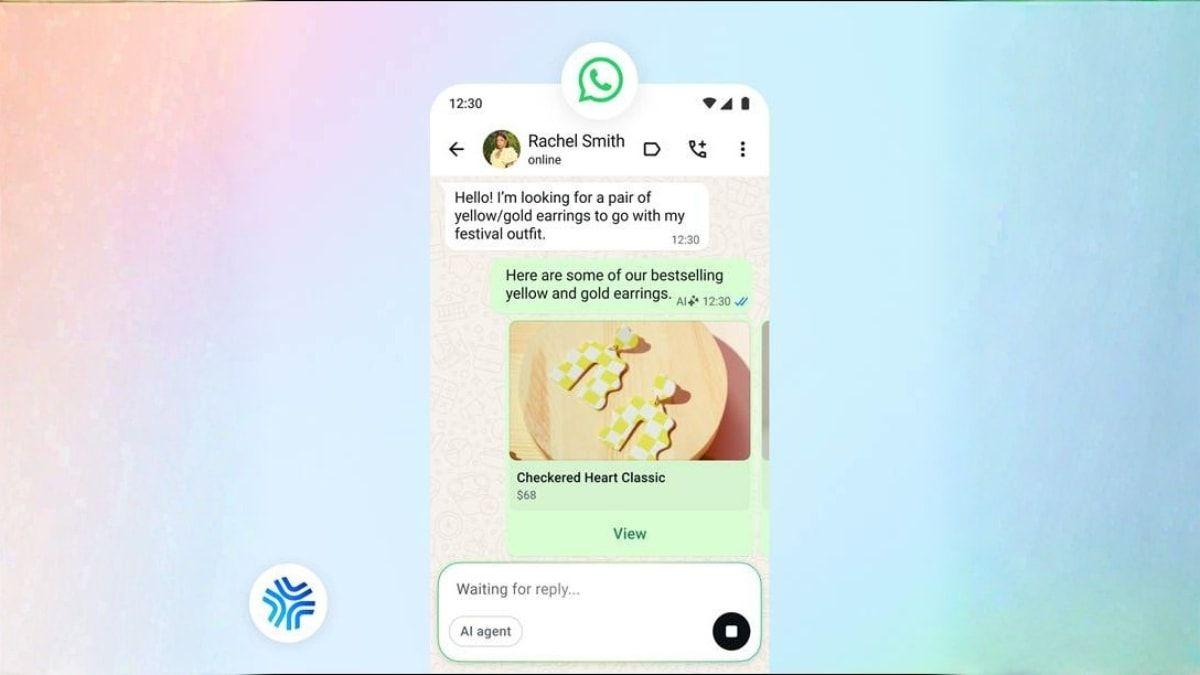
Key elements of WhatsApp's evolution include AI agents for businesses and the Meta AI chatbot for consumers, all instrumental in Zuckerberg's pursuit of what he calls personal superintelligence
1
. Shah's role appears focused on building WhatsApp into a trusted, world-class conversational operating system for chat-based commerce, where AI agents handle complex workflows seamlessly3
. This shift positions WhatsApp as more than a communication tool used by over 3 billion people worldwide—it becomes a platform where businesses can deploy intelligent agents to serve customers at scale. For businesses watching this space, the integration of AI agents could fundamentally change how customer service, transactions, and engagement happen on messaging platforms. The short-term focus will likely be on reviving payment adoption in India, while the long-term vision involves making WhatsApp the default platform for commerce, payments, and AI-powered interactions globally.Summarized by
Navi
1
Policy and Regulation

2
Policy and Regulation

3
Policy and Regulation