LG Electronics and Nvidia explore AI collaboration across robotics, data centres, and mobility


3 Sources
[1]
LG Electronics, Nvidia in talks over robots, AI data centres and mobility
SEOUL, April 29 (Reuters) - South Korean tech company LG Electronics (066570.KS), opens new tab said on Wednesday that it and Nvidia (NVDA.O), opens new tab have been discussing cooperation in robotics, AI data centres and mobility. The comments came after Madison Huang, a senior director for
[2]
LG Electronics and Nvidia are in talks on robotics, AI data centres
The discussions, triggered by a visit from Nvidia's Madison Huang, would deepen LG's physical AI ambitions and give Nvidia another major consumer electronics partner at a moment when physical AI is moving from lab to factory floor. LG Electronics confirmed on Wednesday that it has been in
[3]
LG Electronics, Nvidia in talks over robots, AI data centres and mobility
South Korean tech giant LG Electronics is in talks with Nvidia. The companies are exploring collaboration in key areas like robotics, AI data centres, and mobility solutions. This comes after a visit by Nvidia's senior director for physical AI platforms. The discussions signal potential
Share
Copy Link
LG Electronics and Nvidia are in talks over potential AI collaboration spanning robotics, AI data centres, and mobility solutions. The discussions follow a visit by Madison Huang, Nvidia's senior director for physical AI platforms, to LG's Seoul headquarters where CEO Ryu Jae-cheol attended the meeting directly.
LG Electronics and Nvidia Discuss Strategic AI Collaboration
LG Electronics confirmed Wednesday that it has entered discussions with Nvidia over potential AI collaboration in three critical areas: robotics, AI data centres, and mobility solutions
1
. The talks were triggered by a visit from Madison Huang, Nvidia's senior director for physical AI platforms and eldest daughter of CEO Jensen Huang, to LG's Yeouido headquarters in Seoul2
. LG CEO Ryu Jae-cheol attended the meeting directly, signaling the strategic importance of these exploratory discussions2
.While no formal agreement has been announced and no specific products, investment amounts, or timelines have been confirmed, the three areas under discussion align precisely with both companies' most publicized strategic priorities
2
. The South Korean tech giant's pivot toward AI-powered physical systems and Nvidia's dominance in AI infrastructure create a logical foundation for partnership.Physical AI Platforms Meet Consumer Electronics Scale
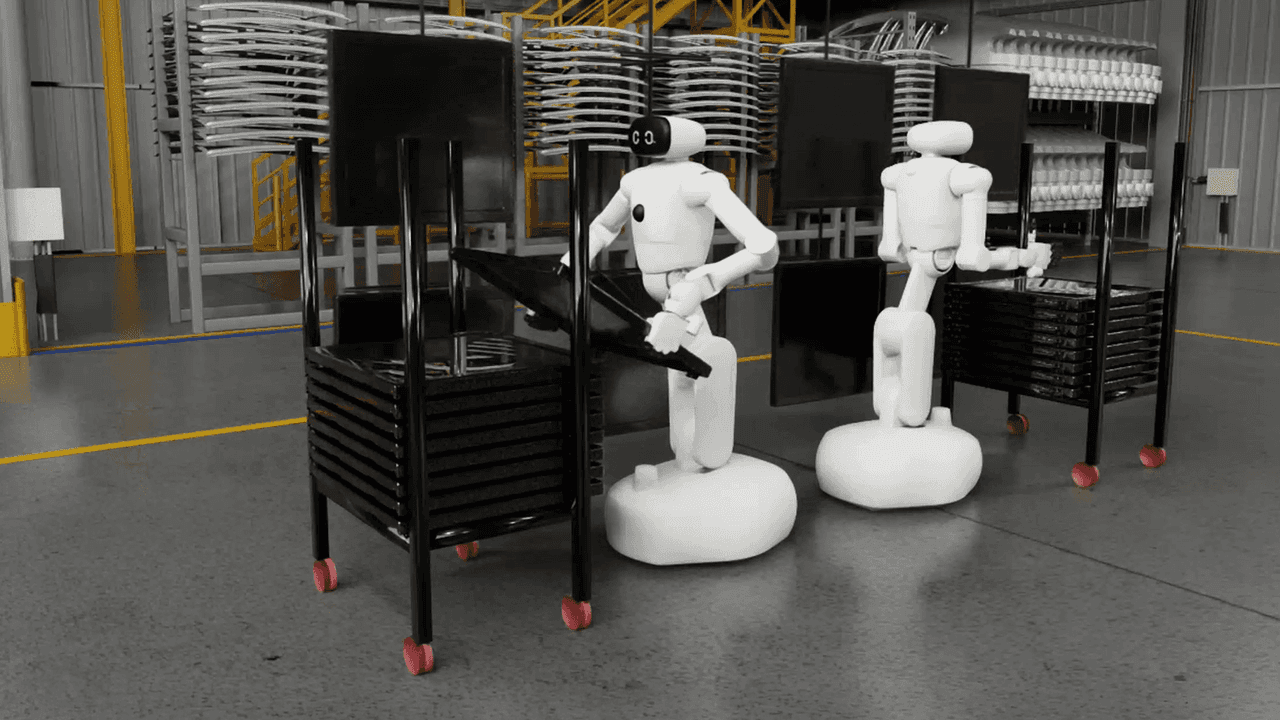
For LG Electronics, the strategic logic centers on accelerating its transition from traditional consumer electronics to AI-powered physical systems. At CES 2026 in January, the company unveiled the LG CLOiD home robot, featuring two articulated arms with seven degrees of freedom per arm and five individually actuated fingers per hand
2
. This humanoid robot represents the physical expression of LG's 'Zero Labor Home' vision, where connected robots and appliances automate household tasks.The CLOiD robot currently runs on LG's own 'Affectionate Intelligence' platform, which handles contextual awareness and natural interaction
2
. However, integrating Nvidia's Isaac robotics stack—including its simulation environment, pre-trained manipulation models, Omniverse-based digital twin infrastructure, and GPU compute optimized for real-time physical AI inference—could dramatically compress the time between prototype and production2
.For Nvidia, LG represents a different category from its existing robotics partnerships, which concentrate on industrial and enterprise settings like the Siemens factory trial in Erlangen
2
. LG would provide mass-market distribution, a global installed base of connected home appliances through its ThinQ ecosystem, and specific plans to deploy robots in actual homes2
. If Nvidia's Isaac platform becomes the AI stack inside CLOiD, it gains access to one of the most data-rich training environments: real homes, real tasks, real variability.AI Data Centres and Thermal Management Opportunities
The AI data centres dimension carries significant near-term commercial potential. LG's CES presentation explicitly positioned the company as a provider of high-efficiency HVAC solutions and thermal management systems for AI data centres
2
. This product category is experiencing explosive growth as the power density of GPU clusters renders conventional cooling infrastructure inadequate.A partnership on data centre thermal management would position LG as a hardware supplier inside Nvidia's ecosystem at the infrastructure level, complementing rather than competing with the AI compute layer
2
. Given that Nvidia's data centre business accounted for the overwhelming majority of its record revenues over the past two years, this represents a substantial market opportunity for both companies.Related Stories
Mobility Solutions and In-Vehicle AI Integration
Both companies operate well-established automotive AI programs that present logical collaboration opportunities. The Nvidia DRIVE platform ranks among the most widely deployed AI computing systems in autonomous and semi-autonomous vehicles
2
. Meanwhile, LG's automotive components division produces in-vehicle infotainment, camera systems, EV components, and what it calls in-vehicle AI solutions including gaze-tracking, adaptive displays, and multimodal generative AI platforms2
. This division represents one of LG's fastest-growing segments.The two companies already operate in adjacent layers of the same vehicle. A formal collaboration would potentially integrate LG's in-cabin AI experience layer with Nvidia's DRIVE compute platform, creating a more seamless smart home ecosystem that extends into mobility solutions
2
. Madison Huang's visit to multiple South Korean companies suggests Nvidia is actively building its physical AI ecosystem across the region3
.References
Summarized by

Navi
Related Stories
NVIDIA and LG Group Build AI Factory to Advance Physical AI, Robotics and Autonomous Manufacturing
08 Jun 2026•Technology
LG and Nvidia Partner to Build Humanoid Robot Launching Q1 2027 with AI Factory Infrastructure
14 Aug 2026•Technology

LG Electronics Secures Nvidia Certification for 2.5-Megawatt AI Cooling Unit, Shares Jump 7.2%
22 Sept 2026•Technology

Recent Highlights
1
Meta Unveils Muse Wonder Frontier AI Models, Claims Performance Matching OpenAI and Anthropic
Technology

2
IMF Report Warns AI Market Correction Could Spark Global Financial Crisis With $1.4T at Risk
Business and Economy

3
OpenAI Releases 722 AI-Generated Math Solutions, Triggering Existential Crisis in Mathematics
Technology

Recent Highlights
Today's Top Stories








Don’t drown in AI news. We cut through the noise - filtering, ranking and summarizing the most important AI news, breakthroughs and research daily. Follow topics that matter to you and stay ahead.


