2 Sources
[1]
Limitless Labs raises $20M to bring AI to the factory floor
Tel Aviv's Limitless Labs has raised $20M to bring 'Physical AI' to CNC machining, the precision metal-cutting behind rocket engines and F1 parts. Its real target: the expertise retiring with a generation of master machinists. The hottest pitch in AI right now is not another chatbot. It is software that can run the machines on a factory floor, and a two-year-old Israeli startup has just raised $20m on the strength of programming parts for Jeff Bezos's rockets. Limitless Labs, formerly LimitlessCNC, closed a $20m Series A co-led by Dell Technologies Capital and Square Peg, with Grove Ventures, Meron Capital and Kinetica. That takes total funding to $27.3m. The Tel Aviv company builds an AI agent for CNC machining, the precision metal-cutting behind everything from rocket engines to medical implants. Feed it a 3D design file and it picks the cutting tools, sequences the operations and generates a ready-to-run machine program, cutting programming time by up to half. Capturing knowledge before it retires The problem it is chasing is demographic. Nearly a quarter of US manufacturing workers are 55 or older, some 409,000 factory jobs sit unfilled, and the gap is projected to hit 1.9 million by 2033. Much of the skill lives in veteran machinists' heads as what the trade calls 'tribal knowledge', and it walks out the door when they retire. 'The manufacturing world needs a better way to capture and scale the expertise that lives inside the heads of a relatively small number of experienced machinists,' said co-founder and chief executive David Priev. Rather than a model trained on text, Limitless says its 'Physical AI' is trained on the physics of metal cutting, machine limits and CAD geometry, and it plugs into the software engineers already use, Siemens NX, Mastercam and PTC Creo. Rockets and F1, at Series A What is unusual is the customer list. Limitless is already in production with Blue Origin, Cadillac's Formula One team, Sandvik and toolmaker ISCAR, environments where a programming error can be catastrophic and tolerances are measured in microns. It is ITAR-compliant and runs on AWS GovCloud for defence work. Landing those names at Series A, while most rivals are still stuck in pilots, is the strongest signal the approach works. The founders, two of them veterans of the IDF's elite 81 tech unit, closed the round in three weeks, with the US investor roadshow falling, as Priev told Geektime, in the opening days of the Iran war, his family sheltering at home as he pitched abroad. A crowded, deep-pocketed field The 'Physical AI' label is suddenly everywhere. Barcelona's THEKER raised €73m for factory robots, NEURA Robotics pulled in up to $1.4bn, and incumbents from Fanuc and Google to Accenture are racing to wire AI into the factory. Against that, $20m is modest. And the harder goal is still ahead. Limitless wants to push towards 'closed-loop' automation, but for now a human engineer signs off every program. Capturing a master machinist's instincts in a model, reliably enough to trust on a rocket, is the real test, and the one the money is meant to crack.
[2]
Limitless Labs lands $20M to build AI agents for precision manufacturing
Limitless Labs lands $20M to build AI agents for precision manufacturing Limitless Labs, operating as LimitlessCNC Ltd., today announced it has raised $20 million in early-stage funding to support agentic artificial intelligence in computer-aided manufacturing. Dell Technologies Capital and Square Peg co-led the Series A funding round, joined by Grove Ventures, Meron Capital and Kinetica. Today's round follows a $4.1 million seed round in March 2025 led by Grove Ventures. Limitless Labs provides a platform that assists with the development, design and production of high-precision machine parts. Computer-aided design and manufacturing is a part of the industry that is a two-part process that has humans design 2D and 3D digital parts of parts and then translate those designs into machine codes that automated machines can then use to build and refine the actual parts. The integration of CAD/CAM has revolutionized various industries, greatly accelerating the ability to precisely machine and develop precision parts, lower waste and speed up production. Examples of industries that have benefited from this industry include manufacturing and engineering that use it to prototype and mill new parts for aerospace and automotive; dentistry that uses it to mill custom crowns, veneers and dental implants - also surgical and specialized medical needs; as well as designing injection molds for electronics, consumer goods, custom jewelry and other everyday items. "The manufacturing world doesn't just need more automation, it needs a better way to capture and scale the expertise that still lives inside the heads of a relatively small number of experienced machinists," said co-founder and Chief Executive David Priev. Limitless sought to tackle this explosion of scale and demand for machining needs as consumer goods and other manufacturing came into their own with retail delivery shifting online and manufacturing becoming an on-demand product. Its platform helps standardize best practices, reduce bottlenecks and free programmers from tedium, the company said, by having AI agents do the everyday work and double-check reliability. The company said the underlying AI agents are trained on the physics of metal cutting, CAD geometry and the operational constraints of real machines, putting them in a special class of large language models and instruction understanding. Limitless Lab's physical AI model translates these real-world foundations into functional understanding for manufacturing. Physical AI refers to artificial intelligence models that connect the real world to the digital, allowing systems to use sensors to understand the environment, reason, make decisions and use actuators to physically manipulate objects. Over the past few years, it has been integrated heavily into manufacturing, where it's rapidly transforming how goods are designed and manufactured. Given a CAD file, the CAM agent can identify features, recommend tools, sequence operations, generate instructions for tools and help produce shop-floor-ready programs to reduce programming time up to 50%. Changing how manufacturing works from design to the factory floor "Eighteen months ago, we backed Limitless Labs' vision that agentic AI could transform the factory floor," said Lior Handelsman, general partner at Grove Ventures and co-founder of solar power system manufacturing company SolarEdge Technologies Inc. "What the team has achieved since then has exceeded expectations." Even as demand for electronics, consumer goods and manufacturing increases. According to a report from The Business Research Private Ltd., demand drivers include simultaneous expansion across aerospace, defense, automotive (especially in electric vehicles), medical devices, electronics and consumer goods, all pulling on the same machining capacity. The market size reached $3.38 billion in 2025 and is expected to exceed $5.09 billion in 2030. With manufacturing jobs reshoring at an increased rate in the United States, Limitless expects that manufacturing needs will become even more compelling at the domestic level. "We believe the next major AI platform will be built for the physical world, and that starts with giving manufacturers a way to scale their best knowledge across every new part and every new engineer," Priev said. Limitless said the new funding will be dedicated to the U.S. commercial organization, advancing the physical AI foundation model automation and growing the CAM agent to automate the design-to-machining pipeline.
Share
Copy Link
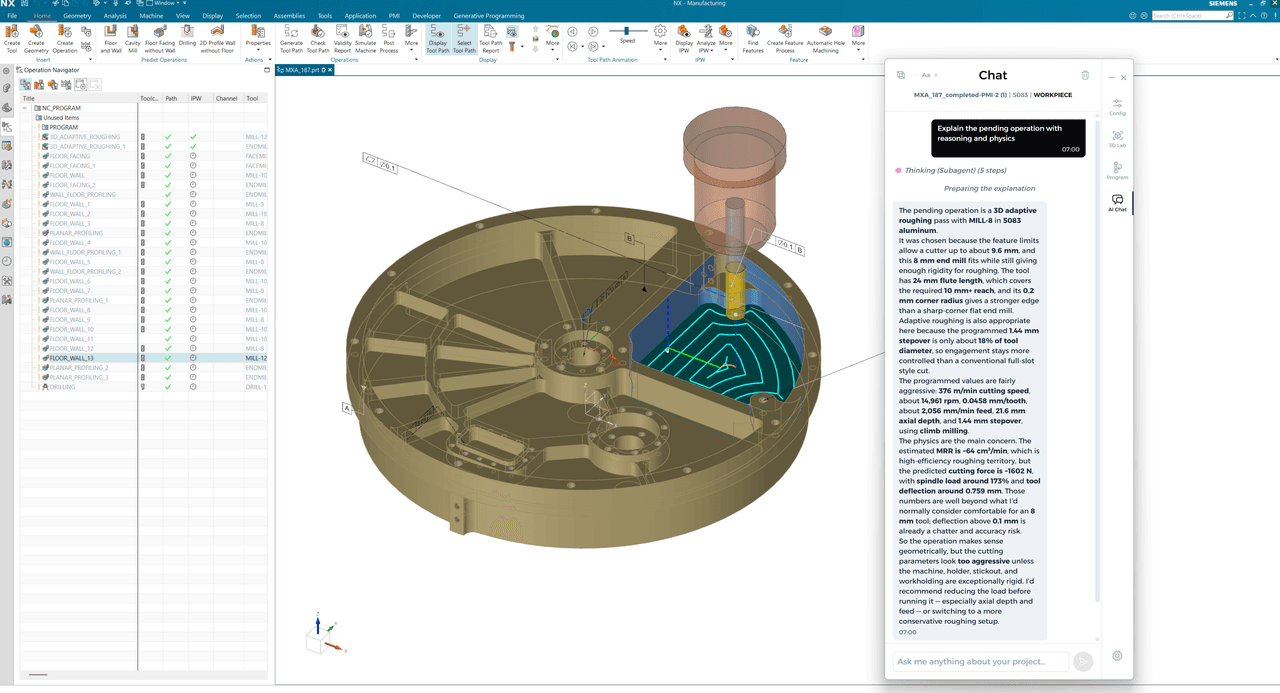
Tel Aviv-based Limitless Labs secured $20 million in Series A funding to bring AI agents to CNC machining, targeting a critical skills gap as nearly a quarter of US manufacturing workers approach retirement. The company already works with Blue Origin and Cadillac's Formula One team, automating programming tasks that traditionally required decades of expertise.
Limitless Labs has closed a $20 million funding round led by Dell Technologies Capital and Square Peg, with participation from Grove Ventures, Meron Capital and Kinetica
1
. The Series A funding brings the Tel Aviv-based company's total capital raised to $27.3 million, following a $4.1 million seed round in March 20252
. The investment positions Limitless Labs, formerly known as LimitlessCNC, to expand its AI-driven CNC machining technology across US manufacturing operations facing an unprecedented skills crisis.The urgency behind AI in manufacturing stems from stark demographic realities. Nearly a quarter of US manufacturing workers are 55 or older, while approximately 409,000 factory jobs sit unfilled
1
. Projections indicate this gap could reach 1.9 million positions by 2033. Much of the expertise critical to precision metal-cutting operations exists as what the industry calls 'tribal knowledge'—skills accumulated over decades that reside solely in the minds of master machinists. "The manufacturing world doesn't just need more automation, it needs a better way to capture and scale the expertise that still lives inside the heads of a relatively small number of experienced machinists," explained co-founder and CEO David Priev2
.Unlike large language models trained on text, Limitless Labs deploys Physical AI trained on the physics of metal cutting, machine operational limits and CAD geometry
1
. The platform integrates directly with software engineers already use, including Siemens NX, Mastercam and PTC Creo. When provided with a 3D design file, the CAM agent identifies features, selects cutting tools, sequences operations and generates ready-to-run machine programs, reducing programming time by up to 50%2
. This approach to automate programming of precision metal-cutting machines addresses bottlenecks that slow production across aerospace, automotive, medical devices and consumer goods sectors.
Source: SiliconANGLE
What distinguishes Limitless Labs at the Series A funding stage is its roster of demanding customers already using the technology in production environments. The company works with Blue Origin on rocket components, Cadillac's Formula One team, industrial giant Sandvik and toolmaker ISCAR
1
. These aerospace and Formula 1 applications operate where programming errors can prove catastrophic and tolerances are measured in microns. The platform maintains ITAR compliance and runs on AWS GovCloud for defense-related work. Landing such high-stakes customers while competitors remain stuck in pilot programs signals the technology's reliability. The founders, including veterans of the IDF's elite 81 tech unit, closed the funding round in just three weeks1
.Related Stories
The design-to-machining pipeline faces mounting pressure as multiple industries compete for limited machining capacity. According to market research, the precision manufacturing sector reached $3.38 billion in 2025 and is projected to exceed $5.09 billion by 2030
2
. Simultaneous expansion across aerospace, defense, electric vehicles, medical devices, electronics and consumer goods creates unprecedented demand. "We believe the next major AI platform will be built for the physical world, and that starts with giving manufacturers a way to scale their best knowledge across every new part and every new engineer," Priev stated2
. With manufacturing jobs reshoring to the United States at increased rates, the domestic skills shortage becomes even more acute.Limitless Labs will deploy the new capital to expand its US commercial organization, advance the Physical AI foundation model and grow the CAM agent's capabilities
2
. The company aims to push toward 'closed-loop' automation, though currently a human engineer still approves every generated program1
. Capturing a master machinist's instincts reliably enough to trust on rocket components represents the ultimate technical challenge. The company operates in an increasingly crowded field where Barcelona's THEKER raised €73 million for factory robots, NEURA Robotics secured up to $1.4 billion, and established players from Fanuc to Google race to integrate AI into manufacturing1
. "Eighteen months ago, we backed Limitless Labs' vision that agentic AI could transform the factory floor," said Lior Handelsman, general partner at Grove Ventures. "What the team has achieved since then has exceeded expectations"2
.Summarized by
Navi
[1]
1
Policy and Regulation

2
Business and Economy

3
Technology