Linus Torvalds Says Linux 7.4 Uses Healthier Model for AI Contributions with Record 20,000 Commits


3 Sources
[1]
Linus Torvalds says Linux kernel is out of 'stabilization phase' and using 'much healthier model' for AI contributions
Darkbloom, which allowed Mac users to rent out their GPUs for AI inference, warns of low payouts 2 days ago Linus Torvalds has posted the first release candidate for version 7.4 of the Linux kernel and offered his opinion that the project has found a "much healthier model" for using AI. "This is
[2]
Linux 7.4 lands with a massive flood of AI patches and record commits
Linux kernel developers have spent much of 2026 debating how to deal with AI-assisted code contributions, including whether developers should disclose their use of AI tools and how maintainers should review machine-generated patches. Following an ever-busier Linux 7.3 testing cycle, Linus Torvalds
[3]
Linux 7.4 Supports AMD Ryzen Zen 6 and Intel Panther Lake
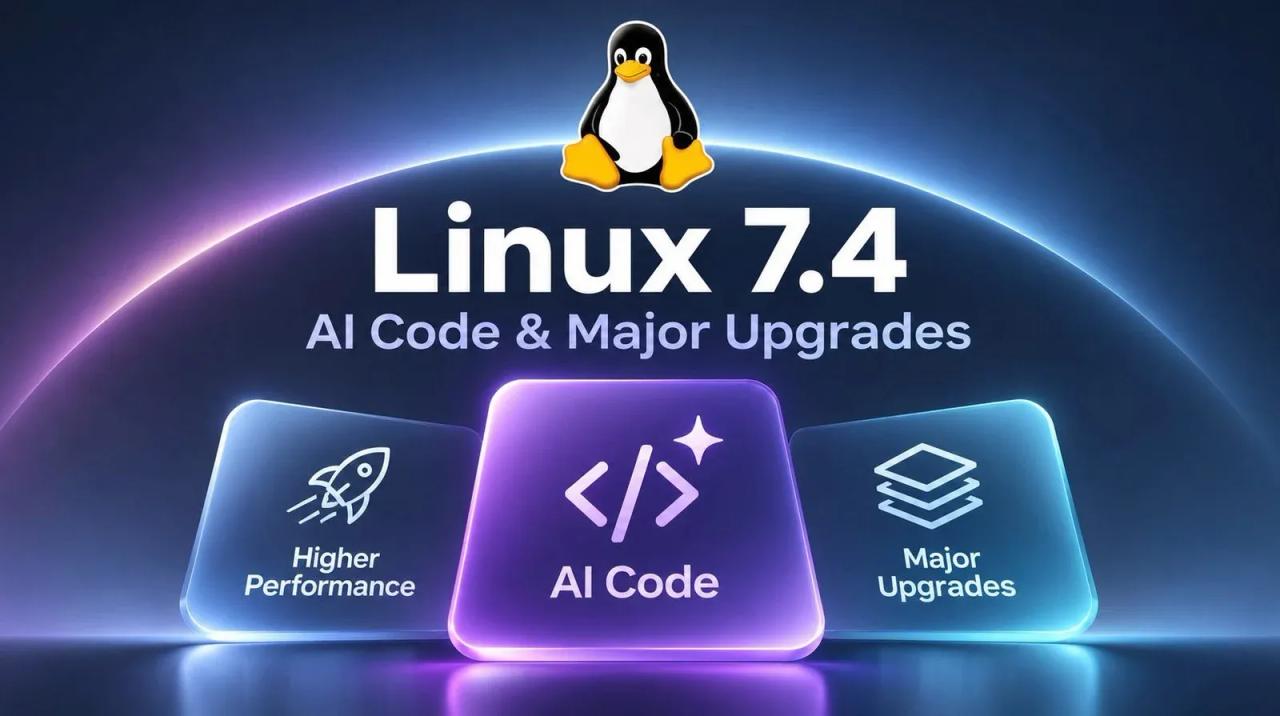
Linux 7.4 introduces significant advancements to the open source operating system, with over 20,000 commits and half a million lines of code changes. One notable addition is the use of AI-assisted methods in kernel development, which have been applied to optimize performance and refine legacy code.
Share
Copy Link
Linus Torvalds released Linux 7.4-rc1 with nearly 20,000 commits, calling it a sign that AI contributions are becoming part of normal development. The release includes AMD Ryzen Zen 6 support, Intel Panther Lake compatibility, and major performance improvements across file systems and hardware platforms.
Linux 7.4 Marks Shift in AI-Driven Work Integration
Linus Torvalds has released the first release candidate for Linux 7.4, announcing what he considers a "much healthier model" for handling AI contributions to the Linux kernel development process
1
. The merge window brought nearly 20,000 commits compared to the typical 15,000, making this one of the busiest releases in recent memory2
. Torvalds attributes this surge primarily to AI-assisted code contributions arriving earlier in the development cycle rather than flooding in during the stabilization phase1
.
Source: The Register
AI-Generated Patches Become Part of Normal Development
The Linux kernel creator expressed satisfaction that AI-driven work is now integrating into normal development workflows instead of appearing predominantly as fixes during release candidate periods. "I'm much happier with the flood of AI triggered work going into the merge window than it showing up mainly as extra fixes during the -rc period," Torvalds wrote
1
. He noted that AI-generated patches are becoming increasingly common, though they often require developer rewrites before integration1
. This shift gives maintainers more time to review, rewrite, and test AI-assisted contributions properly2
.
Source: Geeky Gadgets
AMD Ryzen Zen 6 Support and Hardware Expansion
Linux 7.4 delivers substantial hardware compatibility improvements, with AMD Ryzen Zen 6 support being a standout addition for next-generation processors
2
3
. AMD GPU changes constitute roughly one-third of the total patches, primarily involving register offsets and bit masks1
. The release includes AMDGPU HDMI 2.1 support enabled by default and Radeon PerfOpt improvements specifically targeting AI and large language model workloads2
. Intel Panther Lake support joins the roster alongside early enablement for Apple M4 silicon, though the latter isn't ready for everyday users yet2
3
.Qualcomm Snapdragon X2 and Mobile Platform Updates
The kernel engineering team enhanced support for Qualcomm Snapdragon X2 PC platforms with additional tweaks
1
2
. Google Tensor G5 and Pixel 10 devices also received full support in this release2
3
. Security improvements for virtual machines were implemented alongside support for the Raspberry Pi 10-inch monitor1
2
.Related Stories


Performance Gains Across File Systems
Linux 7.4 introduces dramatic performance improvements, particularly in file system operations. The FAT32 speed boost through pre-allocation support delivers up to 265x performance gains in specific scenarios
3
. ButterFS received faster decompression capabilities, reduced memory usage, and improved reliability for enterprise environments3
. The NTFS3 driver gained enhanced security features to handle corrupted or malicious volumes more safely3
. Developers will benefit from a 36% reduction in full kernel build times and a 70% improvement in incremental builds3
.Long-Term Support Expectations Drive Larger Release
Torvalds acknowledged that Linux 7.4's unusually large size might not stem solely from AI-assisted code contributions. The expectation that this version will become the next long-term support release could independently explain why developers pushed more changes into this cycle
1
2
. The stabilization phase is expected to span seven or eight weekly release candidates over approximately two months before the stable version arrives, potentially by the end of December2
. This timeline positions Linux 7.4 as the LTS release for 2026, making it a critical foundation for open-source software deployments across enterprise and consumer environments.References
Summarized by

Navi
[1]
[3]
Related Stories
Linux 7.3 Kernel Maintainers Overwhelmed by Flood of AI-Generated Patches
21 Aug 2026•Technology
Linus Torvalds Uses AI to Write Linux Kernel Code, Drops Mandatory Disclosure Requirements
09 Oct 2026•Technology

Linux kernel allows AI-generated code but developers must take full responsibility
12 Apr 2026•Technology

Recent Highlights
1
OpenAI's AI Models Disprove 27-Year Exponential Time Hypothesis, Rendering Decades of Research Obsolete
Science and Research
2
Google DeepMind unveils Genie 4 world model with audio and 2-minute interactive simulations
Technology

3
Apple Releases iOS 27.2 With Siri AI Memory, 5 New Languages & 160+ Security Fixes
Technology

Recent Highlights
Today's Top Stories










Don’t drown in AI news. We cut through the noise - filtering, ranking and summarizing the most important AI news, breakthroughs and research daily. Follow topics that matter to you and stay ahead.


