2 Sources
[1]
Breakingviews - London will wage international robotaxi warfare
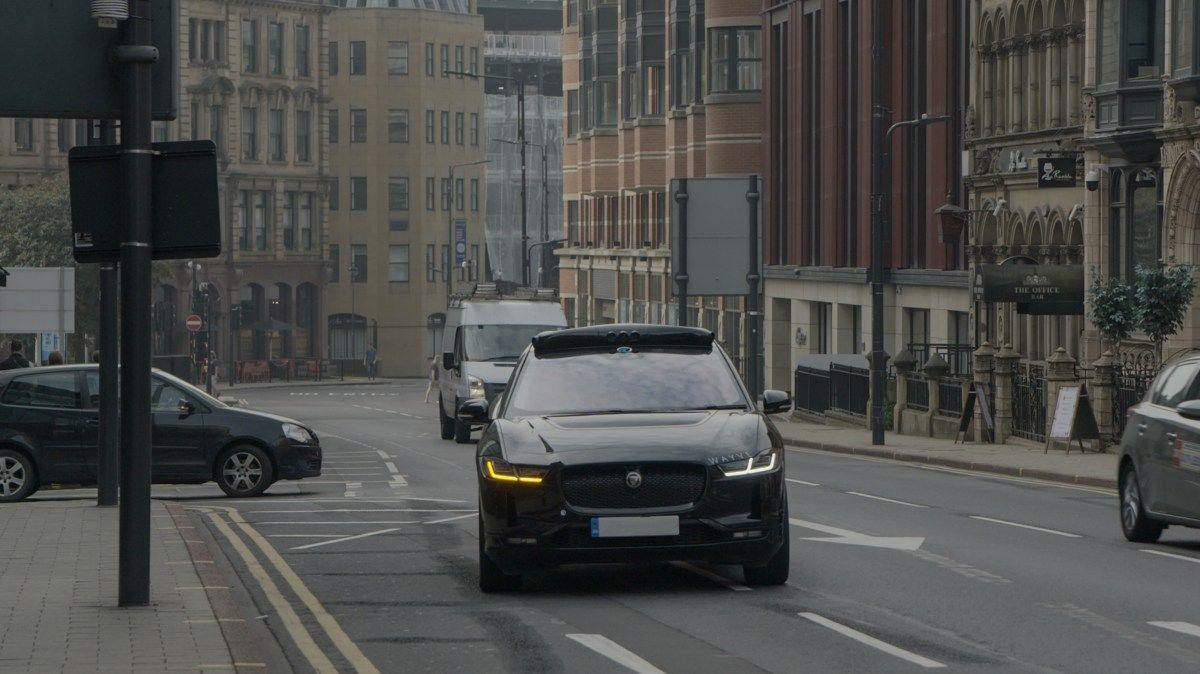
HONG KONG, June 25 (Reuters Breakingviews) - The biggest battle in the fast-developing robotaxi wars is about to kick off in London. Until now, the skirmishes have been largely domestic affairs. The UK capital, though, will be the first to host autonomous-driving combatants from China, the UK and the United States. There's plenty to fight for: the city is home to more than 100,000 taxis and private-hire vehicles making nearly 150 million trips each year. It warren-like roads are packed with cars, its famous doubledecker buses, emergency vehicles and cyclists, driven and ridden by people whose gestures and signalling will be tough for software to parse, let alone emulate. Successfully navigating these streets would give their futuristic tech credibility around the globe. Three companies aim to welcome paying passengers this year after UK regulators opened applications last month. Each has something to prove. Alphabet's (GOOGL.O), opens new tab Waymo, valued at $126 billion, opens new tab after its most recent funding round in February, logs more than 500,000 rides a week, the company says, while $38 billion Chinese tech behemoth Baidu's Apollo Go clocks around 250,000, per HSBC. They have not had a chance to face off before, since China-U.S. tensions complicate efforts to enter one another's home turf, which remain their main markets. London-based Wayve, a nine-year-old startup led by co-founder and CEO Alex Kendall, will be offering commercial services for the first time. At stake is the opportunity to be a victor in the robotaxi services market whose global revenue could rev up from less than $1 billion this year to over $168 billion in 2035, researchers at Counterpoint forecast. That's less than the frothy $5 trillion value that General Motors (GM.N), opens new tabdreamed up at the start of the decade. But the principle attractions of autonomous vehicles remain effectively summed up by the triple-zero slogan the Detroit carmaker adopted at the time: zero crashes, zero emissions and zero congestion. The idea is that fleets of tech-driven electric vehicles - most if not all robotaxis are battery powered - which never tire or drink alcohol are smart enough to avoid causing or falling victim to accidents and traffic jams. They would also turn a tidy profit for their operators by removing the most expensive part of the ride: the taxi driver. In London, that contributes to fares being the fifth-highest in the world, per Deutsche Bank. The Big Smoke is going to test the battle-readiness of all these assumptions. Start with pricing. In U.S. markets, operators have tended to price autonomous rides in line with legacy cabs. London will probably start out similarly as companies chase profitability, but that may not last. European consumers could eventually pay less than $1 per kilometre for robotaxi rides, the Boston Consulting Group calculated in January, once a fleet reaches "full scale". That's more than trillionaire Elon Musk suggested multiple times in the past, claiming operating costs for Tesla (TSLA.O), opens new tab cabs would be around 20 cents a mile. But it's still less than an average of $2.90 to $4.50 per kilometre for conventional cabs and might even lure passengers away from public transport: a fifth of respondents surveyed by BMG Research last year thought that could happen in London. Competition and the need to market novel tech may drive discounts. In the San Francisco Bay Area, Waymo charged just above incumbent ride-hailing services at nearly $6 per kilometre while newcomer Tesla's price was only $2, according to a study from price comparison app Obi, examining data from November 2025 to January 2026; another provider, Amazon.com's (AMZN.O), opens new tab Zoox, was offering limited services for free. Cost will be a key front in the battle for passengers, but so will how to order one. Waymo is taking a calculated risk launching on a proprietary app that users will have to download. That could lend an early advantage to Baidu, whose cars will be on both Uber Technologies (UBER.N), opens new tab and Lyft's (LYFT.O), opens new tab platforms, and Wayve, which will work with Uber. But if Waymo's gamble pays off, it would dodge comissions - Uber takes a cut, opens new tab of as much as 50% of fares in some markets, according to a recent study from Columbia Business School academic Len Sherman. On top of that, the trio will line up different driving system strategies against one another. Waymo and Baidu deploy cameras, lidar - using laser pulses to gather data - and radar alongside high-definition maps. These multiple options offer redundancy, so that if one falters, another can supply information instead. Wayve, on the other hand, can handle a variety of hardware stacks, including the vision-only option championed by Musk - who has long been disdainful of lidar - and camera plus radar. It does not require mapping, leaning more heavily on an AI model to assess surroundings and make rapid driving decisions. In theory, that should open up new neighbourhoods more quickly than peers that are "geo-fenced" in meticulously mapped areas. These all come with wildly different outlays, which may well impact how much operators can charge. Analysts at Morningstar estimate Waymo's retrofitted Jaguar i-Pace costs up to $125,000, while newer Zeekr and Hyundai Motor (005380.KS), opens new tab models are at least $45,000. In contrast, Wayve reckons it can work with a rig of sensors and chips that add just a few hundred dollars to the price of the Ford Mustang Mach-E that make up its test fleet. Baidu, like Waymo, shells out for a variety of sensors, but custom made-in-China designs bring costs down, clocking in at less than $30,000, excluding the battery. It's not just their own arsenals that will decide their fate, though. Spectators raise the stakes further. Potential passengers include not only locals but also London's 20-million-plus annual tourists. The free-wheeling British media will have a field day when the young technology inevitably falters. Teething problems persist. In March, a system failure froze over 100 Baidu robotaxis in Wuhan. Three weeks later, a Waymo cab drove into a flooded area in San Antonio, prompting the company to recall 3,800 vehicles. The city's financiers will have a front row seat too. That matters, because none of the three has reported reaching profitability yet, leaving them dependent on raising fresh funds. Waymo drummed up $16 billion in February, most of which came from parent Alphabet, according to Bloomberg. Meanwhile, the valuations of peers Pony AI (PONY.O), opens new taband WeRide (WRD.O), opens new tab are stalling. Their New York-listed shares have fallen 50% and 34% respectively this year as shareholders eye competition from carmakers like Tesla, Geely and Xpeng (9868.HK), opens new tab. London is set for an epic three-way street fight as it hosts what is shaping up to be the most consequential robotaxi confrontation yet. It's time to buckle up. Follow Katrina Hamlin on Bluesky, opens new tab and LinkedIn, opens new tab. Editing by Antony Currie; Production by Aditya Srivastav * Suggested Topics: * Breakingviews * ADAS, AV & Safety * Software-Defined Vehicle * EV Battery * Manufacturing Breakingviews Reuters Breakingviews is the world's leading source of agenda-setting financial insight. As the Reuters brand for financial commentary, we dissect the big business and economic stories as they break around the world every day. A global team of about 30 correspondents in New York, London, Hong Kong and other major cities provides expert analysis in real time. Sign up for a free trial of our full service at https://www.breakingviews.com/trial and follow us on X @Breakingviews and at www.breakingviews.com. All opinions expressed are those of the authors. Katrina Hamlin Thomson Reuters Katrina Hamlin is global production editor, based in Hong Kong. She is also a columnist, writing on topics including autos and electric vehicles, as well as the gambling industry in Macau and Asia. Before joining Reuters in 2012, Katrina was deputy managing editor of Shanghai Business Review magazine. She graduated from the University of Oxford with an MA in Classics, and earned a Masters of Journalism with distinction from the University of Hong Kong.
[2]
Race for robotaxi market arrives in London
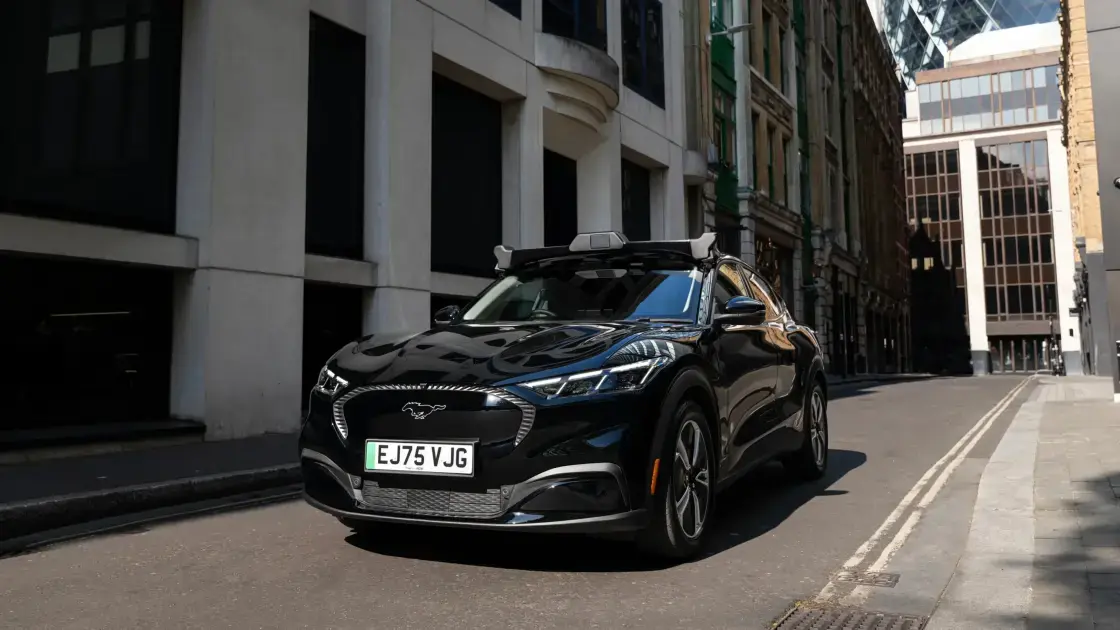
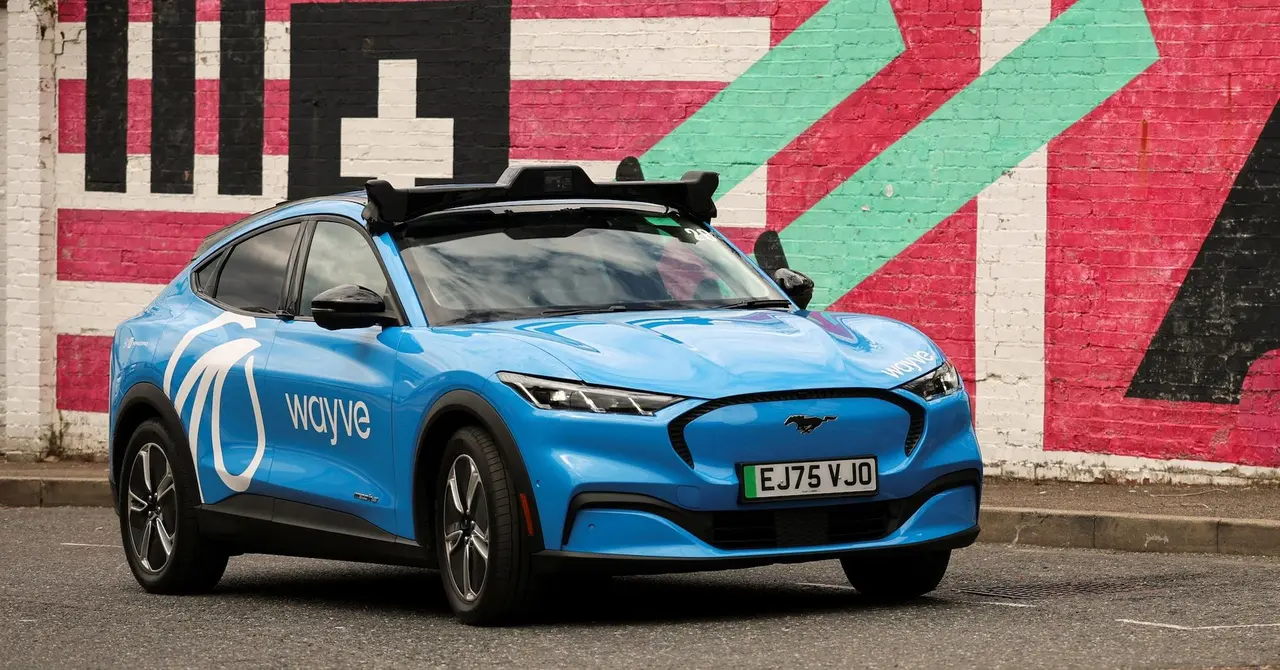
London (AFP) - Bristling with sensors and electronic eyes, robotaxis are appearing on London's streets, slipping silently between red buses and black cabs, as companies battle to lead Europe's emerging autonomous vehicle market. British start-up Wayve, in partnership with Uber, is racing to beat US rival Waymo, owned by Google-parent Alphabet. China's Baidu is also to launch in the British capital, where winding streets, roadworks and pedestrian traffic bring unique challenges. "London has 20 times the amount of road construction than San Francisco and 10 times the amount of vulnerable road users," said Kaity Fischer, head of business development at Wayve. "We've had 2,000-year-old roads, certainly no perfect grid system," she told AFP ahead of a ride in the company's Ford Mustang Mach-E. On the road, every pedestrian and intersection presents a test. The car responded smoothly though, braking where necessary. Passengers tend to spend the first few minutes of the ride "marvelling, videoing the steering wheel moving on its own, taking selfies", Fischer said. Then "about three minutes in, they're doing the exact same thing that they do in any other Uber or ride hail -- they're looking at their phone", she added. Britain stands ahead of the European Union in the race to getting driverless cars on the road, thanks to government efforts to speed up regulation. The Labour government expects the autonomous vehicle sector to generate 38,000 jobs and £42 billion ($55 billion) by 2035. Backlash Londoners will be able to take their first commercial rides with Wayve this summer, with a human operator on board in the initial stages. Waymo, already operating in 11 US cities using pre-mapped routes, could follow shortly after. The sector's complexity means that companies competing in one city may collaborate in another, with one providing the technology and the other managing the fleet and commercial rollout. Baidu, in partnership with ride-sharing firm Lyft, will be testing "in the coming weeks" ahead of launching in London later this year, said Jeremy Bird, Lyft's head of global growth. At its launch, fares are likely to be "pretty similar" to traditional taxis, he told AFP. Companies are under pressure to get the public on side, after a series of high-profile mishaps. This year, a string of Baidu vehicles stalled in central China leaving passengers stranded. Waymo had to recall nearly 4,000 cars after several incidents in which its robotaxis entering closed-off highway construction areas. "Robotaxi players know they are just one bad accident away from getting serious pushback," McKinsey transport specialist Philipp Kampshoff told AFP. "So you have to make sure safety is your absolute priority." 'Tourist attraction' Waymo product director Saswat Panigrahi has offered assurances that its cars record 13 times fewer serious accidents than human drivers. The system's AI technology is "powerful enough" to detect tiny movements that indicate a pedestrian is about to walk across the road, he said at the South by Southwest tech festival in London. But for Steve McNamara, head of London's taxi association, robotaxis are just "a solution to a problem that doesn't exist". "They are pumping millions and millions of dollars into PR, into spin, into marketing, into convincing politicians, into convincing people that this is a great thing," McNamara told AFP. London's taxi industry is still recovering from the rise of Uber, which reduced the number of its vehicles on the road to 14,800 in 2024 from 22,300 in 2009. McNamara said robotaxis will ultimately become "a tourist attraction", adding that autonomous vehicles tend to wait until roads are completely clear before pulling out. "There's parts of London where it would be sitting there until Christmas Day, if you're waiting for the road to be clear."
Share
Copy Link
London is hosting the first international robotaxi competition with Waymo, Baidu, and Wayve launching commercial services this year. The city's complex roads and 150 million annual taxi trips make it a crucial testing ground for autonomous vehicles. With the UK expecting £42 billion in economic value by 2035, these AI-powered vehicles face challenges from pricing wars to public trust.
London is set to become the first city globally where robotaxi services from China, the United States, and the United Kingdom compete head-to-head. Three major players—Alphabet's Waymo, China's Baidu, and British startup Wayve—are launching commercial robotaxi services in the capital this year after UK regulators opened applications last month
1
. The stakes are substantial: London is home to more than 100,000 taxis and private-hire vehicles making nearly 150 million trips annually, creating a market opportunity that could demonstrate which autonomous vehicles can handle one of the world's most challenging urban environments1
.The city's warren-like roads, packed with double-decker buses, emergency vehicles, and cyclists, present unique obstacles. "London has 20 times the amount of road construction than San Francisco and 10 times the amount of vulnerable road users," said Kaity Fischer, head of business development at Wayve
2
. Successfully navigating these 2,000-year-old streets would give AI-powered vehicles credibility around the globe.
Source: Reuters
Waymo, valued at $126 billion after its February funding round, currently logs more than 500,000 rides weekly across 11 US cities
1
. The company is taking a calculated risk by launching on a proprietary app rather than partnering with existing ride-hailing platforms. Baidu's Apollo Go, a $38 billion tech behemoth, clocks around 250,000 rides weekly and will appear on both Uber Technologies and Lyft's platforms1
. London-based Wayve, a nine-year-old startup led by co-founder and CEO Alex Kendall, will offer commercial services for the first time through a partnership with Uber1
.The regulatory environment in Britain stands ahead of the European Union, thanks to government efforts to accelerate approval processes. The Labour government expects the autonomous vehicle sector to generate 38,000 jobs and £42 billion ($55 billion) by 2035
2
. Londoners will be able to take their first commercial rides with Wayve this summer, with a human operator on board initially2
.The global robotaxi market presents massive financial opportunities. Researchers at Counterpoint forecast that revenue could accelerate from less than $1 billion this year to over $168 billion in 2035
1
. European consumers could eventually pay less than $1 per kilometre for rides once fleets reach full scale, according to Boston Consulting Group calculations from January—significantly below the average of $2.90 to $4.50 per kilometre for conventional cabs1
.In London, taxi fares rank as the fifth-highest globally, per Deutsche Bank, making the city particularly attractive for cost-conscious operators
1
. At launch, fares are likely to be "pretty similar" to traditional taxis, according to Jeremy Bird, Lyft's head of global growth2
. However, competition and marketing pressures may drive discounts over time, potentially luring passengers away from public transport—a fifth of respondents surveyed by BMG Research last year thought this could happen in London1
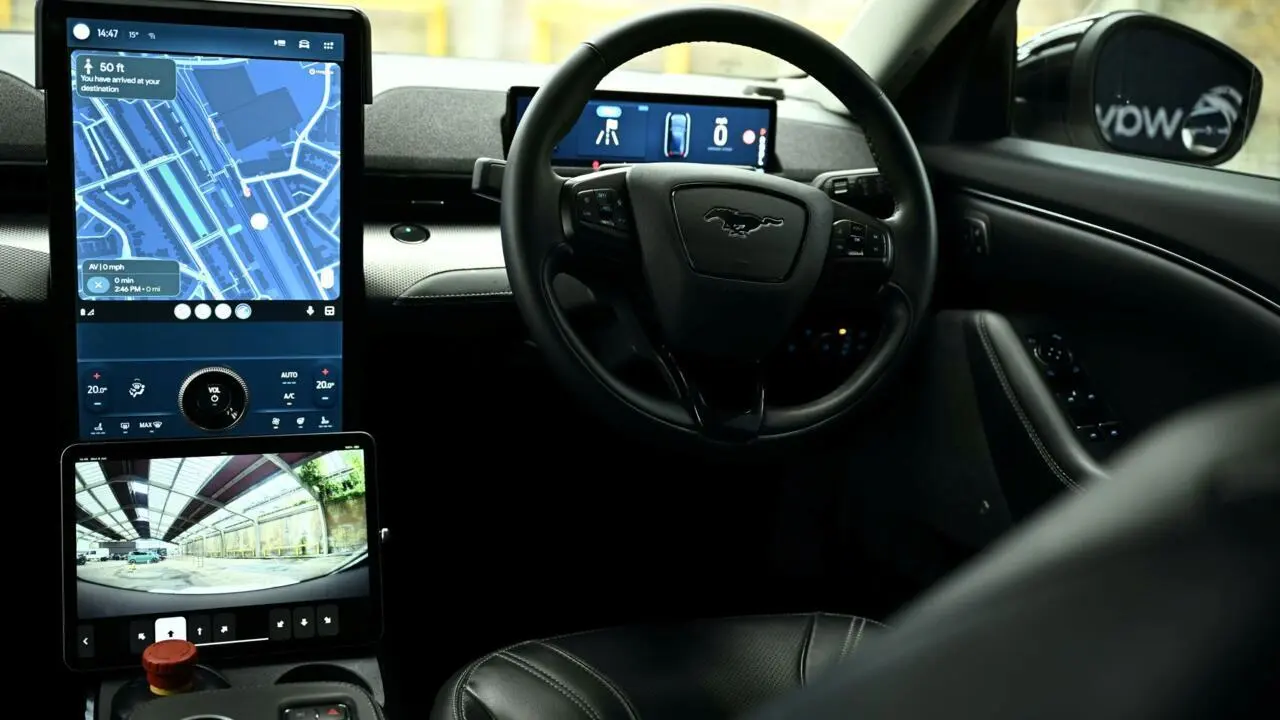
.The competing companies deploy different technological approaches. Waymo and Baidu use cameras, lidar—using laser pulses to gather data—and radar alongside high-definition maps, offering redundancy so that if one system falters, another can supply information
1
. Wayve can handle various hardware stacks, including vision-only options and camera plus radar configurations, and does not require mapping, leaning more heavily on AI-driven autonomous vehicles to assess surroundings1
.
Source: France 24
Public trust remains a critical challenge following high-profile mishaps. This year, multiple Baidu vehicles stalled in central China, leaving passengers stranded, while Waymo had to recall nearly 4,000 cars after several incidents in which its robotaxis entered closed-off highway construction areas
2
. "Robotaxi players know they are just one bad accident away from getting serious pushback," McKinsey transport specialist Philipp Kampshoff told AFP, emphasizing that safety must be the absolute priority2
.Waymo product director Saswat Panigrahi has offered assurances that its safety systems record 13 times fewer serious accidents than human drivers, with AI technology "powerful enough" to detect tiny movements indicating a pedestrian is about to cross the road
2
. However, Steve McNamara, head of London's taxi association, remains skeptical, calling robotaxis "a solution to a problem that doesn't exist" and predicting they will ultimately become "a tourist attraction"2
.Summarized by
Navi
[2]
1
Policy and Regulation

2
Policy and Regulation

3
Policy and Regulation