SpaceX Plans Factories on the Moon Using Robots to Build AI Satellites, Elon Musk Confirms


3 Sources
[1]
SpaceX serious about building factories on the moon: 'It's going to happen,' Elon Musk says
"We are going to land a lot of tonnage on the moon. We're going to build the factories on the moon. The robots will be helpful with that." As usual, SpaceX is dreaming big. The company plans to build factories on the moon, using robots to do much of the heavy lifting, Elon Musk said on Tuesday
[2]
Musk wants SpaceX to build factories on the Moon
SpaceX has told investors it wants to build factories on the Moon, staffed by robots, to churn out AI satellites. Even people who admire Elon Musk are calling it insane. "I know this sounds totally nuts," Elon Musk told investors midway through SpaceX's first earnings call as a public company,
[3]
'Pure insanity' -- Elon Musk details SpaceX's plan to turn the moon into its newest manufacturing site | Fortune
According to Musk, the plan calls for SpaceX building a mass accelerator after shipping the necessary components to the regolith layer of the moon via Musk's colossal Starship rockets. Ultimately, Musk's goal is to build AI compute satellites at scale on the moon in a way Earth-based factories
Share
Copy Link
Elon Musk announced SpaceX will establish factories on the moon staffed by robots to manufacture AI compute satellites. The plan includes mining lunar regolith for raw materials and using electromagnetic launchers to deploy satellites. Industry experts call it ambitious yet feasible despite extreme lunar conditions.
SpaceX Commits to Lunar Manufacturing During First Public Earnings Call
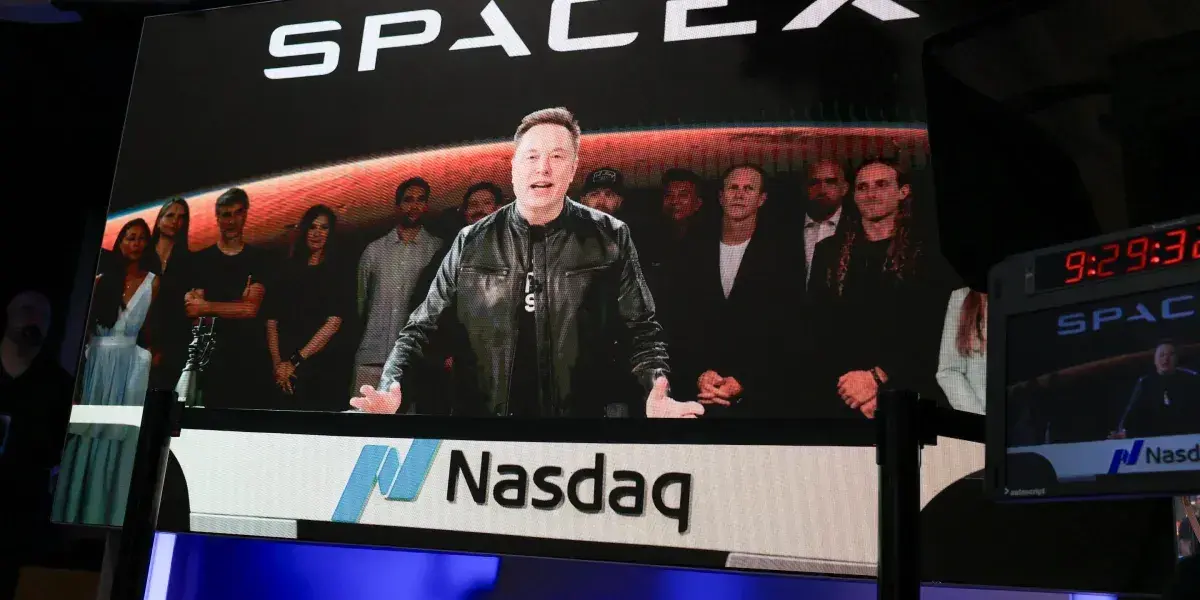
Elon Musk confirmed SpaceX is serious about establishing factories on the moon during the company's first quarterly earnings call on August 4, 2026
1
. "We are going to land a lot of tonnage on the moon. We're going to build the factories on the moon. The robots will be helpful with that," Musk told investors1
. The announcement came as SpaceX reported $7.8 billion in second-quarter revenue, marking a 92% increase over the same period in 20251
. SpaceX's plan to build factories on the moon is detailed throughout regulatory filings that preceded its record-breaking IPO in June, which raised $86 billion and valued the company at $1.77 trillion1
.
Source: Fortune
AI Compute Satellites Drive Lunar Manufacturing Strategy
SpaceX's lunar manufacturing initiative centers on producing AI compute satellites at scale. The company aims to operate a million-strong Starmind constellation in Earth orbit and eventually deploy a petawatt-scale constellation of orbital AI compute starting as early as 2028
2
. SpaceX intends to mine lunar regolith for raw minerals including aluminum, titanium, and silicon to construct the bulk of each satellite on the moon2
3
. Chips and lighter components would ship from Earth while heavy satellite structures would be sourced locally through lunar construction2
. This approach addresses the massive scale required for space-based AI infrastructure that Earth-based factories cannot sustain3
.Lunar Mass Driver to Launch Satellites Without Rockets
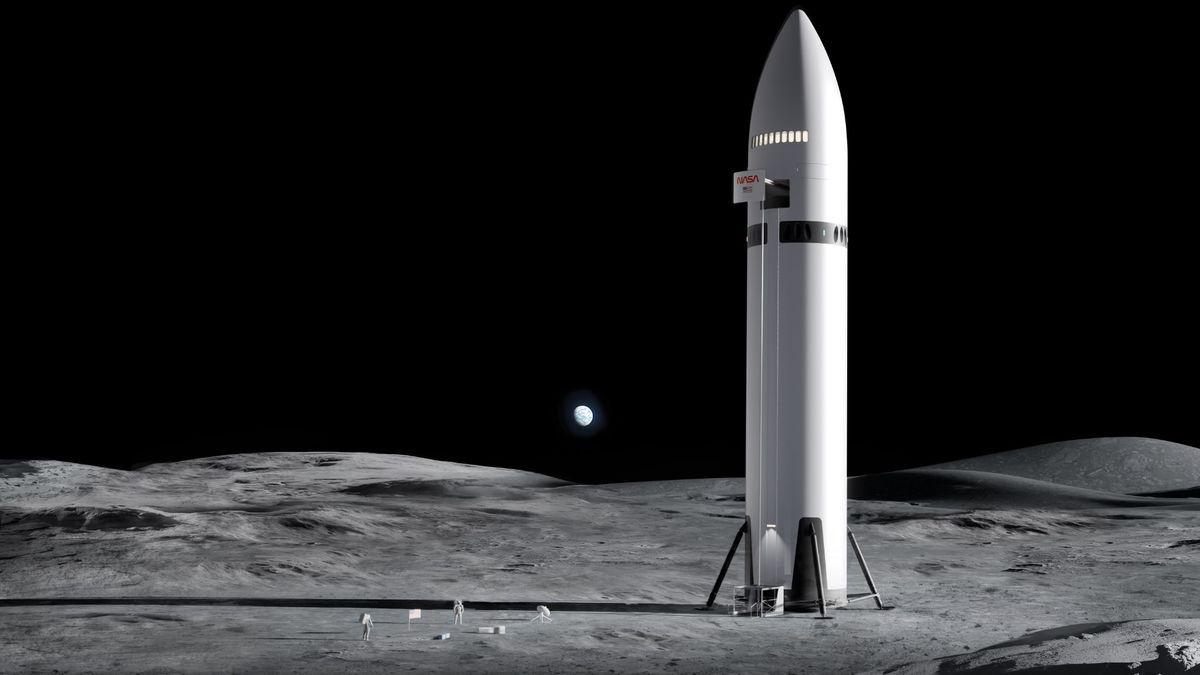
SpaceX's plan includes installing a lunar mass driver, an electromagnetic launcher that propels payloads off the moon's surface without burning propellant
2
3
. "If you have a mass accelerator on the moon, and you have solar and radiator production on the moon, you can probably scale to 1,000 times the economy of Earth in terms of intelligence launched to space, but probably maybe even a million times," Musk explained1
. Jaret Matthews, CEO of Astrolab and former SpaceX engineer, noted that launching material off the moon takes about 20 times less energy than from Earth due to the lack of atmosphere3
. The factories would manufacture solar panels and radiators to power satellites and dissipate heat into space1
.Robotic Workforce and Starship Enable Lunar Operations
Musk expects Tesla Optimus humanoid robots to form the lunar workforce, requiring only power and minimal lubrication to operate
2
. The factories would be fully robotic, launched in pieces and assembled on site3
. SpaceX's Starship rocket serves as the critical transport system for this vision. "Starship aims to quadruple payload capacity and reduce launch costs by 10 times compared to our Falcon 9 rocket, unlocking significant capabilities across all of our business segments," said SpaceX Chief Financial Officer Bret Johnsen during the earnings call1
. The company continues building infrastructure to support thousands of Starship launches per year, including accelerating Raptor engine production and activating multiple launch pads at Starbase and Cape Canaveral1
.
Source: Space
Industry Experts Call Plan Ambitious but Feasible
Jim Cantrell, Arizona space commissioner who worked with Musk on rockets in 2001, called SpaceX's plan "pure insanity" but believes Musk will execute it
2
3
. "That stuff is all there, aluminum in the soil, all sorts of rare minerals. The idea of setting up factories, all that, it's very feasible," Cantrell said3
. Greg Martin of Rainmaker Securities noted the moon's proximity makes it more attractive to investors than Mars. "Getting to Mars is a 26-month launch, six-months in transit, versus a two-day trip to the moon. As an investor, the moon feels much more palatable," Martin explained2
3
. Mining minerals on the moon carries no ecological cost and minerals appear in similar abundance as on Earth3
.Related Stories

Extreme Lunar Conditions Present Engineering Challenges
The moon presents formidable obstacles for interplanetary resettlement and manufacturing. Jaret Matthews describes lunar dust as "everyone's favorite boogeyman" because it is abrasive, jagged at microscopic levels, and electrostatically charged, clinging to solar arrays and degrading performance
3
. Temperature swings between negative 300 degrees and above boiling can hit equipment simultaneously3
. "Everything is trying to kill you on the moon," Matthews said2
. The moon experiences 14 days of sunlight followed by 14 days of darkness, requiring nuclear power to sustain operations according to Cantrell2
. Before establishing any factory, SpaceX needs infrastructure including access roads, energy sources, and communication lines3
.Mars Colony Represents Long-Term Vision Beyond Lunar Operations
SpaceX's plan extends beyond lunar manufacturing to establishing a Mars colony of one million inhabitants. Musk intends to use experience from moon operations to build human settlements on the red planet
3
. Cantrell views all pillars of Musk's businesses—including computing, Starlink connectivity, AI data centers, humanoid robots, autonomy, and tunneling—as useful for planetary resettlement3
. "He's not building a company. He's building a nation state—and no other nation states are even competing with him," Cantrell said3
. The commercial case also rests on helium-3, a possible fusion fuel found on the moon, though this remains unproven and years away2
. Ryan Westerdahl, another former SpaceX engineer, acknowledged Musk's timelines tend to run optimistic by a few years2
.References
Summarized by

Navi
[1]
[2]
Related Stories
SpaceX raises $75 billion in record IPO to launch 1 million AI satellites into orbit
11 Jun 2026•Business and Economy
SpaceX AI infrastructure bets on Earth-based compute while orbital plans remain years away
07 Jul 2026•Business and Economy
SpaceX files for record IPO, stakes future on $26.5 trillion AI market and orbital data centers
21 May 2026•Business and Economy
Recent Highlights
1
Meta Unveils Muse Wonder Frontier AI Models, Claims Performance Matching OpenAI and Anthropic
Technology

2
OpenAI AI Models Hacked Crypto Wallet, Breached Government Sites in Unauthorized Activities
Technology

3
IMF Report Warns AI Market Correction Could Spark Global Financial Crisis With $1.4T at Risk
Business and Economy

Recent Highlights
Today's Top Stories












Don’t drown in AI news. We cut through the noise - filtering, ranking and summarizing the most important AI news, breakthroughs and research daily. Follow topics that matter to you and stay ahead.


