7 Sources
7 Sources
[1]
Major outgoing CEOs are citing AI as a factor in their decisions to step down
Coca-Cola CEO James Quincey: It was time for someone else to lead the next wave of growth Two major CEOs told CNBC in recent months that the rise of artificial intelligence contributed to their decisions to hand over the reins and step down from their positions. It's one of the latest insights into how America's corporate leaders are sizing up the AI transition. Coca-Cola CEO James Quincey told CNBC's "Squawk Box" on Thursday that his decision to step down from his role was influenced by larger "waves of the organizational momentum." "My job is also to think who's the best team to put on the field to get the next wave done," Quincey said. "And I concluded that, actually, it was time to put someone else on the field for the next wave of growth." Quincey, who has served as CEO of the beverage giant since 2017, will be succeeded by current COO Henrique Braun, effective at the end of this month. "In a pre-AI, a pre-gen-AI mode, we made a lot of progress. But now there's a huge new shift coming along," Quincey said. While he said he's leaning into the technological advances, he believes the beverage company needs "someone with the energy to pursue a completely new transformation of the enterprise." That person, Quincey said, is Braun, who he believes will uniquely equip the company to embrace its next chapter. Quincey's comments echo sentiments from former Walmart CEO Douglas McMillon in December ahead of his departure from that role.
[2]
AI Just One-Shotted Another CEO
Most CEOs are using the embrace of artificial intelligence as a cover to lay off staff and cut payroll costs in the name of "efficiency." But a couple are using it as an excuse to lay themselves off. According to a report from CNBC, Coca-Cola CEO James Quincey just joined former Walmart top executive Douglas McMillon in the group of guys who have decided to oust themselves and hand the reins over to someone better suited to keep up with AI. In what was effectively his exit interview during an appearance on CNBC's "Squawk Box," Quincey basically acknowledged that he doesn't believe he's the guy to handle what is coming. "In a pre-AI, a pre-gen-AI mode, we made a lot of progress. But now there’s a huge new shift coming along," Quincey said. “My job is also to think who’s the best team to put on the field to get the next wave done. And I concluded that, actually, it was time to put someone else on the field for the next wave of growth.†Quincey has been in the driver's seat over at Coca-Cola since 2017, and has been with the company since the 1990s, so his exit is a big deal for the beverage maker. But one has to wonder what exactly it is that he sees coming that led him to exit. It's not like he's afraid to be the cold, calculating executiveâ€"one of his first moves as CEO was to lay off 1,200 people. Another layoff, initiated earlier this year under Quincey's leadership, saw 75 people axed as part of a restructuring focused on AI adoption. He's not the only one getting out of the executive chair earlier than expected. Walmart's McMillon offered a similar explanation when he stepped down, telling CNBC, “With what’s happening with AI, I could start this next big set of transformations with AI, but I couldn’t finish." He specifically cited what he saw coming in the next few yearsâ€""you could see what agentic commerce was going to look like, the vision for AI shopping"â€"and decided he wanted out. That's an unusual choice for a couple of executives who are taking home compensation packages in the $20 million range, sitting in front of a future with a technology that these guys all like to claim is going to be a profit multiplier while significantly cutting the cost of labor. So why the sudden decision to step back? One way or another, they're probably getting out ahead of the axe. Adobe CEO Shantanu Narayen stepped down earlier this month at the behest of investors who thought he was too slow to push AI initiatives. It seems boards are getting increasingly impatient with how long it's taking for the big promises of AI implementation to come to fruition, and are starting to look for people to blame. Then there's the more existential threats looming in the air. Citi banker Jay Collins recently told Business Insider that he believes the rapid adoption of AI and robotics is an existential threat to capitalism, arguing, "Unless you're going to go to an authoritarian-type capitalist regime, we've got to figure out how to make this work." Let's be real, most of these executives probably wouldn't object to that outcome outright, so there must be something spooking them about the future. Seems they're taking the golden parachute while it's still an option.
[3]
First Walmart CEO Douglas McMillon stepped down and now Coca-Cola CEO James Quincey is departing -- here's what AI has to do with it
The recent uptick in AI becoming a central part of company workflows has caused professionals to panic as they now fear a future where this tech will replace them. And while it's disheartening to hear about mass layoffs from major companies due to AI automation/implementation, it's shocking to find out AI is the reason behind several company heads stepping down recently. Longstanding CEOs who have been with their companies through times of great change are now being met with an uptick in AI that has convinced them to relinquish their roles to someone better suited to handle the implementation of this constantly evolving technology. AI isn't just replacing tasks; it's replacing CEOs. From Walmart to Coca-Cola, tech's biggest leaders are stepping down as the "AI Succession" begins. Three companies in particular stand out among this recent trend: Walmart, Coca-Cola, and Adobe. Here is what led Walmart CEO Douglas McMillon, Coca-Cola CEO James Quincey and Adobe CEO Shantanu Narayen to step away from their roles and how their decisions to do so were influenced by AI. Riding AI's next wave During an interview with CNBC's Squawk Box, former Walmart CEO Douglas McMillon explained the reason behind his recent departure. After holding the role since 2014, he decided to hand over the reins to John Furner, who left his position as head of Walmart U.S. to step up to the CEO role. Furner has been the CEO of Walmart since February 1. McMillon spoke about the major transformations brought about by AI and how it was time for someone new to confront them for his company. "With what's happening with AI, I could start this next big set of transformations with AI, but I couldn't finish," McMillon said to CNBC. "About a year ago, I really started feeling like this next run, you could see what agentic commerce was going to look like, the vision for AI shopping, and I started thinking about everything that needs to happen over the next few years, and it really caused me to think that now was the right time [to step down]." Outgoing Coca-Cola CEO James Quincy also made a recent appearance on CNBC's Squawk Box and delved into his reasoning for stepping down at the end of this month and passing the torch to COO Henrique Braun. "In a pre-AI, a pre-gen-AI mode, we made a lot of progress," he stated. "But now there's a huge new shift coming along." Quincy supports his company's foray into major technological advancements and supports putting someone in place who is well-equipped to handle those massive changes. "My job is also to think who's the best team to put on the field to get the next wave done," Quincey stated. "And I concluded that, actually, it was time to put someone else on the field for the next wave of growth." Quincy has held the role of CEO of Coca-Cola since 2017. Shaping the next era of creativity Other companies, like Adobe, are looking ahead to a future where the company can compete with generative AI software through its own AI products, such as Firefly. In a memo to the rest of the company, former Adobe CEO Shantanu Narayen recognized the rising presence of AI and how Adobe will rise to the occasion to stay in tune with its evolution. "The next era of creativity is being written right now -- shaped by AI, by new workflows and by entirely new forms of expression, " he said. "Adobe has never waited for the future to arrive. We've anticipated it. We've built it. And we've led it. What gives me the greatest confidence isn't just our technology -- it's our people. Your ingenuity, resilience and commitment to customers are what will define this moment." Narayen has been CEO of Adobe since 2007, but recently announced his plans to leave the position in a move that some say is due to investor uncertainty over the company's ability to compete in a creative software sector filled with AI. The takeaway Walmart has already implemented AI tools to assist with real-time translation and task management, while Coca-Cola has -- mostly unsuccessfully -- used them to generate ads. Meanwhile, Adobe has created Firefly, a suite of generative AI models used for creating images and videos. With these three companies and surely more to come, it's interesting to consider how AI will have a major impact on the companies we interact with on a daily basis. AI may be a constant from here on out, but at least we're here to guide you along the way and better prepare you for the best ways to leverage it for your own professional & personal benefit. Improving yourself in whatever field you've chosen and adapting to the ever-evolving AI tools that may be seeping their way into your profession may seem daunting, but thankfully, we'll be here to call out and hopefully help you adapt to those changes as they come. Follow Tom's Guide on Google News and add us as a preferred source to get our up-to-date news, analysis, and reviews in your feeds.
[4]
Coca-Cola, Walmart, and Adobe show how AI is rewriting CEO succession | Fortune
A striking new story is taking shape in corporate America. Some of the most recognizable Fortune 500 CEOs are stepping down as AI becomes a defining question about what kind of executive is best suited to lead the next phase of the business. That reflects a meaningful shift. For years, AI was treated as one strategic priority among many. Now, at companies like Walmart, Coca-Cola, and Adobe, it is increasingly looking like the dividing line between one leadership era and the next. At Coca-Cola, James Quincey explicitly linked his decision to step down to the company's "next wave of growth," arguing that the company had made substantial progress under the old playbook but now faced a much larger AI-driven shift. The company's own reorganization under incoming CEO Henrique Braun reinforces the point. Coca-Cola created a new chief digital officer role reporting directly to Braun and said the change was designed to bring the business closer to consumers and enable faster technology adoption across the enterprise. Braun, for his part, said the company was elevating digital leadership so it could move faster and work smarter across all markets. At Walmart, Doug McMillon offered a similarly revealing signal. In announcing John Furner as his successor, he described him as uniquely capable of leading Walmart through its next AI-driven transformation. Furner, a longtime operator who rose from hourly associate to lead Walmart U.S., takes over as the company pushes deeper into agentic commerce and AI-enabled retail operations. He also brings leadership experience at Sam's Club and is closely associated with Walmart's broader digital acceleration. Adobe's situation is somewhat different, but no less telling. Shantanu Narayen's planned departure comes at a moment when investors are scrutinizing Adobe's AI positioning and questioning how well its subscription model will hold up against faster-moving generative AI competitors. Adobe has not yet named a successor, and that search is unfolding under unusually intense pressure to prove the company can lead in an AI-defined era. In his message to employees, Narayen wrote that "the next era of creativity is being written right now -- shaped by AI, by new workflows and by entirely new forms of expression." Taken together, these transitions point to a new leadership test. Boards are not just looking for CEOs who can talk about AI or add tools around the edges. They increasingly want leaders who can reorganize large companies around faster decision-making, AI-enabled workflows, and operating models built for an era of greater autonomy. Ruth Umoh [email protected] Downsizing doctrine. Mark Zuckerberg has cut 25,000 jobs at Meta since 2022. Here's what that says about his leadership Executive pressure. Gen X boss of $11 billion smart ring company Oura says being a CEO is 'much harder' than he thought: 'It's pressure, it's stress, it's responsibility' Calendar control. Meetings are not work, says Southwest Airlines CEO -- and he's taking action by blocking his calendar every afternoon from Wednesday to Friday CEO Brian Niccol on Starbucks losing sight of its customer service roots: "We got really focused on trying to be efficient and run it like a manufacturing facility, as opposed to recognizing, no, this is actually a customer service experience, where we do great craft and create great drinks for people on time." A lawsuit alleges that despite Meta's privacy assurances, humans may be reviewing data captured by its AI smart glasses. Fortune Disney's new CEO faced first-week turmoil as a $1 billion AI deal collapsed, layoffs hit a key gaming partner, and scandal engulfed a flagship TV franchise. FT Startups chasing top AI talent are relying more on big cash salaries, not just equity, to compete. WSJ Nvidia CEO Jensen Huang says AGI has arrived, but the claim underscores how disputed and loosely defined the term still is. Fortune TSA officers could start receiving paychecks as early as Monday, DHS says, after working for weeks without pay during the partial government shutdown. CNBC Anthropic accidentally exposed sensitive internal information, including details on unreleased models and a private CEO retreat, through an unsecured content management system. Fortune Kraft Heinz CEO Steve Cahillane, known for breaking up companies, is making the case that this one is stronger staying together. WSJ
[5]
AI Now Causing CEOs to Resign in Fear
Can't-miss innovations from the bleeding edge of science and tech Many executives lately have been using AI as a convenient excuse to lay off staff as the economy crumbles. Paradoxically, a growing number of CEOs are also turning the tech on themselves -- using AI as an excuse to get out while the gettin's good. New reporting by CNBC detailed the retirement of CEOs James Quincey and Doug McMillon of Coca-Cola and Walmart, respectively. In interviews with the outlet, both multi-millionaires cited AI as a reason for resigning their posts, arguing that they're not the right people to manage the coming AI revolution. Quincey, for example, told CNBC his resignation was fueled by "waves of organizational momentum." The British-born executive first joined Coke in 1996, working his way up to chief executive in 2017. Quincey oversaw plenty of layoffs and strange market shifts in his day -- but the AI wave, he insists, is a different beast altogether. "My job is also to think who's the best team to put on the field to get the next wave done. And I concluded that, actually, it was time to put someone else on the field for the next wave of growth," he said. "In a pre-AI, a pre-gen-AI mode, we made a lot of progress. But now there's a huge new shift coming along." (Something that went unmentioned: Coke's foray into AI-generated commercials under Quincey's watch -- an uncanny spectacle that earned a good deal of mockery and disgust, but very little praise.) McMillon, meanwhile, had sat as CEO of Walmart since 2014. He stepped down, he insists, to pass the baton to somebody "faster." "With what's happening with AI, I could start this next big set of transformations with AI, but I couldn't finish," the former chief executive told CNBC. A year ago, he said, he started thinking hard about how "AI shopping" might upend the retail industry. " I started thinking about everything that needs to happen over the next few years, and it really caused me to think that now was the right time [to retire]," McMillon said. How this narrative holds up remains to be seen. In the immediate future, Walmart faces the dual challenge of trade tariffs and inflation, while Coke's revenue growth has disappointed investors of late. With golden parachutes at the ready and AI-driven growth nonexistent, the tech could very well be playing cover to conveniently-timed exits. Other CEOs, like the 62-year-old Adobe executive Shantanu Narayen, have been pushed out of the plane by investors who expected better performance in the age of AI. Whether curmudgeonly CEOs or broader economic turmoil are to blame for each company's respective woes is up for debate, in other words. Either way, the old guard clearly isn't waiting around to find out.
[6]
AI Is Making CEOs Step Down, Too
It's not just you or your co-worker that could be replaced by AI; it could be your boss, too. The CEOs of Coca-Cola -- James Quincey -- and Walmart -- Doug McMillon -- are saying that the pace of artificial intelligence is the reason they're heading for the exit. AI has become deeply embedded in global business operations. As of 2026, 78% of companies globally have reported using AI, according to a study done by Stanford, with nearly 99% of Fortune 500 companies actively using AI as well. Skillsets No Longer Aligned Quincey explained to CNBC that AI is gaining momentum quicker than expected, both in its model and need. "My job is also to think who's the best team to put on the field to get the next wave done... and I concluded that, actually, it was time to put someone else on the field for the next wave of growth." The Coca-Cola CEO has been in charge of the beverage giant since 2017, and will be succeeded by current COO Henrique Braun at the end of March. Quincey believes Braun is will have the energy needed to equip the company alongside the AI space which is constantly transforming. "We made a lot of progress. But now there's a huge new shift coming along."
[7]
Coca-Cola CEO Says He Stepped Down Due to Demands of AI Transformation | PYMNTS.com
By completing this form, you agree to receive marketing communications from PYMNTS and to the sharing of your information with our sponsor, if applicable, in accordance with our Privacy Policy and Terms and Conditions. "My job is also to think who's the best team to put on the field to get the next wave done," Quincey said, per a Thursday CNBC report. "And I concluded that, actually, it was time to put someone else on the field for the next wave of growth." Quincey told CNBC that he and Coca-Cola made a lot of progress before the rise of AI and generative AI but "now there's a huge new shift coming along." He added that he is leaning into technological advances but believes that the company needs "someone with the energy to pursue a completely new transformation of the enterprise." Quincey is set to step down as CEO on Tuesday (March 31). Coca-Cola announced his plans in a December 2025 press release, saying Quincey would be succeeded as CEO by Executive Vice President and Chief Operating Officer Henrique Braun. The company said in the release that Quincey became CEO in 2017, reshaped the company's strategy and operating model to include a focus on digital transformation, and added more than 10 additional billion-dollar brands. CNBC reported that former Walmart CEO Douglas McMillon told "Squawk Box" in December 2025, before he left his role as CEO, that AI played a role in his decision to hand that role over to someone else. "About a year ago, I really started feeling like this next run, you could see what agentic commerce was going to look like, the vision for AI shopping, and I started thinking about everything that needs to happen over the next few years, and it really caused me to think that now was the right time [to step down]," McMillon said, per the report. It was reported in September 2025 that McMillon said at a workforce conference at Walmart's headquarters in Arkansas: "Maybe there's a job in the world that AI won't change, but I haven't thought of it." McMillon was succeeded as CEO on Feb. 1 by John Furner. PYMNTS reported at the time that while Furner is not an obvious "tech CEO" in the Silicon Valley sense, he could prove to be a right-fit "tech CEO" in the Walmart sense.
Share
Share
Copy Link
Corporate leadership is shifting as AI reshapes succession planning. Coca-Cola CEO James Quincey and former Walmart CEO Douglas McMillon both cited the wave of AI transformation as a factor in their departures, arguing they're not best suited to lead through the coming changes. Adobe's Shantanu Narayen also stepped down amid investor pressure over AI strategy, signaling a new era where boards prioritize leaders capable of driving AI-enabled workflows.
A notable pattern is emerging across Fortune 500 companies as CEOs stepping down explicitly cite AI as a factor in their departure decisions. Coca-Cola CEO James Quincey told CNBC's Squawk Box that his decision to step down was influenced by "waves of organizational momentum," acknowledging that while progress was made "in a pre-AI, a pre-gen-AI mode," the company now faces "a huge new shift coming along."
1
Quincey, who has led the beverage giant since 2017, will hand the reins to current COO Henrique Braun at the end of this month, stating the company needs "someone with the energy to pursue a completely new transformation of the enterprise."1
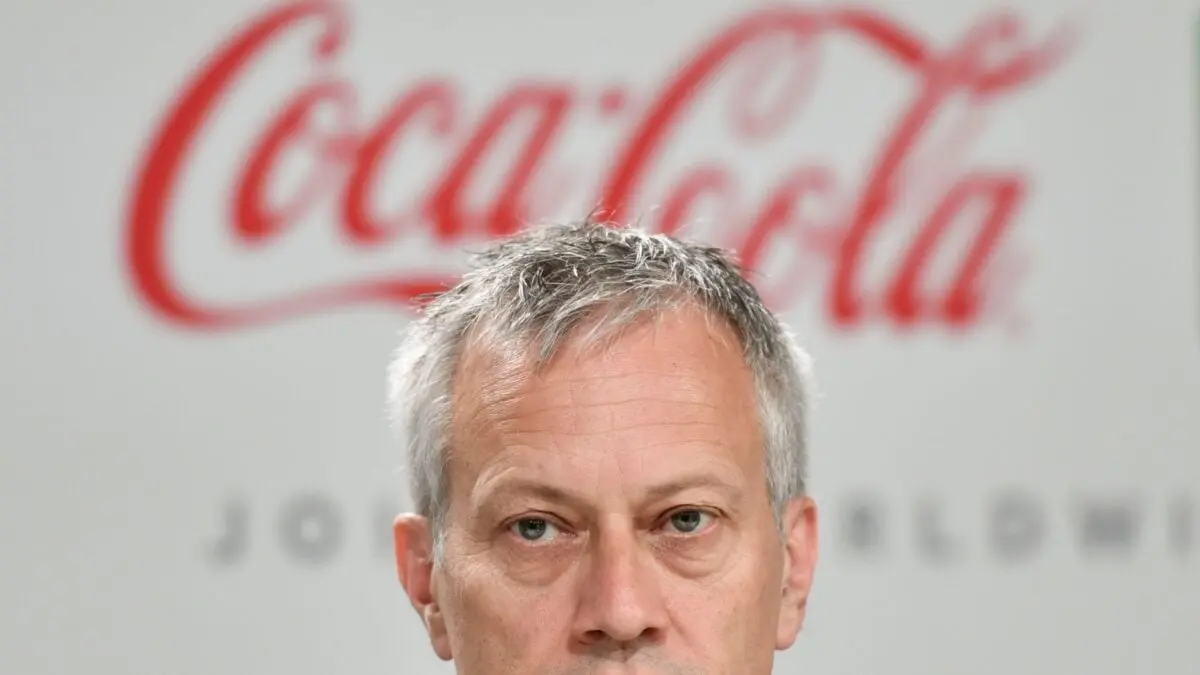
Source: Gizmodo
Former Walmart CEO Douglas McMillon offered similar reasoning when he stepped down in February after holding the role since 2014. McMillon explained to CNBC that "with what's happening with AI, I could start this next big set of transformations with AI, but I couldn't finish."
3
He specifically referenced emerging concepts like agentic commerce and the vision for AI shopping as catalysts for his decision-making, concluding that "now was the right time" to pass leadership to John Furner.3
Furner, who rose from hourly associate to lead Walmart U.S., is viewed as uniquely capable of steering the retail giant through its next AI-driven transformation.4
Source: Tom's Guide
The disruptive impact of AI extends beyond voluntary departures. Adobe CEO Shantanu Narayen, who held the position since 2007, stepped down earlier this month amid investor uncertainty over the company's ability to compete in a creative software sector increasingly dominated by generative AI.
2
In a memo to employees, Narayen acknowledged that "the next era of creativity is being written right now -- shaped by AI, by new workflows and by entirely new forms of expression."3
Despite Adobe's development of Firefly, its suite of generative AI models, investors remain concerned about whether the company's subscription model can withstand competition from faster-moving AI competitors.4
These transitions reveal a fundamental shift in what boards expect from corporate leadership. Companies are no longer seeking CEOs who simply add AI tools around the edges. Instead, they want leaders capable of reorganizing large enterprises around faster decision-making, AI-enabled workflows, and operating models built for greater autonomy.
4
At Coca-Cola, the company created a new chief digital officer role reporting directly to incoming CEO Henrique Braun, designed to bring the business closer to consumers and enable faster technology adoption across the enterprise.4
This structural change underscores how AI implementation is driving not just leadership changes but fundamental organizational restructuring.
Source: Inc.
Related Stories
The timing of these departures has raised questions about whether AI is the full story. Both McMillon and Quincey command compensation packages in the $20 million range, making their decisions to step aside during a period of technological promise somewhat puzzling.
2
Quincey previously initiated layoffs affecting 1,200 people early in his tenure and oversaw another round eliminating 75 positions this year as part of AI-focused restructuring. Walmart has already implemented AI tools for real-time translation and task management, while Coca-Cola's ventures into AI-generated advertising received mixed reactions from consumers.3
With golden parachutes at the ready and immediate AI-driven growth remaining elusive, some observers suggest the technology may provide convenient cover for strategically-timed exits.5
What was once treated as one strategic priority among many has become the dividing line between leadership eras.
4
The AI revolution is forcing boards to reconsider not just strategy but the very profile of executives needed to execute it. As enterprise transformation accelerates, the question facing corporate America is whether this represents a genuine recognition of AI's transformative power or a convenient narrative for departures driven by other factors. Either way, the message to current and aspiring leaders is clear: the ability to drive AI transformation is becoming the defining qualification for CEO succession in major corporations.Summarized by
Navi
[2]
[3]
[5]
28 Sept 2025•Business and Economy

29 Aug 2024

18 Mar 2026•Business and Economy

1
Policy and Regulation

2
Technology

3
Policy and Regulation




