10 Sources
[1]
Martin Scorsese becomes the latest -- and most unlikely -- Hollywood voice for AI
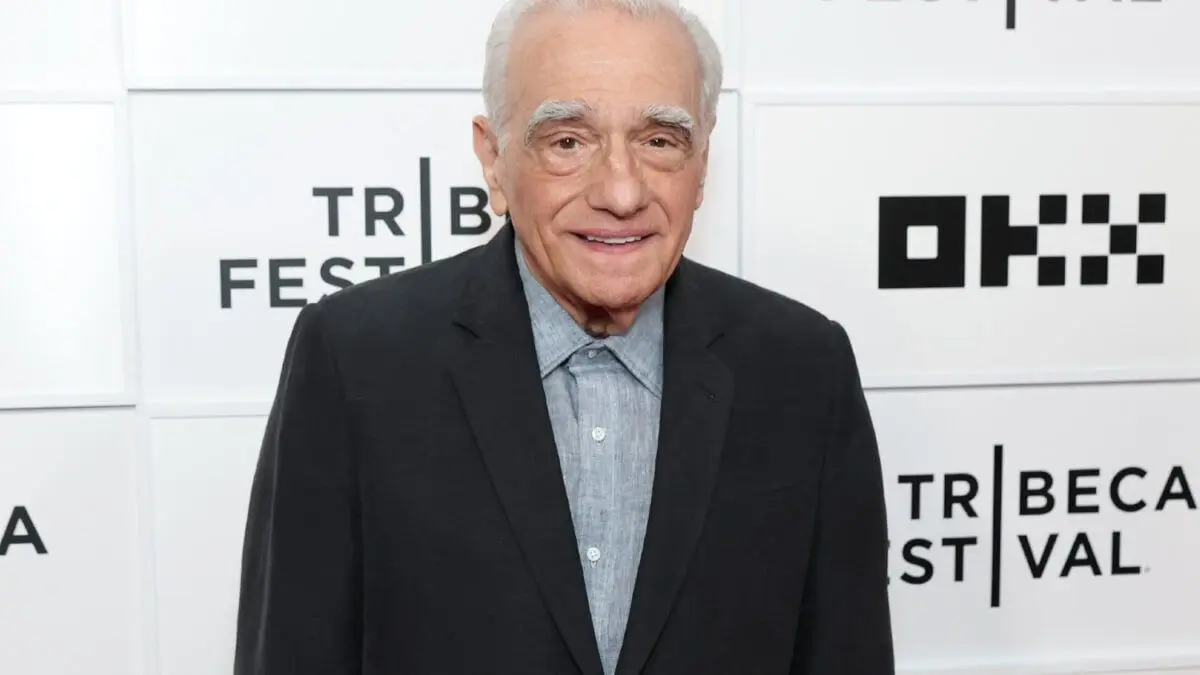
Martin Scorsese has signed on as a partner and adviser to an AI image-generation startup Black Forest Labs, the New York Times reported on Tuesday. The caveat is that one of the world's most famous living directors is using the tech solely for storyboarding. "For 70 years, I've been creating my own storyboards," he said in a statement to the Times. The tool, he said, helps him communicate his vision to cinematographers and production designers far faster and more efficiently. Black Forest Labs is a 70-person outfit headquartered not in San Francisco, but in Freiburg, Germany, the closest major city to the actual Black Forest. Despite its unlikely address, the startup powers image features inside Adobe, Canva, Microsoft, and Meta, and was last valued at $3.25 billion by its investors, which include BroadLight Capital, co-founded by Scorsese's talent manager, Rick Yorn. Black Forest Labs was founded by the team behind Stable Diffusion and according to Wired, declined to partner with Elon Musk's xAI in recent months -- the second time after an earlier collaboration on Grok's image generator ended amid concerns about the platform's content safeguards. All of which is to say that Scorsese's endorsement, though limited in scope, is just the newest sign that Hollywood's once-fierce resistance to AI is softening, whether the industry likes it or not.
[2]
Martin Scorsese's reported AI "embrace" doesn't live up to the hype.
Fresh off interviewing the chatbot-powered stunt that is Tilly Norwood, the NYT tells us of Martin Scorsese's advisor and partner arrangement with Black Forest Labs (whose Flux tech has powered xAI's image generation) in what it calls "a clear sign of Hollywood's softening stance on artificial intelligence." Right now, however, that softening extends only to a test of storyboard creation: I recently tested this out on a scene and the ability to visualize and immediately share the storyboard was creatively freeing. During the pre-production process, time costs money, and this allowed us to move faster without sacrificing quality or craft.
[3]
Martin Scorsese gets backlash after endorsing 'creatively freeing' AI
Legendary film-maker Martin Scorsese has stepped into the fierce debate over the rise of artificial intelligence in Hollywood by endorsing an AI tool that he says has been "creatively freeing" in the pre-production process. The Taxi Driver, Goodfellas and Wolf of Wall Street director has become an adviser to AI company Black Forest Labs, saying he wants to "push the bounds of creativity to create deeper and richer experiences for audiences". The company released a video of Scorsese using AI to instantly create images for storyboards, which show how key characters, locations and scenes should look. He's the latest big-name director to embrace AI, but was criticised by some in the industry who fear its impact on the creative process and jobs. In a statement, the 83-year-old Oscar winner said he had always struggled to "communicate what you see in your head to your cast and crew" in storyboards. He said: "I'm interested in the intersection of technology and storytelling, and seeing how that can push the bounds of creativity to create deeper and richer experiences for audiences. "Remember, cinema is a young medium, only around 125 years old, so we have to be open to how it can evolve." He pointed out that he had used 3D in 2011 film Hugo and de-ageing technology for 2019's The Irishman, and said AI could now help him to convey his ideas "more clearly and efficiently to my creative team" including a production designer, art designer and cinematographer. "I recently tested this out on a scene and the ability to visualize and immediately share the storyboard was creatively freeing," he added. "During the pre-production process, time costs money, and this allowed us to move faster without sacrificing quality or craft." But his enthusiasm was controversial among some fans and members of the film industry. Karla Ortiz, who worked in the art department on films including Avengers: Endgame, Black Panther and Doctor Strange, wrote on X: "He throws every single storyboard artist he's ever worked with under the bus, as he demolishes their livelihoods with models that are likely trained on those storyboard artist's same works. "To use his legacy and power for this is just so disgusting." Animation director Samuel Deats said: "It takes literally seconds for me to storyboard a shot, there is absolutely no reason to need AI built on the stolen work of millions of artists to storyboard your vision, have some damn pride and respect your peers." Others on social media defended Scorsese and the use of AI in film. "Using AI is effectively just another special effect like CGI. And as shown, Scorsese is not adverse to such technological advancements," wrote one user. "If AI can help someone like Scorsese show his cinematographer or production team what he's imagining more quickly, I don't really see the issue," said another. "At that point, it feels less like replacing creativity and more like giving the creative process a better tool." Scorsese is far from the first high-profile film-maker to enthuse about the potential of AI. Darren Aronofsky's studio used AI to recreate the American Revolution in a series of short films, and Steven Soderbergh has used it to create visual scenes in a new documentary about John Lennon. Late actor Val Kilmer has been resurrected by AI to appear in a forthcoming film, which he agreed to star in before his death in April 2025. Steven Spielberg recently said AI could help "save us a lot of legwork" by undertaking tasks such as scouting locations, but should just be "a tool in a large tool chest" and shouldn't have the "final word on anything creative". Guillermo Del Toro said last year that he would "rather die" than use AI. On Tuesday, director Adam Shankman responded to claims that he used AI in his new film Stop! That! Train!, starring RuPaul. "Every shot in 'Stop! That! Train!' was made by human hands!" Shankman wrote on Instagram. "There are a sum total of ZERO shots conceived by AI in the movie. We employed hundreds of VFX artists who all killed themselves getting this out for release and not one job was taken out of human hands."
[4]
Martin Scorsese Feels the Power of the Dark Side, Jumps on the AI Bandwagon
What's the opposite of Absolute Cinema? According to the New York Times, Martin Scorsese has accepted a role as an advisor for a generative AI firm and, even more devastatingly, has apparently started to use the technology during the storyboarding process for his next film. The company in question is Black Forest Labs, the maker of text-to-image and video models, including Flux, which has been used for image and video generation by companies including Adobe, VSCO, and xAI. And if you're wondering how Marty ended up involved with them, well, you can probably blame his agents -- though you don't have to give the director a total pardon. Per the Times, Scorsese's talent manager, Rick Yorn, is the co-founder of BroadLight Capital, one of the firms that has invested in Black Forest Films. Michael Ovitz, the founder of Creative Artists Agency and a former neighbor of Scorsese, is also an investor and probably had Marty's ear on the whole project. Notably, Scorsese didn't speak directly with the Times about his adviser role. But if you've been listening to Marty over the last few years, it's clear he's not as averse to AI as some other creatives. In 2023, as AI was becoming more commercially available, Scorsese said that he hoped it would have a positive impact on the art form. "My hopes are such that with the new technology and the new generations and younger people seeing the world in a different way, that cinema will evolve itself into a new form," he said during an appearance on Sky News' Backstage podcast. In 2024, while speaking at the Berlin Film Festival, the director said filmmakers shouldn't "let the technology scare us," and advised, "Don't become a slave to the technology; let us control the technology and put it in the right direction." During an interview at the Taormina Film Festival in 2025, he told the audience, "Whatever new tool comes along, learn to use it," while warning, "The thing is that it's gotta be human, the heart's gotta be there." All that said, Scorsese's use of the technology itself is limited. In a statement to the Times (that, let's be real, probably did not come from him directly), he said that he's been using it for storyboarding -- something that he has famously done by hand since he was a kid. "There's always been this problem of how do you communicate what you see in your head to your cast and crew," he said. "Now with this tool I can share what I'm visualizing more clearly and efficiently to my creative team -- the production designer, art designer and cinematographer." Scorsese isn't advocating for AI to replace the human element in the final product (importantly, he's repeatedly argued for the importance of preserving that), but it inevitably will. Storyboarding is a job. Scorsese might do it himself, but not every director does, and some of those directors are going to embrace this technology in favor of a more collaborative and human creative process. And films will be worse off for it.
[5]
Director Martin Scorsese Joins AI Image Startup Black Forest Labs
Martin Scorsese has joined the AI image company Black Forest Labs as an adviser, a decision that has shocked some in the film and creative communities. The legendary director -- who has been nominated for an Academy Award 16 times, winning one in 2007 for The Departed -- appeared to limit his enthusiasm for the controversial technology to storyboarding. "For 70 years, I've been creating my own storyboards," Scorsese says in the statement given to The New York Times. "There's always been this problem of how do you communicate what you see in your head to your cast and crew. There are some things you have to see and feel." In the announcement video above, 83-year-old Scorsese is seen giving instructions to create a wintry town in Eastern Europe that he has in his head, which is generated from prompts entered by the Black Forest Labs team. Scorsese says that the 125-year-old cinema industry is a "young medium" and that "we have to be open to how it can evolve." "I'm interested in the intersection of technology and storytelling, and seeing how that can push the bounds of creativity to create deeper and richer experiences for audiences," Scorsese says "Now with this tool, I can share what I'm visualizing more clearly and efficiently to my creative team -- the production designer, art designer and cinematographer." "I recently tested this out on a scene, and the ability to visualize and immediately share the storyboard was creatively freeing," he adds. "During the preproduction process, time costs money, and this allowed us to move faster without sacrificing quality or craft." AI and Cinema That Scorsese, an icon of cinema who has directed influential movies like Goodfellas, The Wolf of Wall Street, and Taxi Driver, would join forces with a generative AI company will no doubt ruffle some feathers. Black Forest Labs, which makes the FLUX AI image generator, was born out of Stability AI, the company that made Stable Diffusion. Scorsese signed on to become a partner of the German comapny last year via startup investor BroadLight Capital. "What AI is doing is pulling from what everyone else has already done in terms of artistic creativity," says Instagram page Reel Takes, who was critical of Scorsese's decision. "They're pulling from images that are already there." "You're not going to tell me that Scorsese doesn't understand the potential impact of his endorsement, which the Black Forest guys were literally giddy about," he adds. Scorsese isn't the only legendary director to partner with an AI firm: filmmaker James Cameron is on the board of directors of Stability AI. Image credits: Header photo licensed via Depositphotos.
[6]
Martin Scorsese has officially joined the AI camp and it's not what anyone expected
Martin Scorsese has partnered with AI startup Black Forest Labs to use generative AI for storyboarding Hollywood's complicated romance with artificial intelligence just got a whole lot more interesting. Martin Scorsese, the 83-year-old director behind Goodfellas, Raging Bull, and The Departed, has signed on as a partner and adviser to Black Forest Labs, a fast-growing AI image generation startup. As reported by the New York Times, Scorsese used the company's technology during preproduction for a new film and released a video from his New York office explaining his enthusiasm. For an industry that only three years ago went on strike partly over AI protections, this is a remarkable turn of events. Scorsese is using AI but not in the way you think Scorsese is using AI exclusively for storyboarding, the process of visually mapping out scenes before cameras roll. He explained that for 70 years, he has drawn his own storyboards, but always struggled to communicate exactly what he sees in his head to his cinematographer, production designer, and art director. Recommended Videos Black Forest Labs' technology, which builds on open AI models called FLUX, helped him solve that problem. The startup is a 70-person company based in Freiburg, Germany, currently valued at around $3.25 billion. Its technology already powers image features inside Adobe, Canva, Microsoft, and Meta. Hollywood is warming up to AI despite protests Scorsese isn't alone, as plenty of other big names are moving in the same direction. Amazon MGM Studios recently unveiled three AI-generated animated series for children, and Netflix is building an internal studio called INKubator to produce AI-generated animated content. Val Kilmer's likeness is also being brought back using AI technology in the upcoming film As Deep as the Grave. An AI actress named Tilly Norwood is already making waves in Hollywood, with her very existence sparking fierce debate about where the industry is headed. Not everyone is convinced, though. Steven Spielberg voiced strong concerns publicly, making clear he opposes AI replacing human creativity in filmmaking. Seth Rogen and Guillermo del Toro also pushed back on AI at Cannes. The debate is far from settled, but Scorsese's endorsement suggests the conversation has moved well past if and firmly into how.
[7]
Film Community Aghast as Martin Scorsese Extolls AI Startup, Says He Now Uses AI for Storyboards
Can't-miss innovations from the bleeding edge of science and tech The film community is in meltdown after acclaimed director Martin Scorsese promoted a new AI startup called Black Forest Labs, saying that he's already using its tech to help plan his movies. Scorsese revealed this collaboration in a statement to The New York Times on Tuesday, which was accompanied by the release of a new promotional video from Black Forest Labs depicting the 83-year-old film legend using its AI image generation tool for storyboarding, the process of visualizing scenes using illustrations in preparation for filming. According to the reporting, Scorsese signed on as a partner and an adviser to the venture last year. Such shilling by a venerated artist for AI was, in the eyes of many filmgoers, the opposite of "Absolute Cinema." "Cannot stress enough how disappointing it is that Martin Scorsese is collaborating with an AI company and putting a stain on his name so late in his life and career," wrote one cineaste. "Putting storyboard artists out of work is bad and that should not be a controversial opinion," another fumed. For film journalist Richard Newby, the reaction was visceral. "I feel like I'm going to throw up," he tweeted. It's easy to understand where they're coming from, since Scorsese is one of the most revered filmmakers alive. The "GoodFellas" and "Mean Streets" director spearheaded a movement that cast off the shackles of the stodgy old studio system and ushered in a Renaissance of Hollywood filmmaking that embraced authorial intent, drawing on a deep reverence for foreign filmmakers -- from Akira Kurosawa to the duo of Michael Powell and Emeric Pressburger -- to create something more stylistic and transgressive, while taking a unflinching eye to social issues of the day. Beyond his role behind the camera, Scorsese has also been an important champion of overlooked international films, and has helped preserve cinema history through his Film Foundation. For him to throw his weight behind AI is a big victory for the industry -- and a gut punch to artists who view the tech as not only a threat to their livelihoods, but to creativity itself. That said, Scorsese is being conspicuously limited in how he praises AI, though this is likely to be little consolation to the anti-AI crowd. In the promotional video and in his remarks to the NYT, he was careful to stress that he only uses AI for storyboarding, claiming that it's allowed his team "to move faster without sacrificing quality or craft" during preproduction. "For 70 years, I've been creating my own storyboards," Scorsese told the NYT in a statement (which is notable, since it definitely reads more like a company-approved release than something he's said in one of his many insightful interviews.) "There's always been this problem of how do you communicate what you see in your head to your cast and crew. There are some things you have to see and feel." "Now with this tool," he added, "I can share what I'm visualizing more clearly and efficiently to my creative team -- the production designer, art designer and cinematographer." The sense of betrayal hit one Scorsese fan especially close to home. "Scorsese's storyboards for Taxi Driver were a big inspiration for me, a poor artist, to feel confident drawing ideas to share with our illustrators," the indie game developer lamented. "I can't understand why so much of the older generation of artists are swayed by this crap when they already had it all figured out."
[8]
Absolute Cinema? Martin Scorsese Used AI to Help Storyboard His Next Movie
It's a somewhat strange headline-heavy week for one of the titans of global cinema: One day after popping up on the cover of Charli XCX's new album, Martin Scorsese has announced his backing of a new artificial intelligence start-up called Black Forest Labs. Per The New York Times, Scorsese signed on as a partner and adviser to Black Forest Labs last year. His ties were made public today with a press release and a video showing how Scorsese used the company's image generation tool, Flux, while storyboarding his next film, What Happens at Night. The film, which stars Leonardo DiCaprio and Jennifer Lawrence, follows a couple as they travel to a small European town to adopt a baby. The video shows Scorsese using the AI tool to generate visuals of what the town might look like. "I'm interested in the intersection of technology and storytelling, and seeing how that can push the bounds of creativity to create deeper and richer experiences for audiences," Scorsese said in a statement. "Remember, cinema is a young medium, only around 125 years old, so we have to be open to how it can evolve." Scorsese's use of Flux appears entirely limited to storyboarding (how filmmakers map out shots during pre-production). While Scorsese has created his own storyboards for decades, he said in his statement that there's "always been this problem of how do you communicate what you see in your head to your cast and crew." He added that Flux allowed him to "share what I'm visualizing more clearly and efficiently to my creative team," and called the process "creatively freeing." He also noted it allowed the production to save money while moving "faster without sacrificing quality or craft." Still, Scorsese's endorsement of an AI product will almost certainly spark controversy. Adoption of AI in film (and other creative industries) has been deeply contentious and divisive, with many creatives viewing it as an existential threat and/or conduit for mediocrity. For instance, at the Cannes Film Festival, Guillermo del Toro bemoaned living in an age where people think "that art can be done with a fucking app." But many Hollywood heavyweights have already signed onto AI in some capacity. James Cameron is on the board of directors for Stability AI, which created another text-to-image generator. (The CEO of Black Forest Labs used to work at Stability.) And Peter Jackson has incorporated AI tech into his creative process, recently comparing it to "a special effect."
[9]
Martin Scorsese Teams Up With AI Company, Says Tech Was "Creatively Freeing" for Storyboard Use: AI "Allowed Us to Move Faster
Martin Scorsese is teaming up with the artificial intelligence company Black Forest Labs, where he will serve as an advisor with the research lab. The Academy Award winner said in a statement released Tuesday that he's utilizing the company's FLUX technology to assist in creating storyboards. "For 70 years, I've been creating my own storyboards. There's always been this problem of how do you communicate what you see in your head to your cast and crew. There are some things you have to see and feel. I'm interested in the intersection of technology and storytelling, and seeing how that can push the bounds of creativity to create deeper and richer experiences for audiences," Scorsese said. "Remember, cinema is a young medium, only around 125 years old, so we have to be open to how it can evolve." He continued, "I utilized 3D with Hugo and de-aging technology for The Irishman. Now, with this tool, I can share what I'm visualizing more clearly and efficiently to my creative team -- the production designer, art designer, and cinematographer -- for them to build on to enrich cinematic intelligence. I recently tested this out on a scene and the ability to visualize and immediately share the storyboard was creatively freeing. During the pre-production process, time costs money, and this allowed us to move faster without sacrificing quality or craft." In collaboration with Black Forest Labs, the company also released a video of Scorsese utilizing the AI platform to help with the storyboarding process. He said, "If you have a tool like this, you could figure it out much much quicker and you could save production time, and also less wear and tear on the crew." With his new role as a Black Forest Labs advisor, Scorsese becomes one of the most prolific Hollywood directors who have voiced their support of AI. Avatar helmer James Cameron joined the board of AI firm Stability AI last September, whereas, on the flipside, Guillermo del Toro told The Hollywood Reporter in October when asked about his thoughts on AI infiltrating creative spaces, "I don't think anyone wants this." "It would be like spitting on God," del Toro added when asked how he would feel if someone from his team suggested using AI to generate something from the outset.
[10]
There was no need, but Martin Scorsese has decided to give in to AI
Martin Scorsese is my favorite living director, alongside Steven Spielberg. They are two heavyweights, after all, and as cliché as it sounds, it's normal for your average film buff to hold them in high regard... which doesn't mean they can't be criticized when they do something objectionable. This is the case with Scorsese, who after years of making his films in a handcrafted way, has now decided that it is time, in the twilight of his career, to surrender (oh, dear) to AI. The author, who has more than enough talent to create wonders like Killers of the Flower Moon, has decided to join Black Forest Labs, a company focused on AI, where he will act as an advisor, trying to "push the boundaries of creativity to create deeper and richer experiences for the audience". Doesn't it feel like you've read the same words eight hundred times in the last year? As he himself has stated, "Cinema is a young medium, it's about 125 years old, and we have to be open to its possibilities for evolution". And if we have to steal from others, then we steal. "I used 3D technology with Hugo and de-aging for The Irishman. Now, with this tool, I can share what I visualize more clearly and efficiently with my creative team to build and enrich cinematic intelligence." Marty, for god's sake. And what does all this talk translate to? Well, Scorsese will use it to create the storyboards for the scenes using the generative model FLUX. "If you have a tool like this you could figure out how to create complex shots more quickly and save production time". Am I the only one who can't wait for the bubble to burst as soon as possible?
Share
Copy Link
Legendary filmmaker Martin Scorsese has become an adviser to AI image-generation startup Black Forest Labs, using the technology for storyboarding. The 83-year-old director says the tool helps him communicate his vision faster during pre-production, but the move has drawn criticism from industry professionals who fear job displacement and the erosion of human creativity in filmmaking.
Martin Scorsese has signed on as a partner and adviser to Black Forest Labs, an AI image-generation startup, marking a significant moment in the ongoing debate about AI in film industry adoption
1
. The 83-year-old Oscar-winning director is using the technology specifically for storyboarding, a process he has personally handled for seven decades. "For 70 years, I've been creating my own storyboards," Scorsese said in a statement to The New York Times, explaining that the tool helps him communicate his vision to cinematographers and production designers far faster and more efficiently5
.
Source: Rolling Stone
Black Forest Labs is a 70-person company headquartered in Freiburg, Germany, and powers image features inside Adobe, Canva, Microsoft, and Meta. The startup was last valued at $3.25 billion by investors including BroadLight Capital, co-funded by Scorsese's talent manager Rick Yorn [1](https://techcrunch.com/2026/06/02/martin-scorsese-becomes-the-latest-and-most-unlikely- Hollywood-voice-for-ai/). The company was founded by the team behind Stable Diffusion and makes the FLUX AI image generator
5
.Scorsese's endorsement, while limited in scope to pre-production tasks, represents what many see as Hollywood's softening stance toward AI technology
2
. The director emphasized the practical benefits during the creative process: "I recently tested this out on a scene and the ability to visualize and immediately share the storyboard was creatively freeing. During the pre-production process, time costs money, and this allowed us to move faster without sacrificing quality or craft"3
.
Source: The Verge
In an announcement video, Scorsese is seen giving instructions to create a wintry town in Eastern Europe, which is generated from prompts entered by the Black Forest Labs team
5
. The filmmaker framed his decision within the context of cinema's evolution, calling it a "young medium, only around 125 years old" and saying "we have to be open to how it can evolve"3
.The announcement drew sharp criticism from storyboard artists and other film industry professionals who fear the impact of generative AI on their livelihoods. Karla Ortiz, who worked in the art department on films including Avengers: Endgame and Black Panther, wrote on X: "He throws every single storyboard artist he's ever worked with under the bus, as he demolishes their livelihoods with models that are likely trained on those storyboard artist's same works"
3
.Animation director Samuel Deats added: "It takes literally seconds for me to storyboard a shot, there is absolutely no reason to need AI built on the stolen work of millions of artists to storyboard your artistic vision, have some damn pride and respect your peers"
3
. The controversy underscores broader anxieties about AI for storyboarding replacing human jobs, even as defenders argue the technology serves as just another tool for technological advancements in filmmaking.Related Stories
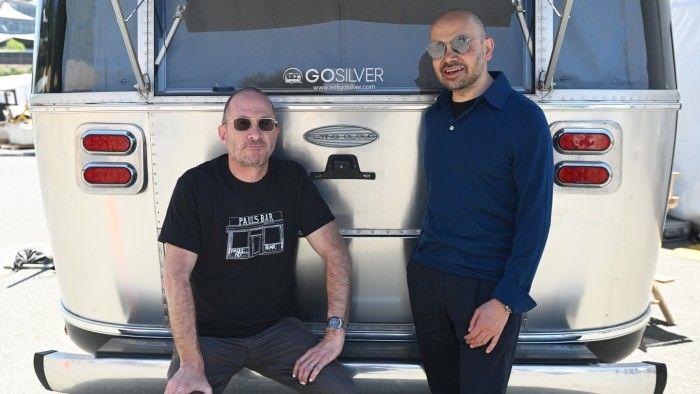
This isn't Scorsese's first embrace of new technology. He pointed out that he used 3D in 2011's Hugo and de-ageing AI technology for 2019's The Irishman
3
. The director has consistently expressed openness to technological innovation when it serves storytelling. In 2023, he said he hoped AI would have a positive impact on cinema, and in 2024 at the Berlin Film Festival, he advised filmmakers to "not let the technology scare us" and to "let us control the technology and put it in the right direction"4
.
Source: PetaPixel
Scorsese isn't alone among high-profile directors exploring AI. Darren Aronofsky's studio used AI to recreate the American Revolution, Steven Soderbergh has used it in a documentary about John Lennon, and filmmaker James Cameron serves on the board of Stability AI
3
5
. However, others like Guillermo Del Toro said last year that he would "rather die" than use AI3
.While Scorsese isn't advocating for AI to replace the human element in final productions, industry observers note that storyboarding is a job, and not every director creates their own boards
4
. Some directors will inevitably embrace this technology in favor of hiring human storyboard artists, potentially diminishing the collaborative nature of the creative process. The debate centers on whether AI technology serves as a productivity tool or threatens to erode the human craftsmanship that defines cinema.Summarized by
Navi
19 May 2026•Entertainment and Society

17 Mar 2026•Technology

29 May 2026•Entertainment and Society

1
Technology

2
Policy and Regulation

3
Technology