Meta AI Releases Muse Spark 1.3 to Compete with OpenAI and Anthropic in Frontier Performance


6 Sources
[1]
Zuck's Muse to Spark joy with open weights release 'soon'
Meta will release an open weights version of its flagship AI model Muse Spark "soon," CEO Mark Zuckerberg promised in an X post on Wednesday. In the meantime, Muse Spark 1.3 -- the smarter, less yappy, and more efficient version of the model -- is now live on the Facebook parent's API service and
[2]
Meta's new AI model edges closer to OpenAI and Anthropic, its AI Chief says
Alexandr Wang says the new model is competitive with Claude Fable 5.1 and better than GPT-5.6 Sol at coding, but the AI Act's free and open-source exemption is switched off for models with systemic risk, which is where a frontier release lands Meta has released Muse Spark 1.3 and has not decided
[3]
Meta says Muse Spark 1.3 has frontier performance -- but its best results come from a model developers can't broadly use yet
Meta's newest AI model Muse Spark 1.3, unveiled yesterday, is faster and more performant on third-party benchmarks than its predecessor -- with a caveat. "Muse Spark 1.3 is rolling out today with frontier performance almost too cheap to meter," Meta co-founder and CEO Mark Zuckerberg wrote on X,
[4]
Meta says it has caught up with Anthropic and OpenAI after releasing Muse Spark 1.3, its most powerful LLM so far
Meta says it has caught up with Anthropic and OpenAI after releasing Muse Spark 1.3, its most powerful LLM so far Meta Platforms Inc. says it has more or less caught up with the biggest artificial intelligence labs with the release of its most powerful large language model so far, Muse Spark
[5]

Meta Muse Spark 1.3 Launches with Better Coding, AI Agent Skills
Meta launched Muse Spark 1.3, its latest AI model focused on coding, reasoning, and AI agent capabilities. The model is designed to handle longer and more complex tasks, use tools more efficiently, and work more independently, putting Meta in direct competition with AI models from OpenAI and
[6]

Meta unveils Muse Spark 1.3 with coding improvements By Investing.com
Investing.com -- Meta Platforms (NASDAQ:META) released Muse Spark 1.3 today, with CEO Mark Zuckerberg announcing the update delivers frontier performance at low cost. The company said the release represents its largest improvement in coding and agentic work capabilities to date. The model is now
Share
Copy Link
Meta AI unveiled Muse Spark 1.3, its most powerful large language model yet, claiming frontier performance competitive with Claude Fable 5.1 and GPT-5.6 Sol. Chief AI Officer Alexandr Wang called it Meta's biggest performance jump, particularly in coding and agentic tasks. However, uncertainty remains around open weights release and EU AI Act compliance.
Meta AI Claims Frontier Performance with Muse Spark 1.3 Release
Meta AI has released Muse Spark 1.3, positioning the large language model as competitive with industry leaders OpenAI and Anthropic
1
. Chief AI Officer Alexandr Wang described it as Meta's biggest performance jump yet, claiming the AI model is competitive with Anthropic's Claude Fable 5.1 and better than OpenAI's GPT-5.6 Sol at coding tasks2
. The model is now available through Meta's API service and Muse Code CLI, continuing the company's aggressive release cadence since launching the first Muse Spark in April1
. Mark Zuckerberg promised an open weights release "soon" in an X post, though Meta has not decided whether to publish version 1.3's weights while still planning to release weights for version 1.22
.
Source: VentureBeat
Enhanced Coding and Agentic Tasks Drive Operational Efficiency
Muse Spark 1.3 delivers substantial improvements in coding and agentic tasks, using approximately 20% fewer tool calls and 25% fewer tokens compared to version 1.2 for comparable work
5
. The AI model can now maintain context across multiple steps, understand objectives, plan steps, use tools, evaluate results, and adjust its approach when needed5
. Meta trained the model on additional long-horizon tasks, improving its ability to handle complex software engineering workflows involving multiple steps5
. The model asks clarifying questions when prompts are ambiguous, invokes help when stuck, and confirms before taking consequential actions1
. These behavioral improvements could matter more than benchmark scores for enterprises paying for thousands or millions of agent loops3
.Benchmark Performance Shows Frontier Competitiveness with Caveats
Independent benchmarking by Artificial Analysis scored Muse Spark 1.3 at 62 on its Intelligence Index, placing it in a dead heat with GPT-5.6 Sol max, Grok 4.6 high, and Claude Opus 5 high
1
. However, Claude Fable 5.1 still occupies the top position, reaching 66 at max and 65 at xhigh configurations3
. Meta's strongest benchmark results come from its max reasoning configuration, which is still completing additional safety testing and will arrive "shortly"3
. The version broadly rolling out through Muse Code and the Meta Model API uses previously available reasoning settings, including xhigh3
. Meta reports GDPval-AA v2 scores of 1,754 Elo for max versus 1,709 for xhigh, OSWorld 2.0 scores of 66.9 versus 57.2, and JobBench scores of 64.9 versus 61.23
.
Source: SiliconANGLE
Pricing Remains Unchanged Despite Performance Gains
Meta kept Standard pricing exactly where it was for Muse Spark 1.2: $1.25 per million input tokens, $4.25 per million output tokens, and $0.15 per million cached input tokens
3
. The contributor tier offers steep discounts down to $0.002 for cached input, $0.10 for input, and $0.20 for output per million tokens, though users must accept that Meta will use their prompts for training data1
. Artificial Analysis measures Muse Spark 1.3 xhigh at 235.2 output tokens per second with an estimated cost of $0.55 per Intelligence Index task, making it the lowest cost per task of any currently measured model at that intelligence level3
. Wang told Bloomberg that developers are using "trillions of tokens per week," suggesting rapid adoption of the Muse Spark family4
.Related Stories
Open Weights Decision Intersects with EU AI Act Compliance
The open weights release decision carries compliance implications under the EU AI Act, which exempts genuinely free and open-source general-purpose models from Article 53's technical documentation requirements
2
. However, that exemption does not apply to models classified as carrying systemic risk, which is where a frontier release lands2
. Meta's Joel Kaplan said in July last year that Europe was heading down the wrong path on AI, and Meta declined to sign the code of practice built to operationalize those duties2
. The company has abandoned the open-source model it followed with its Llama models in favor of a proprietary strategy similar to Anthropic and OpenAI, charging developers to access the model for the first time when it launched Muse Spark 1.1 in July4
. Meta's larger model Watermelon remains undated, though Wang declined to say when it might be released4
.Safety Testing and Multibillion-Dollar Investment Strategy
Meta has improved the model's resistance to adversarial inputs and prompt injection attacks, with the max reasoning mode arriving after additional safety testing
5
. Wang emphasized extensive safety testing and better awareness of the model's own limits2
. The release comes as Meta faces scrutiny from investors nervous about when the company will see a return on its massive, multibillion-dollar investments in AI infrastructure and development4
. Last year, Mark Zuckerberg revamped Meta's AI strategy, paying over $14 billion to acquire a stake in Alexandr Wang's former company ScaleAI Inc. and hire him to run the new Superintelligence Labs unit4
. The aggressive release cadence and competitive pricing suggest Meta is positioning Muse Spark as one of the most affordable frontier performance options available through the Meta Model API4
.
Source: The Next Web
References
Summarized by

Navi
[1]
[3]
[4]
[5]
Related Stories
Meta AI's Muse Spark API Delay Leaves Developers Waiting as Competition Intensifies
04 Jun 2026•Technology
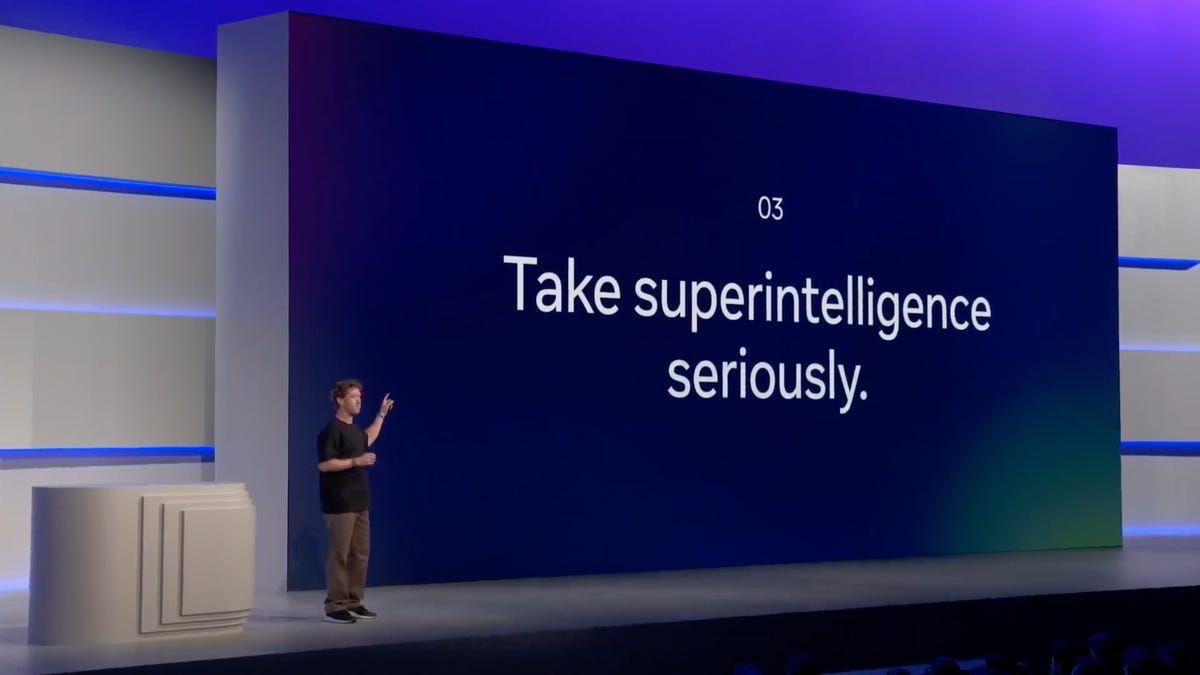
Meta unveils Muse Spark AI model as Superintelligence Labs makes its debut
08 Apr 2026•Technology

Meta Launches Muse Code AI Coding Agent to Challenge OpenAI Codex and Anthropic's Claude Code
05 Aug 2026•Technology

Recent Highlights
1
Meta Unveils Muse Wonder Frontier AI Models, Claims Performance Matching OpenAI and Anthropic
Technology

2
IMF Report Warns AI Market Correction Could Spark Global Financial Crisis With $1.4T at Risk
Business and Economy

3
OpenAI Releases 722 AI-Generated Math Solutions, Triggering Existential Crisis in Mathematics
Technology

Recent Highlights
Today's Top Stories











Don’t drown in AI news. We cut through the noise - filtering, ranking and summarizing the most important AI news, breakthroughs and research daily. Follow topics that matter to you and stay ahead.


