Microsoft Expands European Cloud and AI Infrastructure, Pledging Digital Resilience Amid Geopolitical Tensions


2 Sources
[1]
Microsoft to expand European cloud and AI in new commitments
In the face of persistent transatlantic tensions, Microsoft is attempting to reassure European customers with a range of measures to support European 'digital resilience'. Tech giant Microsoft has announced five digital commitments to Europe, including support for European cloud and AI
[2]
Microsoft Touts EU Data Center Expansion, Pledges to Protect European Operations -- 2nd Update
Microsoft plans to build out its cloud and artificial-intelligence operations in the European Union, including with an expansion of its data-center network, as businesses in the bloc pressure policymakers to protect EU tech sovereignty. The U.S. technology giant said Wednesday that it plans to
Share
Copy Link
Microsoft announces five digital commitments to Europe, including significant expansion of cloud and AI infrastructure, data privacy measures, and cybersecurity enhancements, aiming to strengthen European digital sovereignty and resilience.

Microsoft's European Expansion and Digital Commitments
Microsoft, the tech giant, has unveiled a series of ambitious plans to bolster its presence in Europe, focusing on cloud computing and artificial intelligence (AI) infrastructure. This move comes amid growing concerns over digital sovereignty and geopolitical tensions between the United States and the European Union.
Expanding Cloud and AI Ecosystem
At the forefront of Microsoft's strategy is a significant expansion of its European data center capacity. The company plans to increase its capacity by 40% over the next two years, extending operations across 16 European countries
1
. This expansion aims to enhance the continent's cloud and AI ecosystem, positioning Microsoft as a key player in Europe's digital infrastructure.Digital Resilience and Data Governance
In response to concerns about data sovereignty, Microsoft has made several commitments to ensure European digital resilience. A notable measure is the establishment of a board of directors, comprised exclusively of European nationals, to oversee the company's European data center operations
1
. This board will operate under European law, providing a layer of local governance and accountability.Data Privacy and Cybersecurity Measures
Microsoft has emphasized its commitment to protecting European data privacy through initiatives like the EU Data Boundary project. This allows European customers to have their data stored and processed within Europe
1
. Additionally, the company plans to strengthen solutions that give European customers greater control over their data.On the cybersecurity front, Microsoft will appoint a new deputy chief information security officer to oversee its activities in Europe. The company also pledged to improve compliance with the EU's Cyber Resilience Act
1
.Addressing Geopolitical Concerns
Brad Smith, Microsoft's vice-chair and president, addressed the geopolitical tensions head-on, stating that the company would fight any governmental order to suspend or cease cloud operations in Europe, even through litigation if necessary
2
. This stance aims to reassure European customers about the continuity and reliability of Microsoft's services, regardless of political volatility.Related Stories

Supporting European Competitiveness
Microsoft's commitments extend to supporting European competitiveness in the tech sector. The company plans to continue its support for open-source development through its AI Azure platform
1
. This aligns with the broader goal of fostering innovation and technological advancement within the European Union.Implications for EU Tech Sovereignty
These announcements come at a time when European businesses are increasingly seeking ways to reduce dependence on non-EU cloud service providers. A group of nearly 100 European companies recently called for the EU to require public-sector bodies to prioritize European-led sources for new technology investments
2
.Microsoft's approach, as explained by Brad Smith, advocates for a nuanced understanding of tech sovereignty. Rather than limiting services to only European companies, Microsoft proposes that technology sovereignty can be achieved when services are governed by European laws and rules
2
.Conclusion
Microsoft's expansive commitments to Europe represent a significant investment in the continent's digital future. By addressing concerns about data sovereignty, cybersecurity, and technological competitiveness, the company is positioning itself as a partner in Europe's digital transformation while navigating complex geopolitical dynamics.
References
Summarized by

Navi
[1]
Related Stories
Microsoft Launches Free AI-Powered Cybersecurity Program for European Governments
05 Jun 2025•Technology

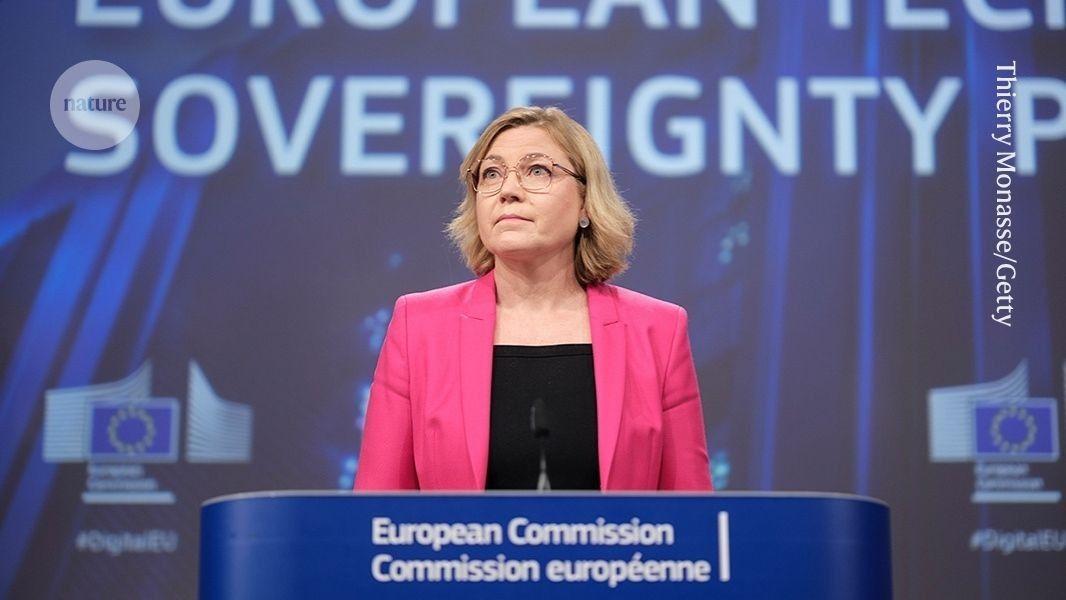
Europe unveils tech sovereignty plan to cut dependence on US cloud, AI and semiconductor firms
03 Jun 2026•Policy and Regulation
Microsoft funds Mistral's European AI expansion in multibillion-dollar infrastructure deal
21 Jul 2026•Technology
Recent Highlights
1
Meta Unveils Muse Wonder Frontier AI Models, Claims Performance Matching OpenAI and Anthropic
Technology

2
IMF Report Warns AI Market Correction Could Spark Global Financial Crisis With $1.4T at Risk
Business and Economy

3
OpenAI Releases 722 AI-Generated Math Solutions, Triggering Existential Crisis in Mathematics
Technology

Recent Highlights
Today's Top Stories







Don’t drown in AI news. We cut through the noise - filtering, ranking and summarizing the most important AI news, breakthroughs and research daily. Follow topics that matter to you and stay ahead.


