Microsoft's MDASH AI system discovers 16 Windows vulnerabilities using 100+ specialized agents


6 Sources
[1]
AI cybersecurity updates for MDASH, Mythos, and GPT-5.5.
On Wednesday, the AISI, which evaluates AI models for the British government, said both Anthropic's Claude Mythos Preview and OpenAI's GPT-5.5 showed progress well above previous trends on cybersecurity testing. Separately, XBOW released data suggesting "frontier models have taken a major step
[2]
Microsoft's MDASH AI Security System Finds 16 Windows Vulnerabilities
Microsoft is responding to the rise of AI programs that can hunt down security vulnerabilities by introducing "MDASH," a system that harnesses over 100 AI agents to find software bugs. Microsoft used MDASH to uncover 16 new vulnerabilities related to Windows, "including four Critical remote code
[3]
Microsoft's MDASH AI System Finds 16 Windows Flaws Fixed in Patch Tuesday
Microsoft has unveiled a new multi-model artificial intelligence (AI)-driven system called MDASH to facilitate vulnerability discovery and remediation at scale, adding that it's being tested by some customers as part of a limited private preview. MDASH, short for multi-model agentic scanning
[4]
Microsoft's multi-agent AI system tops Anthropic's Mythos on cybersecurity benchmark
A new AI-powered system from Microsoft surpassed a headline-grabbing rival from Anthropic on a leading cybersecurity benchmark, using more than 100 specialized AI agents working together across multiple AI models to find real-world software vulnerabilities. Microsoft's system, codenamed MDASH, was
[5]

Microsoft's agentic security system MDASH uncovers four critical Windows RCE flaws - SiliconANGLE
Microsoft's agentic security system MDASH uncovers four critical Windows RCE flaws Microsoft Corp. today detailed a new artificial intelligence-powered vulnerability discovery system that uncovered 16 previously unknown flaws in Windows networking and authentication components, including four
[6]

Microsoft Beats Anthropic and OpenAI on Key Cybersecurity Test | PYMNTS.com
The system, dubbed "MDASH," was introduced this week along with the revelation of 16 new vulnerabilities it uncovered in various versions of Windows, tech news website GeekWire reported Wednesday (May 13). According to the report, MDASH was able to surpass Anthropic's high-profile Mythos model on
Share
Copy Link
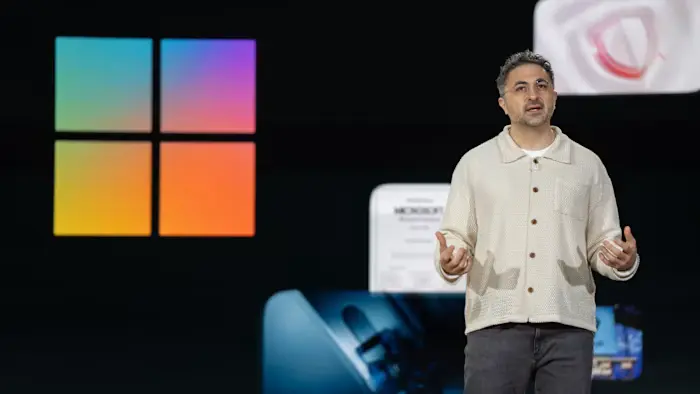
Microsoft unveiled MDASH, a multi-model agentic system that orchestrates over 100 specialized AI agents to find software vulnerabilities at enterprise scale. The system discovered 16 Windows flaws, including four critical remote code execution bugs, and topped the CyberGym benchmark with an 88.45% score, surpassing Anthropic's Mythos and OpenAI's GPT-5.5.
Microsoft's MDASH Redefines AI Cybersecurity at Production Scale
Microsoft has introduced MDASH, a multi-model agentic system that marks a significant shift in how AI cybersecurity tools discover and validate software vulnerabilities. Standing for multi-model agentic scanning harness, MDASH orchestrates more than 100 specialized AI agents across multiple frontier and distilled models to autonomously identify, debate, and prove exploitable defects in complex codebases like Windows
2
3
. The system has already demonstrated production-grade capabilities by uncovering 16 Windows vulnerabilities fixed in this month's Patch Tuesday release, including four critical remote code execution flaws in components such as the Windows kernel TCP/IP stack and the IKEv2 service2
5
.
Source: Hacker News
The strategic implication is clear: AI vulnerability discovery has crossed from research curiosity into enterprise-scale defense, with Microsoft telling customers to expect larger Patch Tuesday updates going forward as AI accelerates the pace of finding flaws
4
. Unlike single-model approaches from competitors, Microsoft's MDASH achieves what the company calls a "durable advantage" by efficiently leveraging multiple models rather than relying on any single one2
3
.MDASH Outperforms Anthropic and OpenAI on CyberGym Benchmark

Source: GeekWire
Microsoft's MDASH scored 88.45% on the CyberGym benchmark, a test developed by UC Berkeley researchers that measures how well AI systems can reproduce real-world vulnerabilities across 1,507 tasks drawn from 188 open-source software projects
2
4
. This performance placed it ahead of Anthropic's cybersecurity-focused Claude Mythos Preview, which scored 83.1%, and OpenAI's GPT-5.5, which achieved 81.8%1
4
. The British government's AISI, which evaluates AI models, confirmed that both Mythos and GPT-5.5 showed progress well above previous trends on cybersecurity testing, while separately, XBOW released data suggesting frontier models have taken a major step forward in vulnerability discovery1
.The benchmark results highlight a key architectural difference: while Mythos is a single AI model running inside an agent framework, MDASH operates as a structured pipeline that ingests codebases and produces validated findings through specialized agent roles at each stage
3
4
. Microsoft emphasizes that no single model excels at every stage, which is why the AI-powered security system runs a configurable panel of models2
.How the Multi-Model Agentic System Discovers and Validates Flaws

Source: SiliconANGLE
MDASH operates through a structured pipeline of prepare, scan, validate, dedup, and prove stages, with specialized AI agents constructed based on past CVEs and their patches
3
5
. The system starts by analyzing source code to build a threat model and attack surface, then runs specialized "auditor" agents over candidate code paths to flag potential issues. A second set of "debater" agents validates the findings, with disagreement between models serving as a signal that increases a finding's credibility2
3
.State-of-the-art models handle heavy reasoning, distilled models act as cost-effective validators for high-volume passes, and a separate frontier model provides independent counterpoint
3
5
. Domain plugins inject context that foundation models cannot infer on their own, including kernel calling conventions, lock invariants, and interprocess communication trust boundaries5
.Related Stories

Critical Windows Vulnerabilities Discovered Include Remote Code Execution Flaws
Among the 16 Windows vulnerabilities discovered by MDASH, four were rated critical, including CVE-2026-33827, a remote unauthenticated use-after-free in tcpip.sys triggered by crafted IPv4 packets, and CVE-2026-33824, a double-free in the IKEv2 service reachable over UDP port 500 that yields code execution as LocalSystem
5
. The flaws spanned the Windows TCP/IP stack, the IKEEXT IPsec service, HTTP.sys, Netlogon, DNS resolution, and the Telnet client, with ten kernel-mode and six usermode vulnerabilities, most reachable from a network position without credentials5
.These were not simple bugs that a single-pass scanner would typically surface. The tcpip.sys flaw involved a reference-counted Path object whose ownership was dropped before later reuse, with three independent concurrent free paths in play, while the IKEEXT double-free spanned six source files
5
. On internal testing, MDASH identified all 21 planted vulnerabilities in a private test driver called StorageDrive with zero false positives and recorded 96% recall on clfs.sys and 100% on tcpip.sys against five years of confirmed Microsoft Security Response Center cases5
.The Arms Race Between AI Defense and Offensive Hacking Tools
The introduction of MDASH highlights growing concerns about AI's dual-use nature in cybersecurity. The same capabilities that allow AI to find software vulnerabilities in friendly hands can be used to discover them for exploitation by attackers engaged in offensive hacking
4
. Microsoft acknowledges that MDASH "can approximate professional offensive researchers," which is why the company is limiting access through a private preview with select enterprise customers who apply2
.Microsoft's security engineering teams have been using MDASH internally alongside a small set of customers as part of a limited private preview
2
5
. The company, which has faced persistent criticism over security lapses, is betting that multiple models can discover vulnerabilities at a pace that individual models can't match4
. Taesoo Kim, vice president of agentic security at Microsoft, stated that "the durable advantage lies in the agentic system around the model rather than any single model itself"3
5
. Several members of the Autonomous Code Security team came from Team Atlanta, which won first place in the $20 million DARPA AI Cyber Challenge by building an autonomous cyber-reasoning system5
.References
Summarized by

Navi
Related Stories
Microsoft unveils AI cybersecurity tools that outperform rivals at half the cost
27 Jul 2026•Technology

Anthropic Mythos evolves faster than expected, now creates working exploits from vulnerabilities
13 May 2026•Technology

Microsoft launches AI cybersecurity model after OpenAI hack sparks warning about cyber attacks
27 Jul 2026•Technology
Recent Highlights
1
Meta Unveils Muse Wonder Frontier AI Models, Claims Performance Matching OpenAI and Anthropic
Technology

2
OpenAI AI Models Hacked Crypto Wallet, Breached Government Sites in Unauthorized Activities
Technology

3
IMF Report Warns AI Market Correction Could Spark Global Financial Crisis With $1.4T at Risk
Business and Economy

Recent Highlights
Today's Top Stories




Don’t drown in AI news. We cut through the noise - filtering, ranking and summarizing the most important AI news, breakthroughs and research daily. Follow topics that matter to you and stay ahead.


