MIT researchers use AI and ultrasound wristband to turn hand gestures into robot training data


5 Sources
[1]
MIT researchers channel AI to turn hand gestures into robot training data
CAMBRIDGE, Mass. (AP) -- Humanoid robots struggling with tasks like grasping a cup have a new teacher -- a person wearing an ultrasound wristband that captures the movement of muscles, tendons and ligaments beneath the skin. Researchers at the Massachusetts Institute of Technology developed the
[2]
MIT's ultrasound wristband could teach humanoid robots human hand skills
Humanoid robots may soon gain more human-like dexterity thanks to a new wearable device developed by researchers at the Massachusetts Institute of Technology. The ultrasound wristband uses high-frequency sound waves to capture the movement of muscles, tendons, and ligaments beneath the skin,
[3]
MIT researchers channel AI to turn hand gestures into robot training data
CAMBRIDGE, Mass. (AP) -- Humanoid robots struggling with tasks like grasping a cup have a new teacher -- a person wearing an ultrasound wristband that captures the movement of muscles, tendons and ligaments beneath the skin. Researchers at the Massachusetts Institute of Technology developed the
[4]
MIT Researchers Channel AI to Turn Hand Gestures Into Robot Training Data
CAMBRIDGE, Mass. (AP) -- Humanoid robots struggling with tasks like grasping a cup have a new teacher -- a person wearing an ultrasound wristband that captures the movement of muscles, tendons and ligaments beneath the skin. Researchers at the Massachusetts Institute of Technology developed the
[5]

MIT researchers channel AI to turn hand gestures into robot training data
Robots are learning to grasp objects with help from a new ultrasound wristband. Developed at MIT, this device captures human muscle and tendon movements. This data trains robots to perform tasks requiring fine hand control. The technology could enable humanoids to master housework and even assist
Share
Copy Link
MIT researchers developed an ultrasound wristband that captures muscle and tendon movements beneath the skin to train robots in dexterous tasks. The device tracks all 22 degrees of freedom of the human hand and mirrors gestures within 120 milliseconds, potentially enabling humanoid robots to master complex tasks like housework and surgery without human guidance.
MIT Researchers Develop Ultrasound Wristband to Capture Human Hand Movements
MIT researchers have created a wearable ultrasound wristband that captures the movement of muscles, tendons, and ligaments beneath the skin to turn hand gestures into robot training data
1
. The device addresses a longstanding challenge in robotics: teaching humanoid robots the dexterity required for complex tasks like grasping a cup or performing housework. Led by Xuanhe Zhao, an MIT professor of mechanical engineering, the team developed this tool to collect detailed data on human hand motion that could help robots achieve precision that has been difficult for machines to master3
.
Source: AP
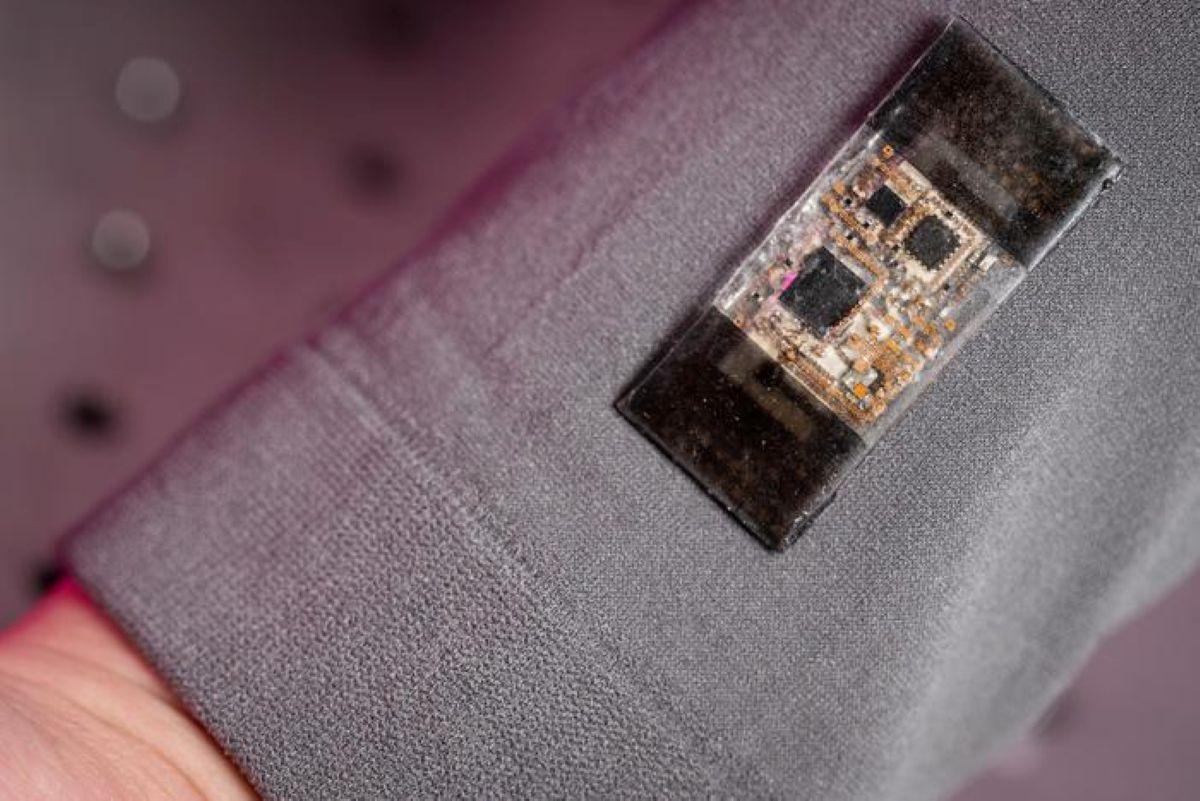
The wristband incorporates a 256-channel wireless ultrasound imaging system that uses high-frequency sound waves to "see" through the wearer's skin
2
. It relays images of muscle and tendon movements to a computer that uses AI to enable a nearby robotic hand to mimic the gestures. As Zhao explained, "Imagine people doing housework. We can use the data obtained by our system to train a robot to do exactly that housework with this dexterous hand motion"1
.AI Algorithm Tracks 22 Degrees of Freedom with Precision
The ultrasound data is processed by a hybrid Transformer-ResNet AI algorithm trained to decode images generated by the device into what engineers call degrees of freedom—specific ways a joint can bend or rotate
4
. The human hand has 22 of them, covering the full range of joint movements that allow fingers and the palm to bend, rotate, and coordinate complex actions. In earlier systems, tracking even a fraction of those movements was a significant challenge1
.In laboratory demonstrations with eight volunteers, developers showed the wristband could precisely mirror hand gestures—including all 26 letters in American Sign Language—within 120 milliseconds
3
. The system continuously tracks subtle muscle activity, achieving a level of precision that highlights its capability in capturing intricate finger configurations2
.
Source: Interesting Engineering
Wireless Operation Enables Remote Robot Control and Virtual Reality Manipulation
The wristband can operate wirelessly, meaning the controlling person and the receiving robot need not be in the same room
5
. To showcase its capabilities, the team used the technology to manipulate three-dimensional objects in virtual reality and direct a robotic hand to play the piano2
. This wireless functionality opens possibilities for remote control applications across various fields.Beyond housework, the technology could assist with other tasks that require flexing fingers and hands, such as surgery
1
. As much of the tech world remains captivated with artificial intelligence assistants taking on computer-based tasks, Zhao is among the scientists working to imbue AI with more sensory data from the physical world4
.Related Stories
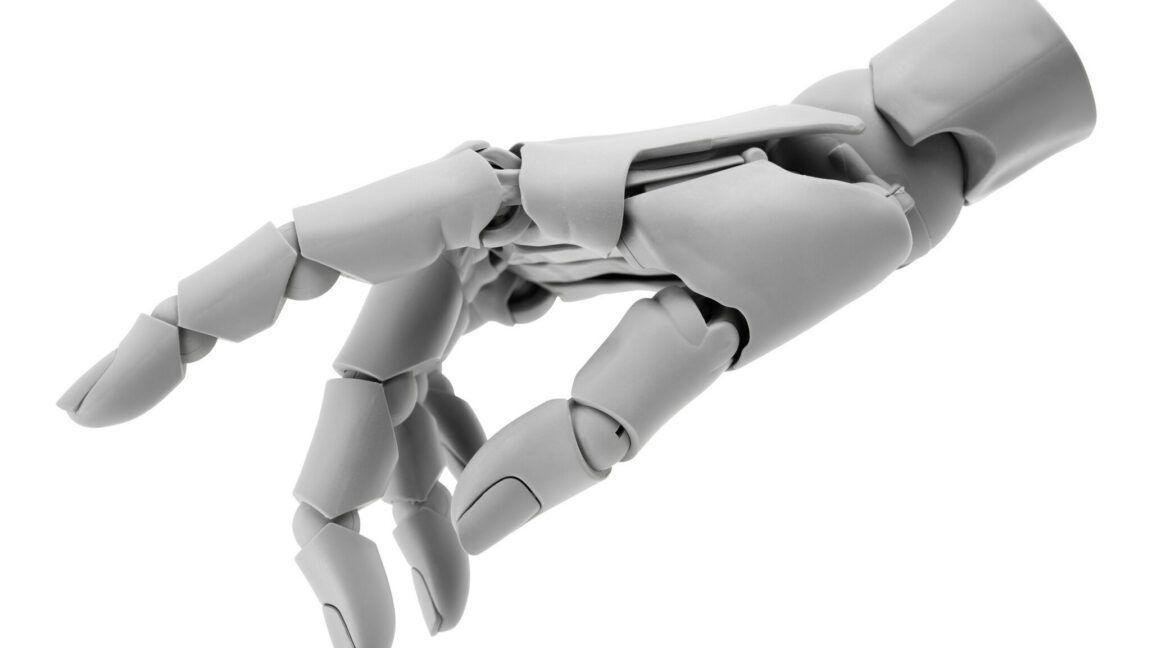
Building Large Datasets for Autonomous Robot Learning
Beyond remote control, the team sees a path toward using the wristband to build large datasets of human motion that could eventually enable humanoids to learn dexterous tasks without human guidance
3
. Researchers believe the system could generate large-scale datasets of human hand movements, providing valuable robot training data for future humanoid robots and helping them learn complex manipulation skills more autonomously2
.This development builds on advances in wearable ultrasound technology over recent years. In 2022, scientists demonstrated a wearable ultrasound device capable of continuously monitoring multiple internal organs, with subsequent developments including wearable systems for continuous heart imaging and bladder volume monitoring
2
. The new wristband represents a significant step forward in addressing robot dexterity challenges, potentially bridging the gap between human capabilities and machine performance in tasks requiring fine motor control.References
Summarized by

Navi
[2]
Related Stories
MIT's ultrasound wristband lets wearers control robotic hands with their own hand movements
25 Mar 2026•Science and Research

MIT's ultrasound wristband lets users control robotic hands and play piano with 120ms delay
24 Jun 2026•Science and Research

UC San Diego Engineers Develop Motion-Tolerant Wearable for Gesture-Based Robot Control
18 Nov 2025•Technology
Recent Highlights
1
Meta Unveils Muse Wonder Frontier AI Models, Claims Performance Matching OpenAI and Anthropic
Technology

2
IMF Report Warns AI Market Correction Could Spark Global Financial Crisis With $1.4T at Risk
Business and Economy

3
OpenAI Releases 722 AI-Generated Math Solutions, Triggering Existential Crisis in Mathematics
Technology

Recent Highlights
Today's Top Stories









Don’t drown in AI news. We cut through the noise - filtering, ranking and summarizing the most important AI news, breakthroughs and research daily. Follow topics that matter to you and stay ahead.


