MIT's ultrasound wristband lets users control robotic hands and play piano with 120ms delay


2 Sources
[1]
Ultrasound imaging turns a robot hand into a skillful mimic
By moving their own hand and fingers, users wearing a remote-control wristband can manipulate objects in a virtual environment or make a robot play the piano. Our hands are the nimblest parts of our bodies, coordinating 34 muscles, 27 joints, and over 100 tendons and ligaments to perform countless
[2]
A wristband into a real-time hand reader, and the ultrasound system can make a robot play the piano, shoot mini basketballs, and mimic your fingers with surprising precision
Scientists have developed a revolutionary ultrasound wristband that tracks hand movements with remarkable accuracy. This wearable device, powered by AI, can decipher intricate finger and palm configurations in real-time, even translating them to control robotic hands. The technology promises to
Share
Copy Link
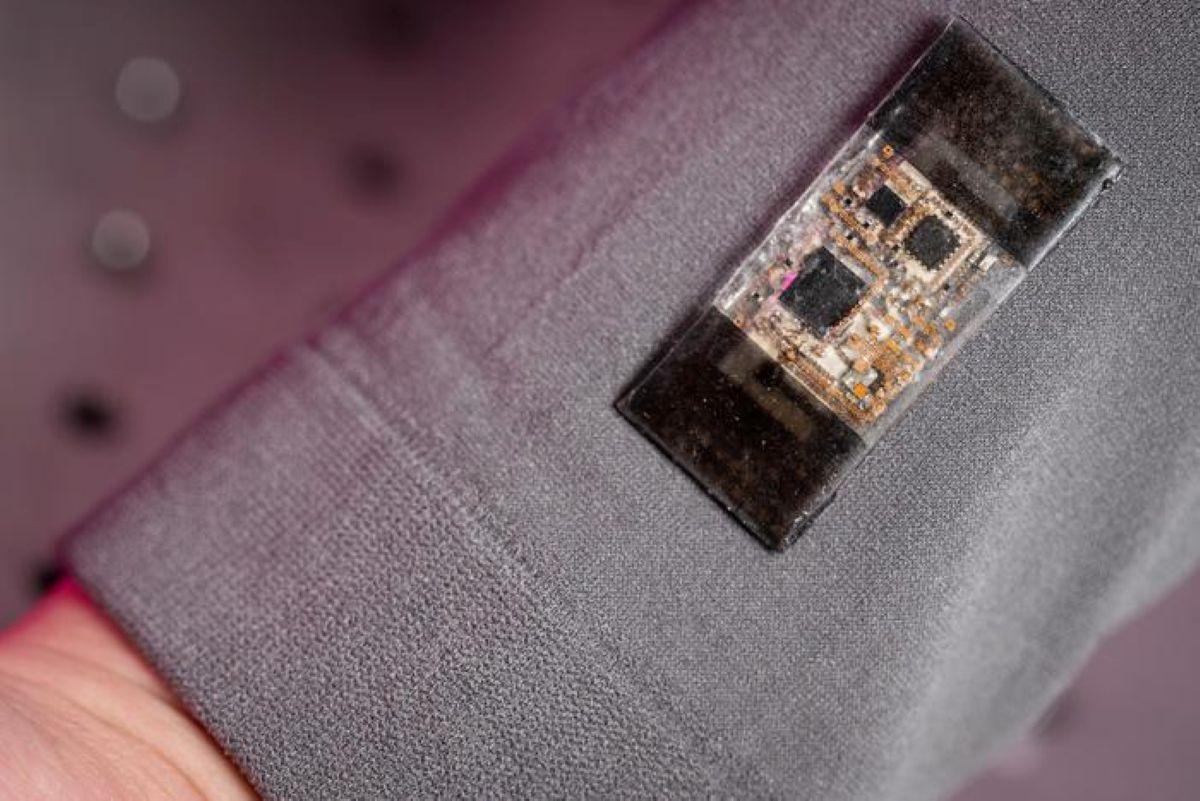
MIT researchers and the University of Southern California have created a wireless ultrasound wristband that tracks hand movements in real-time, enabling users to control a robotic hand or manipulate virtual objects. The device uses ultrasound imaging of wrist tendons and muscles, paired with AI, to capture all 22 degrees of freedom of human hand motion with less than 120 milliseconds delay.
MIT Researchers Pioneer Wearable Device for Robotic Hand Control
MIT researchers, in collaboration with the University of Southern California, have developed a wireless ultrasound wristband that tracks real-time hand movement tracking with precision that could transform how humans interact with robots and virtual environments
1
. The device, detailed in a study titled 'Hand tracking using wearable wrist imaging' published in Nature Electronics, represents a significant advance in capturing human dexterity, a feat that has long eluded robotics engineers . Led by mechanical engineering professor Xuanhe Zhao, the team has created a fully integrated system that can continuously monitor arbitrary hand configurations of the five fingers and palm with a delay of less than 120 milliseconds.
Source: MIT Tech Review
How Ultrasound Imaging Captures Human Dexterity
The ultrasound wristband works by imaging the tendons and muscles in the wrist, which function as control cables for finger movements. Gengxi Lu, a former MIT postdoc and lead co-author, explains the concept: "The tendons and muscles in your wrist are like strings pulling on puppets, which are your fingers. So the idea is: Each time you take a picture of the state of the strings, you'll know the state of the hand"
1
. The wristband features a miniaturized ultrasound "sticker" similar to transducers used in medical offices, paired with a hydrogel that adheres safely to skin. As the wearer moves their hand, high-frequency sound waves produce detailed images of the wrist's internal structures1
.AI Algorithm Translates Ultrasound Data Into Motion
The system tracks all 22 degrees of freedom of the human hand by feeding ultrasound data into an AI algorithm trained on images meticulously labeled by humans
2
. This AI-driven motion tracking continuously translates the ultrasound images into corresponding positions of the fingers and palm in real-time. Testing with eight volunteers of varying hand and wrist sizes demonstrated the system's versatility, successfully tracking all 26 letters of American Sign Language and handling everyday objects such as tennis balls, scissors, and plastic bottles2
.Demonstrations Show Users Control a Robotic Hand Wirelessly
In practical demonstrations, wearers used the device to control a robotic hand through wireless communication, creating what researchers describe as a wireless marionette interaction. Users successfully guided the robotic hand in playing the piano with simple tunes and shooting a basketball into a desktop hoop
1
. The same wristband allowed users to manipulate virtual objects on computer screens, pinching fingers together to enlarge and minimize virtual items smoothly and continuously2
. As wearers gesture or point, the robot mimics those movements with high dexterity, demonstrating the potential for intuitive human-computer interfaces.
Source: ET
Advantages Over Camera and Glove-Based Systems
Existing hand-tracking methods face significant limitations that the ultrasound wristband addresses. Camera-based systems require careful setup, can be blocked by objects or people, and struggle in varying lighting conditions. Glove systems with embedded sensors feel bulky, restrict natural movement, and reduce tactile sensitivity
2
. The ultrasound approach solves both problems by reading movement from inside the body, where the actual control mechanisms operate, rather than relying on external observation or restrictive hardware.Related Stories
Applications in Virtual Reality and Surgical Procedures
The MIT researchers envision building a large dataset of hand motions that could train humanoid robots for delicate tasks, including surgical procedures
1
. The ultrasound band could enable people to grasp and interact with objects in design applications, video games, or other virtual reality settings. Zhao emphasized the technology's potential: "We believe this is the most advanced way to track dexterous hand motion -- through wearable imaging of the wrist. We think these wearable ultrasound bands can provide intuitive and versatile controls for virtual reality and robotic hands"1
.Future Development Plans to Miniaturize Hardware
The team plans to further miniaturize hardware that currently measures similar in size to a cell phone
1
. They also aim to train the AI software on movements from more volunteers with wider varieties of hand sizes, finger shapes, and gestures, reducing the need for lengthy personal calibration sessions2
. The ultimate goal is building a wearable hand tracker that anyone can use to wirelessly manipulate humanoid robots or virtual objects with high dexterity in real time. While the technology currently exists in laboratory settings, its potential to teach robots human-like dexterity represents a significant step toward more intuitive robotic systems and immersive digital interactions.References
Summarized by

Navi
[1]
Related Stories
MIT's ultrasound wristband lets wearers control robotic hands with their own hand movements
25 Mar 2026•Science and Research

MIT researchers use AI and ultrasound wristband to turn hand gestures into robot training data
09 Jun 2026•Technology

AI Co-Pilot for Bionic Hands Transforms How Amputees Control Prosthetics with Intuitive Grasping
09 Dec 2025•Health
Recent Highlights
1
Microsoft and Nvidia Launch Surface Laptop Ultra: A $2,599 AI-Ready PC With RTX Spark Chip
Technology

2
Trump Consulted Grok AI Before Ordering Venezuela Invasion and Capture of Nicolás Maduro
Policy and Regulation

3
Scientists Build AI Model That Reconstructs Images From Brain Scans in Record Time
Science and Research

Recent Highlights
Today's Top Stories







Don’t drown in AI news. We cut through the noise - filtering, ranking and summarizing the most important AI news, breakthroughs and research daily. Follow topics that matter to you and stay ahead.


