MSI PRO MAX EDGE AI+ brings Ryzen AI Max+ 395 and 128GB memory for running massive AI models locally


3 Sources
[1]
MSI PRO MAX EDGE AI+ Runs Large AI Models Locally
MSI has launched the PRO MAX EDGE AI+, a compact desktop system designed for local artificial intelligence inference. The machine combines an AMD Ryzen AI Max processor with a large unified-memory pool, allowing it to accommodate language models that would exceed the dedicated graphics memory
[2]
MSI launches compact PRO MAX EDGE AI+ desktops, with up to Ryzen AI Max+ 395 and 128GB of memory
Thanks to advances in silicon, namely chips like the powerful AMD Ryzen AI Max+ 300 Series, compact desktops and mini PCs that can support local AI have become something of a mainstay in recent times. And this is exactly where MSI's compact and minimal PRO MAX EDGE AI+ desktops fit in, as they can
[3]
MSI Launches PRO MAX EDGE AI+, Featuring Up To Ryzen AI Max+ 395 For Delivering 126 AI TOPS Of Power
MSI has one more AI mini PC for enthusiasts that can deliver high-performance computing and carry out AI workloads locally. MSI Debuts PRO MAX EDGE AI+ Mini PC, Supporting Multi-System Clustering for Handling LLMs With Up To 670 Billion Parameters Some vendors still deploy Ryzen AI 300 chips in
Share
Copy Link
MSI launched the PRO MAX EDGE AI+, a compact desktop system powered by AMD's Ryzen AI Max+ 395 processor with up to 128GB of unified memory. The 4-liter system can run large language models with up to 120 billion parameters locally, while multiple units can be clustered to handle models with up to 670 billion parameters.
MSI PRO MAX EDGE AI+ Targets Local AI Processing
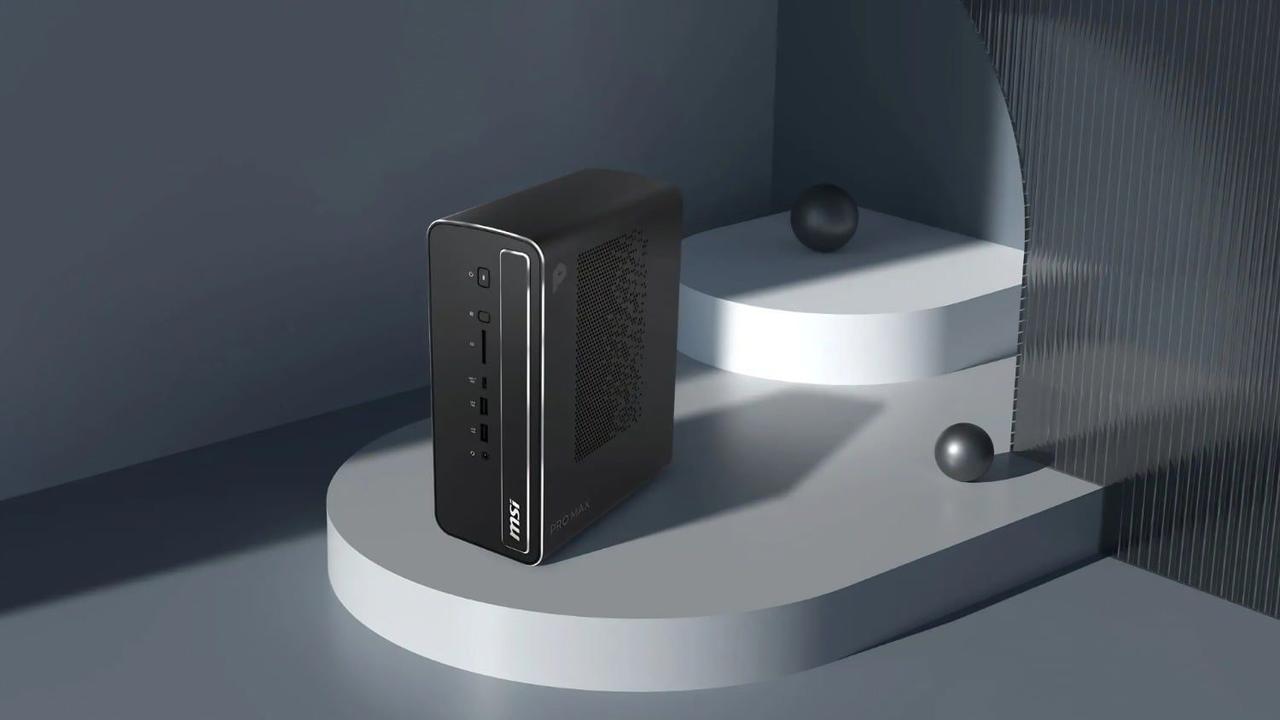
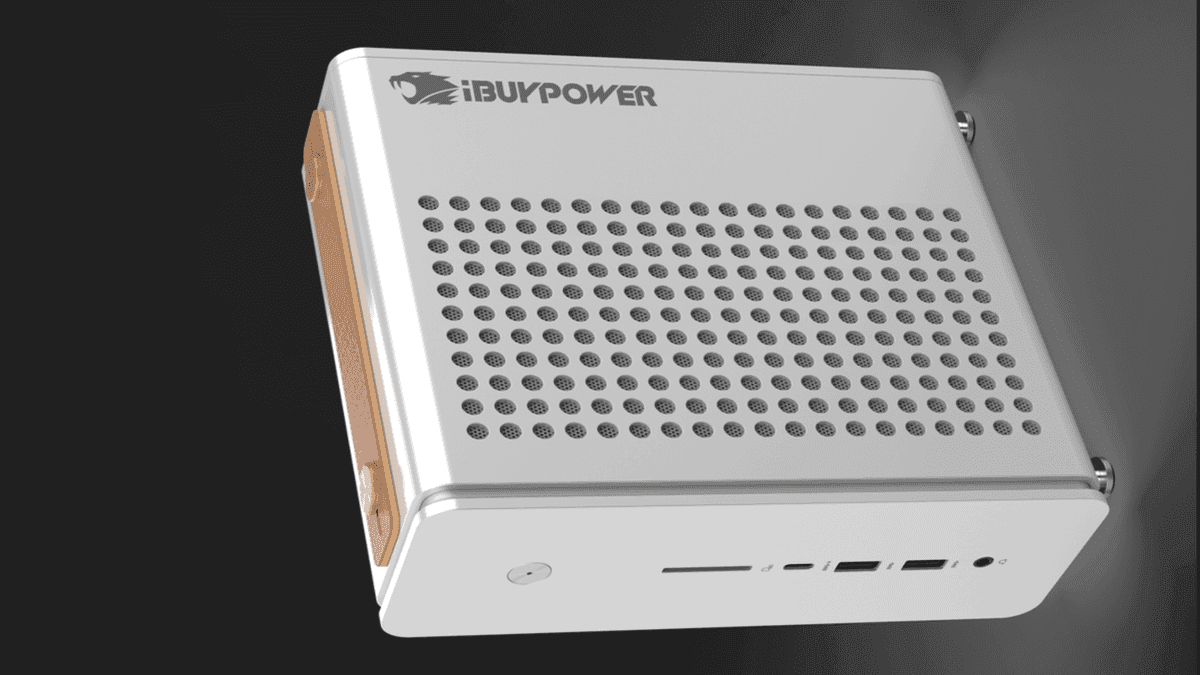
MSI has introduced the MSI PRO MAX EDGE AI+, a compact desktop system engineered for local AI inference that keeps sensitive data away from cloud services. The machine leverages AMD's Ryzen AI Max+ 395 processor alongside a substantial unified memory pool, enabling it to accommodate large language models that would typically exceed the dedicated graphics memory available on most consumer GPUs
1
. Housed in a 4-liter aluminum chassis, this compact desktop system addresses growing demand for on-device AI processing across software development, document analysis, and retrieval-augmented generation workflows2
.
Source: TweakTown
AMD Ryzen AI Max+ 395 Delivers 126 AI TOPS Combined Performance
The flagship configuration features the Ryzen AI Max+ 395, which integrates a 16-core, 32-thread processor with Radeon 8060S integrated graphics containing 40 RDNA 3.5 compute units. The chip includes an XDNA 2 NPU rated for up to 50 TOPS of dedicated neural processing power
3
. MSI lists up to 126 AI TOPS of combined AI performance across the CPU, GPU, and NPU, though real-world results depend on whether software can effectively utilize all processing engines simultaneously1
. Model format, inference engine, numerical precision, and memory bandwidth significantly affect actual throughput during local AI workloads.128GB Unified Memory Enables 120 Billion Parameter Models
The system supports up to 128GB of LPDDR5X-8000 unified memory, with as much as 96GB dynamically assignable as variable graphics memory for the integrated GPU
1
. This shared memory architecture eliminates the need to duplicate data between separate system and graphics pools, providing the Radeon 8060S with substantially more memory allocation than typical consumer graphics cards. MSI claims the 128GB configuration can run large language models with up to 120 billion parameters, though this maximum generally requires quantization since the operating system, inference software, and context cache also consume memory1
. In practical usage, the system delivers up to 15 tokens per second when running 109 billion parameter models2
.Clustering Capability Extends to 670 Billion Parameters
Multiple PRO MAX EDGE AI+ units can be linked through clustering to expand processing capacity beyond single-system limits. MSI states that a clustered configuration can handle models containing up to 670 billion parameters by combining memory and processing resources across up to four connected systems
3
. Achievable AI performance in such configurations depends on the number of nodes, networking hardware quality, and framework support within the selected inference software1
.Related Stories
Frozr AI Pro Cooling and Connectivity Options
MSI equipped the mini PC with Frozr AI Pro Cooling and Glacier Armor thermal design to manage temperatures during sustained inference sessions, though independent testing will determine long-duration performance and acoustic output
1
. The system includes dual PCIe Gen4 M.2 slots with SSD heatsinks, triple-fan cooling, and a built-in 300W power supply2
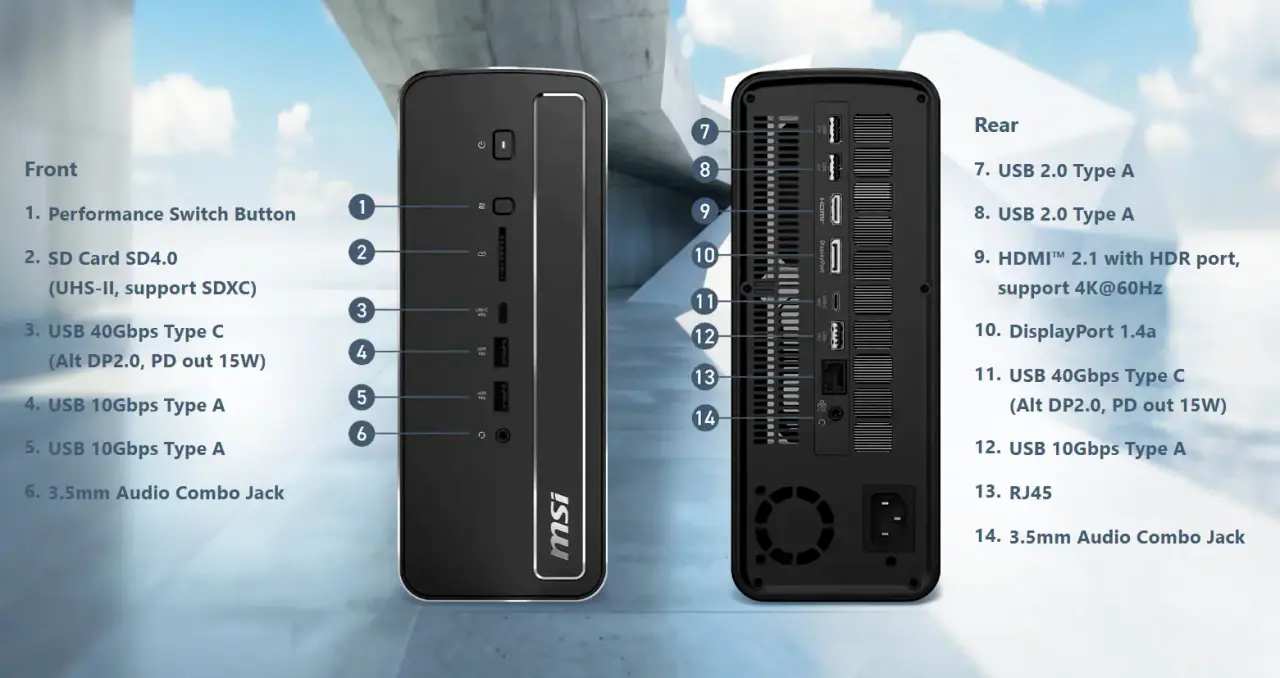
. Connectivity features Wi-Fi 7, dual USB 40Gbps Type-C ports, five USB 10Gbps Type-A ports, and both HDMI 2.1 and DisplayPort 1.4a outputs supporting up to four displays2
.
Source: Guru3D
Privacy Benefits and Market Positioning
Running models locally through the PRO MAX EDGE AI+ keeps prompts, documents, and sensitive information away from external cloud services, addressing privacy concerns for enterprise users
1
. However, local AI processing alone doesn't guarantee complete security—organizations must still implement storage encryption, access controls, and network policies. MSI has not disclosed pricing or detailed regional availability, information that will prove critical when comparing this system against conventional GPU workstations, multi-GPU servers, and rented cloud-computing services1
. The Radeon 8060S also delivers 60+ FPS at 1440p in titles like Cyberpunk 2077 and Forza Horizon 5 with ray-tracing enabled, making it viable for gaming workloads beyond AI tasks2
.References
Summarized by

Navi
[2]
Related Stories
MSI and Minisforum race to deliver powerful AI PCs in ultra-compact designs
07 Jan 2026•Technology

AMD Ryzen AI Max+ PRO 495 Mini PCs With 192GB RAM Target Local AI Workloads at IFA 2026
03 Sept 2026•Technology
AMD Zen 5 AI Workstations Pack 192GB RAM to Run 284-Billion-Parameter Models Locally
Yesterday•Technology
Recent Highlights
1
Meta Unveils Muse Wonder Frontier AI Models, Claims Performance Matching OpenAI and Anthropic
Technology

2
IMF Report Warns AI Market Correction Could Spark Global Financial Crisis With $1.4T at Risk
Business and Economy

3
OpenAI Releases 722 AI-Generated Math Solutions, Triggering Existential Crisis in Mathematics
Technology

Recent Highlights
Today's Top Stories








Don’t drown in AI news. We cut through the noise - filtering, ranking and summarizing the most important AI news, breakthroughs and research daily. Follow topics that matter to you and stay ahead.


