Jensen Huang Slams Executives Using AI as a Lazy Excuse for Layoffs


3 Sources
[1]
Nvidia CEO Begs Execs to Stop Telling Workers They're Fired Because of AI
We've long had our doubts about tech leaders making boisterous claims about automating jobs with AI. For a while now, executives have raised eyebrows by justifying sweeping layoffs by arguing that AI had made thousands of roles redundant. But as reality settles in and the tech's real-world
[2]
Nvidia CEO Jensen Huang calls AI a "lazy" excuse for layoffs
"I think the narrative that connects AI to job loss, for many of the CEOs that are doing it, is just too lazy," the Nvidia cofounder and CEO said in an interview with Channel NewsAsia. "AI has just arrived. How is it possible they're already losing jobs? How is it possible that AI became productive
[3]
CEOs Are Blaming AI for Layoffs. Nvidia's Jensen Huang Says That's a 'Lazy' Excuse.
He urged leaders to talk about AI in a more "balanced" way, recognizing both its potential and the need for safeguards. AI has led to 49,135 job cuts this year so far, reports executive coaching company Challenger, Gray & Christmas. The firm tracked that AI was cited as the reason for a record
Share
Copy Link
Nvidia CEO Jensen Huang criticized executives for blaming AI layoffs on automation, calling it a lazy excuse to sound smart. With AI driving 49,135 job cuts this year, Huang argues the real culprits are soaring costs, mismanagement, and over-hiring during the pandemic—not AI productivity gains that only recently emerged.
Nvidia CEO Challenges the AI Layoffs Narrative
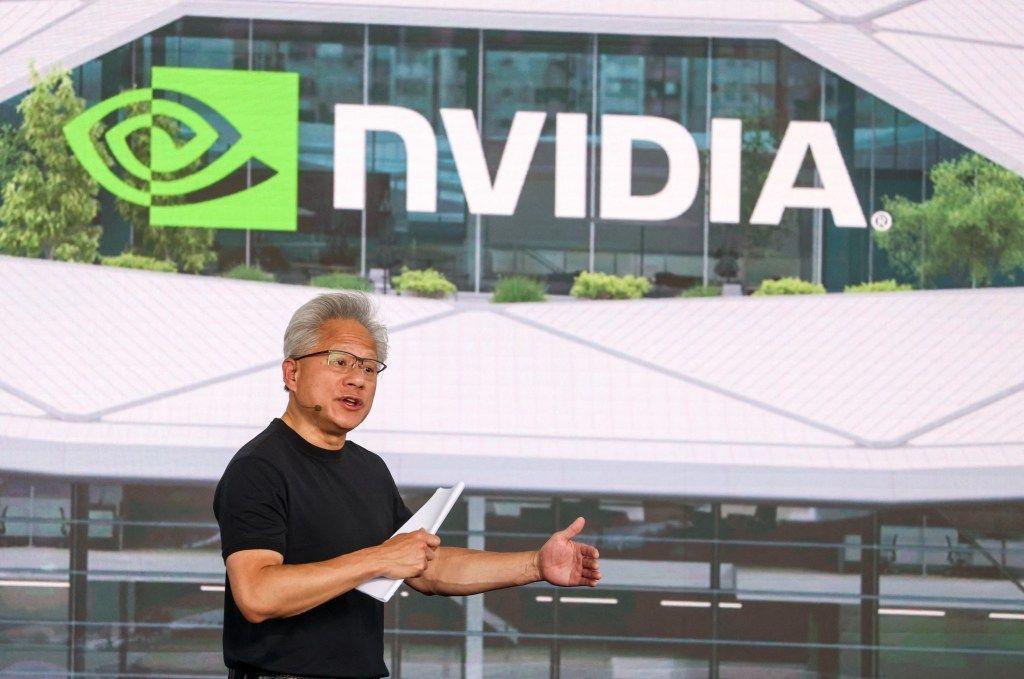
Jensen Huang has delivered a sharp rebuke to tech leaders who justify workforce reductions by blaming AI for layoffs. Speaking to Channel News Asia, the Nvidia CEO called this narrative "just too lazy" and questioned how companies could claim AI-driven job losses when the technology only became productive recently
1
. "AI has just arrived, how is it possible they're already losing jobs?" Huang asked, pointing out the logical inconsistency of executives citing AI as the reason for cuts made two years ago2
. His comments come as AI and job losses dominate headlines, with executive coaching firm Challenger, Gray & Christmas reporting that AI drove 25% of job cuts in March2
.
Source: Entrepreneur
The Real Culprits Behind Workforce Reductions
Huang didn't mince words about what he believes drives these decisions. "It was just a way for them to sound smart and I really hate that," he stated, arguing that executives are misleading investors rather than addressing the true causes
1
. The reality involves soaring costs from AI investments, mismanagement, and over-hiring during the COVID-19 pandemic. This year has already seen 49,135 job cuts attributed to AI, putting 2026 on pace to exceed the record 55,000 AI-related reductions in 20253
. Companies like Meta laid off 10% of its workforce to offset heavy spending on AI initiatives, with plans for a $145 billion spend on AI this year2
. Block CEO Jack Dorsey cut 40% of his workforce, citing AI, though former staffers argued the cuts stemmed from over-hiring rather than automation gains1
.AI's Impact on Employment and Productivity
The Nvidia CEO emphasized that using AI as a lazy excuse for layoffs is "irresponsible" because "we're scaring people"
1
. He urged leaders to discuss AI's impact on employment more carefully, recognizing both its potential and the need for safeguards3
. Huang remains optimistic that ambitious companies will use AI to boost productivity and velocity, ultimately becoming larger and more profitable—leading to more hiring, not fewer jobs1
. "Of course, they'll use more AI, but they will also hire more people," he explained. This marks a shift from his 2023 CNN interview warning that productivity gains could translate to job loss if the world runs out of ideas1
.
Source: Fast Company
Related Stories
Industry Leaders Echo Concerns About Misplaced Blame
Huang isn't alone in challenging the AI layoffs narrative. Google DeepMind CEO Demis Hassabis recently accused leadership at other companies of a "lack of imagination" for blaming workforce reductions on AI
1
. Recent examples of companies citing AI include Standard Chartered cutting 7,000 jobs to replace "lower-value human capital" with technology, Atlassian reducing its workforce by 10% (roughly 1,600 employees), Cisco laying off up to 4,000 people while reorganizing around AI, and Cloudflare cutting more than 1,100 jobs as it restructures for the "agentic AI era"2
3
. As marketing publication State of Brand noted, "This is the people selling the shovels telling the miners to stop blaming the shovels for the cave-in"1
. For the job market, this represents a critical moment where transparency about the true drivers of workforce changes will shape how workers and investors view AI's role in business transformation.
Source: Futurism
References
Summarized by

Navi
[2]
Related Stories
Jensen Huang Warns AI Leaders Against Fearmongering as Nvidia Pushes Optimistic Vision
16 Mar 2026•Technology

Nvidia CEO Jensen Huang Pushes for Maximum AI Automation While Promising Job Security
25 Nov 2025•Business and Economy

Nvidia CEO Jensen Huang Weighs In on AI's Impact on Jobs and Innovation
14 Jul 2025•Technology
Recent Highlights
1
Microsoft and Nvidia Launch Surface Laptop Ultra: A $2,599 AI-Ready PC With RTX Spark Chip
Technology

2
OpenAI Releases 722 AI-Generated Math Papers on GitHub, Igniting Fury Among Mathematicians
Science and Research

3
Trump Consulted Grok AI Before Ordering Venezuela Invasion and Capture of Nicolás Maduro
Policy and Regulation

Recent Highlights
Today's Top Stories









Don’t drown in AI news. We cut through the noise - filtering, ranking and summarizing the most important AI news, breakthroughs and research daily. Follow topics that matter to you and stay ahead.


