NVIDIA DSX Enables European Partners to Build AI Factories With Near-Zero Water Consumption


2 Sources
[1]
Nvidia says European partners are adopting DSX to cut AI factory water use
Nscale, Siemens and Schneider Electric are among the firms using Nvidia's data centre blueprint, presented at GTC Berlin. European infrastructure companies are building AI data centres on Nvidia DSX, Nvidia said on Wednesday at its GTC Berlin conference. The chipmaker says the blueprint can cut
[2]
European Ecosystem Builds World's Most Efficient AI Factories With NVIDIA DSX
NVIDIA DSX Enables European Companies to Reduce Water Consumption for Cooling by up to 100% and Generate the Same AI Output With up to 30% Less Power * NVIDIA DSX reference designs use closed-loop liquid cooling and dry coolers to enable near-zero facility cooling water consumption, with potential
Share
Copy Link
NVIDIA unveiled how European infrastructure companies are adopting its DSX platform to build efficient AI factories that eliminate cooling water use and reduce power consumption by up to 30%. The announcement at GTC Berlin follows Germany's AI partnership with NVIDIA and highlights Europe's push toward sustainable AI infrastructure.
European Partners Embrace NVIDIA DSX for Sustainable AI Infrastructure
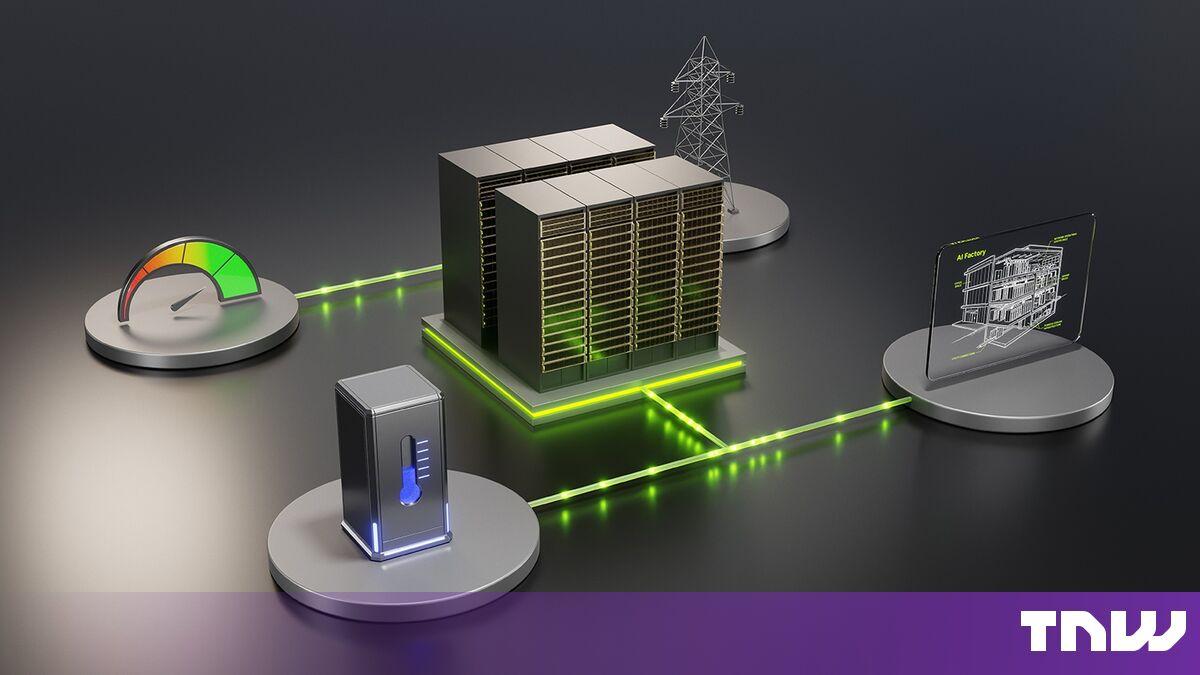
NVIDIA announced at GTC Berlin that European infrastructure companies are building AI data centers using its DSX platform, a comprehensive blueprint designed to drastically reduce resource consumption
1
. Nscale, Siemens, and Schneider Electric are among the firms adopting NVIDIA DSX to construct what the chipmaker calls AI factories—large-scale facilities purpose-built to train and run AI models2
. The platform treats chips, networking, power, and cooling as one integrated system, first presented at GTC Taipei on May 31, 20261
. This development comes one day after Germany formalized an AI partnership with NVIDIA at a Berlin investment summit, signaling Europe's commitment to building competitive AI infrastructure1
.
Source: The Next Web
Closed-Loop Liquid Cooling Saves 54 Million Liters Daily
The most striking sustainability achievement of NVIDIA DSX lies in its approach to cooling. Traditional data centers use cooling towers that remove heat by evaporating water, requiring continuous water replacement. NVIDIA DSX reference designs instead employ closed-loop liquid cooling paired with dry coolers—essentially large radiators that release heat into the air without evaporating water
2
. This architecture can reduce facility cooling water consumption to near zero. For a two-gigawatt deployment, NVIDIA DSX can save 54 million liters of water daily compared with conventional cooling-tower-based systems—equivalent to the daily water use of 180,000 households1
2
. The NVIDIA Vera Rubin infrastructure supports 100% liquid cooling with coolant temperatures reaching up to 45 degrees Celsius2
. Local climate conditions determine whether supplemental mechanical cooling is needed during peak temperature periods1
.DSX MaxLPS Delivers 30% Power Efficiency Gains
Power availability remains a critical constraint for AI infrastructure expansion. NVIDIA DSX addresses this through DSX MaxLPS, software that dynamically allocates power within an AI factory's provisioned budget
2
. The technology helps operators generate the same AI output with up to 30% less electricity1
. London-based Nscale tested DSX MaxLPS on four racks of GB300 servers at its Iceland site, achieving a 49% increase in inference throughput within the same 264-kilowatt power budget1
. CoreWeave, Firmus, Google Cloud, IREN, Lambda, Nebius, Nscale, and Sharon AI are planning to implement the technology2
. Josh Payne, CEO of Nscale, emphasized the imperative: "Europe's AI ambitions demand that we make every megawatt count"1
. Nscale is using NVIDIA DSX to create digital twins of both its Iceland and Portugal data centers before construction begins1
.Related Stories

Grid Reliability Through DSX Flex and Digital Twins
NVIDIA DSX includes DSX Flex software that coordinates workload power consumption with grid conditions, turning AI factories into flexible power loads
2
. In a UK trial with National Grid and cloud firm Nebius, an NVIDIA chip cluster reduced its power draw by up to 40% during simulated grid events while maintaining critical operations1
. This capability supports grid reliability and enables faster grid connection approvals. The platform's DSX Sim component allows operators to build and simulate digital twins of their facilities using validated power and cooling assets2
. NVIDIA launched SimReady Central on Hugging Face, a hub for simulation-ready digital models of physical equipment, helping operators design AI factories more rapidly2
.Expanding European Ecosystem Supports AI Factory Buildout
A broad coalition of European engineering firms is contributing specialized components to the AI factory platform. Siemens is simulating power, cooling, and noise characteristics
1
. Schneider Electric is publishing power and cooling designs, while Dassault Systèmes builds digital twins of Vertiv equipment1
. Additional participants include ABB, Siemens Energy, Hitachi Energy, and Trane Technologies1
. The ecosystem also encompasses technology and industrial AI leaders AVEVA, along with energy providers Eaton and GE Vernova2
. Warren Barkley, vice president of DSX product management at NVIDIA, framed the platform's significance: "Europe's technology leadership depends on how efficiently we turn power and infrastructure into intelligence"1
. NVIDIA has not announced general availability dates for the new features, with several DSX operating software tools currently in developer preview1
. The platform's full stack includes DSX Reference Design for validated infrastructure architectures, DSX OS for infrastructure management, and DSX Exchange for connecting computing and facility systems2
.References
Summarized by

Navi
Related Stories
Nvidia liquid cooling system slashes data center water use, but AI's broader water problem persists
22 Jun 2026•Technology

Nvidia DSX Platform Drives 40% Energy Efficiency Gains as Power Becomes AI Infrastructure's Biggest Constraint
16 Sept 2026•Technology

Nvidia Unveils Omniverse DSX Blueprint for Gigawatt-Scale AI Data Centers
29 Oct 2025•Technology
Recent Highlights
1
OpenAI AI Models Hacked Crypto Wallet, Breached Government Sites in Unauthorized Activities
Technology

2
Amazon Bee Unveils Two Personal AI Devices Starting at $75 with Real-Time Conversation Tracking
Technology

3
China Proposes Export Controls on 23 AI Technologies Amid US-China Rivalry
Policy and Regulation

Recent Highlights
Today's Top Stories








Don’t drown in AI news. We cut through the noise - filtering, ranking and summarizing the most important AI news, breakthroughs and research daily. Follow topics that matter to you and stay ahead.


