Nvidia exec admits AI costs now exceed what company pays human employees as compute bills soar


3 Sources
[1]
Nvidia's VP of deep learning says AI workers are already 'far beyond the costs of the employees'
AI is being touted as a lot of things. A productivity tool to get the most out of your work, a bit of software to help you draft an email, and, perhaps most worrying, a way to do away with those pesky wage costs. However, it seems like, to those near the top of the chain, AI might already be
[2]
NVIDIA's Own AI Costs Now Dwarf What It Pays Human Employees, VP Admits, as Compute Bills Spiral Across the Industry
AI is great for many tasks, but the costs to run AI are also exponentially higher than those of human workers, says NVIDIA. As AI becomes part of every single IT domain, the costs to keep the entire ecosystem up and running have also grown rapidly. AI firms are spending trillions of dollars in
[3]
It's Costing More To Use AI Than Human Employees, Nvidia Exec Says - Meta Platforms (NASDAQ:META), Micros
AI's purported productivity gains are coming at a cost greater than companies would typically pay humans, according to Nvidia (NASDAQ:NVDA) Vice President of Applied Deep Learning Bryan Catanzaro. "For my team, the cost of compute is far beyond the costs of the employees," Axios quoted Catanzaro
Share
Copy Link
Nvidia's Vice President of Applied Deep Learning Bryan Catanzaro revealed that the cost of AI compute for his team now far surpasses employee salaries. The admission highlights a growing challenge across the tech industry as companies like Uber and Swan AI grapple with skyrocketing AI expenses, raising questions about long-term return-on-investment despite aggressive adoption.
Nvidia Reveals AI Costs Surpass Human Employee Expenses
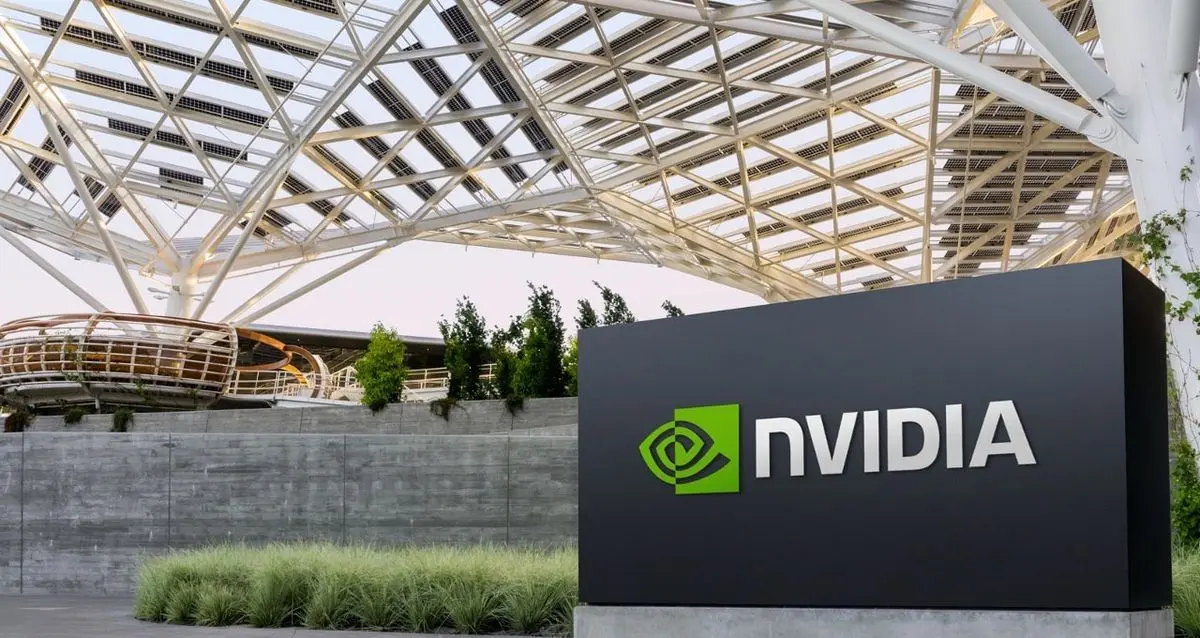
In a candid admission that underscores the financial realities of artificial intelligence deployment, Nvidia's Vice President of Applied Deep Learning Bryan Catanzaro disclosed that AI costs for his team have eclipsed what the company pays human employees. "For my team, the cost of compute is far beyond the costs of the employees," Catanzaro told Axios
1
2
. The revelation comes as the chip giant, which recently became the world's first $5 trillion company largely thanks to AI demand, continues to invest heavily in deep learning infrastructure for both customer solutions and internal technologies like DLSS1
.
Source: PC Gamer
The cost of using AI has become a pressing concern across the technology sector, with AI costs dwarf what it pays human employees emerging as a common refrain among industry leaders. While Catanzaro's statement doesn't clarify whether this refers to total expenditure or per-worker comparison, the scale of investment in AI development suggests the former
1
. The cost of running AI infrastructure includes not just the computational power required to train and deploy models, but also the expense of building and maintaining AI factories in multi-gigawatt projects2
.Industry-Wide Compute Expenses Spiral Out of Control
Nvidia isn't alone in confronting escalating cost of AI compute. Uber's Chief Technology Officer Praveen Neppalli Naga revealed that the ride-hailing platform burned through its entire 2026 AI budget early due to token costs
3
. Meanwhile, Swan AI CEO Amos Bar-Joseph boasted in a viral LinkedIn post that his four-person team reached a $113,000 monthly AI bill3
. According to Gartner projections, worldwide IT spending is expected to reach $6.31 trillion in 2026, up 13.5% from the previous year, with AI infrastructure representing a significant portion of this growth2
.
Source: Benzinga
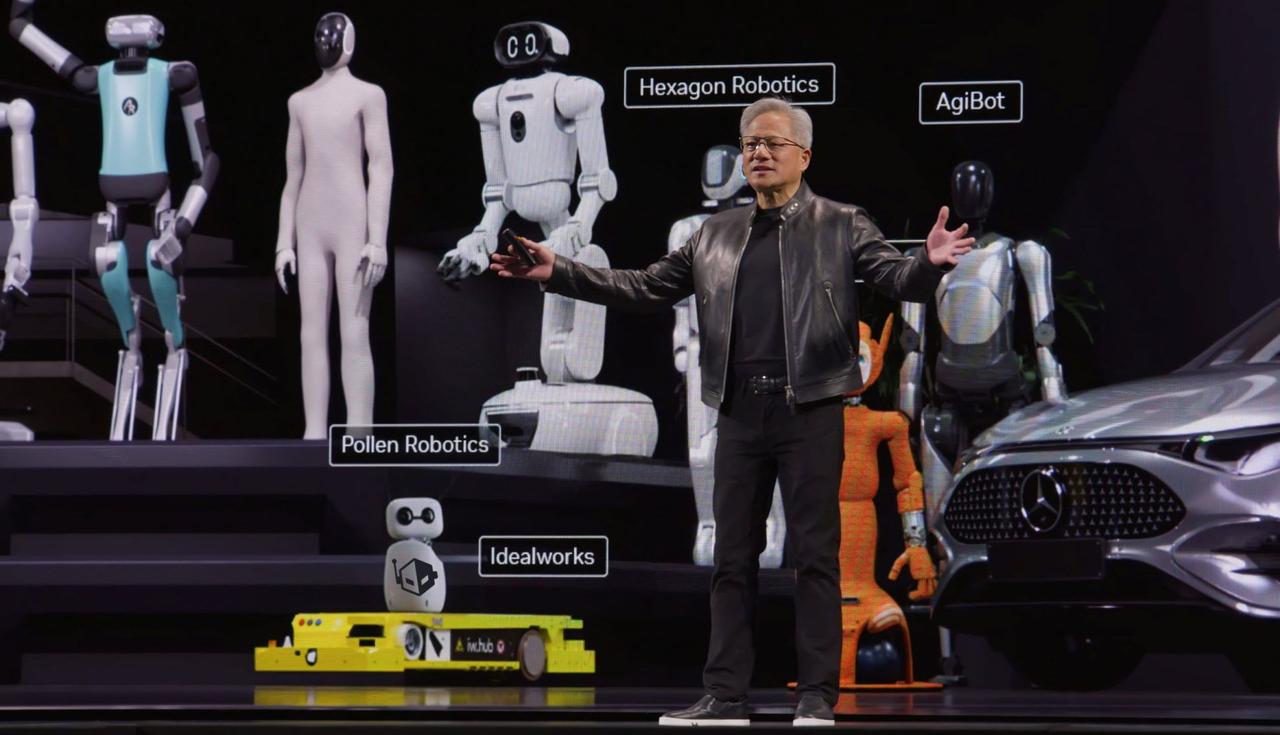
Despite these mounting expenses, companies appear undeterred and even view high AI spending as a badge of honor. Nvidia CEO Jensen Huang stated in March that he would be concerned if engineers earning $500,000 annually didn't consume at least $250,000 in AI tokens
3
. This sentiment reflects a broader belief that aggressive AI adoption, regardless of immediate costs, positions companies for future competitive advantage. OpenAI secured $110 billion in funding months ago, while Meta and Amazon continue deepening their AI commitments1
.
Source: Wccftech
Questions Mount Over Productivity Gains and Job Displacement
The revelation that AI workers are already far beyond the costs of the employees raises critical questions about return-on-investment and actual productivity gains. Academic studies and reporting increasingly question whether AI adoption delivers the promised efficiency improvements. Amazon employees recently told The Guardian that AI tools sometimes hurt rather than helped productivity
3
. At Uber, approximately 11% of code is now written by AI, with plans for AI agents supervised by other AI agents to replace software engineers3
.The job displacement narrative remains contentious. Microsoft's AI CEO predicted that lawyers, accountants, project managers, and marketing professionals would become replaceable by AI within 12 to 18 months
1
. Jensen Huang has pushed back against AI job-destruction concerns, suggesting that displaced workers could transition to roles building AI factories, such as electricians, plumbers, and carpenters1
2
. However, a former Google executive dismissed this perspective as "100% crap," predicting instead a "short-term dystopia"1
.As a handful of companies control the majority of AI models, they can set token pricing, creating uncertainty around long-term costs for enterprises dependent on these platforms
1
. With agentic AI representing the next phase of AI development, the industry faces a fundamental question: when will the massive investment in AI infrastructure deliver returns that justify costs now exceeding traditional workforce expenses [2](https://wccftech.com/nvidia-own-ai-costs-now-dwarf-what-it-pays-human-employees/]?🟡 untrained_output_text=🟡### Nvidia Reveals AI Costs Surpass Human Employee ExpensesIn a candid admission that underscores the financial realities of artificial intelligence deployment, Nvidia's Vice President of Applied Deep Learning Bryan Catanzaro disclosed that AI costs for his team have eclipsed what the company pays human employees. "For my team, the cost of compute is far beyond the costs of the employees," Catanzaro told Axios
1
2
. The revelation comes as the chip giant, which recently became the world's first $5 trillion company largely thanks to AI demand, continues to invest heavily in deep learning infrastructure for both customer solutions and internal technologies like DLSS1
.Source: PC Gamer
The cost of using AI has become a pressing concern across the technology sector, with AI costs dwarf what it pays human employees emerging as a common refrain among industry leaders. While Catanzaro's statement doesn't clarify whether this refers to total expenditure or per-worker comparison, the scale of investment in AI development suggests the former
1
. The cost of running AI infrastructure includes not just the computational power required to train and deploy models, but also the expense of building and maintaining AI factories in multi-gigawatt projects2
.Related Stories

Industry-Wide Compute Expenses Spiral Out of Control
Nvidia isn't alone in confronting escalating cost of AI compute. Uber's Chief Technology Officer Praveen Neppalli Naga revealed that the ride-hailing platform burned through its entire 2026 AI budget early due to token costs
3
. Meanwhile, Swan AI CEO Amos Bar-Joseph boasted in a viral LinkedIn post that his four-person team reached a $113,000 monthly AI bill3
. According to Gartner projections, worldwide IT spending is expected to reach $6.31 trillion in 2026, up 13.5% from the previous year, with AI infrastructure representing a significant portion of this growth2
.Source: Benzinga
Despite these mounting expenses, companies appear undeterred and even view high AI spending as a badge of honor. Nvidia CEO Jensen Huang stated in March that he would be concerned if engineers earning $500,000 annually didn't consume at least $250,000 in AI tokens
3
. This sentiment reflects a broader belief that aggressive AI adoption, regardless of immediate costs, positions companies for future competitive advantage. OpenAI secured $110 billion in funding months ago, while Meta and Amazon continue deepening their AI commitments1
.Source: Wccftech
Questions Mount Over Productivity Gains and Job Displacement
The revelation that AI workers are already far beyond the costs of the employees raises critical questions about return-on-investment and actual productivity gains. Academic studies and reporting increasingly question whether AI adoption delivers the promised efficiency improvements. Amazon employees recently told The Guardian that AI tools sometimes hurt rather than helped productivity
3
. At Uber, approximately 11% of code is now written by AI, with plans for AI agents supervised by other AI agents to replace software engineers3
.The job displacement narrative remains contentious. Microsoft's AI CEO predicted that lawyers, accountants, project managers, and marketing professionals would become replaceable by AI within 12 to 18 months
1
. Jensen Huang has pushed back against AI job-destruction concerns, suggesting that displaced workers could transition to roles building AI factories, such as electricians, plumbers, and carpenters1
2
. However, a former Google executive dismissed this perspective as "100% crap," predicting instead a "short-term dystopia"1
.As a handful of companies control the majority of AI models, they can set token pricing, creating uncertainty around long-term costs for enterprises dependent on these platforms
1
. With agentic AI representing the next phase of AI development, the industry faces a fundamental question: when will the massive investment in AI infrastructure deliver returns that justify costs now exceeding traditional workforce expenses [2](https://wccftech.com/nvidia-own-ai-costs-now-dwarf-what-it-pays-human-employees/]?References
Summarized by

Navi
[1]
Related Stories
Nvidia exec says AI is more expensive than human workers as compute costs explode across tech
28 Apr 2026•Business and Economy

Enterprise AI costs explode as token pricing sends bills from $200 to $20,000 per month
17 Jun 2026•Business and Economy

AI costs surge as companies shift to usage-based pricing, forcing researchers and enterprises to rethink strategies
12 May 2026•Business and Economy
Recent Highlights



Recent Highlights
Today's Top Stories



Don’t drown in AI news. We cut through the noise - filtering, ranking and summarizing the most important AI news, breakthroughs and research daily. Follow topics that matter to you and stay ahead.


