7 Sources
[1]
Nvidia denies pausing AI cloud commitments initiative after reported partner backlash -- report claims company told cloud providers it could only lease its GPUs to Nvidia-approved customers
Nvidia on Friday denied a report by the Wall Street Journal claiming that the company had put some transactions under its recently introduced 'take or pay' AI Compute Partnership on hold, less than two months after unveiling the initiative in early July and days before detailing the effort in its earnings call. The transactions were reportedly paused as some partners were irritated with Nvidia's attempts to influence their operations and because it raised internal concerns about potential antitrust scrutiny. "The new business model we introduced in July that opens up compute access to the fast-growing AI ecosystem is still in place and continues to evolve due to high demand," a spokesperson for Nvidia told Tom's Hardware. The report itself does not establish that Nvidia has abandoned the AI Compute Partnership program under which the company committed to rent capacity of newly built AI data centers as well as their minimum revenue, but claims that it put some deals on hold. Meanwhile, Nvidia's denial indicates that the program continues to exist, but is evolving, which means changing. Per the report, it looks like Nvidia attempted to control how its 'AI Compute Partners' rented their capacity. The company told some cloud providers participating in the program that they could lease its GPUs only to customers approved by Nvidia, according to the WSJ report. The company also preferred to spread available capacity across multiple smaller AI companies instead of allowing a single large customer to take most or all of it. Some cloud operators reportedly pushed back against these restrictions, arguing that they should retain control over which customers they serve. Perhaps, in turn, Nvidia put some of the deals on hold. While Nvidia does not lend any money or directly finance AI data center buildouts (which essentially means circular financing), it provides demand commitments and guaranteed revenue levels, which perhaps raised internal concerns about potential antitrust scrutiny. As a result, Nvidia could be revising the terms of the deals it inks with partners. $36 billion of commitments Modern AI data centers cost billions of dollars that must be spent on the premises, infrastructure, and compute hardware well before an operator has secured enough customer contracts to finance the buildout. Meanwhile, banks or infrastructure investors want confidence that enough of the future facility capacity will actually be rented. Under the program, Nvidia intends to use its own demand commitment on a portion of the facility's capacity in exchange for a percentage of the facility's revenue if demand is strong. This makes financing AI data centers easier as from the lender's perspective, part of the project's revenue stream is effectively supported by Nvidia rather than depending entirely on the operator's ability to find customers. "Nvidia provides a take-or-pay commitment on a portion of the facility's capacity, a minimum revenue guarantee that gives lenders the confidence to underwrite the project, and in exchange, we share in a portion of the NeoCloud's revenue earned above that floor," explained Colette Kress, chief financial officer of Nvidia, during the company's earnings call. "In this model, we get paid twice, once on the hardware sale, and again through the share of rental revenue, a highly recurring stream layered on top of a one-time equipment purchase." While actual percentages and economic terms have not been disclosed, it should work pretty straightforwardly. Nvidia provides a take-or-pay commitment that it rents, say, 30% of the capacity of a newly built facility and a minimum revenue guarantee over a period of six years. If the demand is strong and the facility rents 80% of its capacity, well exceeding the minimum revenue guarantee, Nvidia does not need to absorb the guaranteed capacity, and because revenue exceeds the agreed floor, Nvidia receives a percentage of the excess revenue. If the demand is weak and the facility can only rent 20% of its capacity, running well below the guaranteed revenue level, Nvidia's take-or-pay obligation would require it to cover the difference between actual revenue and the contracted minimum according to the specific agreement. Alternatively, Nvidia could rent back unused compute capacity for its own needs and cover the difference between the actual and guaranteed revenue level. While at least some participants were reportedly irritated with Nvidia's alleged control of tenants, the program has proven to be quite a success so far. As of late July, just weeks after formally announcing the program, Nvidia had committed $36 billion in these new agreements that run for six years. "Our commitments, which are typically six years in duration, totaled $36 billion as of July 26, 2026," an Nvidia filing with the Securities and Exchange Commission reads. Nvidia has not disclosed which portions of monetizable capacities it typically commits, so it is impossible to figure out the value of the hardware it intends to supply under the $36 billion commitments. Follow Tom's Hardware on Google News, or add us as a preferred source, to get our latest news, analysis, & reviews in your feeds.
[2]
Nvidia pauses revenue-sharing deals with AI cloud companies, WSJ reports
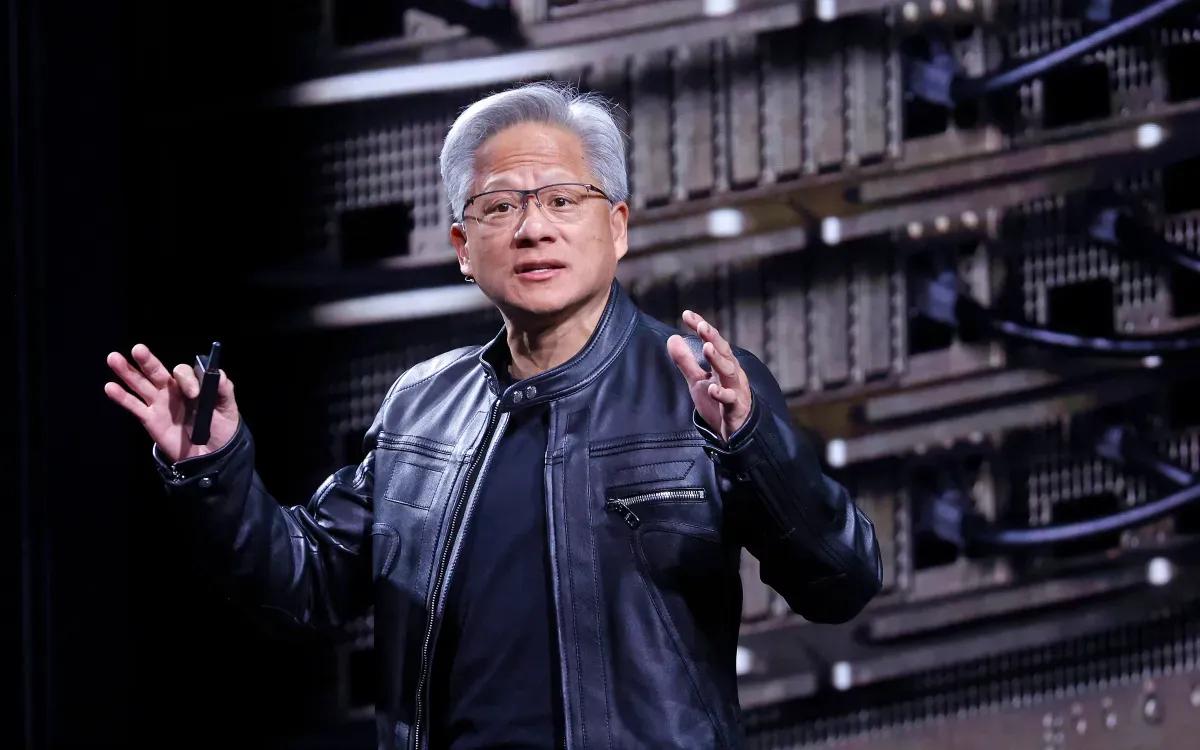
0 seconds of 0 secondsVolume 0% Press shift question mark to access a list of keyboard shortcuts Keyboard ShortcutsEnabledDisabled Shortcuts Open/Close/ or ? Play/PauseSPACE Increase Volume↑ Decrease Volume↓ Seek Forward→ Seek Backward← Captions On/Offc Fullscreen/Exit Fullscreenf Mute/Unmutem Decrease Caption Size- Increase Caption Size+ or = Seek %0-9 Next Up Sectors Up Close: Is Nvidia's dominance under threat? 00:00 00:00 00:00 Aug 27 (Reuters) - Nvidia (NVDA.O), opens new tab has paused some deals in a new financing initiative that offered credit support to AI cloud companies in exchange for a share of revenue, the Wall Street Journal reported on Thursday, citing people familiar with the matter. Some Nvidia employees expressed concerns to current and potential customers that the initiative could draw antitrust scrutiny, the report said. The chip giant stepped back from the program last week, the Journal said, adding that the company could still revamp the initiative or fold it into another program. "The new business model we introduced in July that opens up compute access to the fast-growing AI ecosystem is still in place and continues to evolve due to high demand," an Nvidia spokesperson said. Item 1 of 2 Nvidia CEO Jensen Huang speaks during a doorstep after attending the AI Ecosystem Reception in Tokyo, Japan, July 16, 2026. REUTERS/Manami Yamada/File Photo [1/2]Nvidia CEO Jensen Huang speaks during a doorstep after attending the AI Ecosystem Reception in Tokyo, Japan, July 16, 2026. REUTERS/Manami Yamada/File Photo Purchase Licensing Rights, opens new tab The reported move comes less than two months after Nvidia announced the program. The company introduced it as a new business model designed to support financing needs at AI cloud firms so that they can purchase its expensive chips. Nvidia had sought to rent the compute capacity back if its cloud customers were unable to sell it. It would also earn a share of their cloud revenues derived from Nvidia-powered capacity, on top of the money made on the chips sale itself. The employees said there are sensitivities around the extent to which Nvidia can dictate how its customers do business, according to the Journal. In the early weeks of the program, Nvidia irked some potential partners with the extent of control it sought, the report said. The company told some customers that they could only rent the chips out to approved customers and signaled it preferred the capacity to be distributed among multiple smaller AI firms rather than one large customer, the Journal said. Reporting by Deborah Sophia in Bengaluru; Editing by Leroy Leo and Joyjeet Das Our Standards: The Thomson Reuters Trust Principles., opens new tab
[3]
Nvidia has paused parts of the revenue-sharing programme it launched in July
Staff raised antitrust concerns and partners objected to the conditions attached. The chipmaker says the model is still in place. Nvidia has halted some of the transactions under the financing programme it introduced eight weeks ago, in which it extends credit to AI cloud companies buying its chips and takes a cut of what those chips later earn, the Wall Street Journal reported on Thursday. The scheme was announced on 1 July, and it does an unusual amount of work for one arrangement. Nvidia sells the chips, guarantees to rent back capacity that a customer cannot resell, and then collects a share of the cloud revenue those chips generate, meaning the company is paid at the point of sale and again along the way. Two objections surfaced internally, according to The Wall Street Journal. Employees flagged that the structure could attract antitrust scrutiny, and they raised the related question of how far Nvidia could reasonably go in dictating how its customers run their businesses. That second concern was not hypothetical. The company had been restricting which parties could lease the chips in question, and it preferred that capacity be spread across several smaller AI firms rather than concentrated with a single large customer, conditions that some partners found more constraining than they had expected. Nvidia did not confirm the pause but did not dispute the programme's existence either. "The new business model we introduced in July that opens up compute access to the fast-growing AI ecosystem is still in place and continues to evolve due to high demand," a spokesperson said, per the Wall Street Journal. The wording leaves the company room to revise the terms or fold the arrangement into an existing programme, both of which the Journal reported are under consideration. TNW has not independently verified the report, which rests on unnamed sources. The two deals announced at launch give a sense of the scale involved. Sharon AI, an Australian operator, signed for up to 40,000 Grace Blackwell GB300 chips, and Firmus took commitments for up to 170,000, roughly 210,000 accelerators between them. Firmus said at the time that it expected between $25bn and $30bn in committed customer offtake during the first six years of its deployment. Sharon AI had raised $1.6bn in a private placement in June to fund its side. The revenue-share percentages themselves have never been disclosed, which is one reason outside analysis of the programme has been thin. What is known is the shape rather than the economics. Neither Sharon AI nor Firmus has said publicly whether its own agreement is among those affected, and the reporting did not name the paused deals. That leaves the two largest publicly known commitments in an unclear position. Nvidia has been building this apparatus for a while, as it backstopped $6.3bn of CoreWeave capacity in September 2025, and it has since offered startups compute on deferred payment terms and assembled a $500bn financing platform with six large financial institutions behind it. Taken together, those moves make the chipmaker something closer to a lender and landlord of the AI buildout than a component supplier. That is precisely the position that makes a competition lawyer sit up, particularly when the same company also holds more than $40bn in AI equity stakes taken this year. No regulator has opened an inquiry into the programme, and none of the reporting suggests one is imminent. The pause, on the account given, came from inside the building. The timing is awkward in one respect. Nvidia designed the programme to unlock purchases by cloud operators who could not raise the capital to buy chips outright, and a pause removes that route for the companies least able to find another one. The hyperscalers are unaffected, because they were never the target. Anyone with a balance sheet deep enough to buy accelerators outright has been doing exactly that, on ordinary commercial terms, all year. What happens next is a commercial question rather than a legal one for now. Demand for the chips has not softened, the financing gap the programme was built to close has not gone away, and Nvidia has said only that the model continues to evolve.
[4]
Nvidia pauses AI cloud revenue-sharing deals over antitrust concerns
"The new business model we introduced in July that opens up compute access to the fast-growing AI ecosystem is still in place and continues to evolve due to high demand," an Nvidia spokesperson said. The program, called the AI Compute Partnership, was designed to address a financing problem facing smaller cloud providers, who must spend billions of dollars on Nvidia chips and data center infrastructure before securing enough customer contracts to borrow against. Under the arrangement, Nvidia promised to rent GPU capacity itself if a provider could not find another customer -- giving providers a source of guaranteed revenue to support financing.
[5]
Nvidia revenue-sharing deals: Nvidia pauses revenue-sharing deals with AI cloud companies
The chip giant stepped back from the program last week, the Journal said, adding that it could still revamp the initiative later or fold it into another program. Nvidia has paused some deals that were part of its new financing initiative that offered credit support to AI cloud companies in exchange for a share of revenue, the Wall Street Journal reported on Thursday, citing people familiar with the matter. The chip giant stepped back from the program last week, the Journal said, adding that it could still revamp the initiative later or fold it into another program. "The new business model ... that opens up compute access to the fast-growing AI ecosystem is still in place and continues to evolve due to high demand," an Nvidia spokesperson said. The reported move comes less than two months after Nvidia announced the program, designed to support financing needs at small AI cloud firms. Nvidia had sought to rent compute capacity back from cloud customers if they were unable to sell it, providing them with a guaranteed buyer and making it easier for the firms to borrow the capital needed to fund their purchases of Nvidia's AI chips. Under the model, Nvidia would earn revenue on the sale of the hardware itself and then a share of its customers' cloud revenues derived from Nvidia-powered capacity. Nvidia said in its earnings call this week that the model had the potential to drive billions in revenue over the medium- to long-term. But investor scrutiny has mounted in recent months as Nvidia pumps money back into the AI ecosystem, stoking fears over its role in so-called circular deals that could artificially inflate demand. The company this month helped arrange $500 billion in financing from major U.S. financial institutions for its customers, and also agreed to guarantee up to $105 billion to help OpenAI lease a massive data center. The Journal reported that some Nvidia employees expressed concerns to current and potential customers that the initiative could draw antitrust scrutiny, and said there are sensitivities around the extent to which Nvidia can dictate how its customers do business. In the early weeks of the program, Nvidia irked some potential partners with the extent of control it sought, the report said. Nvidia told some cloud providers they could only rent its chips out to approved customers and signaled it preferred the capacity be distributed among multiple smaller firms rather than one large customer, the report added. Under the proposed deals, Nvidia would receive 50% of any revenue cloud providers earned through its chips beyond a certain threshold, the Journal said. (Reporting by Deborah Sophia in Bengaluru; Editing by Leroy Leo and Joyjeet Das)
[6]
Nvidia Pauses Revenue-Sharing Deals With AI Cloud Companies: Report - NVIDIA (NASDAQ:NVDA)
Nvidia Steps Back From Revenue-Sharing Deals With AI Cloud Providers Amid Antitrust Concerns: Report Nvidia Corp. (NASDAQ:NVDA) has reportedly temporarily paused its financing program that offered credit support to AI cloud providers in exchange for a share of their revenue, backing away from the initiative less than two months after unveiling it. Employees Raise Antitrust Concerns Some of the company's employees told current and potential customers they were worried the program could draw antitrust scrutiny, citing sensitivities around how much control the chip giant could exert over its customers' businesses, The Wall Street Journal reported Thursday. Nvidia stepped back from the program last week and could revamp it in the future or fold it into a different initiative, the report added, citing people familiar with the matter. Nvidia did not immediately respond to Benzinga's request for comment. The Program Launched In July The initiative was introduced in July, offering AI cloud providers credit support through minimum revenue guarantees in exchange for a share of future revenue above a specified threshold, allowing the company to profit from both hardware sales and a cut of customer earnings. Markets US Forces Clear Iranian Sea Mines From Strait of Hormuz After Months, Says CENTCOM, Reopening Key Shipping Lanes: 'We Got The Job Done' CENTCOM says U.S. forces cleared Iranian sea mines from the Strait of Hormuz after months, reopening vital shipping lanes. 3 min read Read this article "In this model, we get paid twice, once on the hardware sale and again through the share of rental revenue," CFO Colette Kress said on Wednesday's second-quarter earnings call. Trending She pushed back against claims that the arrangement amounts to "circular financing," saying the company's risk remains low because its computing hardware can always be redeployed to other customers. Part of a Broader Financing Push The revenue-sharing model is one of several tools Nvidia has used to support its customer ecosystem, including a nearly $50 billion investment in frontier AI labs and a partnership with Apollo Global Management (NYSE: APO), BlackRock Inc. (NYSE: BLK), Blackstone Inc. (NYSE: BX), Brookfield Asset Management (NYSE: BAM), Goldman Sachs (NYSE: GS) and KKR & Co. Inc. (NYSE: KKR) to mobilize more than $500 billion in third-party infrastructure capital. Earlier this month, "The Big Short" investor Michael Burry called Nvidia's AI financing push a "Wall Street stunt." The pause comes even as Nvidia posted record second-quarter revenue of $96.22 billion, above the $92.11 billion analysts expected, according to Benzinga Pro, and guided for $108 billion in the third quarter, a figure that would mark roughly 1,730% revenue growth over four years if achieved. Price Action: Shares of the company rose 8.74% in Thursday's regular trading session to $227.98, but fell 0.83% in Friday's pre-market trade to $226.09. Benzinga Edge rankings indicate Nvidia's stock has a Momentum score in the 79th percentile and a Growth score in the 98th percentile. Markets Stock Market: Will S&P 500 Open Up or Down Today? Will the S&P 500 open higher? Polymarket odds dip to 47% as Wall Street weighs AI boom against an escalating U.S.-Iran economic war. 3 min read Read this article Disclaimer: This content was partially produced with the help of AI tools and was reviewed and published by Benzinga editors. Market News and Data brought to you by Benzinga APIs To add Benzinga News as your preferred source on Google, click here.
[7]
NVIDIA Quietly Freezes Its Cloud Credit Support Deals After Internal Talks Warn of Antitrust Exposure
According to a fresh report from The Wall Street Journal, chip designer NVIDIA Corporation has stopped its revenue sharing and credit support initiative to support AI growth, according to a report in The Wall Street Journal. The Journal's report comes a day after NVIDIA's latest earnings report, which saw the firm report $108 billion in commitments to OpenAI and other firms as part of its initiative to support data center infrastructure development. Concerns About Antitrust Scrutiny Lead NVIDIA To Pause Credit Support & Revenue Sharing Agreements With Cloud Providers Back in July, NVIDIA had announced in a blog post that it was partnering with cloud providers to set up AI factories through a revenue-sharing and credit support business model. Among the firms that were its partners were Sharon AI and Firmus, with the former deploying 40,000 NVIDIA Blackwell AI GPUs to deliver sovereign AI infrastructure. Firmus' deal was bigger as the firm had planned to deploy as many as 170,000 NVIDIA GPUs in its AI factory campus in Batam, Indonesia. NVIDIA outlined that through these deals, it would not only earn direct product revenue by selling its GPUs but also make money once the infrastructure facilities came online and started providing services. Now, according to a report in The Wall Street Journal, NVIDIA has decided to pause its credit support revenue sharing initiative for cloud providers. According to the details, discussions within NVIDIA have raised the prospect of antitrust scrutiny for the deals and the extent to which the firm can support its customers and determine their business operations. The decision is recent, with NVIDIA deciding to pause the initiative last week, according to the Journal's sources. However, the program hasn't been scrapped and could pop up again in the future. NVIDIA's latest earnings also saw the firm disclose $108 billion in guarantees and other agreements to enable AI cloud computing. As part of its SEC filings, the firm outlined that it enters "into commercial arrangements, including financial guarantees and other forms of credit support, financing arrangements, and data center leases" as part of its initiatives to support customer and partner AI buildouts. NVIDIA also added that it had "entered into agreements with AI clouds to enable broader access to our data center infrastructure products." These agreements require the firm to buy back unsold committed capacity, with the firm warning that while it "may earn a share of revenue generated by sales of the supported capacity, but lower-than-expected AI compute demand or pricing may reduce the revenue" it received. Follow Wccftech on Google to get more of our news coverage in your feeds.
Share
Copy Link
Nvidia has paused transactions under its AI Compute Partnership initiative less than two months after launch. The financing initiative for AI cloud firms faced internal antitrust concerns and partner pushback over restrictions on chip leasing. The company insists the revenue-sharing program continues to evolve.
Nvidia has paused some transactions under its recently launched AI Compute Partnership initiative, less than two months after unveiling the financing initiative for AI cloud firms in early July
1
2
. The Wall Street Journal reported that the chip giant stepped back from the program last week, citing internal antitrust concerns and partner backlash over the extent of control Nvidia sought over their operations3
. Nvidia denied abandoning the initiative entirely, with a spokesperson stating that "the new business model we introduced in July that opens up compute access to the fast-growing AI ecosystem is still in place and continues to evolve due to high demand"1
2
. The company may revamp the initiative or fold it into another program2
.
Source: Tom's Hardware
The revenue-sharing program ran into trouble when Nvidia attempted to control how its cloud partners operated their businesses. The company told some cloud providers they could only lease Nvidia AI chips to customers approved by Nvidia
1
5
. Nvidia also signaled it preferred GPU capacity rentals be distributed among multiple smaller AI firms rather than allowing a single large customer to dominate capacity2
5
. Some cloud partners pushed back against these restrictions, arguing they should retain control over which customers they serve1
. The extent of control Nvidia sought irked potential partners in the early weeks of the program5
.Some Nvidia employees raised concerns that the AI Compute Partnership initiative could draw antitrust scrutiny and questioned how far the company could reasonably dictate how its customers conduct business
2
3
. These internal sensitivities around Nvidia's control over customer operations contributed to the pause5
. While no regulator has opened an inquiry into the program, and none of the reporting suggests one is imminent, the pause came from inside the company3
. The structure raised questions because Nvidia provides credit support for AI cloud companies while also controlling aspects of their operations, potentially creating regulatory inquiries down the line4
.
Source: The Next Web
The AI Compute Partnership initiative was designed to address a financing problem facing smaller AI cloud firms who must spend billions on AI data centers and Nvidia AI chips before securing customer contracts
4
. Under the business model, Nvidia provides a take-or-pay commitment on a portion of facility capacity and a minimum revenue guarantee that gives lenders confidence to underwrite AI infrastructure financing1
. Nvidia promises to rent GPU capacity back if cloud providers cannot find another customer, providing guaranteed revenue4
5
. In exchange, Nvidia receives payment twice: once on hardware sales and again through a share of rental revenue earned above a minimum floor1
. Under proposed deals, Nvidia would receive 50% of any revenue cloud providers earned through its chips beyond a certain threshold5
.Related Stories
Despite the pause, the Nvidia revenue-sharing program had proven successful in its initial weeks. As of late July, just weeks after formally announcing the program, Nvidia had committed $36 billion in these new agreements that run for six years
1
. Two deals announced at launch illustrate the scale: Sharon AI signed for up to 40,000 Grace Blackwell GB300 chips, while Firmus took commitments for up to 170,000 chips, totaling roughly 210,000 accelerators between them3
. Firmus expected between $25 billion and $30 billion in committed customer offtake during the first six years of deployment, while Sharon AI had raised $1.6 billion in June to fund its side3
. Neither company has confirmed whether its agreement is among those paused3
.The pause removes a critical financing route for AI cloud companies least able to find alternatives. The program was specifically designed to unlock purchases by cloud operators who could not raise capital to buy chips outright
3
. Hyperscalers remain unaffected because they were never the target—companies with deep balance sheets continue buying accelerators outright on ordinary commercial terms3
. The financing gap the program addressed has not disappeared, and demand for Nvidia AI chips remains strong3
. Investor scrutiny has mounted as Nvidia pumps money back into the AI ecosystem, stoking concerns over its role in circular deals that could artificially inflate demand5
. The company recently helped arrange $500 billion in financing from major financial institutions for its customers and agreed to guarantee up to $105 billion to help OpenAI lease a massive data center5
. Watch whether Nvidia revises the terms to address antitrust sensitivities while maintaining the financing support smaller cloud partners desperately need.
Source: Wccftech
Summarized by
Navi
02 Jul 2026•Business and Economy

02 Dec 2025•Business and Economy

27 Jul 2026•Business and Economy

1
Technology

2
Policy and Regulation

3
Technology