NVIDIA and LG Group Build AI Factory to Advance Physical AI, Robotics and Autonomous Manufacturing


5 Sources
[1]
NVIDIA and LG Group Build an AI Factory to Advance Physical AI, Mobility and AI Infrastructure
New AI factory to serve as the foundation for LG Group's robotics, autonomous driving, data center technologies and GPU cloud services. NVIDIA and LG Group are building an AI factory to accelerate LG Group's next wave of AI-driven businesses, spanning robotics, autonomous driving, data center
[2]
NVIDIA and LG build AI factory to train next-generation robots
The next frontier of AI involves machines that can move, see, and make decisions in the physical world. NVIDIA and South Korea's LG Group are betting heavily on that future through a broad collaboration aimed at weaving AI into everything from factory floors and household robots to autonomous
[3]
NVIDIA and Doosan Group Collaborate to Advance Physical AI and AI Factory Infrastructure
Companies to explore robotics, AI factory power solutions and advanced electronics materials for next-generation data center systems. NVIDIA and Doosan Group are expanding their collaboration to advance new opportunities across physical AI, robotics and AI factory infrastructure, spanning Doosan
[4]
Nvidia CEO Jensen Huang Just Announced a New 'Multi-Trillion-Dollar' AI Collaboration With an Unexpected Partner
The push for robots continues. Nvidia recently announced that it will partner with LG Group to build an AI factory, focusing primarily on robotics, autonomous driving, and data center technologies. "We are working with them in motor technology as well as mechanical systems so that we can bring
[5]
NVIDIA-LG Partnership: Strengthening Robotics, Automation & Advanced Computing Infrastructure
NVIDIA and South Korea's LG Group have announced a strategic partnership to develop a global AI factory. This move aims to bring advanced computing and automation technologies into manufacturing, mobility, robotics, and data center operations. The collaboration combines NVIDIA's computing
Share
Copy Link
NVIDIA and LG Group announced a strategic collaboration to build an AI factory that will accelerate development across robotics, autonomous driving, and data center technologies. The partnership combines NVIDIA's full-stack AI platforms with LG's global expertise in consumer electronics, manufacturing, and mobility to create an autonomous manufacturing ecosystem connected through real-time data and AI.
NVIDIA and LG Group Unite to Transform Manufacturing and Robotics
NVIDIA and LG Group have announced a strategic collaboration to build an AI factory that will serve as the foundation for LG's next wave of AI-driven businesses. The partnership brings together NVIDIA's full-stack, end-to-end AI factory platform with LG Group's global leadership in consumer electronics, robotics, mobility components, and data center technologies
1
. The AI factory will provide LG Group with accelerated computing infrastructure to train, simulate, validate and deploy AI-based applications across its key businesses, marking a significant shift from generative AI experimentation toward practical industrial applications5
.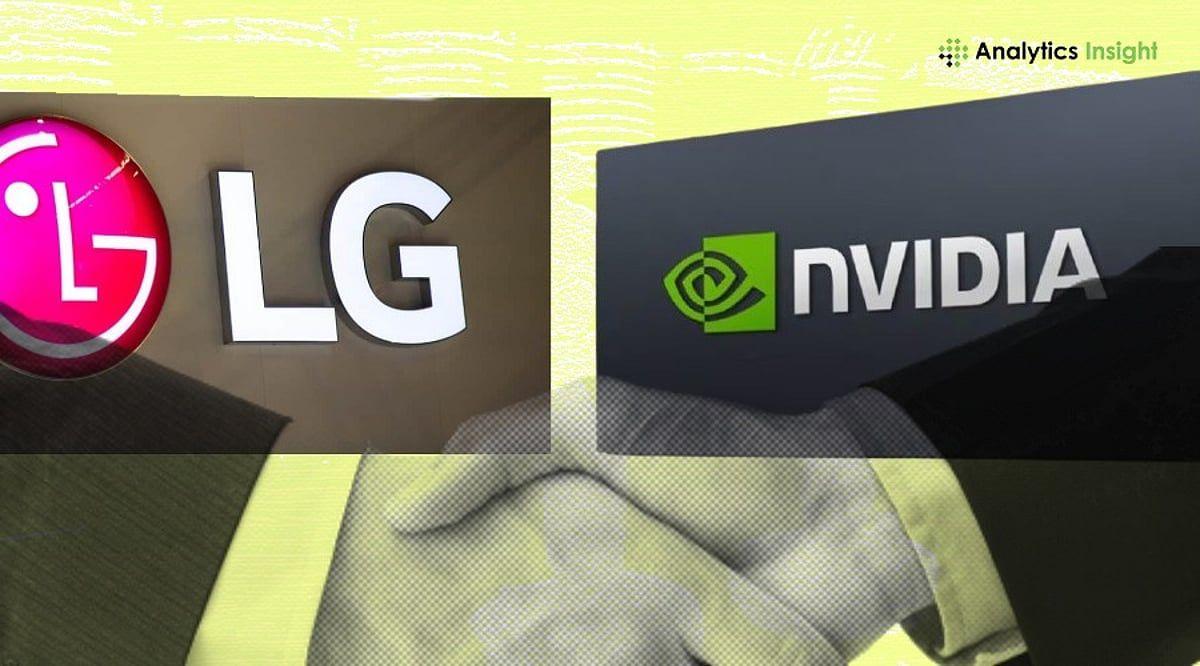
Source: Analytics Insight
Jensen Huang, NVIDIA's CEO, met with LG Group Chairman Koo Kwang-mo in Seoul to discuss the collaboration, stating that the companies are working together on motor technology and mechanical systems to advance humanoid robotics and architect future data centers
4
. The partnership connects AI model development, physical AI data generation, robot simulation and training, edge deployment and factory-scale digital twin technologies into a unified workflow for building physical AI systems1
.Building an Autonomous Manufacturing Ecosystem Through Digital Twin Technologies
The combination of LG's production technology data and know-how from global manufacturing sites with NVIDIA's AI infrastructure and digital twin technologies will help enhance AI-driven manufacturing competitiveness. The two companies will collaborate to build an autonomous manufacturing ecosystem in which the entire process—from raw material procurement to production, logistics and customer delivery—is connected in real time through data and AI, establishing it as a new global smart factory standard
1
.Engineers will be able to simulate factory environments, test operational changes, and validate processes virtually before implementing them in the real world
2
. This approach enables LG to respond to changing conditions with greater speed and efficiency, creating a system that operates through continuous data analysis and real-time decision-making. The collaboration aims to shorten the path from AI experimentation to commercial deployment by combining NVIDIA's accelerated computing platforms with LG's expertise across manufacturing, telecommunications and mobility2
.Next-Generation Robots and Physical AI Development
LG Electronics is developing home-based robots like CLoiD to help with a wide range of indoor household tasks, enhancing everyday convenience and improving quality of life. By integrating NVIDIA Isaac Sim and NVIDIA Isaac Lab open robotics frameworks into their development workflows, LG can simulate, train and validate these home cobots in physically accurate virtual environments before deployment
1
. Instead of relying solely on physical testing, developers will train and evaluate these machines inside realistic virtual environments, allowing teams to refine robot behavior more efficiently2
.The company is exploring using the NVIDIA Isaac GR00T open, reasoning vision action language model for both its home robots and modular robotics platforms. The GR00T model will provide LG robots humanlike reasoning and the ability to execute complex tasks
1
. NVIDIA and LG Electronics also plan to jointly develop reference robots, positioning LG's robots as part of the NVIDIA Isaac GR00T ecosystem, equipping them with stronger reasoning capabilities to handle more sophisticated tasks2
.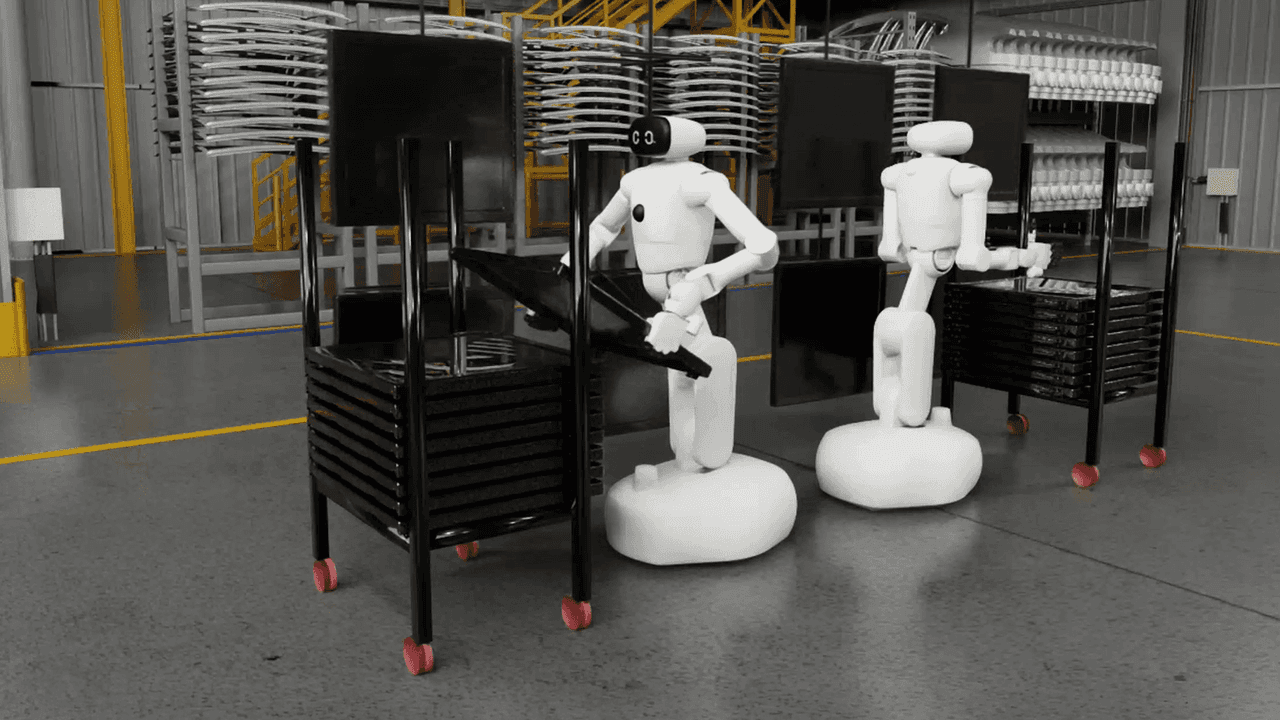
Source: NVIDIA
Addressing the Training Data Challenge Through Synthetic Data Generation
One of robotics' biggest challenges remains access to quality training data. To help overcome the training data challenge for robotics, LG Electronics is developing a physical AI data factory poised to help Korean and global companies accelerate physical AI projects. By turning compute into data, LG will be providing high-quality training data for robotics and industrial AI projects, using NVIDIA Cosmos world foundation models for synthetic data generation and augmentation
1
.LG CNS is building an ecosystem that enables anyone to easily adopt AI robots in manufacturing and logistics sites. By integrating NVIDIA's robotics technologies including Isaac open robotics frameworks, NVIDIA Cosmos open world models and Isaac GR00T robotic foundation models into its PhysicalWorks industrial robot platform, the company is accelerating the AI transformation of logistics and manufacturing floors
1
. LG Innotek, harnessing its world-class optical expertise, plans to provide state-of-the-art robotics components, including sensing solutions, specifically optimized for NVIDIA's development environments and GPU architecture .Related Stories
Expanding AI Factory Infrastructure and Data Center Technologies
Beyond robotics, the partnership extends to the computing backbone that supports increasingly demanding AI applications. LG Electronics is further elevating its AI factory infrastructure capabilities through technical collaboration on prefabricated modular design technologies. This initiative aligns with the NVIDIA DSX AI factory platform, enabling the rapid deployment of scalable, high-performance supercomputing infrastructure
1
. These technologies include cooling distribution units, cold plates and prefab modular design capabilities to help address the power, thermal and deployment requirements of next-generation liquid-cooled AI factories1
.In collaboration with LG Electronics and LG Energy Solution, LG Uplus—a telecommunications provider under LG Corp.—plans to build scalable, power-efficient AI factories based on NVIDIA DSX. The effort is expected to combine NVIDIA accelerated computing and AI factory reference architectures with LG's infrastructure, energy and telecommunications capabilities to support future AI cloud and GPU service opportunities
1
. LG Uplus intends to build large-scale AI data centers capable of supporting the latest NVIDIA GPUs and to explore future GPU cloud services2
.Broader Industry Implications and Autonomous Driving Applications
The collaboration also reaches the automotive sector. LG Electronics plans to align its advanced driver-assistance technologies with NVIDIA DRIVE platforms to support future software-defined vehicles, AI-powered cockpits and edge computing applications
2
. This expansion into autonomous driving demonstrates the comprehensive scope of the partnership across multiple AI-driven sectors.The announcement reflects a broader shift in the technology sector. After two years of heavy investment in generative AI tools, companies are now focusing on practical industrial applications that can improve operations and productivity
5
. NVIDIA is also pursuing similar collaborations with other Korean conglomerates, including Doosan Group, to advance physical AI, robotics and AI factory infrastructure across industrial automation, power generation and advanced electronics materials3
. These partnerships signal a coordinated effort to establish South Korea as a major hub for advanced computing infrastructure and physical AI development, with implications for global manufacturing standards and the competitive landscape in robotics and autonomous systems.References
Summarized by

Navi
[1]
[2]
Related Stories
LG and Nvidia Partner to Build Humanoid Robot Launching Q1 2027 with AI Factory Infrastructure
14 Aug 2026•Technology

LG Electronics and Nvidia explore AI collaboration across robotics, data centres, and mobility
29 Apr 2026•Technology
Samsung and Nvidia Partner to Build Revolutionary AI Megafactory with 50,000 GPUs
31 Oct 2025•Technology

Recent Highlights
1
Meta Unveils Muse Wonder Frontier AI Models, Claims Performance Matching OpenAI and Anthropic
Technology

2
IMF Report Warns AI Market Correction Could Spark Global Financial Crisis With $1.4T at Risk
Business and Economy

3
OpenAI Releases 722 AI-Generated Math Solutions, Triggering Existential Crisis in Mathematics
Technology

Recent Highlights
Today's Top Stories








Don’t drown in AI news. We cut through the noise - filtering, ranking and summarizing the most important AI news, breakthroughs and research daily. Follow topics that matter to you and stay ahead.


