Nvidia quietly integrates DLSS 5 Neural Rendering profiles into latest GeForce driver release


3 Sources
[1]
Potential DLSS 5 references have been found in the latest Nvidia driver, but it's all gone quiet on the AI image enhancement front
I think it's fair to say that Nvidia's DLSS 5 reveal earlier this year didn't go entirely to plan. Or, to put it in stronger terms, it caused a huge amount of internet debate, with voices across the industry weighing in on whether this kind of image-altering AI generation tech had a place in our
[2]
Nvidia GeForce 610.47 Driver Quietly Adds First DLSS 5 Neural Rendering Profiles
Nvidia has quietly begun integrating DLSS 5 infrastructure into its GeForce driver stack. Shortly after the release of GeForce Game Ready Driver 610.47, users inspecting the driver package discovered three previously unseen "DLSS-NR" entries hidden inside Nvidia Profile Inspector, marking the first
[3]
NVIDIA's latest driver quietly adds the first signs of DLSS 5 Neural Rendering support
NVIDIA has released GeForce Game Ready Driver 610.47, and buried inside it are the first signs of DLSS 5 making its way into the driver pipeline. User Warkratos discovered through the NVIDIA Profile Inspector that the new driver appears to add three new profile entries: DLSS-NR, DLSS-NR Streamline,
Share
Copy Link
Nvidia has begun laying groundwork for DLSS 5 by adding Neural Rendering profile entries to its GeForce Game Ready Driver 610.47. The discovery reveals three new DLSS-NR entries that don't yet activate any functionality but signal active preparation for the controversial AI image enhancement technology's planned Autumn 2026 release.
Nvidia Embeds First DLSS 5 Infrastructure in Public Driver
Nvidia has quietly started integrating DLSS 5 infrastructure into its driver ecosystem, marking a significant step toward the technology's eventual public release. Users examining the GeForce Game Ready Driver 610.47 discovered three previously unseen profile entries inside Nvidia Profile Inspector: "Enable DLSS NR override," "Enable DLSS NR SL override," and "Override DLSS NR presets"
1
2
. The discovery was first made by Guru3D forum member Warkratos, who maintains updated XML definitions for Nvidia Profile Inspector, and later confirmed by hardware observer Renan Maniero while examining the latest Nvidia GeForce driver components and Streamline integrations2
.
Source: Guru3D
The "NR" designation almost certainly refers to Neural Rendering, the terminology Nvidia introduced during its DLSS 5 presentation at GTC 2026 earlier this year
2
3
. However, these entries currently do not activate any visible functionality. Users attempting to manually enable the DLSS NR overrides through Nvidia Profile Inspector report no image quality changes or rendering differences inside games, as Nvidia has not yet released the required DLSS 5 runtime DLLs necessary for Neural Rendering to function .What Neural Rendering Means for Gaming Graphics
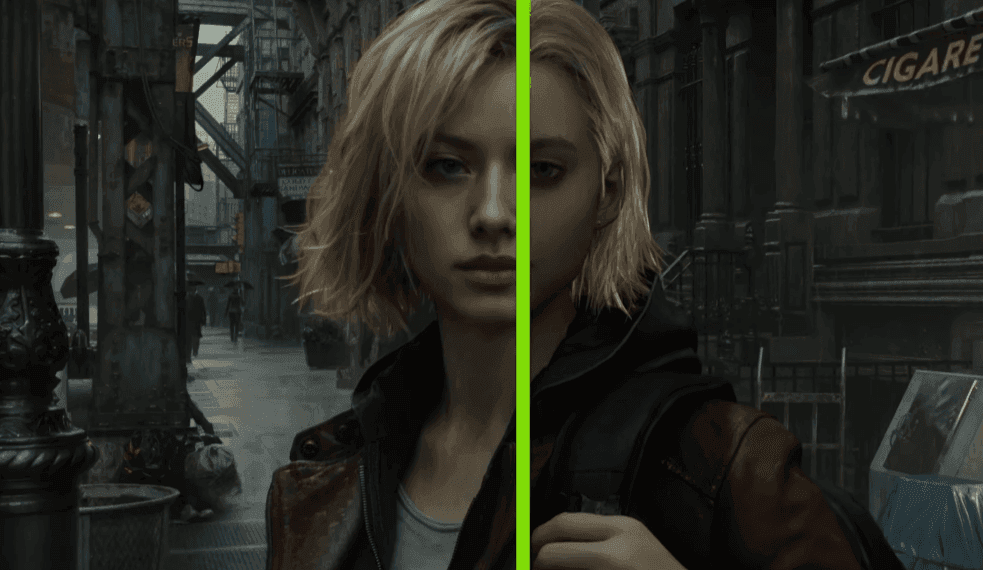
DLSS 5 represents a substantial shift in Nvidia's AI rendering strategy compared to previous generations. While earlier DLSS versions primarily focused on AI upscaling, anti-aliasing reconstruction, and frame generation, Neural Rendering expands the concept significantly by allowing AI models to directly enhance rendered scenes with reconstructed lighting, material properties, reflections, and surface detail augmentation
2
. Nvidia describes this approach as "3D Guided Neural Rendering," where AI generation capabilities work alongside conventionally rendered geometry instead of simply scaling existing image data2
.
Source: PC Gamer
The technology takes a game's rendered 2D frame and motion vectors as input, then uses an AI model to infuse the scene with real-time photorealistic lighting and materials anchored to the source 3D content
3
. Nvidia CEO Jensen Huang has repeatedly referred to DLSS 5 as the "GPT moment for computer graphics," positioning it as the company's next major graphics technology transition following the introduction of real-time ray tracing in 20182
.Community Divided on AI Image Enhancement Direction
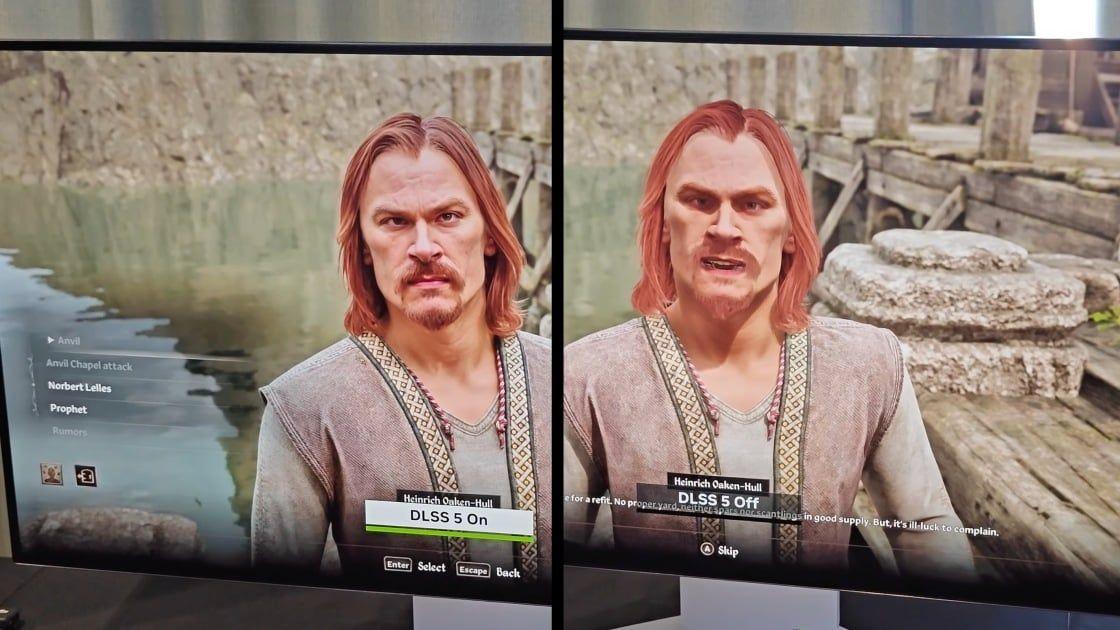
The DLSS 5 reveal earlier this year generated substantial controversy within the gaming community. The technology drew significant backlash following its early demos, with many gamers criticizing the altered visuals and dubbing them "AI slop"
3
. The announcement even split the PC Gamer team in half, sparking debate across the industry about whether this kind of AI image enhancement had a place in games1
. While Nvidia emphasizes visual fidelity improvements and rendering efficiency, some enthusiasts remain cautious about the growing reliance on AI-generated image reconstruction compared to traditional native rendering approaches2
.Despite the harsh criticism, Nvidia isn't backing off. The company has been keen to point out that developers will have creative control over how far the AI enhancements are allowed to go, with plans to win over the more than 50% of users who don't want DLSS 5 altering their games by assuring developers they will retain full artistic control
1
3
.Related Stories
Fall 2026 Launch Window and Game Support
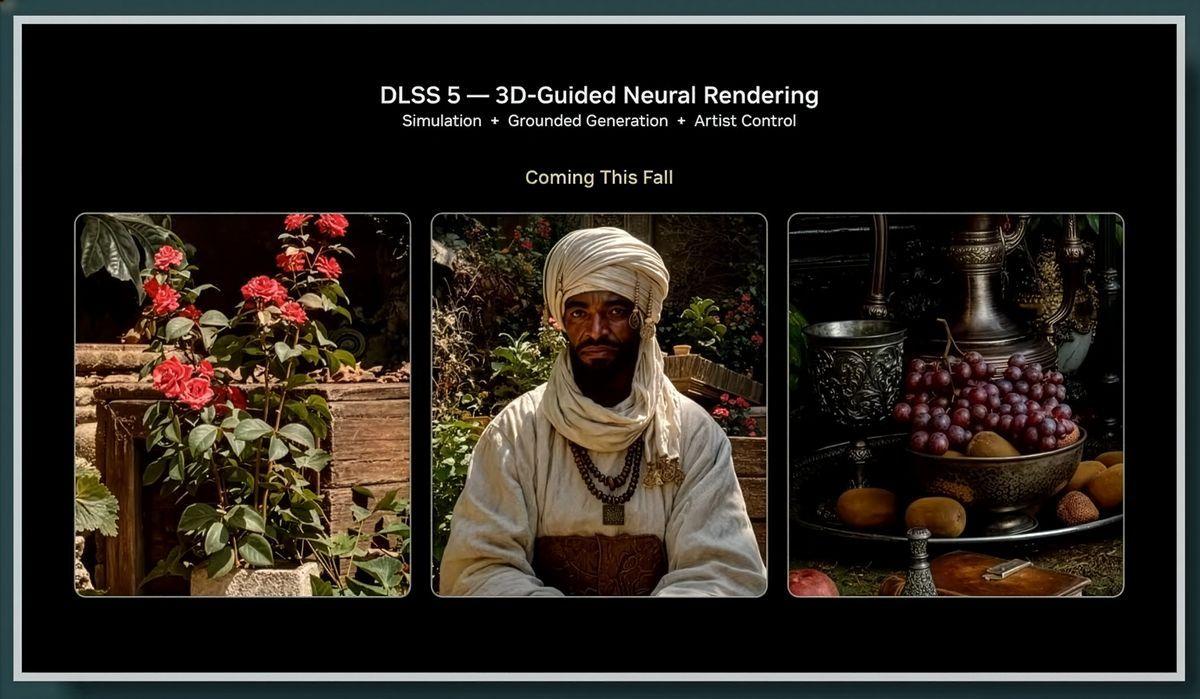
Nvidia is currently targeting Autumn 2026 for the official launch of DLSS 5 with Neural Rendering support
2
. The initial launch lineup already includes major titles such as Assassin's Creed Shadows, Hogwarts Legacy, Starfield, Resident Evil Requiem, Phantom Blade Zero, Naraka: Bladepoint, Delta Force, and The Elder Scrolls IV: Oblivion Remastered, along with several projects from Tencent and NetEase2
3
.Hardware requirements are not yet confirmed, but the technology will likely only work with RTX 50-series cards, since early demos used two RTX 5090 cards, and Nvidia is working to reduce that requirement to just one
3
. The implementation pattern closely resembles previous DLSS feature launches, where earlier versions of DLSS 4 Multi Frame Generation and transformer-based AI reconstruction models also appeared first as hidden profile entries and Streamline infrastructure before becoming publicly accessible features2
. The appearance of DLSS-NR profile entries inside GeForce 610.47 confirms that Nvidia's next-generation rendering stack is now actively being integrated into public drivers, even if the core Neural Rendering components themselves remain unavailable for now .References
Summarized by

Navi
Related Stories
Nvidia DLSS 5 Officially Launches Sept 3 With NBA 2K27 Despite Leaks and Uncanny Valley Backlash
28 Aug 2026•Technology
Nvidia unveils three AI models for DLSS 5, promises developers control over artistic intent
21 Jul 2026•Technology
Nvidia's DLSS 4 Leak Hints at Revolutionary AI Features for RTX 50-Series GPUs
18 Dec 2024•Technology

Recent Highlights



Recent Highlights
Today's Top Stories









Don’t drown in AI news. We cut through the noise - filtering, ranking and summarizing the most important AI news, breakthroughs and research daily. Follow topics that matter to you and stay ahead.


