Nvidia RTX Spark AI laptop passes brutal local coding test but reveals critical memory limits


9 Sources
[1]
I put Lenovo's RTX Spark laptop through a completely bonkers AI coding test - and it passed - ZDNET
Forget ordinary laptop benchmarks - I tested the $4,000 Lenovo RTX Spark with real local AI coding and a brutal battery workload. * Lenovo's new RTX Spark laptop handled an outrageous local AI coding test. * The gorgeous OLED screen and generous ports add everyday appeal. * Heavy workloads
[2]
RTX Spark is here but it's the chassis it comes in that counts
Maker, meme-r, and unabashed geek, Joe has been writing about technology since starting his career in 2018 at KnowTechie. He's covered everything from Apple to apps and crowdfunding and loves getting to the bottom of complicated topics. In that time, he's also written for SlashGear and numerous
[3]
5 things nobody tells you before buying an Nvidia RTX Spark laptop for local AI
Maker, meme-r, and unabashed geek, Joe has been writing about technology since starting his career in 2018 at KnowTechie. He's covered everything from Apple to apps and crowdfunding and loves getting to the bottom of complicated topics. In that time, he's also written for SlashGear and numerous
[4]
I've used NVIDIA's AI laptop and its personal AI supercomputer, and only one feels finished
Nvidia's RTX Spark and DGX Spark share -- more or less -- a chip, but that is where the similarities end. The DGX Spark is positioned as a personal AI supercomputer, while the RTX Spark is a Windows laptop or desktop optimized for AI and everyday use. Add How-To Geek on Google Add as Preferred
[5]
Nvidia built the gaming laptop of the future. But don't buy RTX Spark for games
Nvidia-powered laptops can run games surprisingly well. But if PC games are your primary motivation, you can get better performance for far less money. endif; ?> Right now you can buy a new laptop powered by an Nvidia processor. That would have been a wild statement a few years ago. But what's
[6]

I've tested the Asus ProArt P16 RTX Spark for two weeks and its powerful Nvidia chip has blown me away with its awesome AI, gaming and creative performance -- but its high price still makes it a tough sell
Asus ProArt P16 RTX Spark: two-minute review The Asus ProArt P16 RTX Spark is one of the new generation of laptops powered by Nvidia's RTX Spark chip. This all-in-one system-on-a-chip is packing 20 ARM CPU cores, 6144 CUDA GPU backed up by 64GB of RAM and promises to offer fantastic AI, creative
[7]
I pitted the 32GB RTX Spark against a Snapdragon X2 laptop for local AI, and only one could actually run the model
NVIDIA wants the RTX Spark to be the laptop chip for running AI agents on your own machine, so I expected my $3,200 HP OmniBook Ultra 16 to run circles around a Snapdragon laptop. Instead, Hermes took one look at the 32GB RTX Spark and said every model I wanted was too big. The Zenbook A16, with
[8]
32GB of RAM is the one thing holding HP's RTX Spark laptop back
HP's first RTX Spark laptops are here, and I've spent the past two weeks with the 32GB OmniBook Ultra 16. It really is a fantastic laptop in almost every way. I was able to game on it with basically no issues, and both its keyboard and OLED screen are among the best I've used. Then I asked it to do
[9]

MSI Prestige N16 Flip AI Plus C1XM review - NVIDIA RTX Spark N1X 128GB
RTX Spark AI Power in a 2-in-1 Laptop The MSI Prestige N16 Flip AI+ C1XM brings NVIDIA's RTX Spark platform to a 16-inch convertible laptop designed for local AI, creative work, and everyday productivity. Its 360-degree hinge lets it switch between laptop, tablet, tent, and presentation modes,
Share
Copy Link
Nvidia's RTX Spark platform debuts in laptops like the $4,000 Lenovo Yoga 9n, delivering impressive local AI workloads with 64GB unified memory and 6,144 CUDA cores. Testing revealed strong performance against Mac Studio in AI coding tests, but memory constraints and compatibility issues expose growing pains for the new AI hardware platform.
Nvidia RTX Spark Brings Personal AI Supercomputer Power to Laptops
Nvidia's RTX Spark platform has arrived in consumer laptops, marking a significant shift in how AI workloads can run locally on portable machines. The technology, based on Nvidia's GB10 superchip originally designed for its DGX Spark personal AI supercomputer, now powers devices like the Lenovo Yoga 9n 2-in-1 starting at $3,000
1
2
. The platform represents Nvidia's first major push into Windows on Arm processors, competing directly with Apple's unified memory architecture while targeting developers and AI enthusiasts who need to run local large language models.The N1X chip comes in two configurations: an 18-core variant with 5,120 GPU cores and a 20-core version with 6,144 CUDA cores, both featuring Nvidia's Blackwell architecture with 192 Tensor Cores
4
. The top-tier Lenovo Yoga 9n configuration includes the 20-core N1X chip, 64GB of unified memory, and 1TB storage for $4,000, though Best Buy offers it at $3,7502
. Microsoft's Surface Laptop Ultra with identical specs costs $4,300, but extends to 128GB for $5,9003
.AI Laptop Holds Its Own Against Mac Studio in Coding Tests
Real-world testing pushed the RTX Spark platform through demanding AI coding tests that revealed both capabilities and limitations. When running local AI workloads using the Qwen3-Coder-Next 80B model with llama.cpp and CUDA acceleration, the Lenovo Yoga 9n demonstrated approximately 3x faster prompt processing compared to a $5,300 Mac Studio equipped with an M4 Max chip, 128GB unified memory, and 40-core GPU
1
.
Source: ZDNet
However, token generation performance told a different story. The Mac Studio delivered 1.5x faster performance on 8-billion-parameter models and 2.5x faster speeds on 32-billion-parameter models, exposing how the RTX Spark's 64GB memory ceiling constrains larger AI workloads
1
. Testing involved running OpenCode v2.1.4 with a 32,768-token context window—significantly smaller than the 1-million-token windows available through cloud-based services like Claude Code.In an extreme test, reviewers tasked the AI laptop with converting Mac-only Swift source code to Windows-compatible C++ with no specifications or screenshots, relying entirely on source code analysis. The system successfully derived requirements and began the conversion, demonstrating the platform's capability to handle complex local AI coding tests
1
.Memory Architecture Creates Unexpected Limitations for AI Workloads
The unified memory configuration on RTX Spark laptops operates differently than traditional discrete GPU setups, creating both advantages and constraints. The Nvidia app allows users to divide memory between CPU and GPU, but testing revealed this split doesn't function as a hard limit for local large language models
3
.With the GPU split set to 16GB, Ollama successfully loaded the Qwen3 32B model at 28GB, utilizing 15.8GB dedicated GPU memory plus 12.9GB shared memory. Increasing the split to 48GB improved generation speed by only 3%—from 11.8 to 12.1 tokens per second—while leaving Windows with just 14.8GB of available memory
3
. Windows reported maximum GPU memory totals of 55.4GB at the 48GB split, insufficient for models like gpt-oss-120b requiring approximately 65GB.The memory ceiling becomes permanent at purchase since RAM is soldered to the board. The 18-core N1X variant tops out at 64GB, while only the 20-core version supports 128GB configurations
3
. This differs substantially from the DGX Spark, which supports clustering up to eight units for 1TB aggregate memory—a capability entirely absent from RTX Spark laptops4
.Related Stories

Power Efficiency and Gaming Performance Exceed Expectations
Despite running at 45W to 80W compared to the DGX Spark's 140W power draw, RTX Spark laptops deliver competitive performance for AI workloads while maintaining practical battery life
4
. The Lenovo Yoga 9n required charging only a handful of times during regular use over a week, though intensive AI workloads drain the 99.9Wh battery in under two hours4
.Gaming compatibility surprised reviewers, with the integrated graphics performing at approximately RTX 5070 mobile levels. Testing included modern titles like Space Marine II, brand new releases, and legacy DirectX9 games from 2010
5
. Nearly all games installed and ran without issues on Arm-based chips, though the original Skyrim (2011) refused to launch while the 2021 remaster worked fine. Mount & Blade: Warband ran at roughly 25% expected framerate5
.However, the $3,000-$7,000 price range makes these AI laptops poor value for gaming-focused users. Equivalent gaming performance costs approximately $1,000 less with discrete RTX 5070 laptops
5
.Software Compatibility Issues Emerge for Local AI Development
Windows 11's Smart App Control creates friction for developers working with local AI workloads. The security feature, enabled by default on fresh installations, blocks unsigned applications or those not verified by Microsoft's cloud service
3
. This affects many AI tools distributed as GitHub releases, including current Lemonade builds and unsigned llama.cpp releases. Ollama proved the only tool that ran without issues across test systems.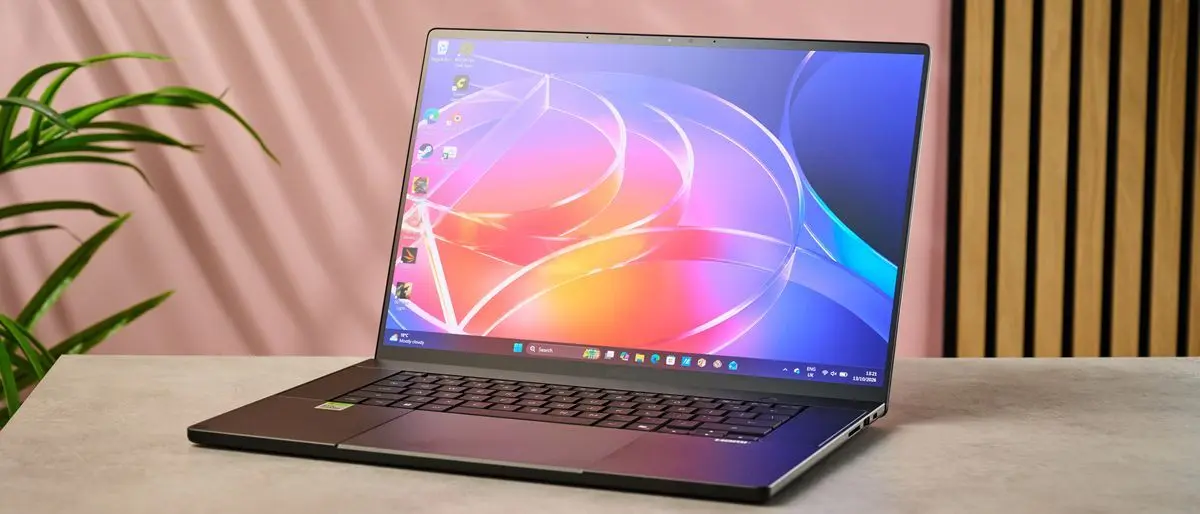
Source: TechRadar
Strangely, older Lemonade releases executed without problems while current versions triggered blocks, suggesting updates to previously-approved tools face new scrutiny. Users can disable Smart App Control in Windows Security settings, and recent Windows updates allow re-enabling it without requiring a clean install
3
.The RTX Spark platform shows promise for local AI development but feels incomplete compared to the DGX Spark. While sharing nearly identical silicon, the DGX Spark runs customized Ubuntu optimized for AI applications and supports ConnectX-7 networking at 200Gbps for multi-unit clustering
4
. RTX Spark laptops sacrifice these enterprise features for portability and power efficiency, creating a consumer-focused AI hardware platform that excels at specific tasks while revealing the challenges of running cutting-edge AI workloads on Windows 11 with Arm-based chips.References
Summarized by

Navi
[1]
[2]
[4]
Related Stories
Nvidia RTX Spark AI Laptops Launch With Powerful Local AI But Sky-High Prices Starting at $2,600
15 Oct 2026•Technology
RTX Spark AI Laptops Deliver Real Local AI Power, But Snapdragon X2 Offers Budget Alternative
04 Nov 2026•Technology
Nvidia RTX Spark debuts at Computex 2026, promising to reinvent the PC for AI agents
02 Jun 2026•Technology
Recent Highlights


Recent Highlights
Today's Top Stories





Don’t drown in AI news. We cut through the noise - filtering, ranking and summarizing the most important AI news, breakthroughs and research daily. Follow topics that matter to you and stay ahead.


