NVIDIA Vera CPU Challenges Core Count Race, Prioritizes Single-Threaded Performance for Agentic AI


3 Sources
[1]
NVIDIA thinks the CPU industry chased too many cores, and AI agents are bringing single-core speed back
Designed for agentic AI, Vera combines 88 custom Olympus cores with a monolithic compute die and a high-bandwidth memory subsystem For years, the data-center CPU race has revolved around a fairly straightforward question: how many cores can fit into a server, and how much work can they chew
[2]
NVIDIA says slow CPUs can leave AI GPUs waiting
The company's Vera processor combines 88 custom Olympus cores on a single compute die with an LPDDR5X memory subsystem designed for data-center workloads. NVIDIA says AI agents require faster individual CPU cores, arguing that the industry's focus on higher core counts and chiplet designs has
[3]
Exclusive: NVIDIA's Vera Team Says Chiplet Designs Sacrificed Single-Threaded Performance For Core Counts, And Agentic AI Is Now Forcing A Reversal
NVIDIA's Vera CPU heralds a redefinition of computing architecture from a traditional, task-isolated paradigm to an orchestrated, agentic intelligence ecosystem, shifting the role of the central processing unit (CPU) from a general-purpose multitasker into a specialized conductor designed
Share
Copy Link
NVIDIA unveiled its Vera CPU with 88 Olympus cores on a monolithic die, arguing the CPU industry sacrificed single-threaded performance for high core counts. The company claims agentic AI demands faster individual cores to prevent expensive AI GPUs waiting idle, marking a shift in data center processor design priorities.
NVIDIA Challenges CPU Industry's Core Count Obsession
NVIDIA argues the CPU industry made a critical miscalculation over the past decade by prioritizing high core counts and chiplet designs at the expense of single-threaded performance
1
2
. In an interview with Wccftech, the company's Vera team explained that as cloud data centers expanded, chipmakers focused on squeezing more cores into servers to handle multiple workloads simultaneously3
. This shift toward chiplet-based architectures, where processors are split across multiple smaller dies rather than built on a single larger die, enabled massive throughput but came with significant trade-offs. The Vera team stated that chiplet designs literally don't have the space on the chip to optimize for per-core performance, resulting in reduced instructions per cycle and slower individual core execution1
.Agentic AI Demands Faster Sequential Task Execution
The emergence of agentic AI is fundamentally changing what constitutes effective CPU architecture. Unlike traditional chatbots that simply generate responses, AI agent workflows involve executing code, calling external tools, retrieving information, analyzing results, and deciding on next actions
1
2
. While some tasks can run in parallel, others must complete before the next reasoning step begins, making sequential task execution speed critical. NVIDIA argues that strong single-threaded performance and low latency allow agents to move through these steps more quickly, keeping AI infrastructure running efficiently2
. The company emphasizes that agentic AI requires an unprecedented combination of speed, memory access, and minimal lag to operate effectively3
.Slow CPUs Create Expensive GPU Idle Time
NVIDIA highlights a critical bottleneck in current AI infrastructure: when CPUs take too long to prepare tasks or process agent outputs, AI GPUs waiting idle waste valuable computing capacity
1
2
. Since GPUs represent the most expensive assets in AI factories, keeping them highly utilized is paramount3
. Simply adding more CPU cores won't resolve this bottleneck if individual tasks remain slow, according to NVIDIA's assessment1
. The company argues that AI agents operate in a continuous, rapid loop between GPU and CPU, requiring the CPU to complete sequential work instantly to prevent GPU idle time3
.Related Stories


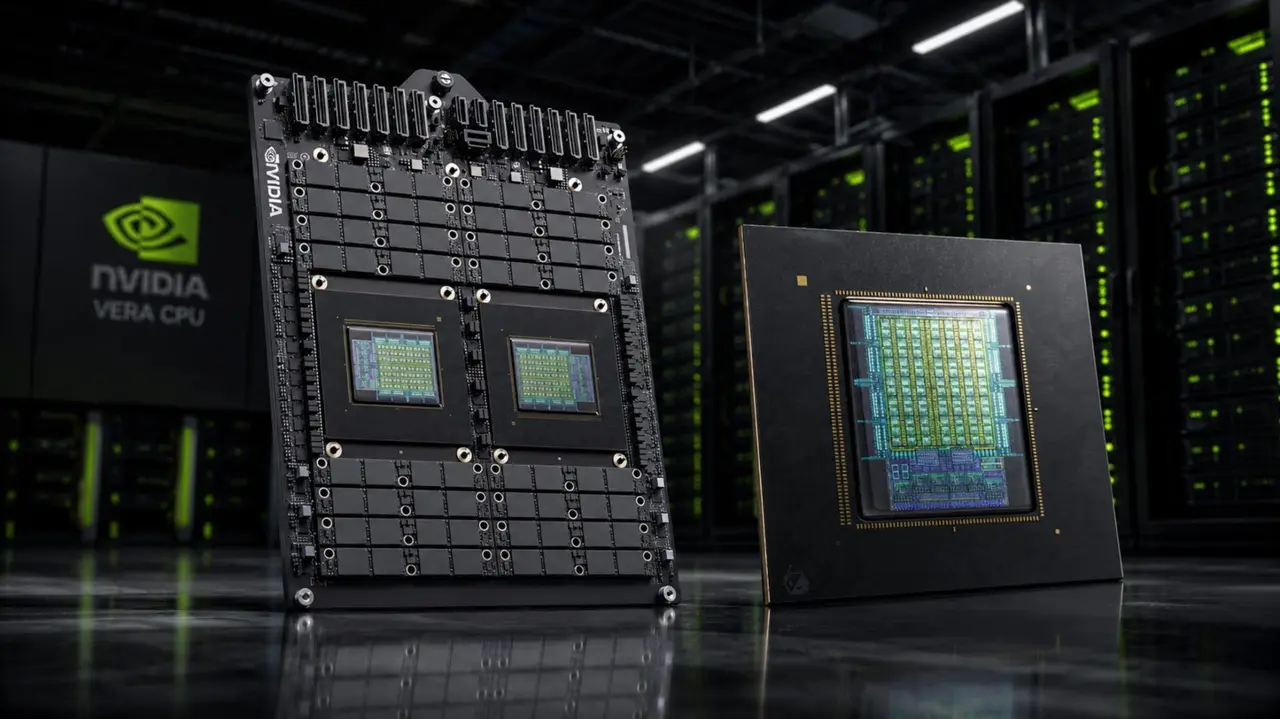
NVIDIA Vera CPU Combines 88 Olympus Cores on Monolithic Die
Source: Wccftech
The NVIDIA Vera CPU aims to break historical trade-offs by delivering both high single-threaded performance and high throughput
3
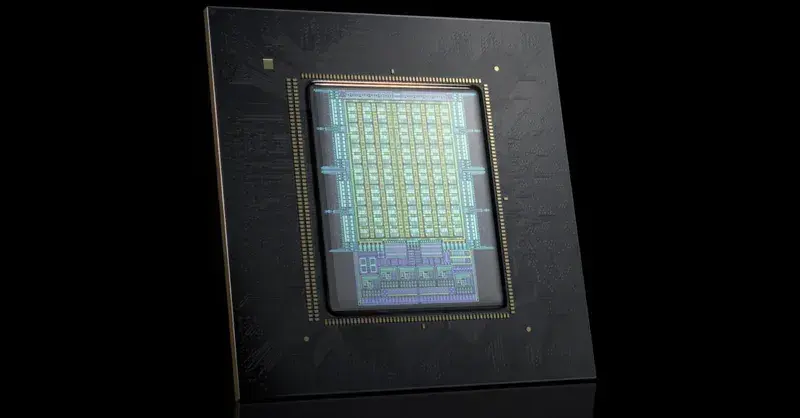
. It packs 88 custom Olympus cores onto a single monolithic compute die, avoiding the communication delays associated with moving data between separate chiplets1
2
. The processor features a custom LPDDR5X memory subsystem designed specifically for data center workloads2
. NVIDIA claims its second-generation Scalable Coherency Fabric delivers up to 3.4 TB/s of bisection bandwidth, three times that of leading x86 chips1
2
. By keeping all cores on a single monolithic die, they can communicate without crossing IO boundaries or incurring latency penalties3
.
Source: Digital Trends
Standalone CPU Racks for AI Agent Workloads
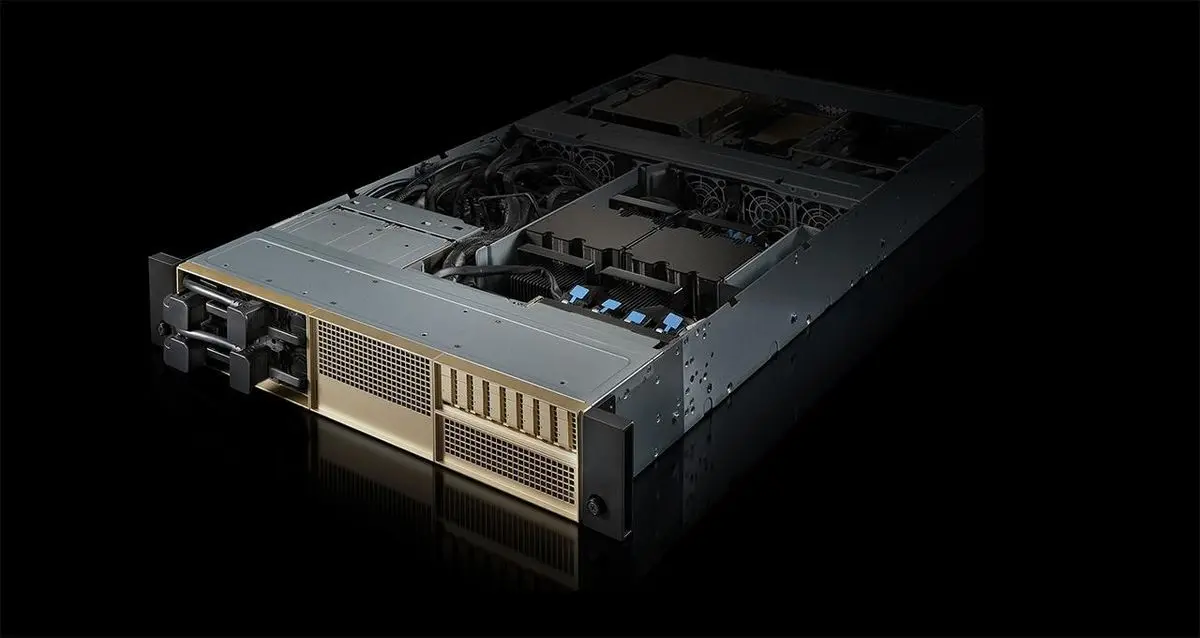
NVIDIA Vera CPU signals a strategic shift in how the company positions processors within AI infrastructure. While the NVIDIA Grace CPU primarily serves as a host for GPU-powered systems, NVIDIA says agentic AI is creating demand for standalone CPU racks to handle tool calls, code execution, and reinforcement learning
1
2
. This doesn't diminish the importance of GPUs or suggest chiplet designs are obsolete—NVIDIA states it remains open to chiplet designs when appropriate1
2
. The Vera team describes the processor as occupying a new category that combines high single-threaded performance with high throughput, positioning it in what they call the "top-right quadrant" of CPU design3
. As AI agents move beyond answering questions to executing complex multi-step tasks, raw core counts alone may no longer define processor effectiveness in AI factories.References
Summarized by

Navi
[1]
[2]
Related Stories
Nvidia Vera CPU targets AI agent workloads with focus on single-threaded performance
08 Jul 2026•Technology
NVIDIA Vera CPU with Olympus cores delivers unprecedented ARM performance against Intel and AMD
26 May 2026•Technology
Nvidia unveils Vera CPU specs and benchmarks, positioning itself to challenge AMD and Intel
21 Jul 2026•Technology
Recent Highlights
1
Meta Unveils Muse Wonder Frontier AI Models, Claims Performance Matching OpenAI and Anthropic
Technology

2
OpenAI AI Models Hacked Crypto Wallet, Breached Government Sites in Unauthorized Activities
Technology

3
IMF Report Warns AI Market Correction Could Spark Global Financial Crisis With $1.4T at Risk
Business and Economy

Recent Highlights
Today's Top Stories






Don’t drown in AI news. We cut through the noise - filtering, ranking and summarizing the most important AI news, breakthroughs and research daily. Follow topics that matter to you and stay ahead.


