One-Quarter of Global Data Centers Face Water Stress, Study Reveals Rising Climate Risks


2 Sources
[1]
Many data centers are located where water resources are limited
One-quarter of the world's data centers are located in areas where water demand exceeds supply for at least one month each year, according to a new global analysis. Researchers reporting in Environmental Science & Technology mapped data center locations against available water resources and found
[2]
Many Data Centers Are Located Where Water Resources Are Limited | Newswise
Newswise -- One-quarter of the world's data centers are located in areas where water demand exceeds supply for at least one month each year, according to a new global analysis. Researchers reporting in ACS' Environmental Science & Technology mapped data center locations against available water
Share
Copy Link
A groundbreaking global analysis reveals that 25% of the world's data centers operate in water-stressed regions, with demand exceeding supply at least one month yearly. Climate projections suggest this figure could jump to 33% as temperatures rise, with U.S. facilities facing the greatest risk.
Data Centers Face Growing Water Resource Limitations
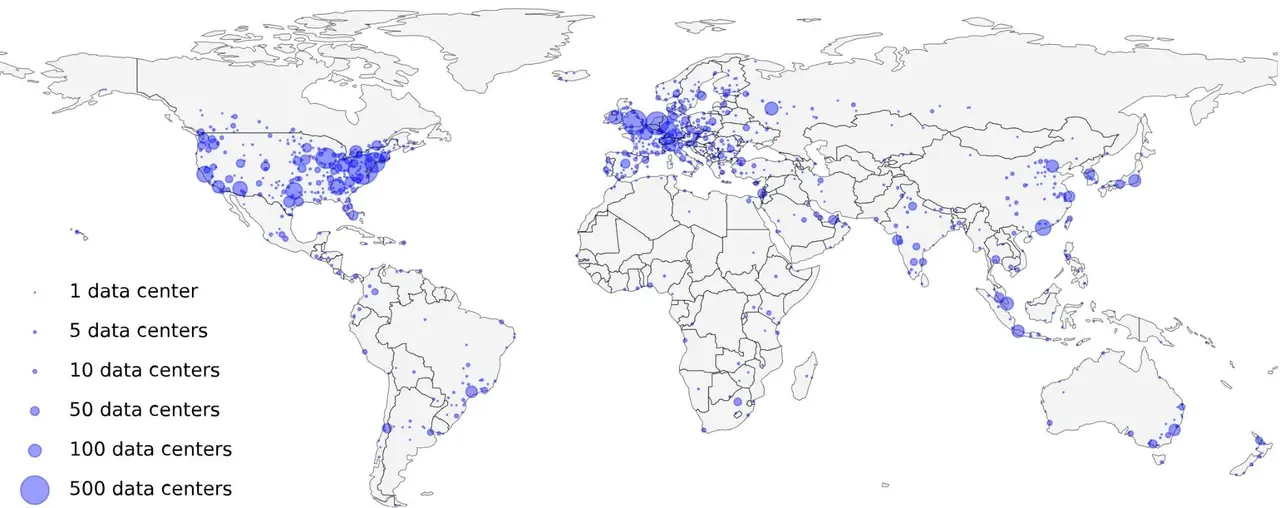
A comprehensive global analysis published in Environmental Science & Technology has uncovered a pressing challenge: one-quarter of the world's data centers are located in areas where water demand exceeds supply for at least one month each year
1
. The research, led by Lorenzo Rosa and colleagues, mapped 9,347 operational data centers worldwide against local water availability and current consumption patterns2
. Their findings reveal that approximately 6% of these facilities operate in regions experiencing water stress most of the year, raising concerns about the AI infrastructure environmental impact on communities and ecosystems1
.
Source: Newswise
The urgency stems from how these facilities function. Thousands of data centers globally provide the computing power and storage backbone for AI technologies, consuming large volumes of water to cool servers and prevent overheating
2
. Unlike electricity that can be transmitted across long distances, water for these facilities must come from nearby rivers, lakes, and aquifers—the same sources that local communities, agriculture, and manufacturing depend upon1
.Water Scarcity Measurement Reveals Critical Gaps
"The energy footprint of data centers has been quantified in detail because electricity is metered and reported," says Lorenzo Rosa, the study's lead author. "Water scarcity is measured locally, inconsistently, and often not at all. So, we built the map because it did not exist"
2
. This lack of comprehensive tracking has obscured the true scale of water resource limitations facing the industry.The researchers' analysis of data centers in water-stressed regions revealed competing demands. Cities and municipalities represent the largest water users near 41% of data centers, while agriculture serves as the primary consumer near another 28%
1
. Rosa emphasizes the conflict: "These facilities are not landing in empty landscapes. They are landing on top of the water supply of cities and farms"2
.Future Climate Scenarios Paint Troubling Picture
The research team projected forward using climate models that assume global temperatures averaging 5.4 degrees Fahrenheit (3 degrees Celsius) warmer than 1900 levels—a scenario that could materialize anywhere from 10 to 40 years from now
1
. Under these future climate scenarios, the proportion of data centers facing water stress could jump to 33%2
. The United States faces particularly acute risks, as 39% of the global total of data centers are already located there, and most additional facilities projected to face water stress are American1
.This escalation matters because local water availability fluctuates seasonally and annually, unlike the steady demand from data centers
2
. As climate change intensifies droughts and alters precipitation patterns, the mismatch between supply and demand will likely worsen.Related Stories

Environmental Impacts Demand Strategic Response
The findings highlight environmental impacts that extend beyond immediate water consumption. Data centers could intensify pressure on water resources in areas already experiencing—or projected to experience—water stress
1
. Whether this scarcity translates into actual consequences for water users remains uncertain and requires further investigation. However, the research makes clear that long-term planning for data center operations must incorporate local water management and infrastructure needs2
.Watch for industry responses to this research, particularly whether major technology companies will shift site selection criteria or invest in alternative cooling technologies. The study's comprehensive mapping provides a baseline that regulators and communities can use to assess proposals for new facilities. As AI technologies continue expanding, the tension between computational needs and water resources will likely intensify, making strategic location decisions and water-efficient technologies essential for sustainable growth.
References
Summarized by

Navi
Related Stories
Google pledges water replenishment as AI data centers face drought zone scrutiny
03 Jun 2026•Business and Economy
Data Centers' Massive Water Consumption: A Hidden Environmental Cost of AI Boom
20 Aug 2025•Technology

AI Data Centers: The Hidden Environmental Cost and Innovative Cooling Solutions
26 Sept 2025•Technology

Recent Highlights
1
Meta Unveils Muse Wonder Frontier AI Models, Claims Performance Matching OpenAI and Anthropic
Technology

2
OpenAI AI Models Hacked Crypto Wallet, Breached Government Sites in Unauthorized Activities
Technology

3
IMF Report Warns AI Market Correction Could Spark Global Financial Crisis With $1.4T at Risk
Business and Economy
Recent Highlights
Today's Top Stories






Don’t drown in AI news. We cut through the noise - filtering, ranking and summarizing the most important AI news, breakthroughs and research daily. Follow topics that matter to you and stay ahead.


