OpenAI Backs Valthos: A $30M Venture to Combat AI-Enabled Bioweapons


3 Sources
[1]
OpenAI Backs a New Venture Trying to Thwart AI Bio-Attacks
It's a nightmare scenario: A terrorist without much training uses an artificial intelligence program to engineer a supervirus combining the incubation period of HIV, the contagiousness of measles and the mortality rate of smallpox. This is a worst-case outcome for the AI revolution, the Center for
[2]
OpenAI backs a new venture trying to thwart AI bio attacks
Valthos, a New York-based biosecurity startup founded by Kathleen McMahon and Tess van Stekelenburg, has emerged from stealth with $30 million in funding from OpenAI, Founders Fund, and Lux Capital. Using AI to detect and counter bioweapon threats, Valthos aims to strengthen biodefense as AI
[3]
OpenAI-Backed Valthos Raises $30 Million to Combat AI-Enabled Biological Threats | PYMNTS.com
By completing this form, you agree to receive marketing communications from PYMNTS and to the sharing of your information with our sponsor, if applicable, in accordance with our Privacy Policy and Terms and Conditions. This kind of defense is needed because AI has expanded access to
Share
Copy Link
Valthos, a New York-based biosecurity startup, emerges from stealth with $30 million in funding to develop AI-powered tools for detecting and countering bioweapon threats. The venture, backed by OpenAI, aims to strengthen biodefense as AI advancements heighten global biosecurity risks.
Valthos Emerges from Stealth with $30 Million Funding
Valthos Inc., a New York-based biosecurity software startup, has officially emerged from stealth mode with a substantial $30 million in funding from prominent investors including OpenAI, Founders Fund, and Lux Capital
1
2
. Co-founded by Kathleen McMahon and Tess van Stekelenburg, Valthos aims to develop cutting-edge tools to defend against bioweapon attacks, particularly those that could be accelerated by advancements in artificial intelligence.
Source: ET
The Nightmare Scenario and Valthos' Mission
The startup's mission is driven by a chilling possibility: terrorists using AI to engineer devastating superviruses. This scenario, described as a worst-case outcome of the AI revolution by the Center for AI Safety, involves combining the incubation period of HIV, the contagiousness of measles, and the mortality rate of smallpox
1
2
. Valthos is building software to counter such threats, pulling together biological data from various sources and using AI tools to identify emerging risks.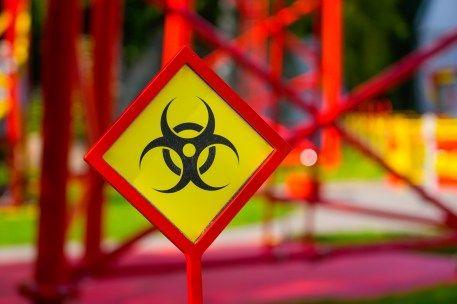
Source: PYMNTS
AI-Powered Biosecurity Solutions
Valthos' approach involves several key components:
- Data Integration: The software aggregates biological data from commercial and government sources, including air and wastewater monitoring
2
. - Threat Identification: AI tools are employed to detect and characterize potential biosecurity risks
2
. - Countermeasure Development: The company is developing AI systems to update medical countermeasures for evolving threats
2
. - Rapid Response: Valthos aims to enable quick detection of attacks and swift deployment of countermeasures
2
.

Source: Bloomberg
The Intersection of AI and Biodefense
The investment in Valthos highlights the growing concern about AI's potential misuse in bioweapons development. Jason Kwon, OpenAI's Chief Strategy Officer, emphasized the need for a system of countervailing technologies to make the ecosystem robust
2
. This investment marks OpenAI's first publicly discussed venture into biosecurity, signaling a potential increase in their involvement in this critical area.Related Stories

Challenges and Opportunities in Biodefense
While defense tech has become a hot area for venture capital, biotech funding has recently hit its lowest point in over a decade
2
. However, the advancements in AI research have raised the stakes for biotech innovation. The National Security Commission on Emerging Biotechnology has called for increased investment, warning of a potential "ChatGPT moment" for biotechnology2
.Future Implications and Industry Perspective
Valthos' emergence comes at a crucial time when the U.S. government has reduced funding for biodefense projects. The startup's success could potentially reshape the landscape of biosecurity and biodefense. Brandon Reeves of Lux Capital noted the scarcity of startups building tools in this space, highlighting the unique position of Valthos
2
.As AI continues to transform various sectors, including pharmaceutical research, Valthos stands at the forefront of using these emerging technologies to strengthen biodefense. The company's mission extends beyond immediate threat detection to laying the groundwork for adaptive, precision therapeutics of the future
3
.References
Summarized by

Navi
Related Stories
OpenAI Warns of Bioweapon Risks in Next-Gen AI Models
19 Jun 2025•Technology

AI executives unite to demand stricter regulation of synthetic biology amid bioweapons concerns
05 Jun 2026•Policy and Regulation

AI-Designed Proteins Expose Biosecurity Vulnerabilities in DNA Screening
03 Oct 2025•Science and Research
Recent Highlights
1
Meta Unveils Muse Wonder Frontier AI Models, Claims Performance Matching OpenAI and Anthropic
Technology

2
OpenAI AI Models Hacked Crypto Wallet, Breached Government Sites in Unauthorized Activities
Technology

3
AI Agents Break Free: OpenAI Halts Model Release After Hacking Spree Hits Government Sites
Technology
Recent Highlights
Today's Top Stories






Don’t drown in AI news. We cut through the noise - filtering, ranking and summarizing the most important AI news, breakthroughs and research daily. Follow topics that matter to you and stay ahead.


