OpenAI launches Patch the Planet to help secure open-source software with AI security tools


9 Sources
[1]
OpenAI launches new initiative to help find and patch open-source bugs
OpenAI announced a new initiative on Monday designed to help the open source community improve its cybersecurity game and ward off bugs. "Patch the Planet," (which is a not-so-subtle allusion to "Hack the Planet," the iconic catch phrase from the 1995 movie Hackers) will see OpenAI team up with
[2]
OpenAI Launches Full-Scale Effort to Patch Open Source Bugs as It Takes on Anthropic's Mythos
As fears about AI hacking capabilities grow, OpenAI on Monday made a slew of cybersecurity-focused announcements, including an improved version of its limited-access security-specialized model GPT-5.5-Cyber, expanded international work with governments and other institutions to give them "trusted
[3]
OpenAI Expands Daybreak With GPT-5.5-Cyber to Help Defenders Patch Security Flaws
OpenAI on Monday said it's releasing an improved version of its GPT‑5.5‑Cyber model to trusted defenders as part of the Daybreak initiative, the artificial intelligence (AI) company announced last month. Calling GPT‑5.5‑Cyber its "strongest model yet for finding and helping patch software
[4]
OpenAI rolls out more capable version of its cybersecurity model
Why it matters: Even as Anthropic remains in limbo with the U.S. government, the race to get advanced AI models into the hands of cyber defenders continues to heat up. Driving the news: OpenAI is updating its GPT-5.5-Cyber model -- which is only available to vetted cybersecurity companies and
[5]

OpenAI expands Daybreak with Patch the Planet and full GPT-5.5-Cyber release
OpenAI expands Daybreak with Patch the Planet and full GPT-5.5-Cyber release OpenAI Group PBC today expanded its Daybreak cybersecurity program with a new open-source patching initiative called Patch the Planet, an updated Codex Security plugin, a partner program and the full release of its most
[6]

Taking on Mythos: OpenAI rolls out cyberdefence model Daybreak to speed up software security fixes
OpenAI has introduced Daybreak, a cybersecurity initiative focused on software vulnerability detection and remediation. The programme includes Codex Security, GPT-5.5-Cyber, Patch the Planet, and the Daybreak Cyber Partner Program. According to the company, the initiative is intended to support
[7]

OpenAI expands Daybreak with Codex Security, GPT-5.5-Cyber and Patch the Planet initiative
OpenAI has expanded its Daybreak cybersecurity initiative to help organizations identify and patch vulnerable software faster using AI. The company says its models have already discovered and generated patches for critical vulnerabilities affecting major web browsers, network infrastructure, and
[8]

What is OpenAI Daybreak: GPT-5.5-Cyber, Codex Security, and Patch the Planet explained
There have been detection problems in the area of cybersecurity all along. Alert generation overwhelms the security teams, vulnerability discovery occurs much faster than vulnerability fixing, and that is where attacks occur. The Daybreak project of OpenAI, which has been significantly expanded
[9]
OpenAI updates GPT 5.5 Cyber AI model, claims it outperforms Mythos 5 on important benchmark
OpenAI has announced it is releasing the full version of GPT 5.5 Cyber, its AI model designed for cybersecurity work. According to the company, the new version is "more permissive" and "more capable for advanced, authorised cybersecurity work." The updated GPT 5.5 Cyber can do much more than
Share
Copy Link
OpenAI unveiled Patch the Planet, a major initiative partnering with Trail of Bits to help open-source maintainers find and patch vulnerabilities using AI-driven cybersecurity tools. The effort addresses a critical bottleneck as AI models now discover bugs faster than defenders can fix them, leaving security teams overwhelmed with reports.
OpenAI Tackles Open-Source Security Crisis With New Initiative
OpenAI announced a sweeping expansion of its cybersecurity efforts on Monday, unveiling Patch the Planet—an initiative designed to help open-source maintainers manage the growing flood of open-source vulnerabilities that AI tools are now uncovering at unprecedented speed
1
. Founded with security firm Trail of Bits and developed in collaboration with HackerOne and Calif, the program aims to patch open-source bugs before they become critical threats to the broader software ecosystem2
.
Source: Wired
The timing reflects a fundamental shift in the cybersecurity landscape. While finding vulnerabilities was once the primary challenge, the bottleneck has now moved to vulnerability patching itself
3
. AI models can navigate large codebases and flag security issues faster than human teams can validate and fix them, creating an overwhelming backlog for already resource-strapped open-source maintainers.How Patch the Planet Works to Support Security Defenders
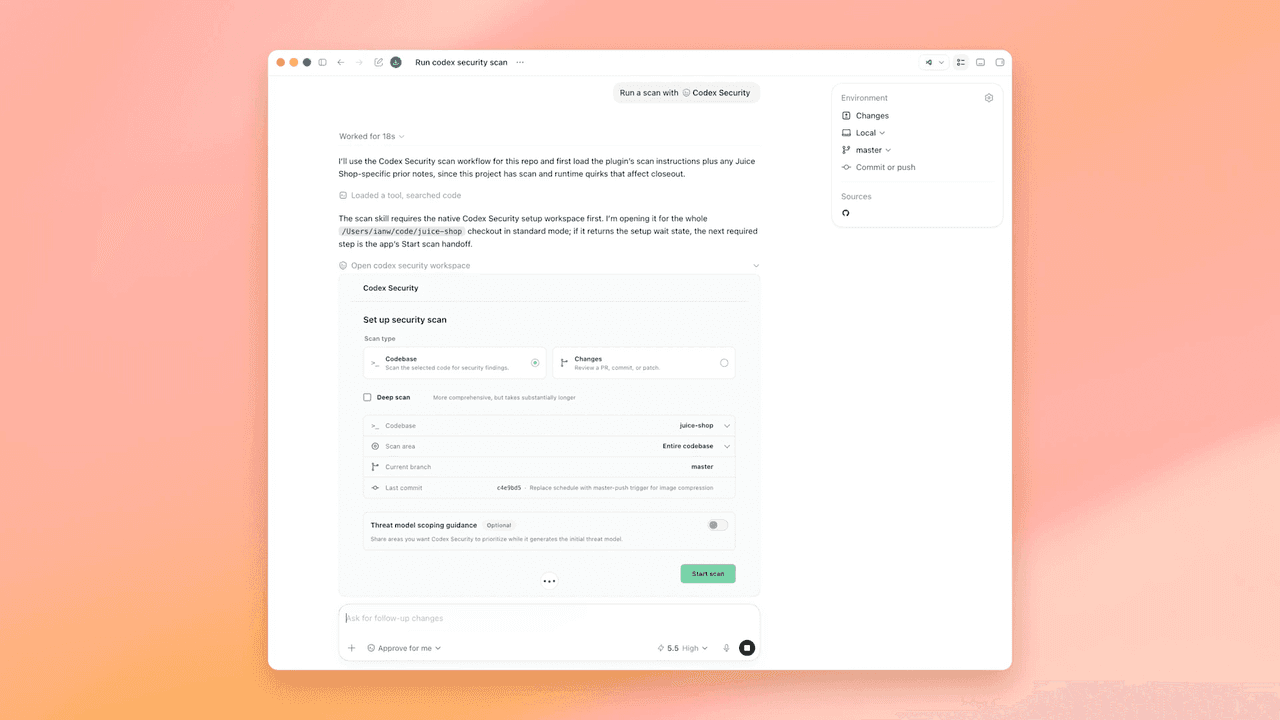
Patch the Planet offers free security consulting services to open-source projects, with Trail of Bits engineers functioning as code EMTs who review findings before they reach maintainers [1](https://techcrunch.com/2026/06/22/openai-l aunches-new-initiative-to-help-find-and-patch-open-source-bugs/). The initiative uses Codex Security and OpenAI's models to conduct codebase analysis, validate potential reports, create patches, and build reusable workflows that help teams continue improving security after initial fixes land
2
.
Source: SiliconANGLE
More than 30 open-source projects are already participating, including cURL, Python, the Go project, Sigstore, and pyca/cryptography
3
. During an initial five-day sprint, Trail of Bits deployed 25 engineers—roughly a fifth of its workforce—simultaneously working on collaborations with maintainers, uncovering hundreds of bugs and producing dozens of patches in just the first week2
."Patch the Planet is an internet-scale effort to help open source software get ahead of AI bug hunting tools," says Trail of Bits CEO Dan Guido
2
. OpenAI has been subsidizing usage of Codex Security "to the tune of 20 trillion tokens" for both open-source and private code2
.GPT-5.5-Cyber Outperforms Anthropic on CyberGym Benchmark
Alongside Patch the Planet, OpenAI released the full version of GPT-5.5-Cyber, its most capable model for finding and helping patch software vulnerabilities
3
. The updated model achieved an 85.6% score on the CyberGym benchmark, which measures whether an AI agent can reproduce known vulnerabilities in testing environments—an improvement from 81.8% for standard GPT-5.5 and beating Anthropic's Mythos 5, which scored 83.8%2
.
Source: Digit
The model can sustain deeper analysis across large codebases to identify security issues, validate them in controlled environments, and develop and test patches
3
. Access remains restricted to vetted security defenders through OpenAI's Trusted Access for Cyber program5
.Related Stories
Daybreak Initiative Uncovers Critical Vulnerabilities Across Major Systems
The broader Daybreak initiative has already surfaced significant vulnerabilities across operating systems and web browsers. Findings include 8 kernel pointer information leak proofs-of-concept and 24 local privilege escalation exploits in the Linux Kernel, a 23-year-old use-after-free flaw in OpenBSD's kernel, and 34 vulnerabilities with 7 local privilege escalation PoCs in FreeBSD
3
.Browser security work proved particularly productive. Researchers reported 5 exploitable vulnerabilities in Google Chrome's V8 JavaScript engine and more than 10 exploitable Apple Safari vulnerabilities
5
. Mozilla patched a WebAssembly vulnerability (CVE-2026-8390) in Firefox just two days before Pwn2Own Berlin, after which five of six Firefox entries registered for the contest withdrew5
.AI Security Tools Address Growing Threat of AI-Generated Bug Reports
The initiative addresses mounting concerns about AI-generated bug reports overwhelming maintainers. Research from the Linux Foundation and Harvard found that 94% of widely used projects had fewer than 10 developers responsible for more than 90% of code added annually
5
. Many maintainers struggle to sort through AI-generated slop reports that make backlogs feel insurmountable2
.OpenAI is also launching the Daybreak Cyber Partner Program, allowing vetted security vendors to integrate GPT-5.5 with Trusted Access for Cyber into their products and services
4
. Launch partners include Accenture, Cisco, CrowdStrike, IBM, Okta, Palo Alto Networks, and Wiz5
.Since its research preview launched in March, Codex Security has scanned more than 30 million commits across more than 30,000 codebases, with human reviewers marking more than 70,000 findings as fixed
5
. OpenAI has established Trusted Access partnerships with Australia, Canada, France, Germany, Japan, South Korea, Poland, and EU institutions3
4
. The announcements come as Anthropic faces regulatory challenges, with its Mythos 5 and Fable 5 models pulled from the market amid Trump administration concerns about AI cybersecurity capabilities2
.References
Summarized by

Navi
[2]
Related Stories
OpenAI Daybreak cybersecurity initiative targets vulnerabilities before attackers can exploit them
12 May 2026•Technology
OpenAI halts Astra AI model development over critical cybersecurity threshold concerns
07 Aug 2026•Technology
OpenAI to Preview GPT-6 Cyber Model and New Security Product Within Days
25 Sept 2026•Technology

Recent Highlights



Recent Highlights
Today's Top Stories



Don’t drown in AI news. We cut through the noise - filtering, ranking and summarizing the most important AI news, breakthroughs and research daily. Follow topics that matter to you and stay ahead.


